
Search
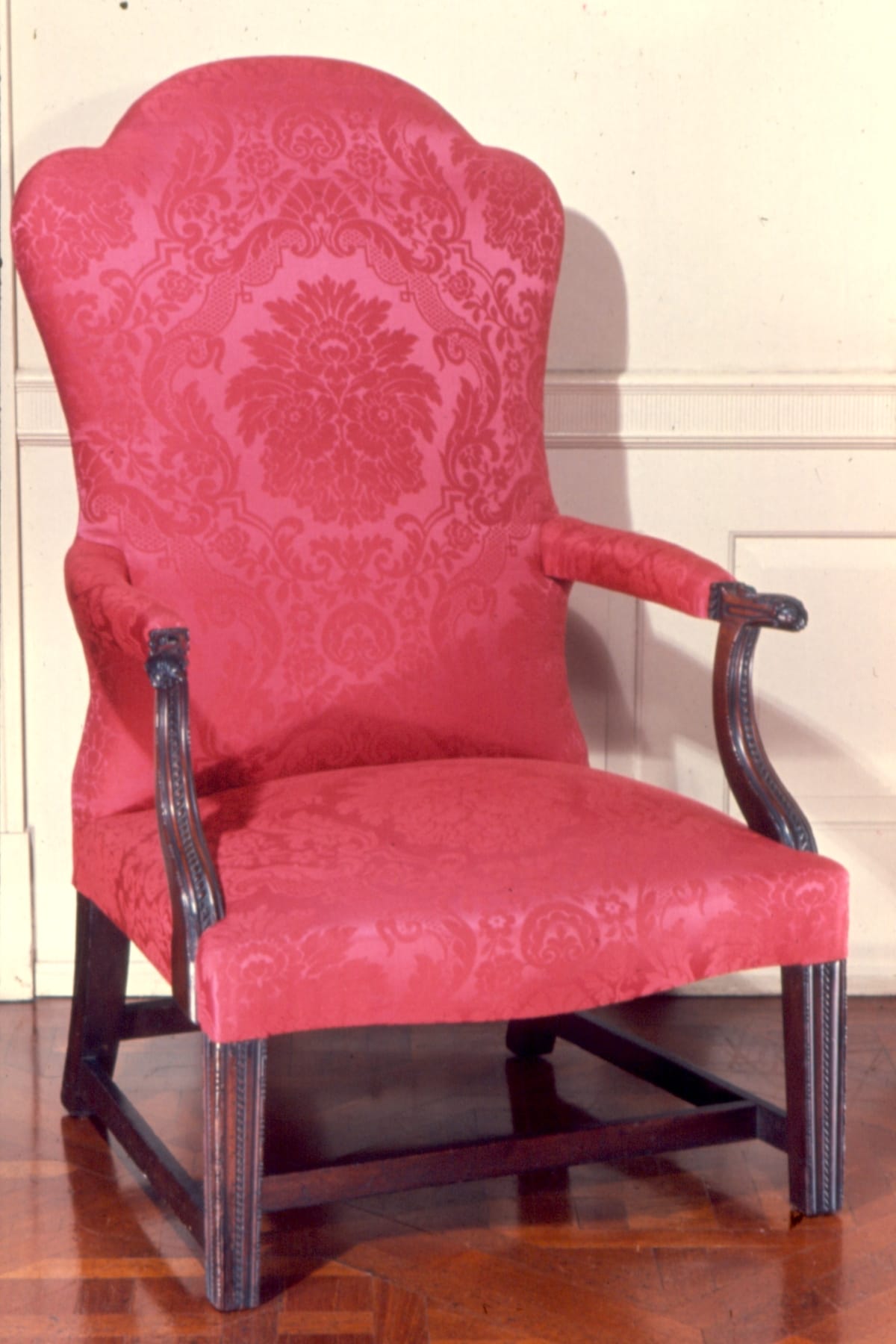
- Speaker's Chair Used in the United States House of Representatives in Philadelphia, 1790-1795 - This chair was made in the early 1790s for either the Speaker of the U.S. House of Representatives or the President of the U.S. Senate, both bodies then located in Philadelphia. We believe that it was later used by the U.S. Supreme Court, along with three similar chairs, now at the Independence National Historical Park, Philadelphia.
- 1790-1795
- Collections - Artifact
Speaker's Chair Used in the United States House of Representatives in Philadelphia, 1790-1795
This chair was made in the early 1790s for either the Speaker of the U.S. House of Representatives or the President of the U.S. Senate, both bodies then located in Philadelphia. We believe that it was later used by the U.S. Supreme Court, along with three similar chairs, now at the Independence National Historical Park, Philadelphia.
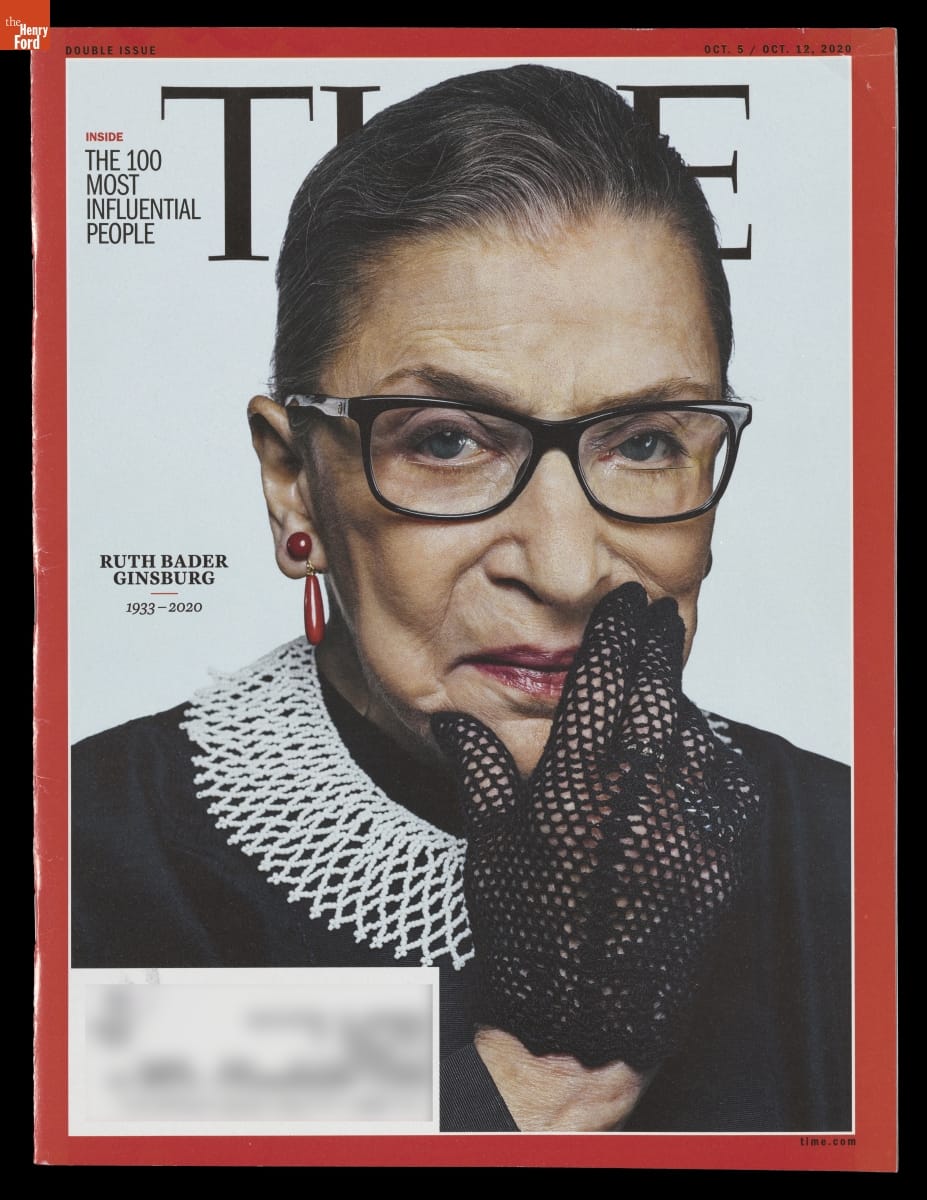
- "Time," October 5-12, 2020 - This <em>Time</em> magazine cover honors Ruth Bader Ginsburg, who served on the Supreme Court from 1993 until her death in 2020 at age 87. She was known for advocating for women's rights, uniting the liberal justices, and wearing bejeweled collars over her judicial robes. This cover portrait features her famous "dissent collar," often worn when she disagreed with the Court's decision.
- October 01, 2020
- Collections - Artifact
"Time," October 5-12, 2020
This Time magazine cover honors Ruth Bader Ginsburg, who served on the Supreme Court from 1993 until her death in 2020 at age 87. She was known for advocating for women's rights, uniting the liberal justices, and wearing bejeweled collars over her judicial robes. This cover portrait features her famous "dissent collar," often worn when she disagreed with the Court's decision.
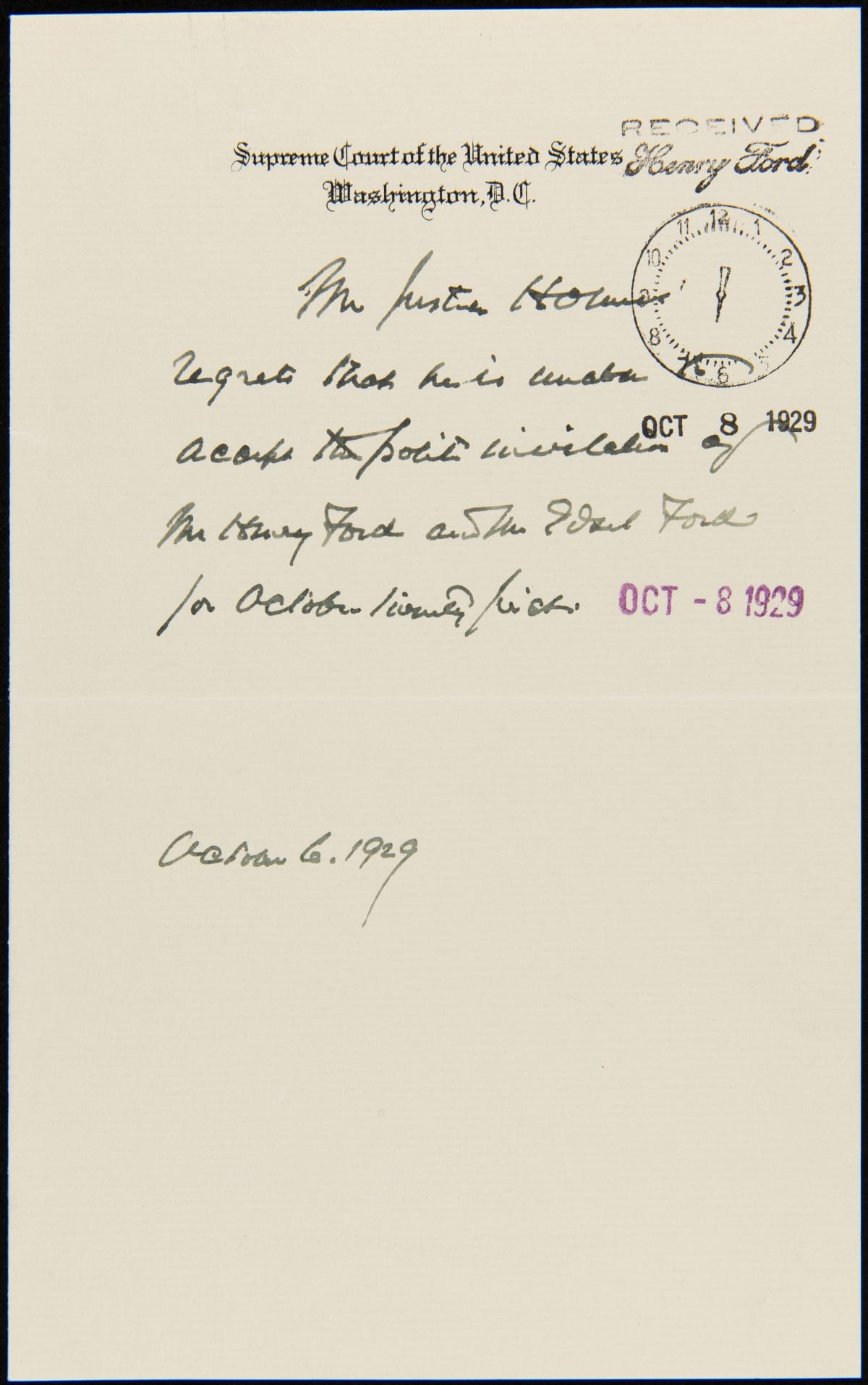
- Letter from Justice Oliver Wendell Holmes to Henry Ford and Edsel Ford regarding Invitation to Light's Golden Jubilee, October 6, 1929 - On October 21, 1929, Henry Ford hosted an event, Light's Golden Jubilee, which celebrated the 50th anniversary of Thomas Edison's invention of the incandescent lamp. The event also served as the official dedication of The Edison Institute, Ford's museum complex named in honor of his friend. U. S. Supreme Court Justice Oliver Wendell Holmes Jr. was invited, but he had to send his regrets.
- October 21, 1929
- Collections - Artifact
Letter from Justice Oliver Wendell Holmes to Henry Ford and Edsel Ford regarding Invitation to Light's Golden Jubilee, October 6, 1929
On October 21, 1929, Henry Ford hosted an event, Light's Golden Jubilee, which celebrated the 50th anniversary of Thomas Edison's invention of the incandescent lamp. The event also served as the official dedication of The Edison Institute, Ford's museum complex named in honor of his friend. U. S. Supreme Court Justice Oliver Wendell Holmes Jr. was invited, but he had to send his regrets.
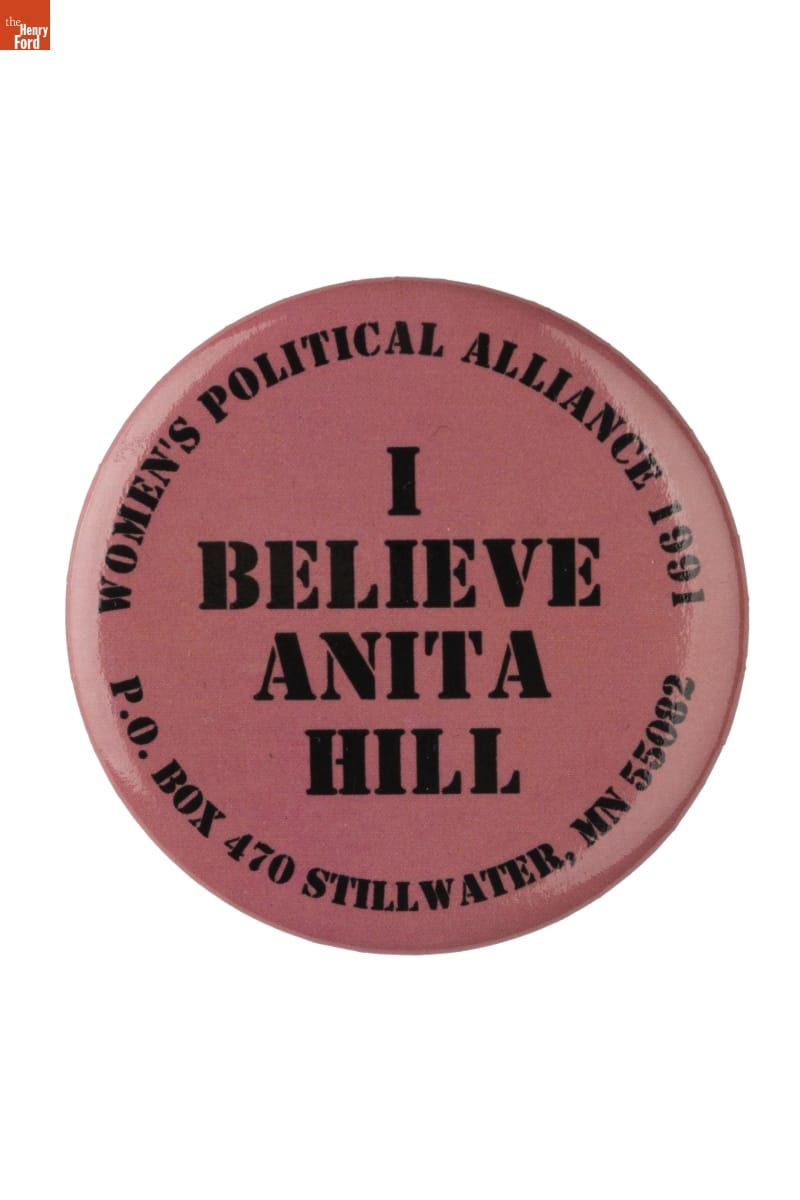
- "I Believe in Anita Hill" Button, 1991 - During Clarence Thomas's 1991 confirmation hearings for his nomination to the Supreme Court, Anita Hill raised allegations that he had sexually harassed her while she worked for him. Over the course of the proceedings, Hill was accused of lying and her sanity was questioned. Hill's televised testimony sparked conversations – both public and private – about the nature of sexual harassment.
- 1991
- Collections - Artifact
"I Believe in Anita Hill" Button, 1991
During Clarence Thomas's 1991 confirmation hearings for his nomination to the Supreme Court, Anita Hill raised allegations that he had sexually harassed her while she worked for him. Over the course of the proceedings, Hill was accused of lying and her sanity was questioned. Hill's televised testimony sparked conversations – both public and private – about the nature of sexual harassment.
- Letter from William H. Taft to Henry Ford regarding McGuffey Readers, 1924 -
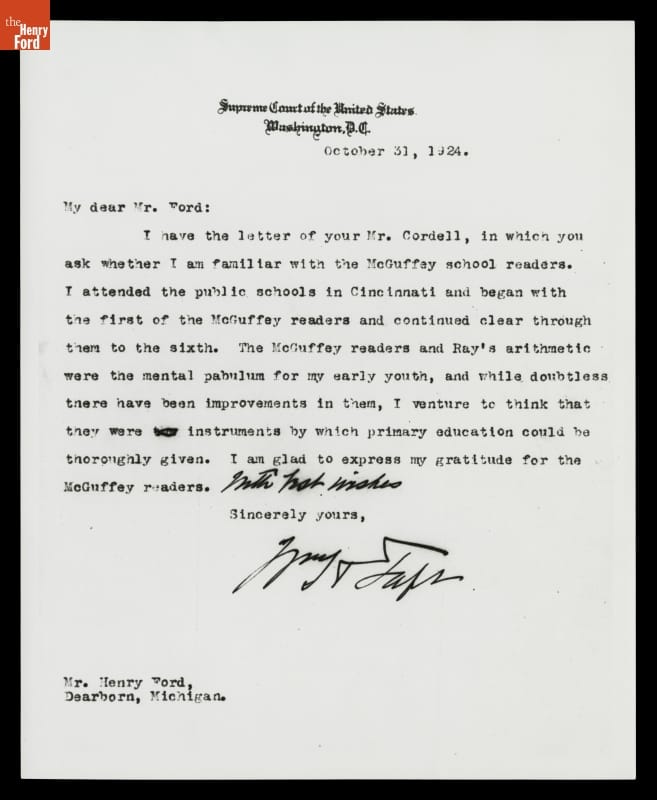
- October 31, 1924
- Collections - Artifact
Letter from William H. Taft to Henry Ford regarding McGuffey Readers, 1924
- U.S. Supreme Court Report, Curtis C. Flood, Petitioner, v. Bowie K. Kuhn et al, 1972 - In 1969, Curt Flood, all-star center fielder for the St. Louis Cardinals, decided to challenge Major League Baseball's Reserve Clause in the U.S. Supreme Court. The reserve clause was the key tool that owners used to restrict the movement of players from team to team and to control player salaries. Flood lost. But his actions put in motion changes that led to baseball's free agency a few years later.
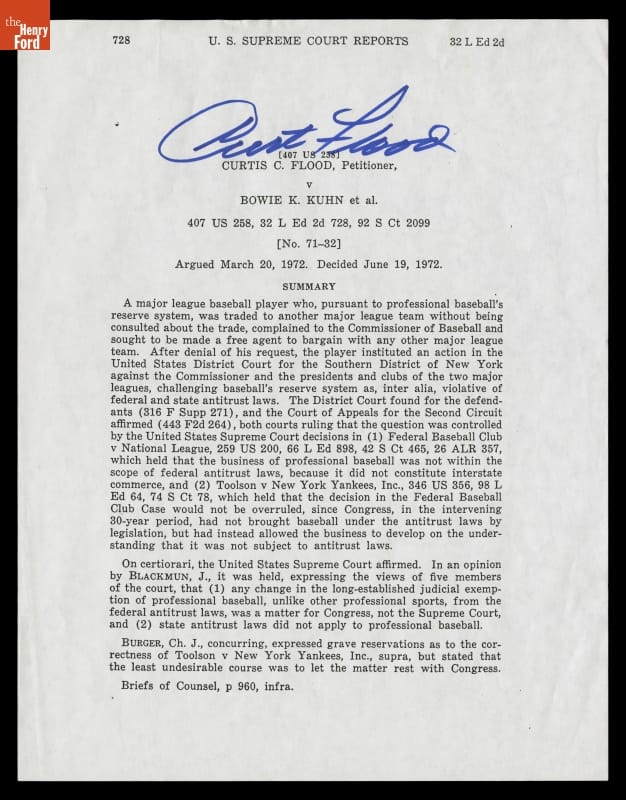
- June 19, 1972
- Collections - Artifact
U.S. Supreme Court Report, Curtis C. Flood, Petitioner, v. Bowie K. Kuhn et al, 1972
In 1969, Curt Flood, all-star center fielder for the St. Louis Cardinals, decided to challenge Major League Baseball's Reserve Clause in the U.S. Supreme Court. The reserve clause was the key tool that owners used to restrict the movement of players from team to team and to control player salaries. Flood lost. But his actions put in motion changes that led to baseball's free agency a few years later.