
Search
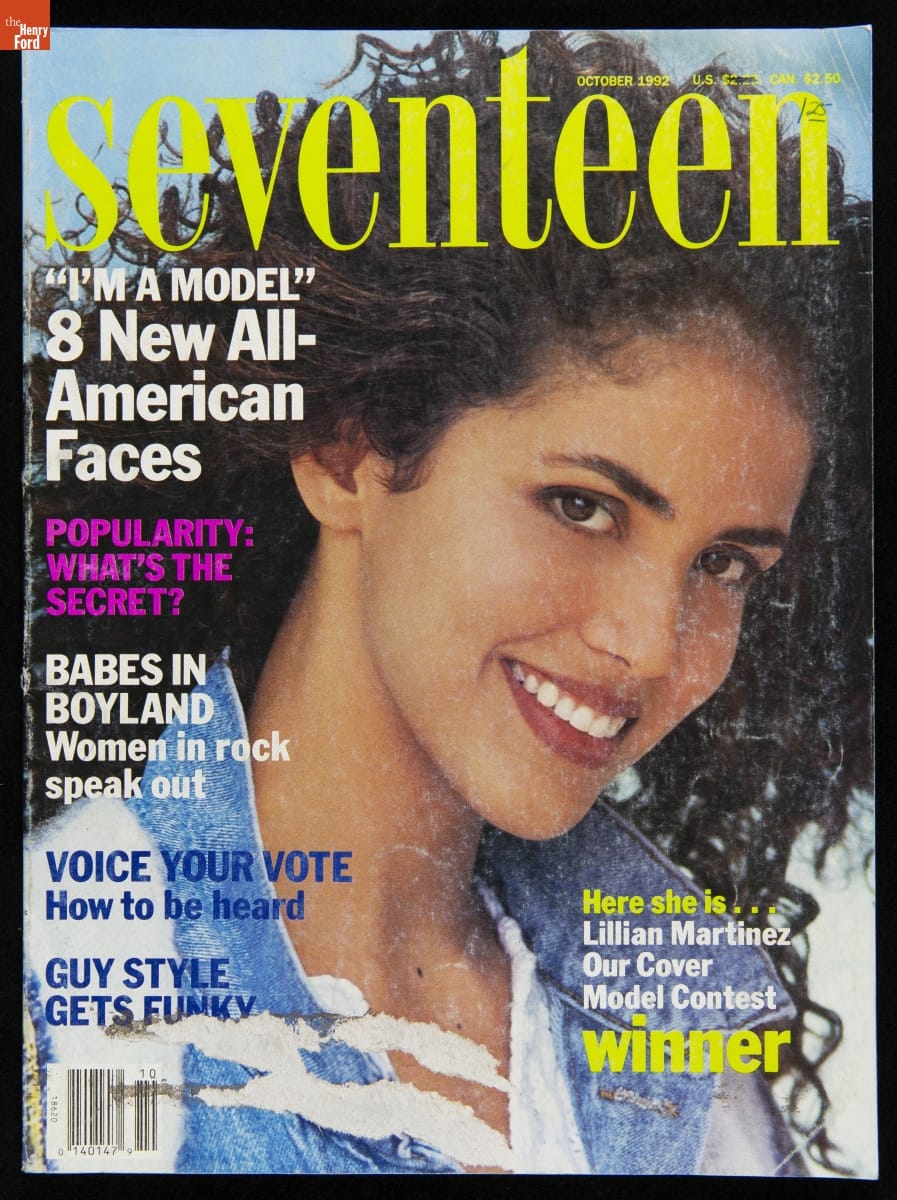
- Magazine, "Seventeen," October 1992 -
- October 01, 1992
- Collections - Artifact
Magazine, "Seventeen," October 1992
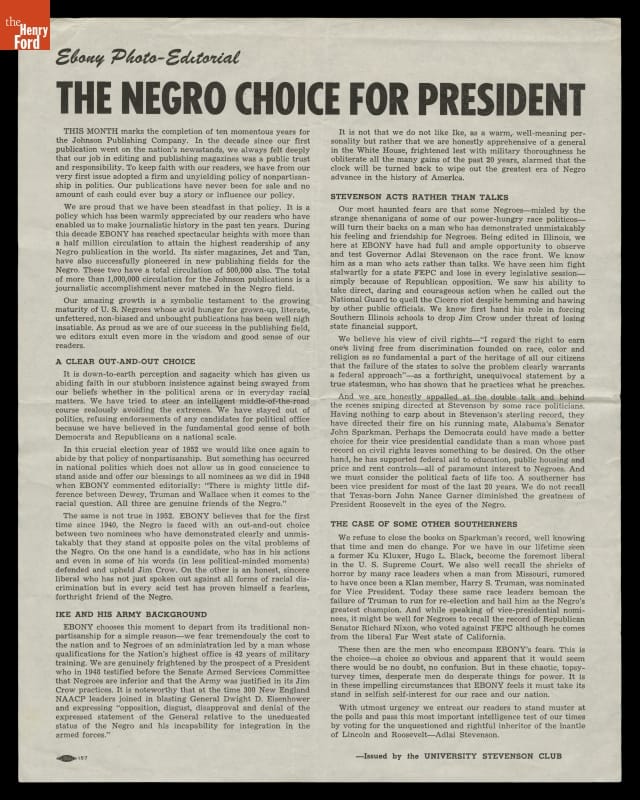
- Handbill, "The Negro Choice for President," 1952 -
- 1952
- Collections - Artifact
Handbill, "The Negro Choice for President," 1952
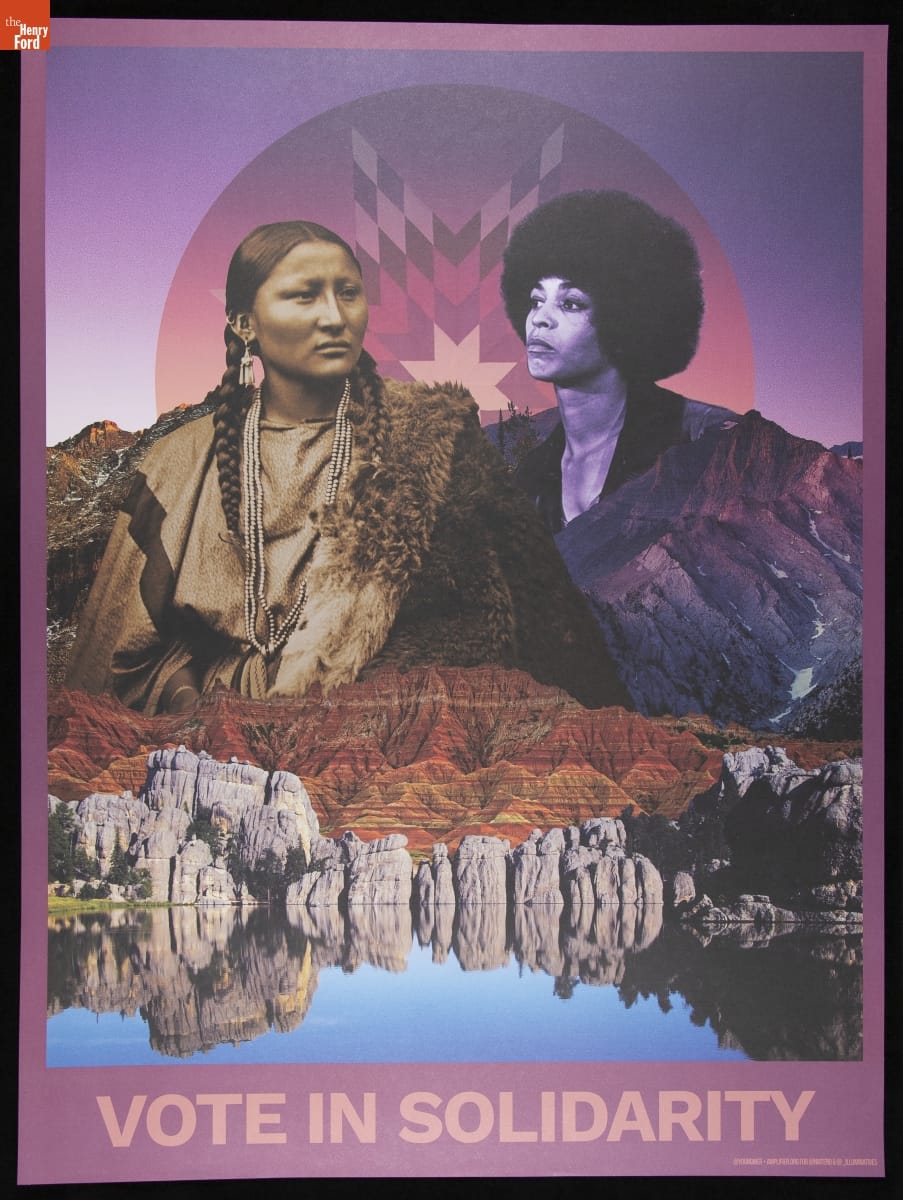
- Poster, "Vote in Solidarity," 2020 -
- 2020
- Collections - Artifact
Poster, "Vote in Solidarity," 2020
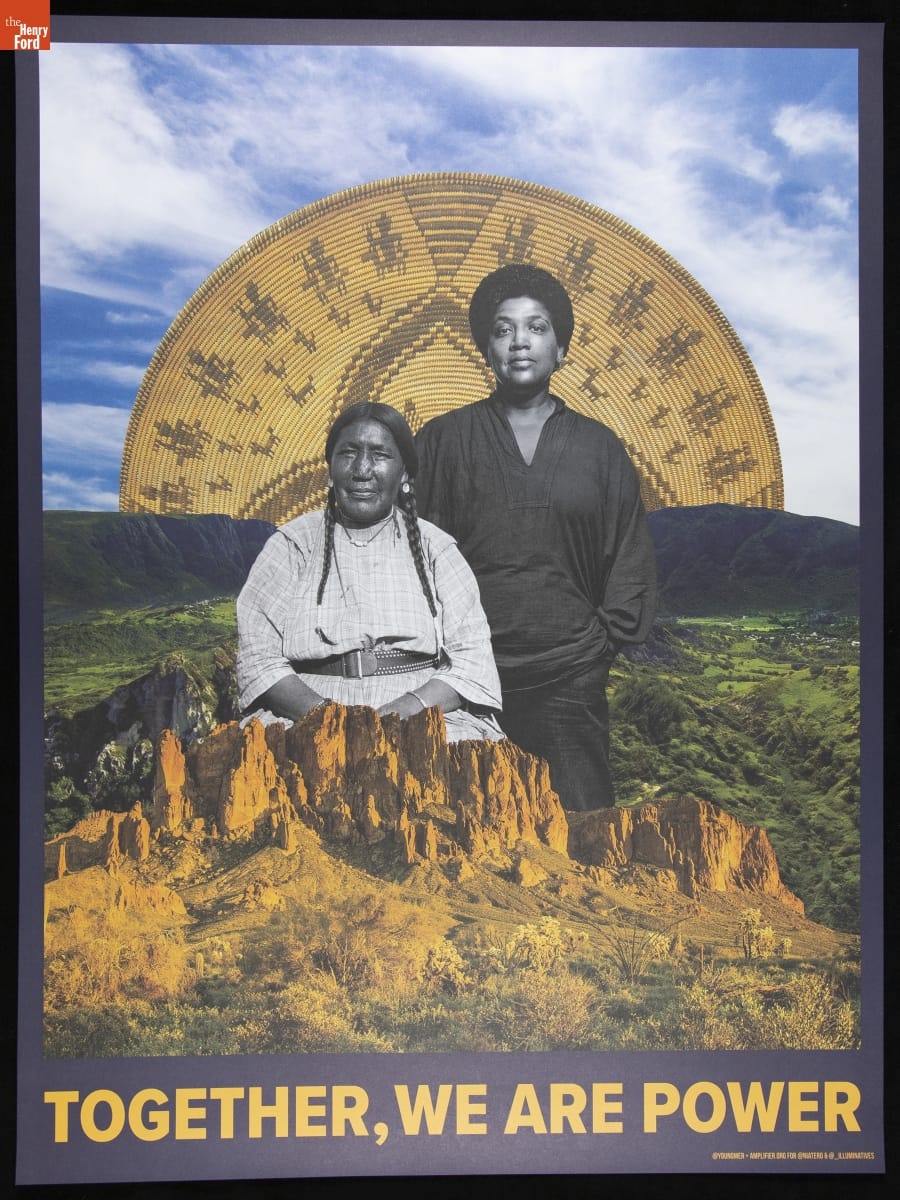
- Poster, "Together, We Are Power," 2020 -
- 2020
- Collections - Artifact
Poster, "Together, We Are Power," 2020
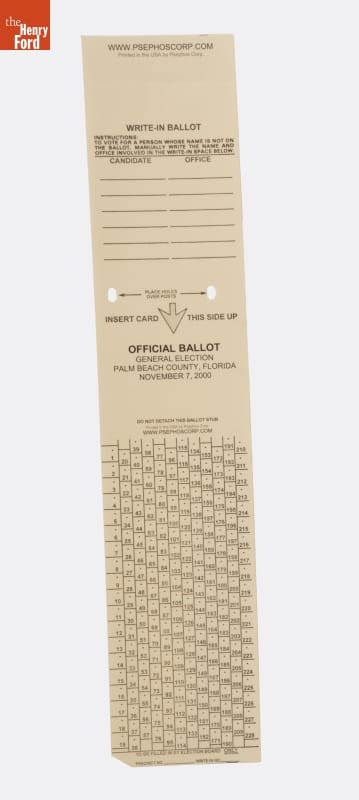
- Copy of a 2000 Presidential Election Ballot for Palm Beach County, Florida - Paper "butterfly ballots" are pierced with a "punch needle"--reminiscent of computer punch cards. Leftover confetti fragments of the punched paper are called "chads." If ballots are not fully punched, partially attached "hanging chads" invalidate the vote. During the 2000 Presidential election, this infamous system caused confusion among voters in Palm Beach County, Florida, forcing a recount of spoiled ballots.
- circa 1995
- Collections - Artifact
Copy of a 2000 Presidential Election Ballot for Palm Beach County, Florida
Paper "butterfly ballots" are pierced with a "punch needle"--reminiscent of computer punch cards. Leftover confetti fragments of the punched paper are called "chads." If ballots are not fully punched, partially attached "hanging chads" invalidate the vote. During the 2000 Presidential election, this infamous system caused confusion among voters in Palm Beach County, Florida, forcing a recount of spoiled ballots.
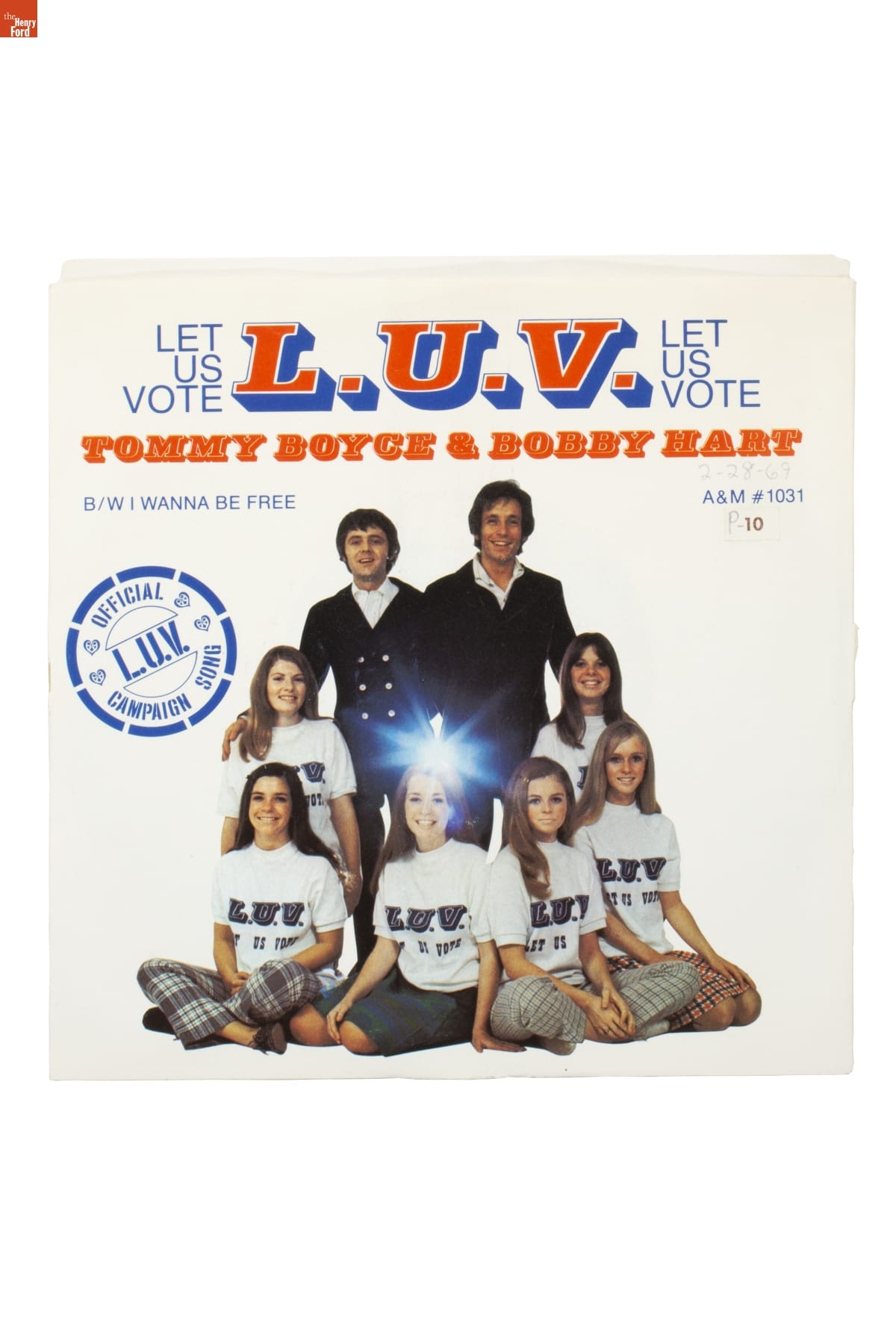
- Record Album, "L.U.V (Let Us Vote)," 1969 - During the height of the Vietnam War in the 1960s, America's youth fought to lower the voting age from 21. At the time, most draft-aged 18-year-olds could not vote. Student-led organizations, such as Let Us Vote (L.U.V.), lobbied for change. In late 1969, the singer-songwriting duo "Tommy" Boyce and Bobby Hart composed "L.U.V. (Let Us Vote)," which became the organization's official campaign song.
- 1969
- Collections - Artifact
Record Album, "L.U.V (Let Us Vote)," 1969
During the height of the Vietnam War in the 1960s, America's youth fought to lower the voting age from 21. At the time, most draft-aged 18-year-olds could not vote. Student-led organizations, such as Let Us Vote (L.U.V.), lobbied for change. In late 1969, the singer-songwriting duo "Tommy" Boyce and Bobby Hart composed "L.U.V. (Let Us Vote)," which became the organization's official campaign song.
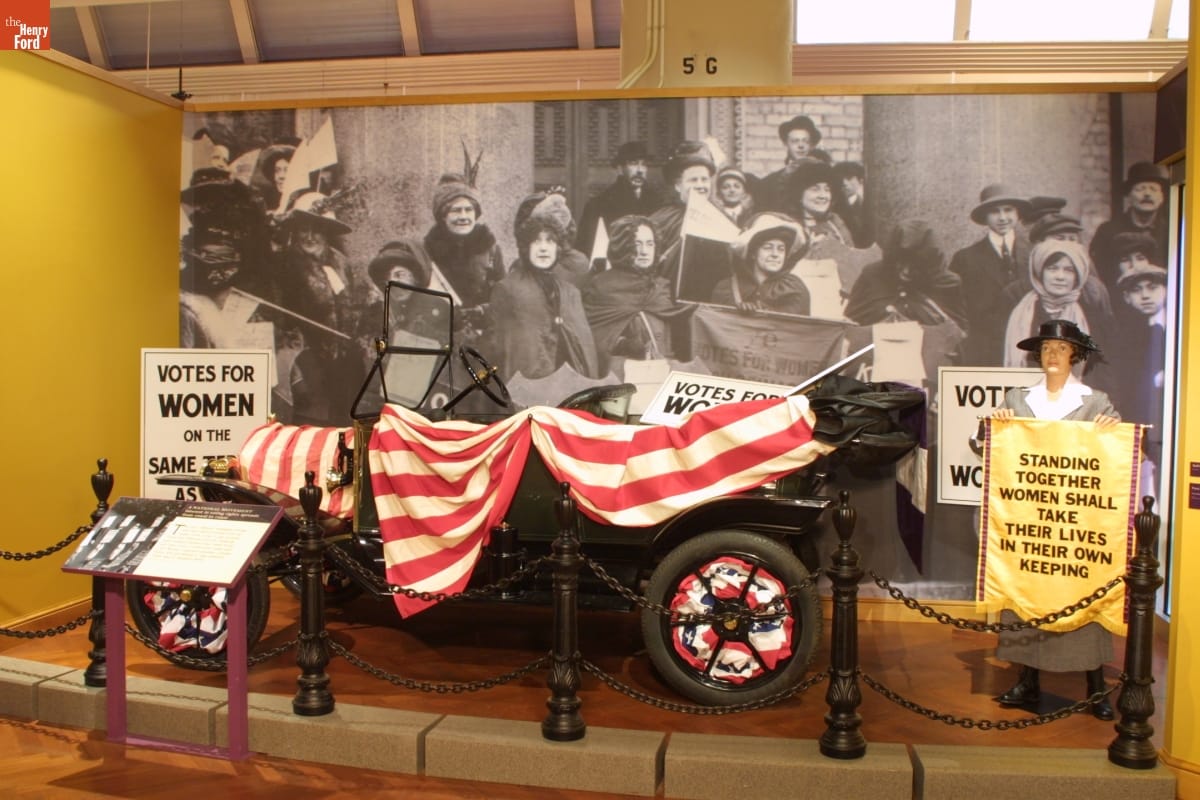
- "Votes for Women" Section of "With Liberty and Justice for All" Exhibit in Henry Ford Museum, January 2006 - <em>With Liberty and Justice for All</em> opened in Henry Ford Museum of American Innovation in 2006. The exhibit explored struggles that arose in the quest for freedom in America, and included sections devoted to Independence, Freedom and Union, Votes for Women, and the Civil Rights Movement. The Votes for Women area acknowledged the automobile's role in women's fight for suffrage.
- January 17, 2006
- Collections - Artifact
"Votes for Women" Section of "With Liberty and Justice for All" Exhibit in Henry Ford Museum, January 2006
With Liberty and Justice for All opened in Henry Ford Museum of American Innovation in 2006. The exhibit explored struggles that arose in the quest for freedom in America, and included sections devoted to Independence, Freedom and Union, Votes for Women, and the Civil Rights Movement. The Votes for Women area acknowledged the automobile's role in women's fight for suffrage.
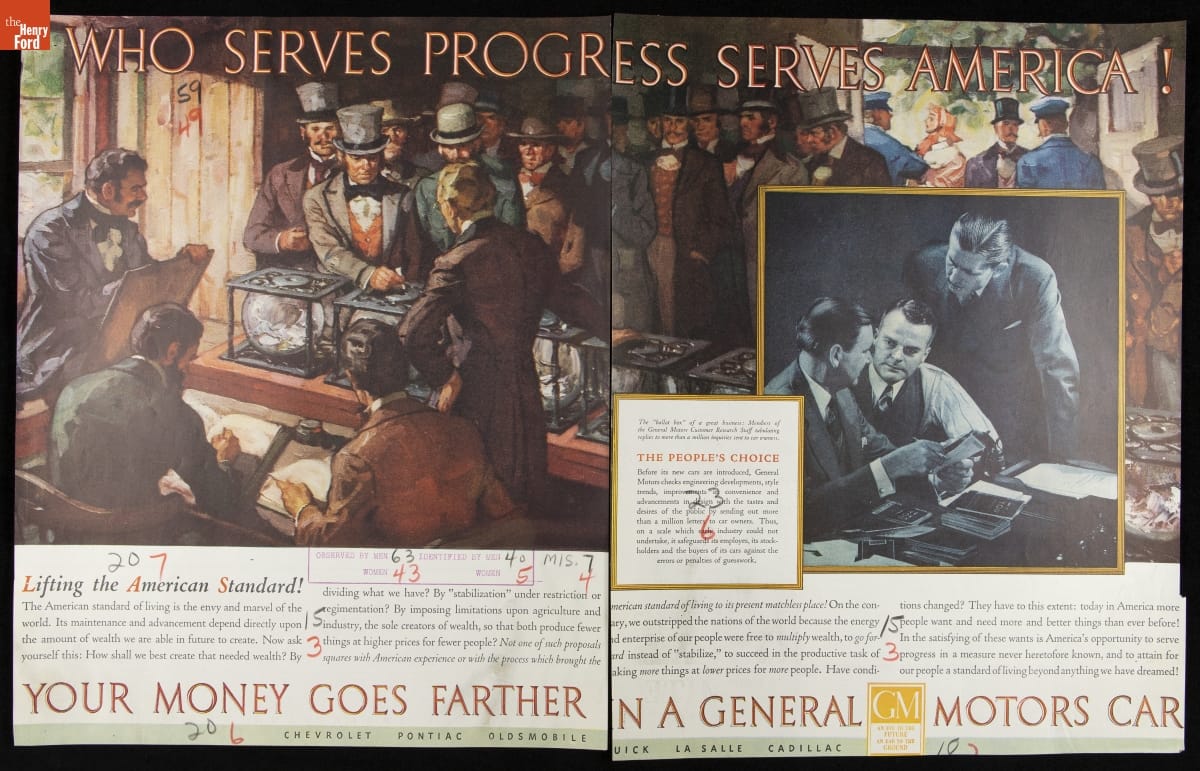
- General Motors Corporation Advertisement, "Who Serves Progress Serves America," 1936 - The vote is the most sacred element of American democracy. General Motors associated voting with the country's high standard of living in this advertisement from 1936. GM also noted that its engineers and designers surveyed the public when creating new vehicles. Each new car and truck represented "the people's choice."
- 1936
- Collections - Artifact
General Motors Corporation Advertisement, "Who Serves Progress Serves America," 1936
The vote is the most sacred element of American democracy. General Motors associated voting with the country's high standard of living in this advertisement from 1936. GM also noted that its engineers and designers surveyed the public when creating new vehicles. Each new car and truck represented "the people's choice."
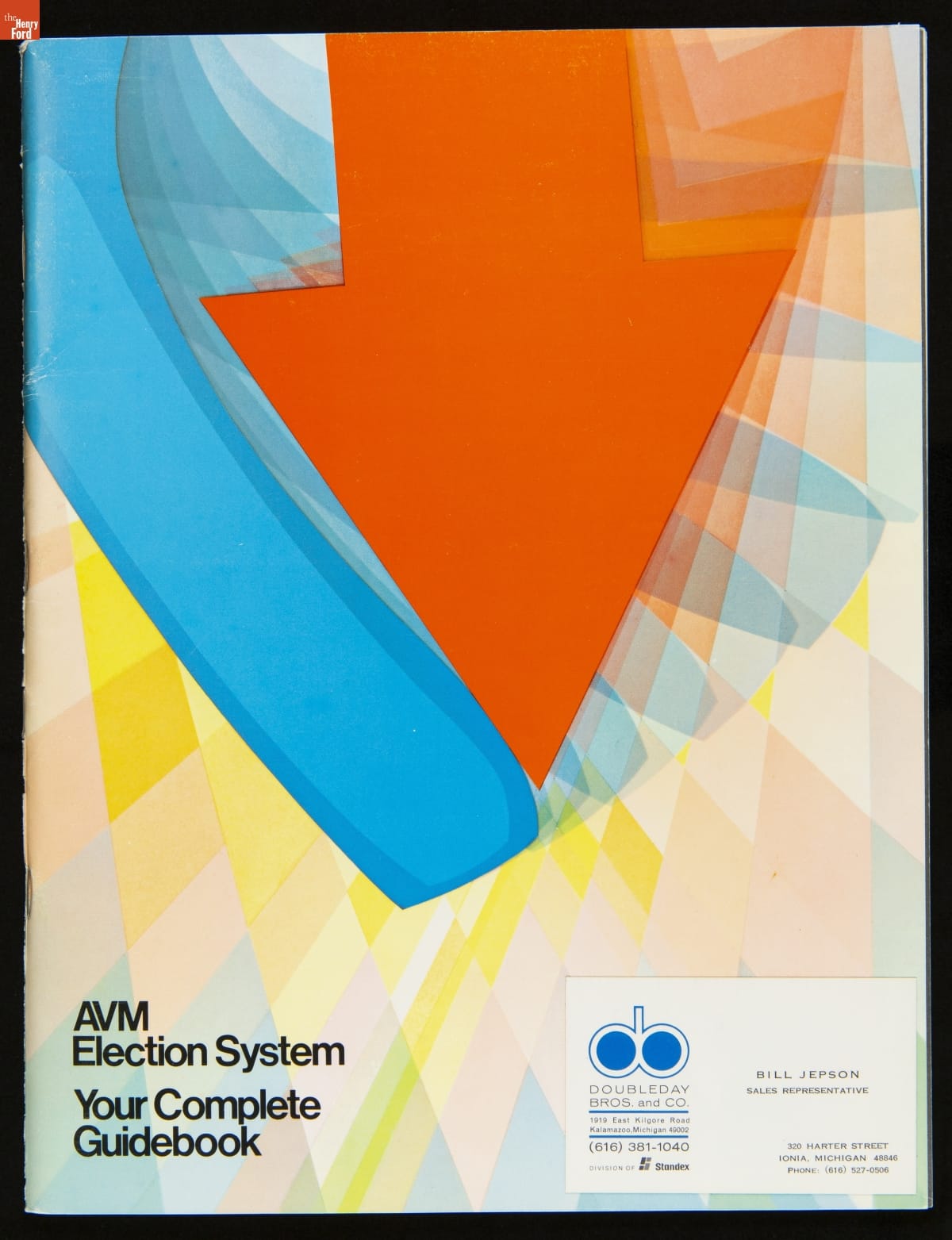
- AVM Election System Guidebook, 1965-1982 -
- 1965-1982
- Collections - Artifact
AVM Election System Guidebook, 1965-1982
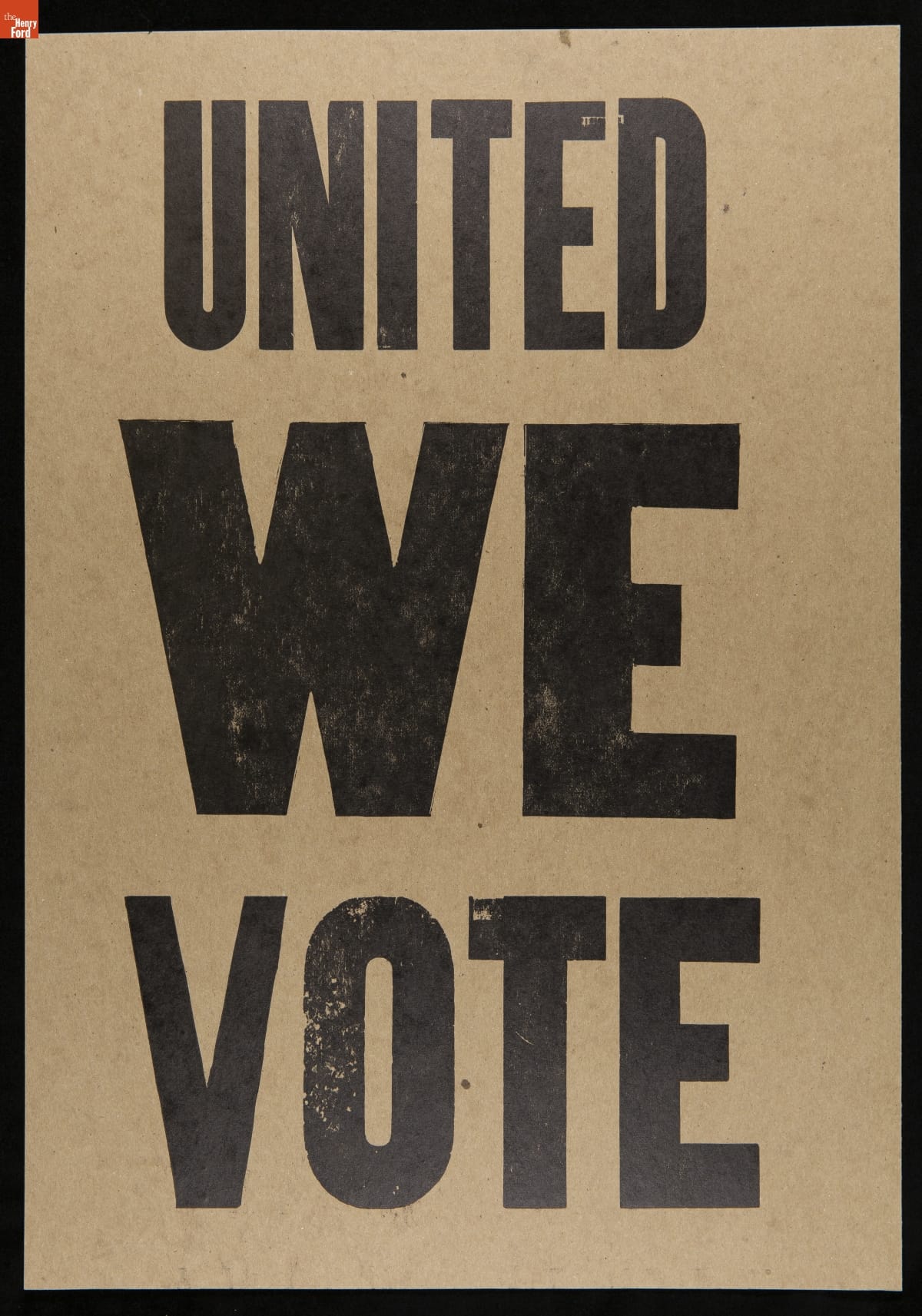
- Protest Poster, "United We Vote," 2020 - In June 2020, Detroit-based non-profit letterpress organization Signal-Return responded to the civil unrest that followed the death of George Floyd by producing free protest posters for the community. These posters were made in solidarity with the principles behind the Black Lives Matter movement and distributed with the intent that they be carried in local protests or displayed in visible places.
- 2020
- Collections - Artifact
Protest Poster, "United We Vote," 2020
In June 2020, Detroit-based non-profit letterpress organization Signal-Return responded to the civil unrest that followed the death of George Floyd by producing free protest posters for the community. These posters were made in solidarity with the principles behind the Black Lives Matter movement and distributed with the intent that they be carried in local protests or displayed in visible places.