
Search
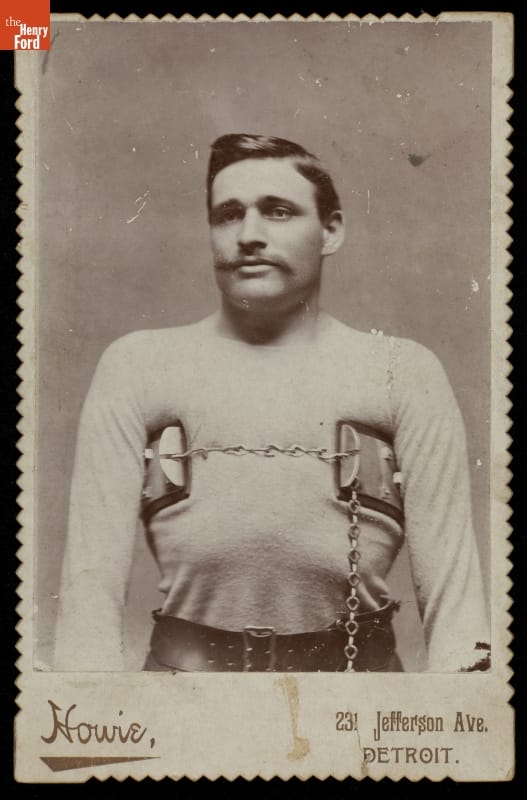
- Thomas Rowe, Expansionist Circus Performer, circa 1895 - Professional photographers began producing cabinet cards in 1867. Consumers quickly preferred them over earlier cartes-de-visite, which were mounted on smaller cardboard stock. Through the early 1900s, Americans commonly exchanged and collected cabinet photographs of family, friends and celebrities. This example, made in Detroit, Michigan, around 1895, depicts Thomas Rowe, a sideshow performer in the Walter L. Main Circus.
- circa 1895
- Collections - Artifact
Thomas Rowe, Expansionist Circus Performer, circa 1895
Professional photographers began producing cabinet cards in 1867. Consumers quickly preferred them over earlier cartes-de-visite, which were mounted on smaller cardboard stock. Through the early 1900s, Americans commonly exchanged and collected cabinet photographs of family, friends and celebrities. This example, made in Detroit, Michigan, around 1895, depicts Thomas Rowe, a sideshow performer in the Walter L. Main Circus.
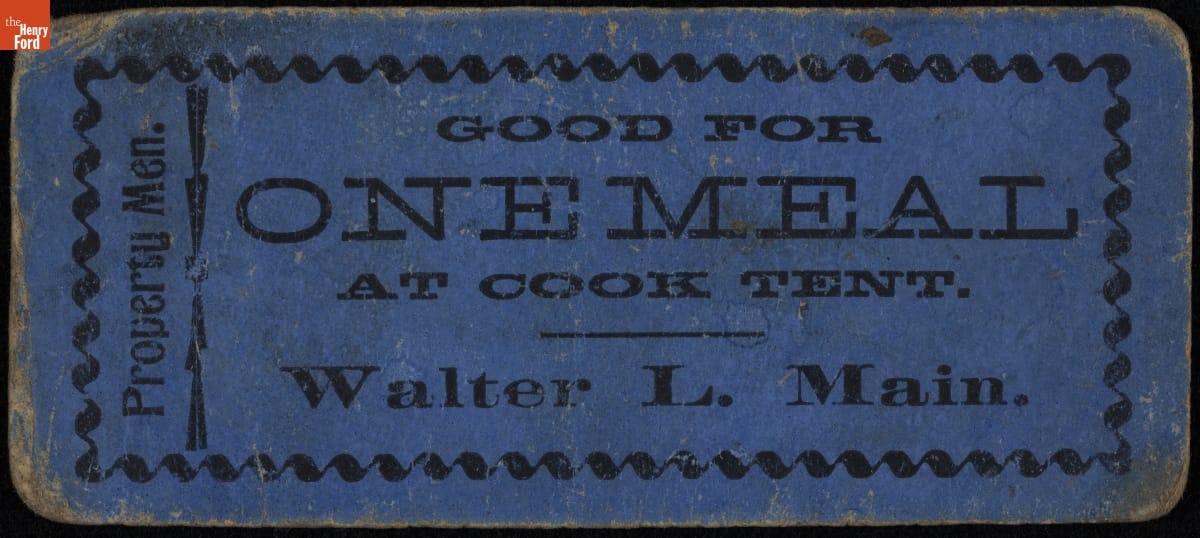
- Meal Ticket for Walter L. Main Circus Property Men, circa 1895 - Owners of circuses and traveling shows in late 19th and early 20th centuries provided meals for all their employees. Tickets were issued to workers in different departments and were redeemable at the tent where the meals were cooked and served. This ticket was issued to a member of the "Property Men" department. This crew stored, maintained, and setup the props used during performances.
- circa 1895
- Collections - Artifact
Meal Ticket for Walter L. Main Circus Property Men, circa 1895
Owners of circuses and traveling shows in late 19th and early 20th centuries provided meals for all their employees. Tickets were issued to workers in different departments and were redeemable at the tent where the meals were cooked and served. This ticket was issued to a member of the "Property Men" department. This crew stored, maintained, and setup the props used during performances.
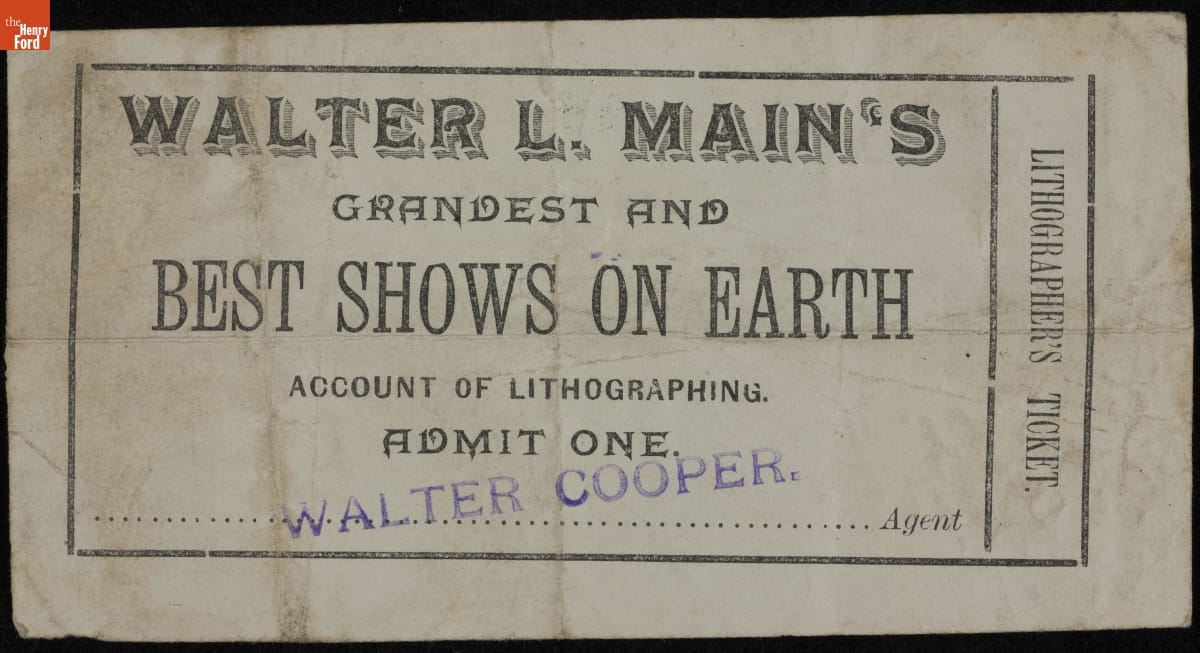
- "Lithographer's Ticket" for Admission to the Walter L. Main Circus, circa 1898 - In the late 19th and early 20th centuries, circus advance men, called "lithographers," promoted the show by posting advertisements in merchants' stores or pasting colorful posters on fences, buildings, and barns. In exchange, local businessmen, merchants and farmers would receive free passes to the circus. Lithographers for the Walter L. Main's Shows issued this ticket to those who helped publicize the soon-to-arrive attraction.
- circa 1898
- Collections - Artifact
"Lithographer's Ticket" for Admission to the Walter L. Main Circus, circa 1898
In the late 19th and early 20th centuries, circus advance men, called "lithographers," promoted the show by posting advertisements in merchants' stores or pasting colorful posters on fences, buildings, and barns. In exchange, local businessmen, merchants and farmers would receive free passes to the circus. Lithographers for the Walter L. Main's Shows issued this ticket to those who helped publicize the soon-to-arrive attraction.
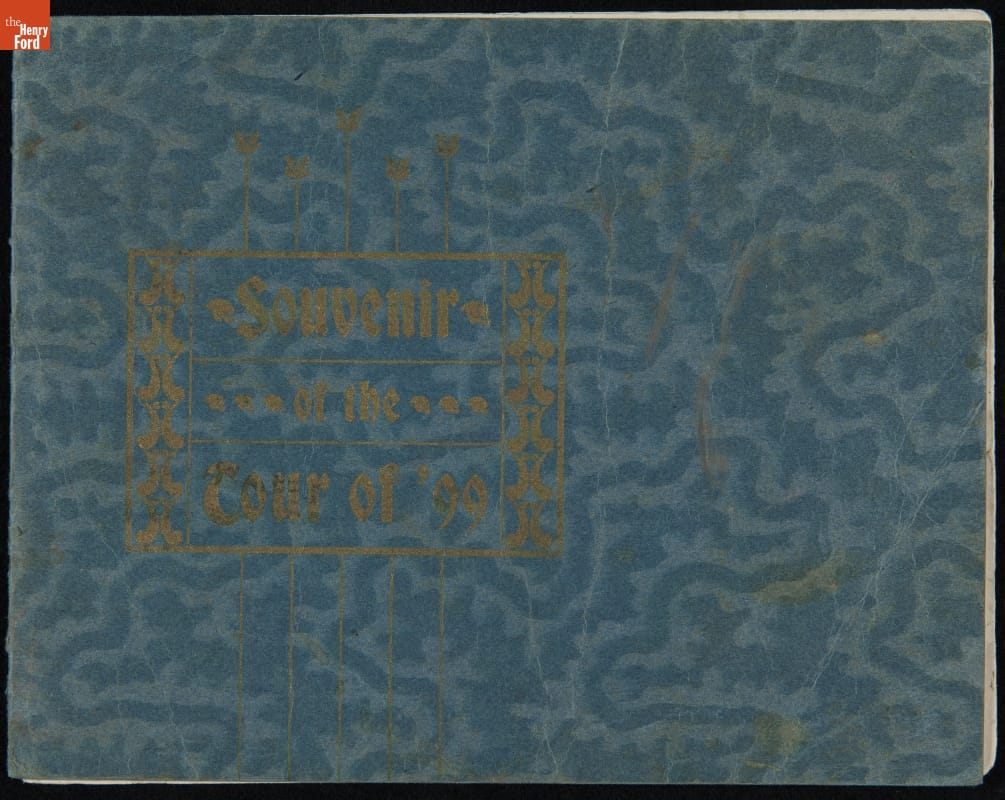
- Route Book for Employees of the Walter L. Main Circus, Season 1899 - Circuses and other traveling shows often published year-end, souvenir route books. These publications documented the shows' travels--recording performance locations, dates, and miles traveled, as well as listing key staff. The Walter L. Main circus published this route book of their 1899 tour. The tour started from the show's winter quarters in Geneva, Ohio, and played its last date in New Mexico.
- 1899
- Collections - Artifact
Route Book for Employees of the Walter L. Main Circus, Season 1899
Circuses and other traveling shows often published year-end, souvenir route books. These publications documented the shows' travels--recording performance locations, dates, and miles traveled, as well as listing key staff. The Walter L. Main circus published this route book of their 1899 tour. The tour started from the show's winter quarters in Geneva, Ohio, and played its last date in New Mexico.
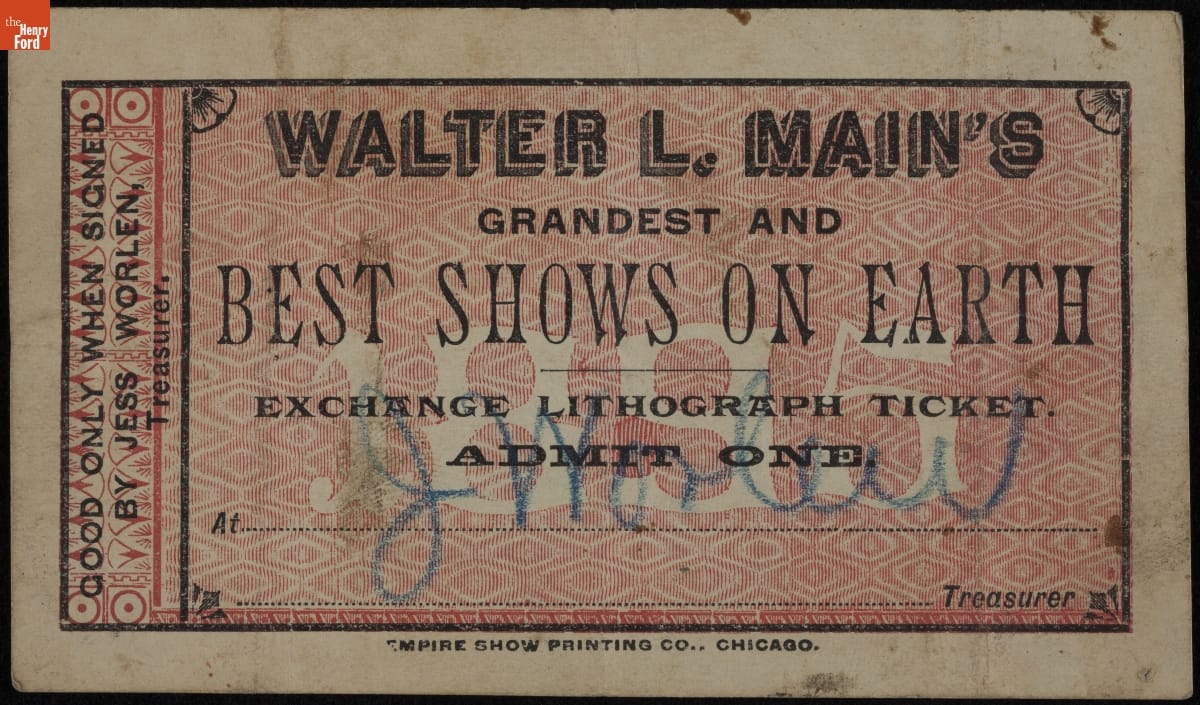
- "Exchange Lithograph Ticket" for Admission to the Walter L. Main Circus, circa 1898 - In the late 19th and early 20th centuries, circus advance men, called "lithographers," promoted the show by posting advertisements in merchants' stores or pasting colorful posters on fences, buildings, and barns. In exchange, local businessmen, merchants and farmers would receive free passes to the circus. Lithographers for the Walter L. Main's Shows issued this ticket to those who helped publicize the soon-to-arrive attraction.
- circa 1898
- Collections - Artifact
"Exchange Lithograph Ticket" for Admission to the Walter L. Main Circus, circa 1898
In the late 19th and early 20th centuries, circus advance men, called "lithographers," promoted the show by posting advertisements in merchants' stores or pasting colorful posters on fences, buildings, and barns. In exchange, local businessmen, merchants and farmers would receive free passes to the circus. Lithographers for the Walter L. Main's Shows issued this ticket to those who helped publicize the soon-to-arrive attraction.
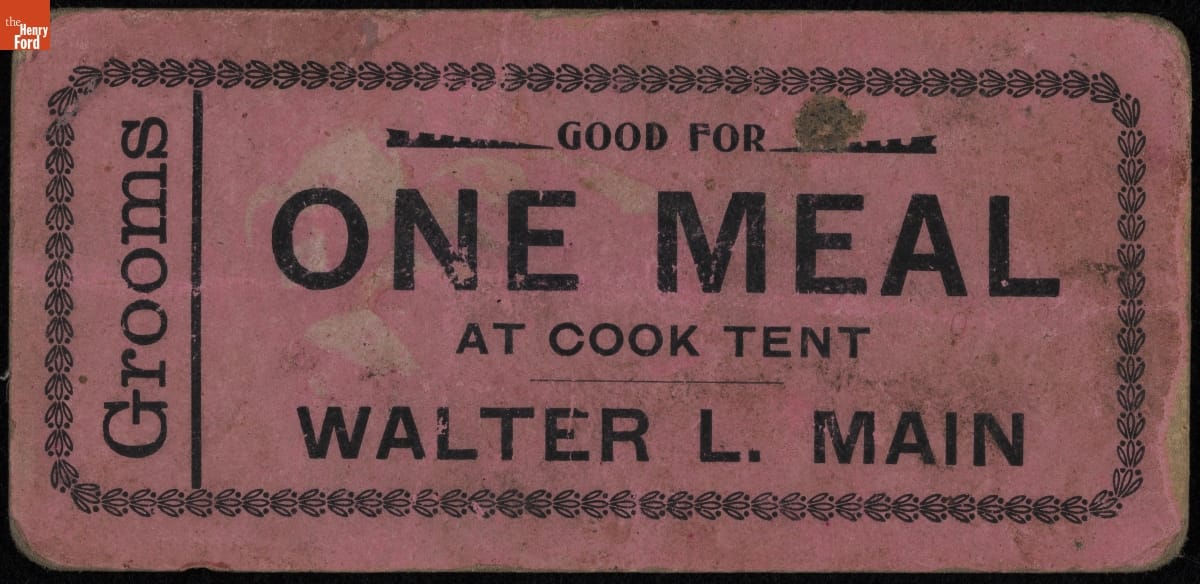
- Meal Ticket for Walter L. Main Circus Grooms, circa 1895 - Owners of circuses and traveling shows in late 19th and early 20th centuries provided meals for all their employees. Tickets were issued to workers in different departments and were redeemable at the tent where the meals were cooked and served. This ticket was issued to a member of the "Grooms" department. This crew cared for and tended the animals used in the shows.
- circa 1895
- Collections - Artifact
Meal Ticket for Walter L. Main Circus Grooms, circa 1895
Owners of circuses and traveling shows in late 19th and early 20th centuries provided meals for all their employees. Tickets were issued to workers in different departments and were redeemable at the tent where the meals were cooked and served. This ticket was issued to a member of the "Grooms" department. This crew cared for and tended the animals used in the shows.
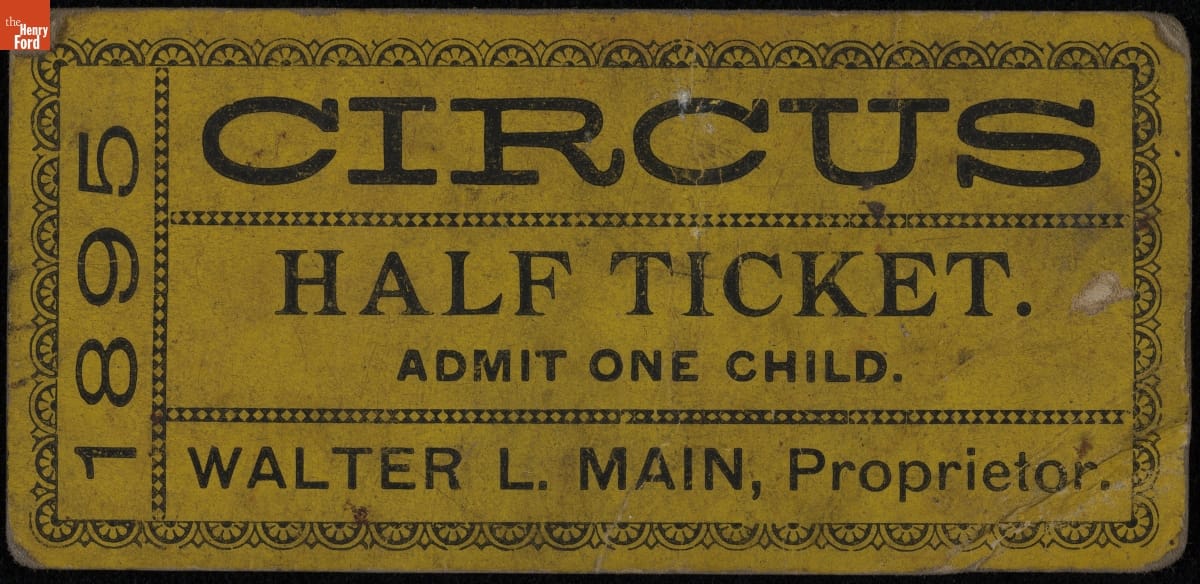
- Child's Admission Ticket to the Walter L. Main Circus, 1895 - Traveling circuses in the late 19th and early 20th centuries brought excitement to cities and towns where they stopped. Advance men promoted the coming attraction. The commotion of the show's arrival, setup and parade piqued the interest of local residents. For a modest price families could purchase tickets to this spectacle. The Walter L. Main Circus, like other shows, offered half-price children's tickets.
- 1895
- Collections - Artifact
Child's Admission Ticket to the Walter L. Main Circus, 1895
Traveling circuses in the late 19th and early 20th centuries brought excitement to cities and towns where they stopped. Advance men promoted the coming attraction. The commotion of the show's arrival, setup and parade piqued the interest of local residents. For a modest price families could purchase tickets to this spectacle. The Walter L. Main Circus, like other shows, offered half-price children's tickets.
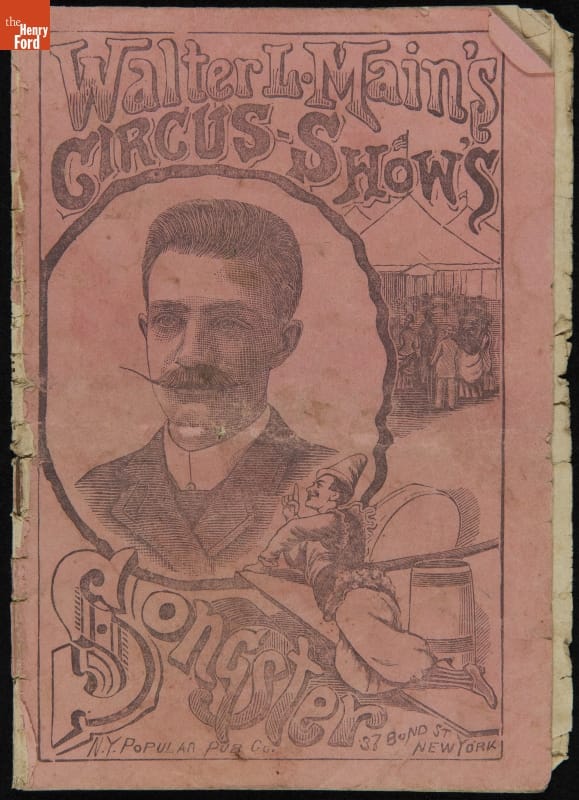
- "Walter L. Main's Circus-Shows Songster," circa 1900 - Many late 19th and early 20th century circuses scheduled additional entertainment after the main show ended. This after-show concert usually had singing, dancing, musical acts or a Wild West exhibition. The concert provided extra revenue for the show's management. Concertgoers had to buy an additional ticket and for a nominal price they could buy a "Songster" filled with texts and lyrics from the performance.
- circa 1900
- Collections - Artifact
"Walter L. Main's Circus-Shows Songster," circa 1900
Many late 19th and early 20th century circuses scheduled additional entertainment after the main show ended. This after-show concert usually had singing, dancing, musical acts or a Wild West exhibition. The concert provided extra revenue for the show's management. Concertgoers had to buy an additional ticket and for a nominal price they could buy a "Songster" filled with texts and lyrics from the performance.
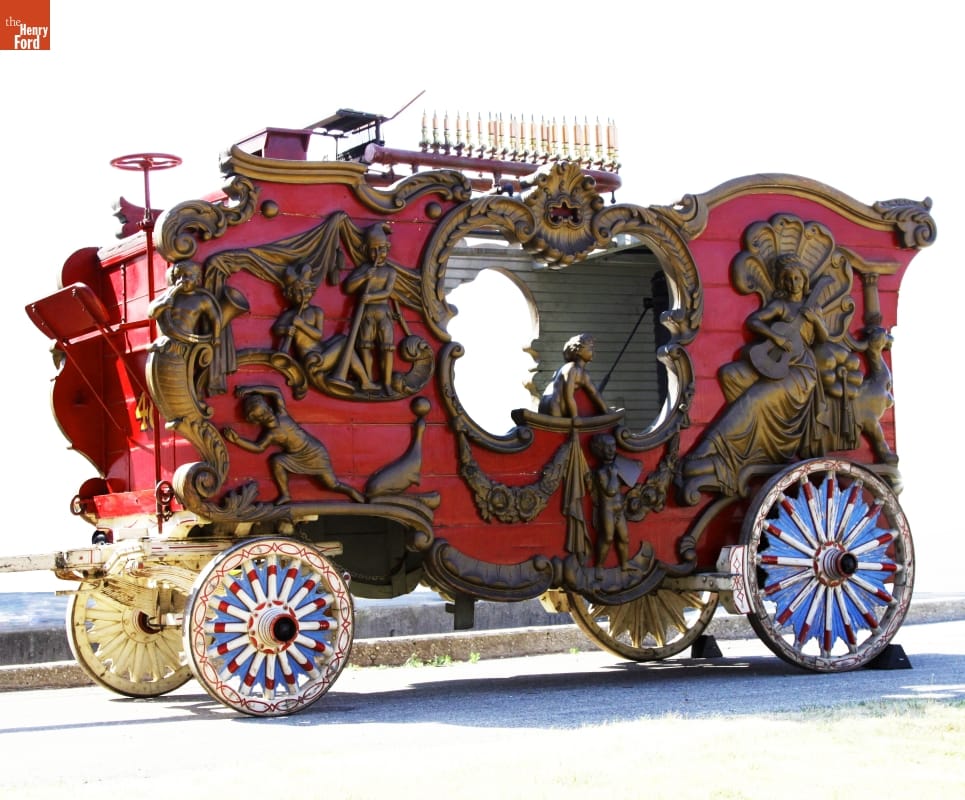
- Calliope Circus Wagon, 1917 - During the late 19th and early 20th centuries, traveling circuses entertained millions of Americans. When a circus arrived in town, it staged a spectacular promotional parade down main street, and the musical steam calliope was a highlight. This calliope was built for the John Robinson Circus of Peru, Indiana, about 1917. Other circuses used it before the calliope's retirement in 1929.
- 1917
- Collections - Artifact
Calliope Circus Wagon, 1917
During the late 19th and early 20th centuries, traveling circuses entertained millions of Americans. When a circus arrived in town, it staged a spectacular promotional parade down main street, and the musical steam calliope was a highlight. This calliope was built for the John Robinson Circus of Peru, Indiana, about 1917. Other circuses used it before the calliope's retirement in 1929.
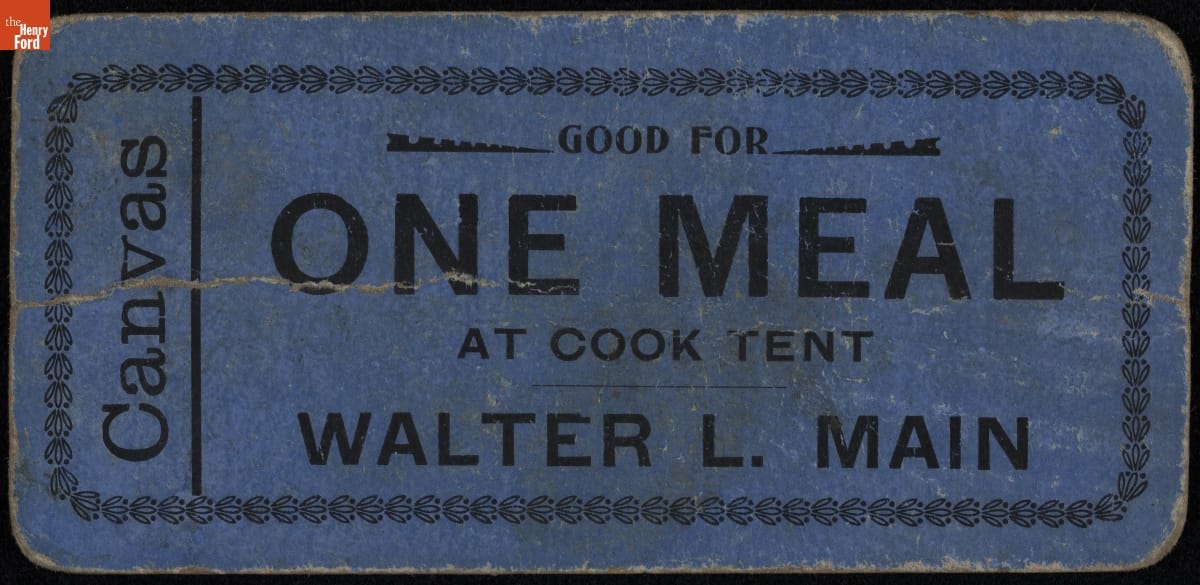
- Meal Ticket for Walter L. Main Circus Canvas Workers, circa 1895 - Owners of circuses and traveling shows in late 19th and early 20th centuries provided meals for all their employees. Tickets were issued to workers in the different departments and were redeemable when meals were served. This ticket was issued to a member of the "Canvas" department. This crew set up all the tents, from the "Big Top" to the "cook tent" where workers ate.
- circa 1895
- Collections - Artifact
Meal Ticket for Walter L. Main Circus Canvas Workers, circa 1895
Owners of circuses and traveling shows in late 19th and early 20th centuries provided meals for all their employees. Tickets were issued to workers in the different departments and were redeemable when meals were served. This ticket was issued to a member of the "Canvas" department. This crew set up all the tents, from the "Big Top" to the "cook tent" where workers ate.