
Calliope Circus Wagon, 1917
THF152350 / Calliope Circus Wagon, 1917
01
Artifact Overview
During the late 19th and early 20th centuries, traveling circuses entertained millions of Americans. When a circus arrived in town, it staged a spectacular promotional parade down main street, and the musical steam calliope was a highlight. This calliope was built for the John Robinson Circus of Peru, Indiana, about 1917. Other circuses used it before the calliope's retirement in 1929.
Artifact Details
Artifact
Calliope
Date Made
1917
Creators
Place of Creation
Location
Not on exhibit to the public.
Object ID
30.1623.1
Credit
From the Collections of The Henry Ford. Gift of Andrew Donaldson.
Material
Wood (Plant material)
Paint (Coating)
Leather
Color
Red
Black (Color)
Blue
Brown
Gold (Color)
White (Color)
Dimensions
Height: 12.5 in
Width: 8.208 in
Length: 18 in
Wheelbase: 12.167 in
Diameter: 36 in (Wheel Diameter)
Diameter: 53 in (Wheel Diameter)
Inscriptions
Inscribed on front: 48
Keywords |
|---|
02
Related Content
 Set
SetOnline Horse-Drawn Vehicles Collection
- 29 Artifacts
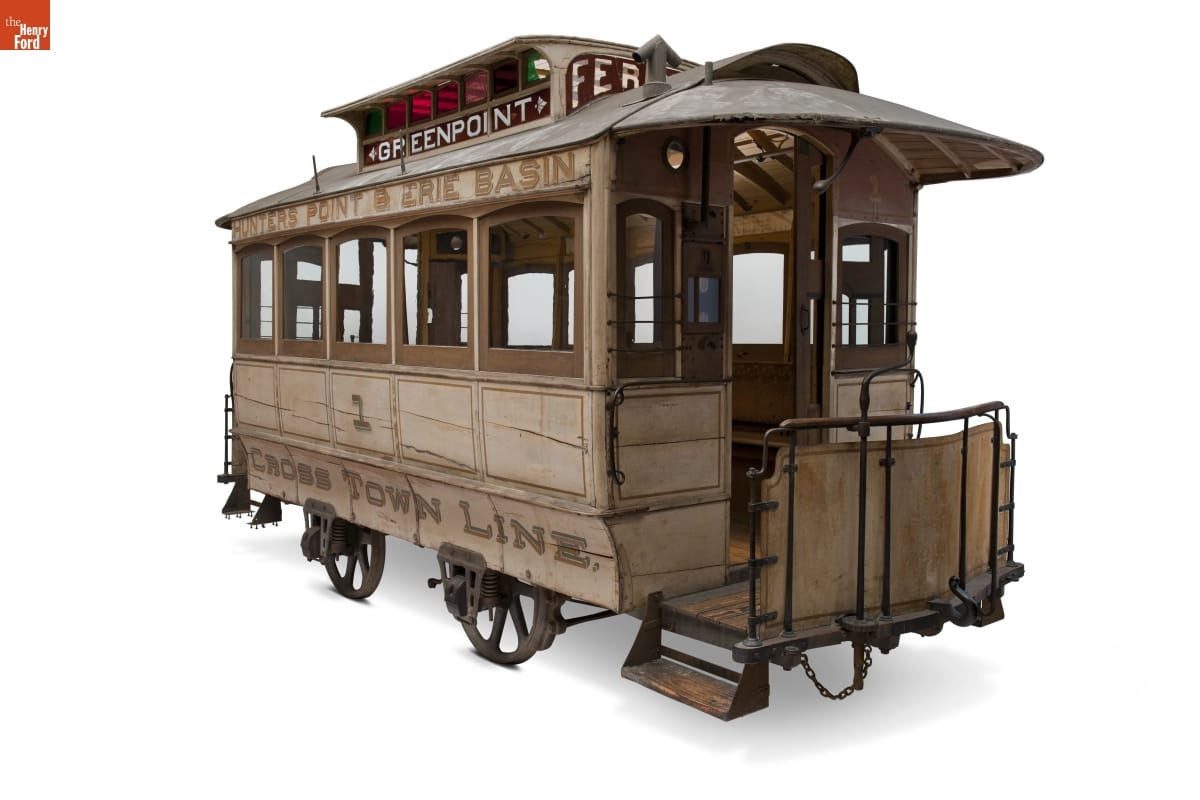
The horse-drawn streetcar was an important means of public transportation in 19th-century American cities. New York's Brooklyn City Railroad ran this car on its line between Hunters Point in Long Island City, and Erie Basin in South Brooklyn. But horses were expensive to stable and feed -- and messy too. Operators embraced electric streetcars starting in the late 1880s.