
Search
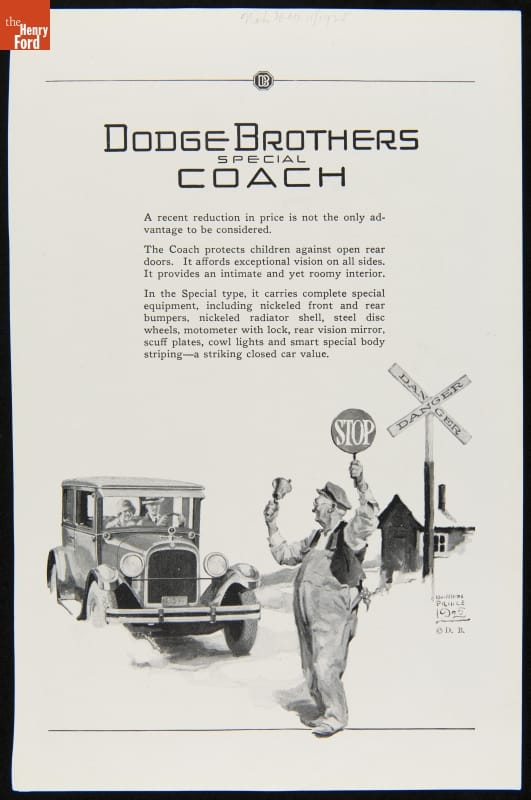
- 1926 Dodge Brothers Advertisement, "Dodge Brothers Special Coach" - Dodge Brothers introduced its all-steel auto bodies -- the industry's first -- for 1923. This 1926 advertisement promotes the company's two-door Special Coach. Dodge Brothers' upmarket Special line included nickeled bumpers and radiators, steel disc wheels, and a motometer radiator cap, among other features. The Special Coach started at $1,135.
- November 01, 1925
- Collections - Artifact
1926 Dodge Brothers Advertisement, "Dodge Brothers Special Coach"
Dodge Brothers introduced its all-steel auto bodies -- the industry's first -- for 1923. This 1926 advertisement promotes the company's two-door Special Coach. Dodge Brothers' upmarket Special line included nickeled bumpers and radiators, steel disc wheels, and a motometer radiator cap, among other features. The Special Coach started at $1,135.
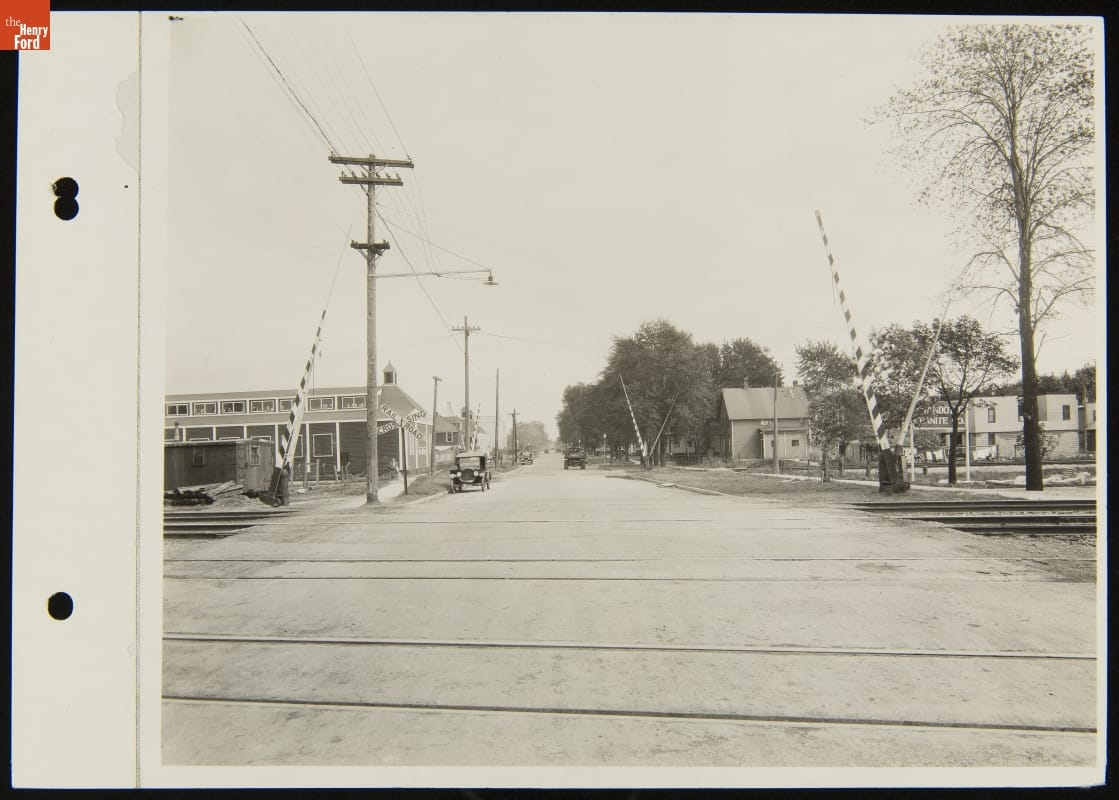
- Railroad Crossing, Wyandotte, Michigan, Detroit, Toledo & Ironton Railroad, October 1925 - Apart from eliminating it altogether, the safest way to protect a railroad crossing is with movable gates. The earliest gates, introduced around 1870, were hand-operated by an employee stationed at the crossing. Automated gates first appeared in the 1930s. Four-quadrant gates completely block off the road, while more common two-quadrant gates block each lane only in the direction of travel.
- October 01, 1925
- Collections - Artifact
Railroad Crossing, Wyandotte, Michigan, Detroit, Toledo & Ironton Railroad, October 1925
Apart from eliminating it altogether, the safest way to protect a railroad crossing is with movable gates. The earliest gates, introduced around 1870, were hand-operated by an employee stationed at the crossing. Automated gates first appeared in the 1930s. Four-quadrant gates completely block off the road, while more common two-quadrant gates block each lane only in the direction of travel.
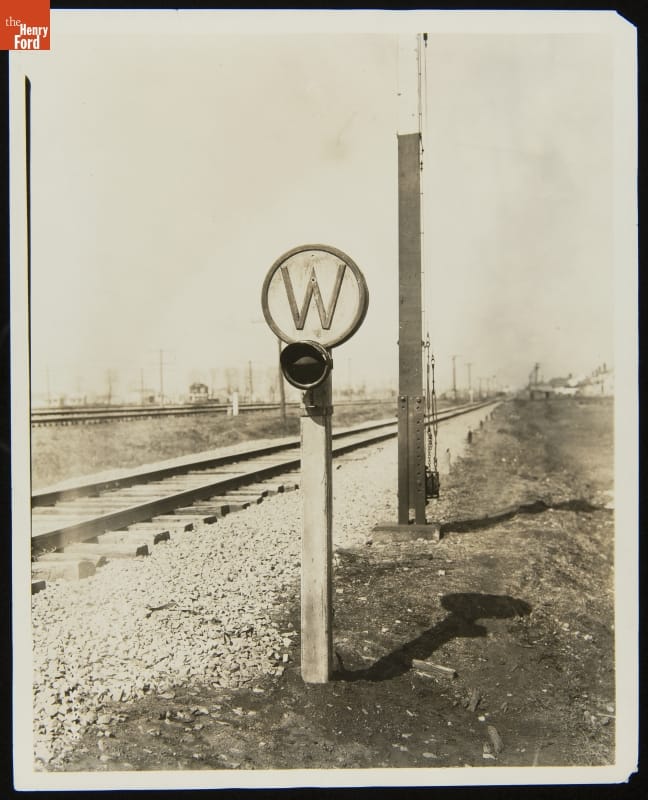
- Railroad Crossing Flash Signal, Detroit, Toledo & Ironton Railroad, March 1925 - In the United States, locomotive engineers must sound a specific sequence of horn or whistle blasts when approaching most road crossings: two long blasts, one short, and one more long. Railroads frequently placed a whistle post, like this one, along the track about one-quarter mile before a crossing to notify the engineer when to use the horn.
- March 20, 1925
- Collections - Artifact
Railroad Crossing Flash Signal, Detroit, Toledo & Ironton Railroad, March 1925
In the United States, locomotive engineers must sound a specific sequence of horn or whistle blasts when approaching most road crossings: two long blasts, one short, and one more long. Railroads frequently placed a whistle post, like this one, along the track about one-quarter mile before a crossing to notify the engineer when to use the horn.
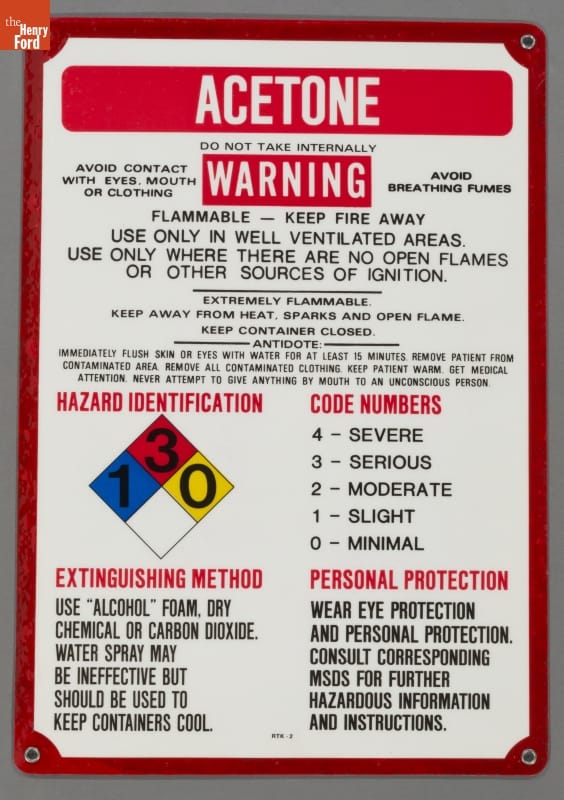
- Acetone Warning Sign, 1992 - A safe workplace benefits both employees and employers. Warning signs alert workers of possible dangers that may cause harm -- and help prevent accidents and loss of valuable worktime. Informational signs, like this one from the 1990s, remind readers about potentially hazardous materials used in their area and how to stay safe when working with them.
- 1992
- Collections - Artifact
Acetone Warning Sign, 1992
A safe workplace benefits both employees and employers. Warning signs alert workers of possible dangers that may cause harm -- and help prevent accidents and loss of valuable worktime. Informational signs, like this one from the 1990s, remind readers about potentially hazardous materials used in their area and how to stay safe when working with them.
- Railroad Crossing, Detroit, Toledo & Ironton Railroad, December 1925 - Busy railroad crossings were protected by a signal person or, later, automated warning devices. Quieter crossings -- those on little-used branch lines or spurs, or over lightly traveled rural roads -- might only be marked with a sign. Designs varied by railroad company, but most used an X-shaped sign with a message like "Stop, Look and Listen" or "Look Out for the Cars."
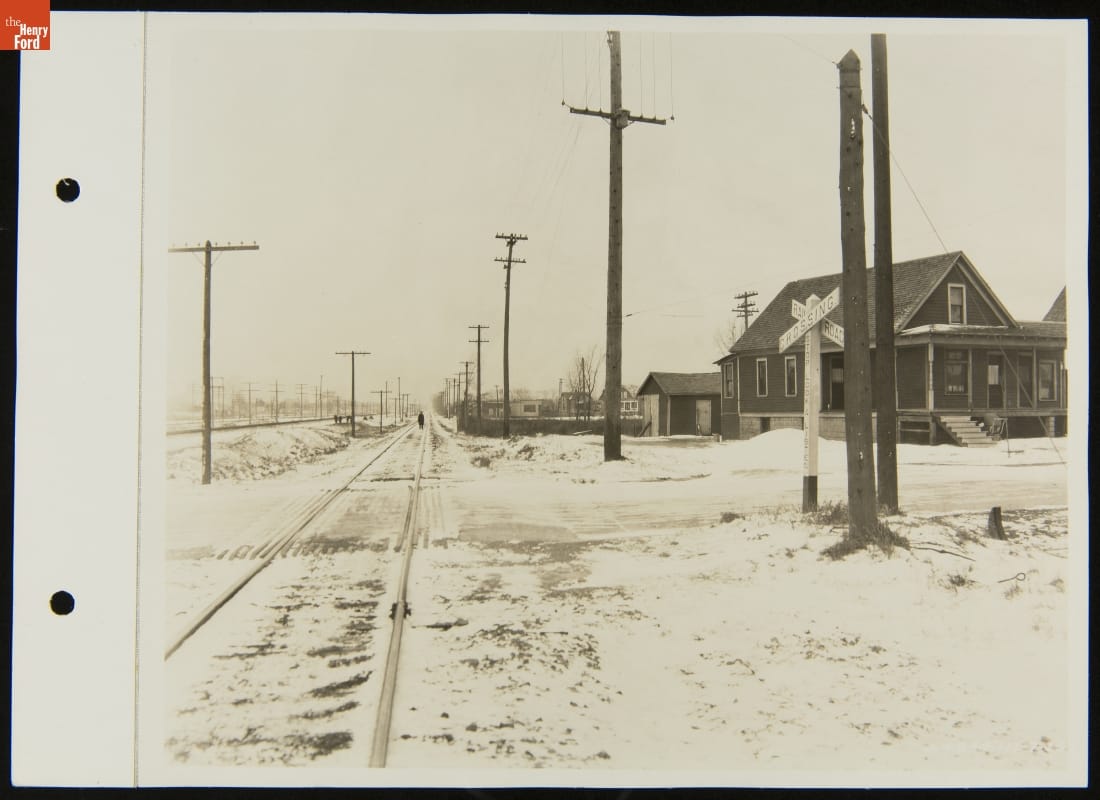
- December 01, 1925
- Collections - Artifact
Railroad Crossing, Detroit, Toledo & Ironton Railroad, December 1925
Busy railroad crossings were protected by a signal person or, later, automated warning devices. Quieter crossings -- those on little-used branch lines or spurs, or over lightly traveled rural roads -- might only be marked with a sign. Designs varied by railroad company, but most used an X-shaped sign with a message like "Stop, Look and Listen" or "Look Out for the Cars."
- Detroit, Toledo & Ironton Railroad Crossing, Wauseon, Ohio, June 1926 - On the railroad, "grade crossing" refers not only to a railroad-roadway crossing, but also to the intersection of two different railroad lines. Both crossing types are seen in this photo. The road crossing is protected by signs with flashing warning lights. The crossing of the two railroads, farther in the distance, is protected by semaphore signals mounted atop tall poles.
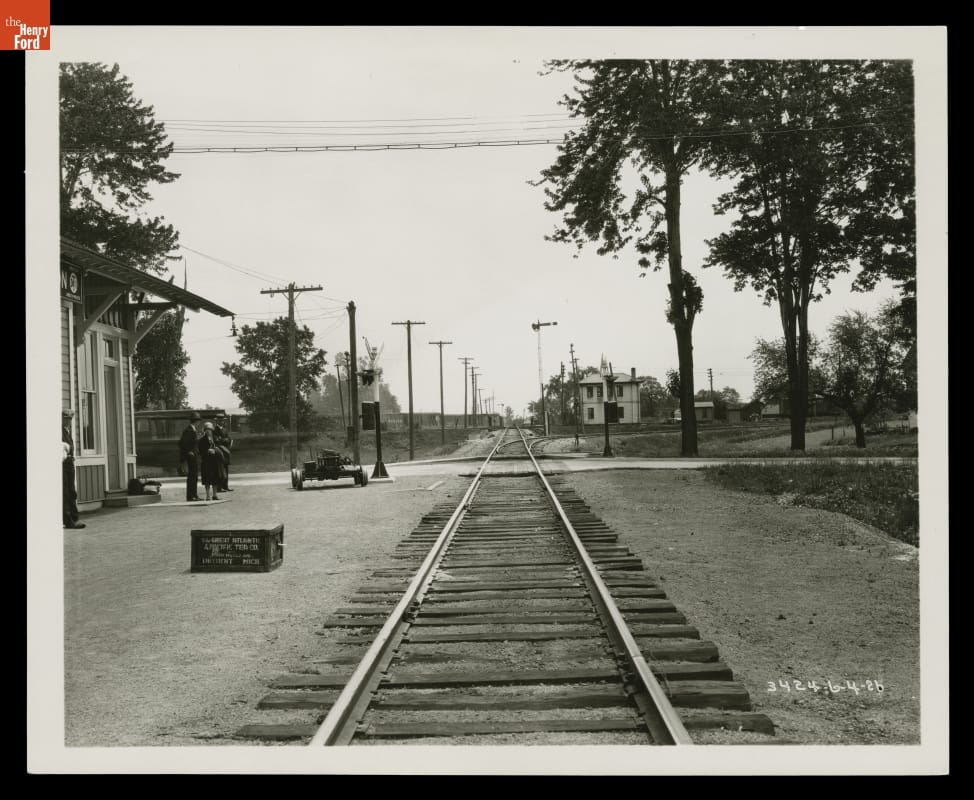
- June 04, 1926
- Collections - Artifact
Detroit, Toledo & Ironton Railroad Crossing, Wauseon, Ohio, June 1926
On the railroad, "grade crossing" refers not only to a railroad-roadway crossing, but also to the intersection of two different railroad lines. Both crossing types are seen in this photo. The road crossing is protected by signs with flashing warning lights. The crossing of the two railroads, farther in the distance, is protected by semaphore signals mounted atop tall poles.
- Railroad Crossing Signal, September 1924 - The first automated, flashing red light railroad crossing signal appeared around 1913. The flashing lights mimicked the motion of a lantern being swung back and forth -- long a signal for "stop" on American railroads. The X-shaped crossbuck sign, in wide use by 1900, was inspired by the skull and crossbones -- a universal symbol for danger.
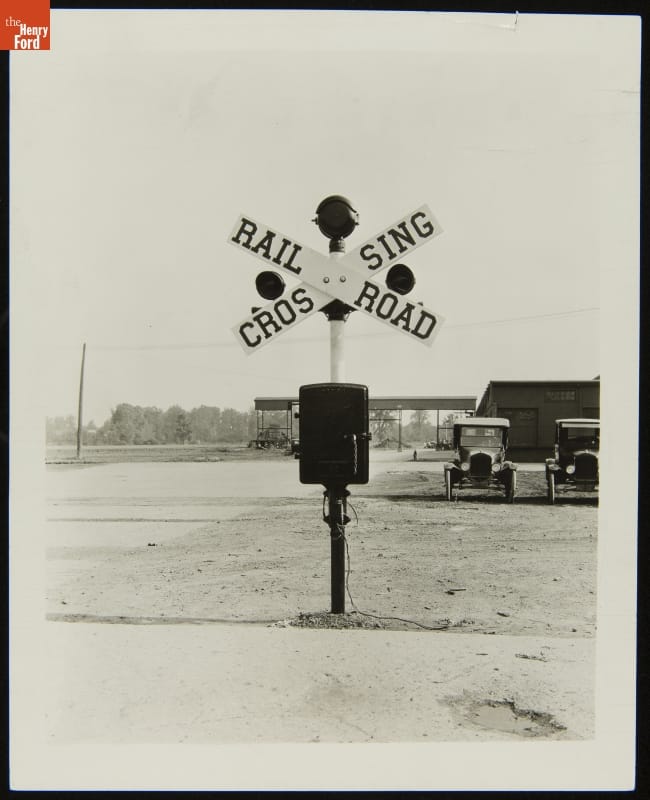
- September 06, 1924
- Collections - Artifact
Railroad Crossing Signal, September 1924
The first automated, flashing red light railroad crossing signal appeared around 1913. The flashing lights mimicked the motion of a lantern being swung back and forth -- long a signal for "stop" on American railroads. The X-shaped crossbuck sign, in wide use by 1900, was inspired by the skull and crossbones -- a universal symbol for danger.
- Railroad Crossing Signal Lights, Detroit, Toledo & Ironton Railroad, November 1926 - The first automated, flashing red light railroad crossing signal appeared around 1913. The flashing lights mimicked the motion of a lantern being swung back and forth -- long a signal for "stop" on American railroads. The X-shaped crossbuck sign, in wide use by 1900, was inspired by the skull and crossbones -- a universal symbol for danger.
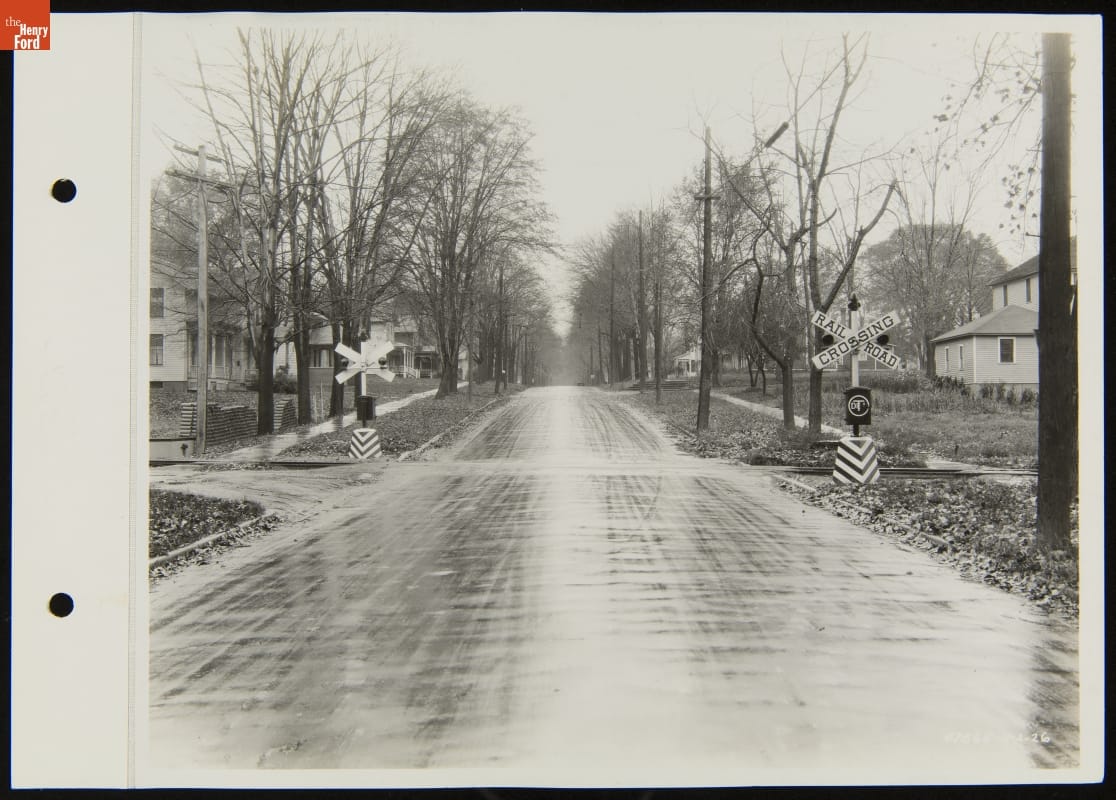
- November 02, 1926
- Collections - Artifact
Railroad Crossing Signal Lights, Detroit, Toledo & Ironton Railroad, November 1926
The first automated, flashing red light railroad crossing signal appeared around 1913. The flashing lights mimicked the motion of a lantern being swung back and forth -- long a signal for "stop" on American railroads. The X-shaped crossbuck sign, in wide use by 1900, was inspired by the skull and crossbones -- a universal symbol for danger.
- Railroad Crossing, Detroit, Toledo & Ironton Railroad, Oak Street, Wyandotte, Michigan, June 1926 - Apart from eliminating it altogether, the safest way to protect a railroad crossing is with movable gates. The earliest gates, introduced around 1870, were hand-operated by an employee stationed at the crossing. Automated gates first appeared in the 1930s. Four-quadrant gates completely block off the road, while more common two-quadrant gates block each lane only in the direction of travel.

- June 16, 1926
- Collections - Artifact
Railroad Crossing, Detroit, Toledo & Ironton Railroad, Oak Street, Wyandotte, Michigan, June 1926
Apart from eliminating it altogether, the safest way to protect a railroad crossing is with movable gates. The earliest gates, introduced around 1870, were hand-operated by an employee stationed at the crossing. Automated gates first appeared in the 1930s. Four-quadrant gates completely block off the road, while more common two-quadrant gates block each lane only in the direction of travel.
- Railroad Crossing Signal Lights, Detroit, Toledo & Ironton Railroad, November 1926 - Blind curves -- whether on the railroad, the road, or both -- added another element of danger to a railroad crossing. Crossings like this were some of the first to be protected with automated warning devices. The lights and bells on these signs were activated whenever an approaching train tripped an electrical relay wired to the track.
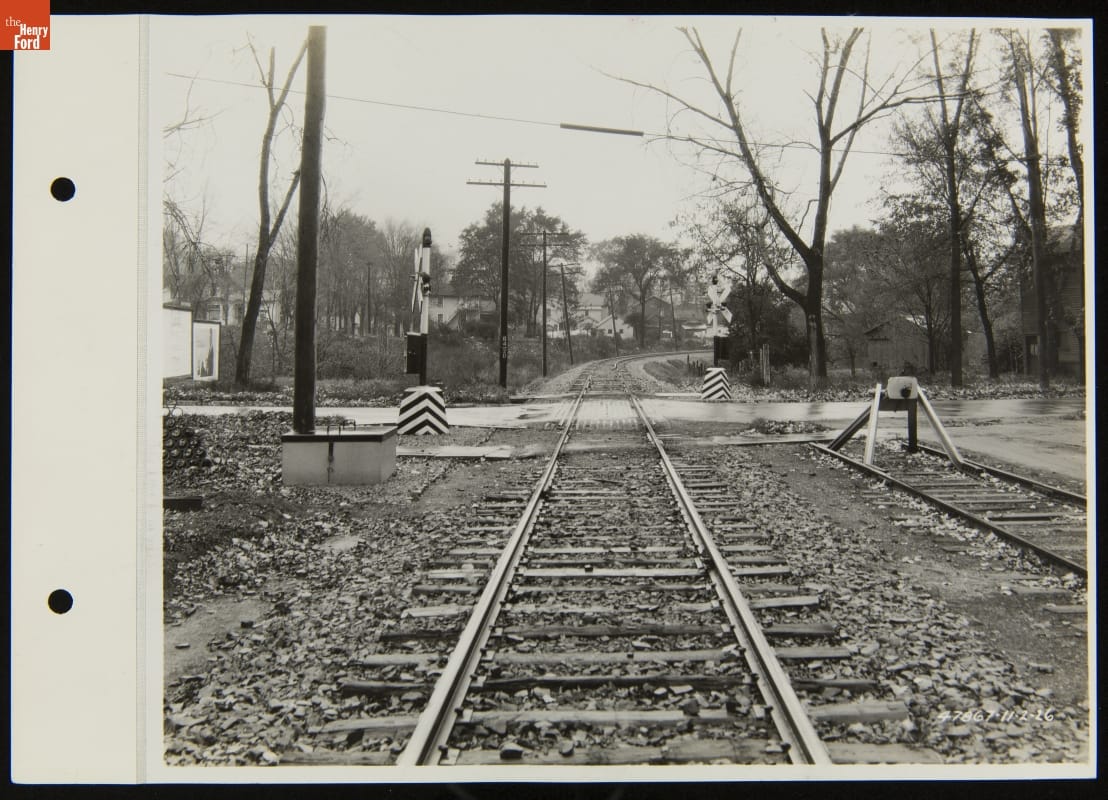
- November 02, 1926
- Collections - Artifact
Railroad Crossing Signal Lights, Detroit, Toledo & Ironton Railroad, November 1926
Blind curves -- whether on the railroad, the road, or both -- added another element of danger to a railroad crossing. Crossings like this were some of the first to be protected with automated warning devices. The lights and bells on these signs were activated whenever an approaching train tripped an electrical relay wired to the track.