
Search
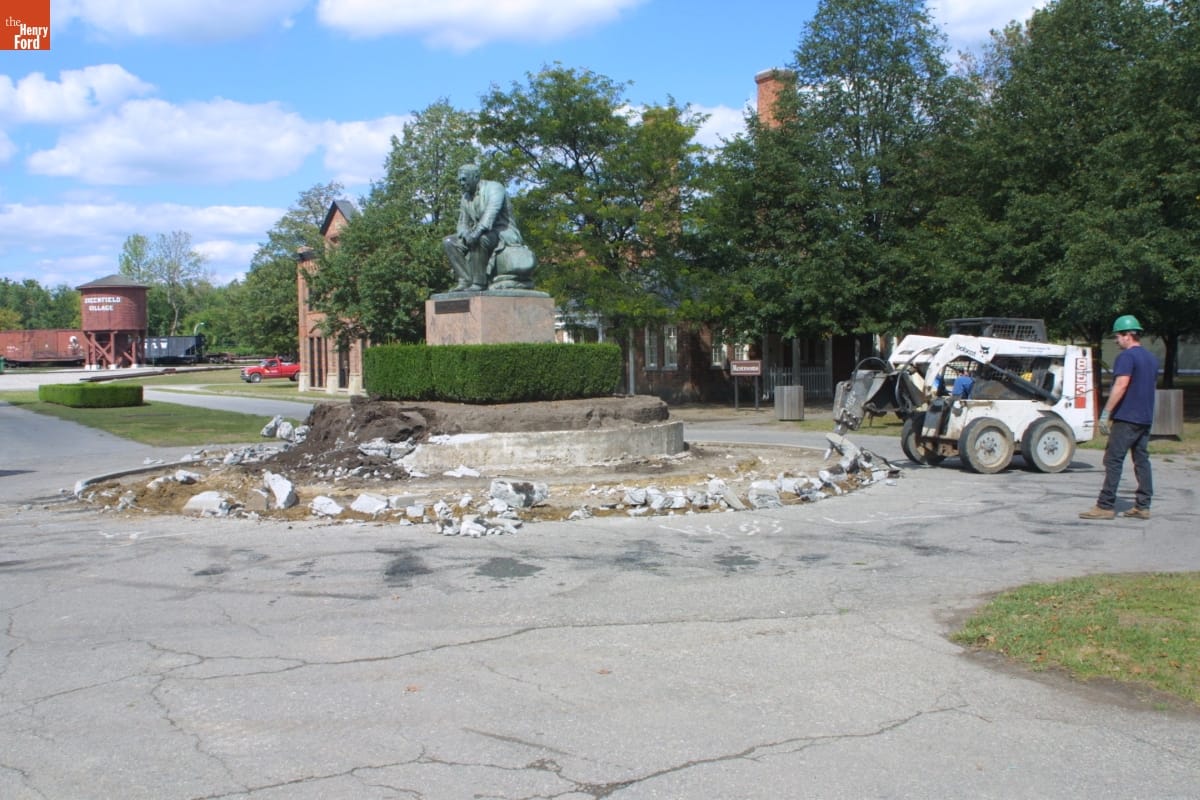
- Thomas Edison Statue before Relocation during the Greenfield Village Restoration Project, September 2002 - By 2000, Greenfield Village began showing its age. Buildings and crumbling infrastructure desperately needed repair. Museum planners envisioned a revitalized village. They created themed "Historic Districts" by relocating and refurbishing the historic structures. Workers repaved streets and upgraded water, sewer, electric, and gas lines. In June 2003, nine months after restoration began, visitors passed through a new entrance into a reborn Greenfield Village.
- September 01, 2002
- Collections - Artifact
Thomas Edison Statue before Relocation during the Greenfield Village Restoration Project, September 2002
By 2000, Greenfield Village began showing its age. Buildings and crumbling infrastructure desperately needed repair. Museum planners envisioned a revitalized village. They created themed "Historic Districts" by relocating and refurbishing the historic structures. Workers repaved streets and upgraded water, sewer, electric, and gas lines. In June 2003, nine months after restoration began, visitors passed through a new entrance into a reborn Greenfield Village.
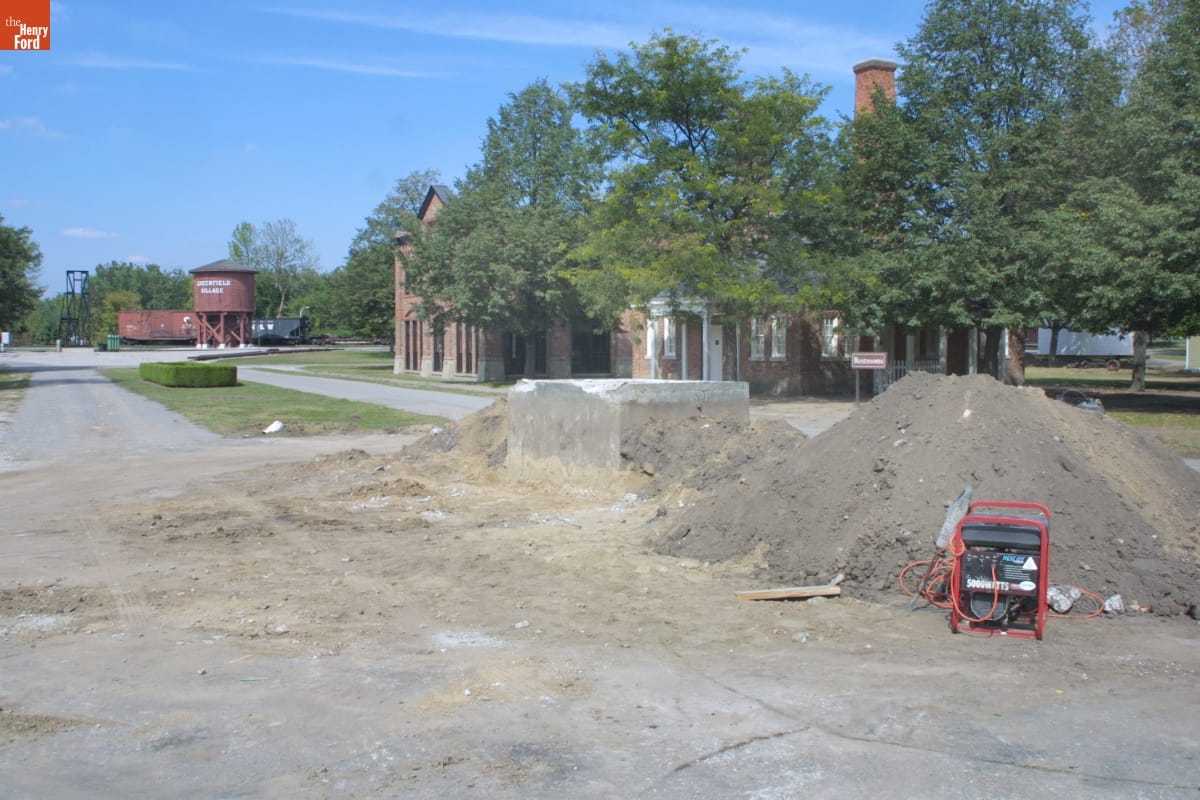
- Thomas Edison Statue Former Site after Relocation during the Greenfield Village Restoration Project, September 2002 - By 2000, Greenfield Village began showing its age. Buildings and crumbling infrastructure desperately needed repair. Museum planners envisioned a revitalized village. They created themed "Historic Districts" by relocating and refurbishing the historic structures. Workers repaved streets and upgraded water, sewer, electric, and gas lines. In June 2003, nine months after restoration began, visitors passed through a new entrance into a reborn Greenfield Village.
- September 01, 2002
- Collections - Artifact
Thomas Edison Statue Former Site after Relocation during the Greenfield Village Restoration Project, September 2002
By 2000, Greenfield Village began showing its age. Buildings and crumbling infrastructure desperately needed repair. Museum planners envisioned a revitalized village. They created themed "Historic Districts" by relocating and refurbishing the historic structures. Workers repaved streets and upgraded water, sewer, electric, and gas lines. In June 2003, nine months after restoration began, visitors passed through a new entrance into a reborn Greenfield Village.
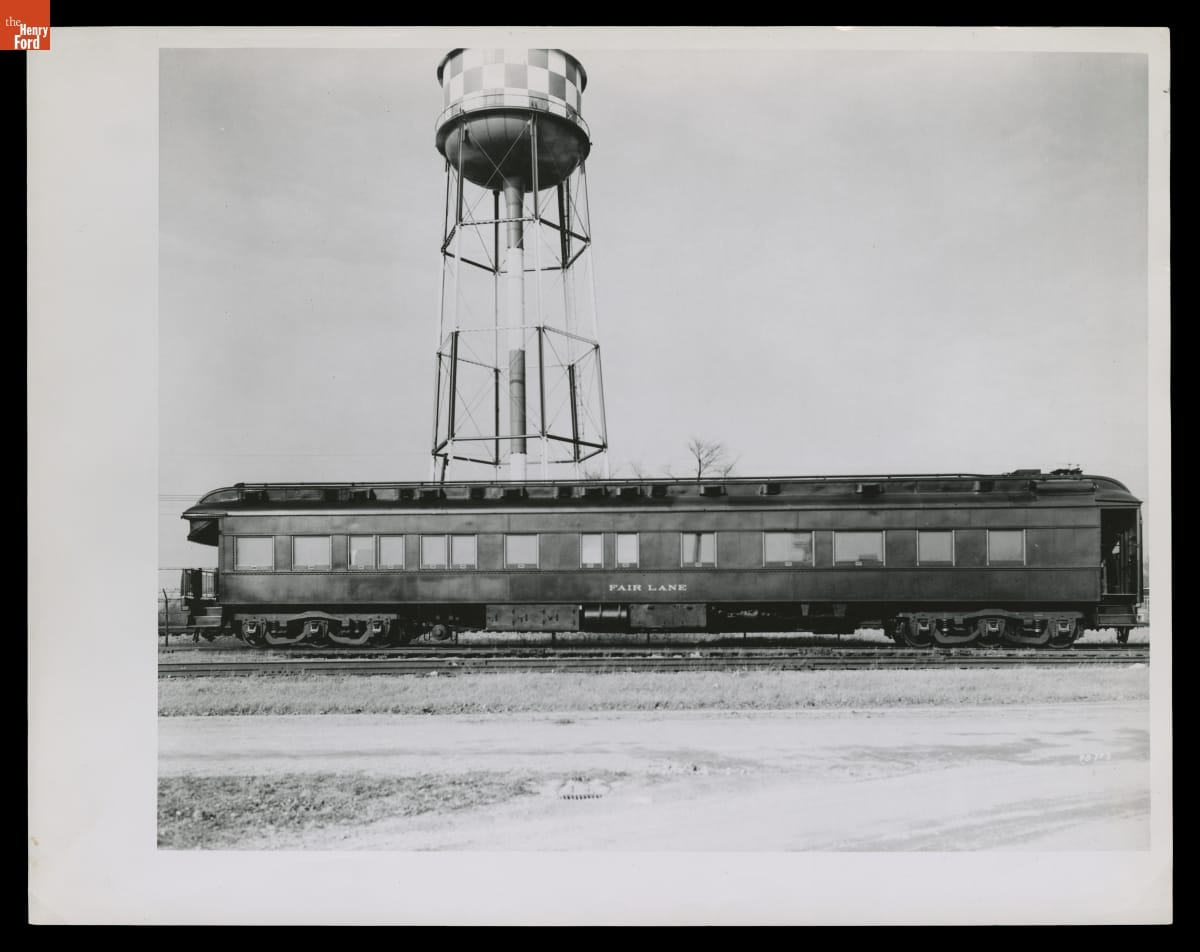
- Henry Ford's Private Railroad Car, "Fair Lane," November 12, 1942 - By 1920, Henry and Clara Ford found it increasingly difficult to travel with any degree of privacy. They purchased a private railcar and named it <EM>Fair Lane</EM>. The car had four private rooms, an observation lounge, a dining room, and a fully equipped kitchen. It could accommodate eight passengers. The couple made over 400 trips using <EM>Fair Lane</EM> before selling the passenger car in 1942.
- November 12, 1942
- Collections - Artifact
Henry Ford's Private Railroad Car, "Fair Lane," November 12, 1942
By 1920, Henry and Clara Ford found it increasingly difficult to travel with any degree of privacy. They purchased a private railcar and named it Fair Lane. The car had four private rooms, an observation lounge, a dining room, and a fully equipped kitchen. It could accommodate eight passengers. The couple made over 400 trips using Fair Lane before selling the passenger car in 1942.
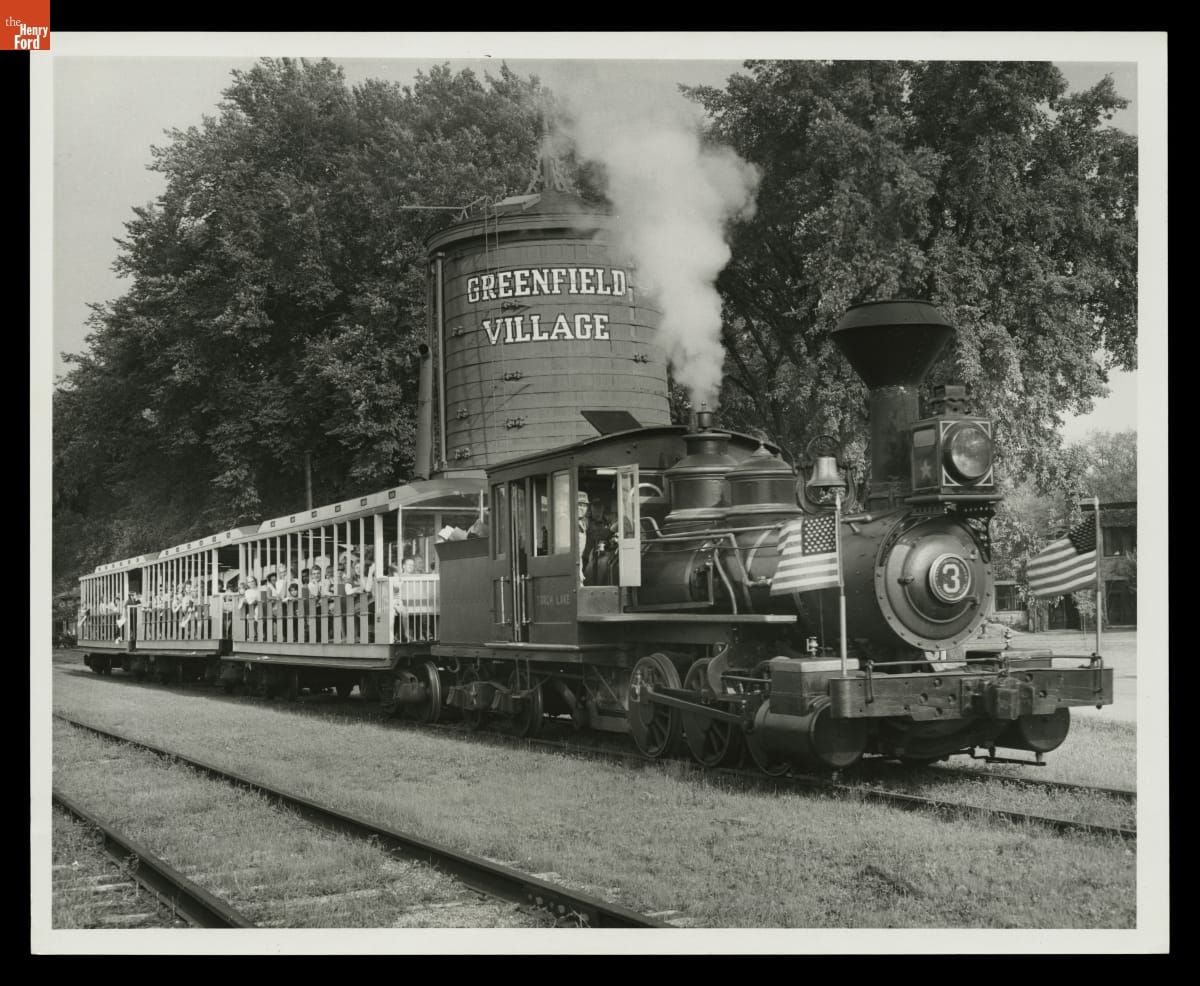
- Torch Lake Steam Locomotive Pulling Passenger Cars in Greenfield Village, August 1972 - The Henry Ford's Weiser Railroad opened to the public in 1972. Its two-mile route took riders on a scenic loop around Greenfield Village. Authentic steam locomotives, maintained and operated by museum staff, pulled the open passenger cars. More than a simple excursion, the railroad's intermediate stations made it a practical transportation link around the village.
- August 24, 1972
- Collections - Artifact
Torch Lake Steam Locomotive Pulling Passenger Cars in Greenfield Village, August 1972
The Henry Ford's Weiser Railroad opened to the public in 1972. Its two-mile route took riders on a scenic loop around Greenfield Village. Authentic steam locomotives, maintained and operated by museum staff, pulled the open passenger cars. More than a simple excursion, the railroad's intermediate stations made it a practical transportation link around the village.
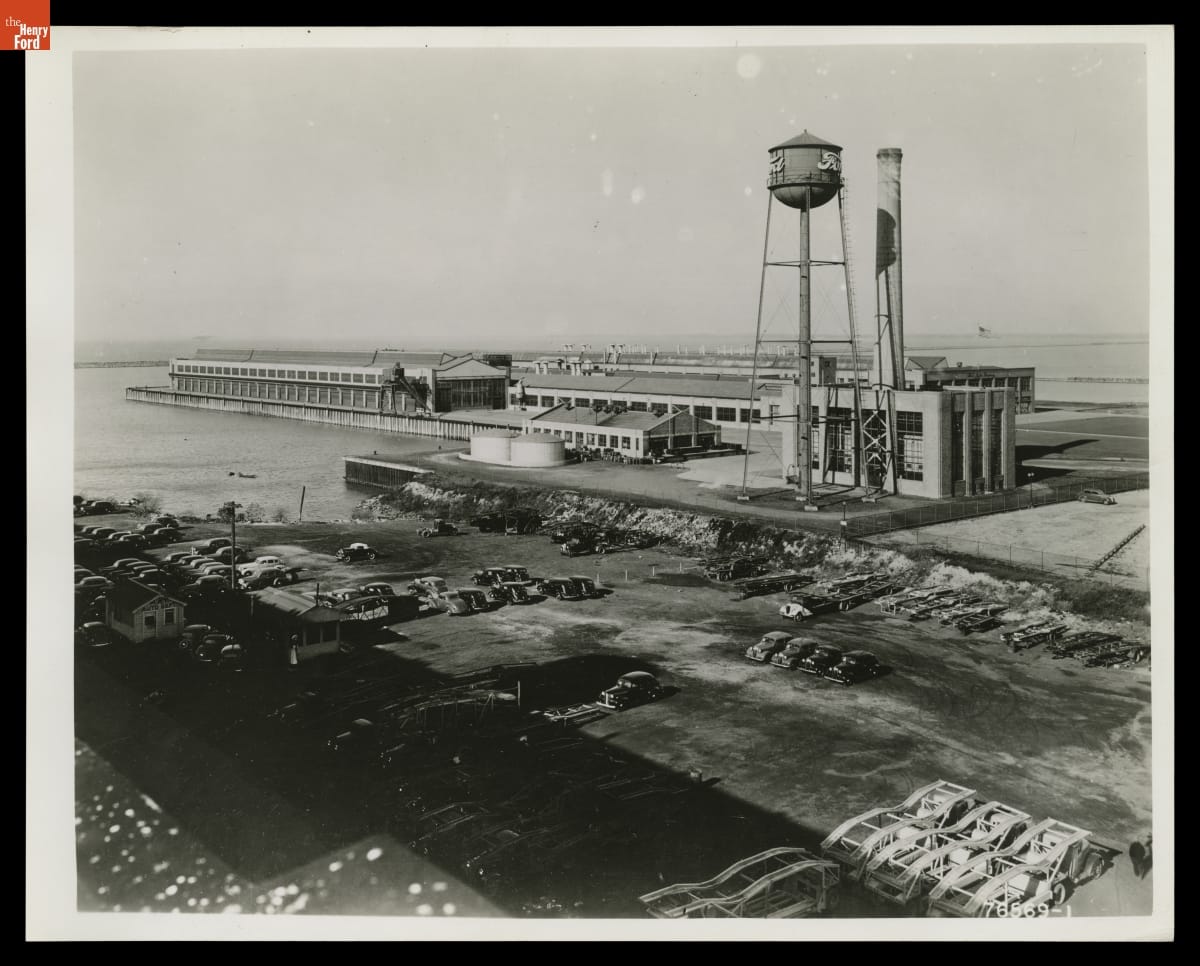
- Ford Motor Company Assembly Plant, Buffalo, New York, February 1942 - Starting in the 1910s, Ford Motor Company opened domestic assembly plants throughout the United States. These plants allowed the company to better serve its customers, with facilities located in major American cities. Ford's first plant in Buffalo, New York, opened in 1915. Operations moved to a larger facility on Buffalo's Fuhrmann Boulevard in 1931. The Fuhrmann Assembly Plant closed in 1958.
- February 02, 1942
- Collections - Artifact
Ford Motor Company Assembly Plant, Buffalo, New York, February 1942
Starting in the 1910s, Ford Motor Company opened domestic assembly plants throughout the United States. These plants allowed the company to better serve its customers, with facilities located in major American cities. Ford's first plant in Buffalo, New York, opened in 1915. Operations moved to a larger facility on Buffalo's Fuhrmann Boulevard in 1931. The Fuhrmann Assembly Plant closed in 1958.
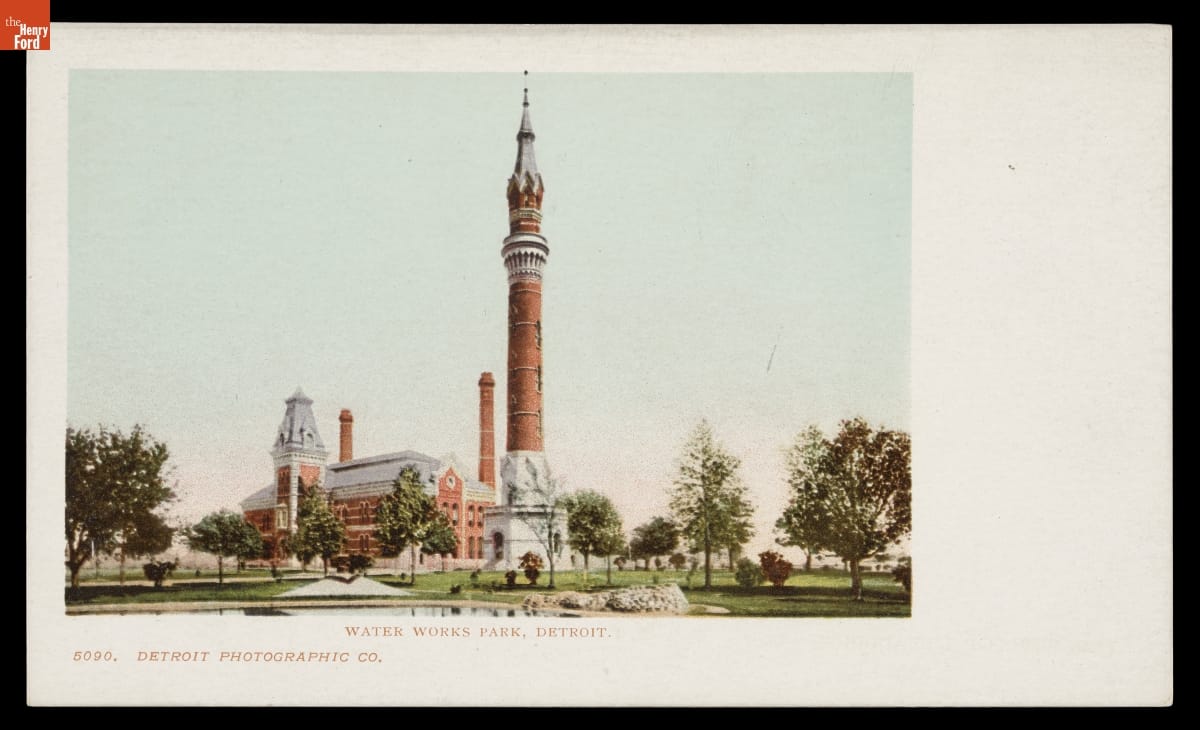
- Water Works Park, Detroit, Michigan - In 1868, Detroit began developing a pumping station to supply the city's water system, and an accompanying 110-acre park, later renamed Gladwin Park. Its ornate water tower became an iconic landmark. The water works were permanently shut down in 1945, and the surrounding park closed in 1951, although sections were sporadically opened to the public in the years to follow.
- 1900-1902
- Collections - Artifact
Water Works Park, Detroit, Michigan
In 1868, Detroit began developing a pumping station to supply the city's water system, and an accompanying 110-acre park, later renamed Gladwin Park. Its ornate water tower became an iconic landmark. The water works were permanently shut down in 1945, and the surrounding park closed in 1951, although sections were sporadically opened to the public in the years to follow.
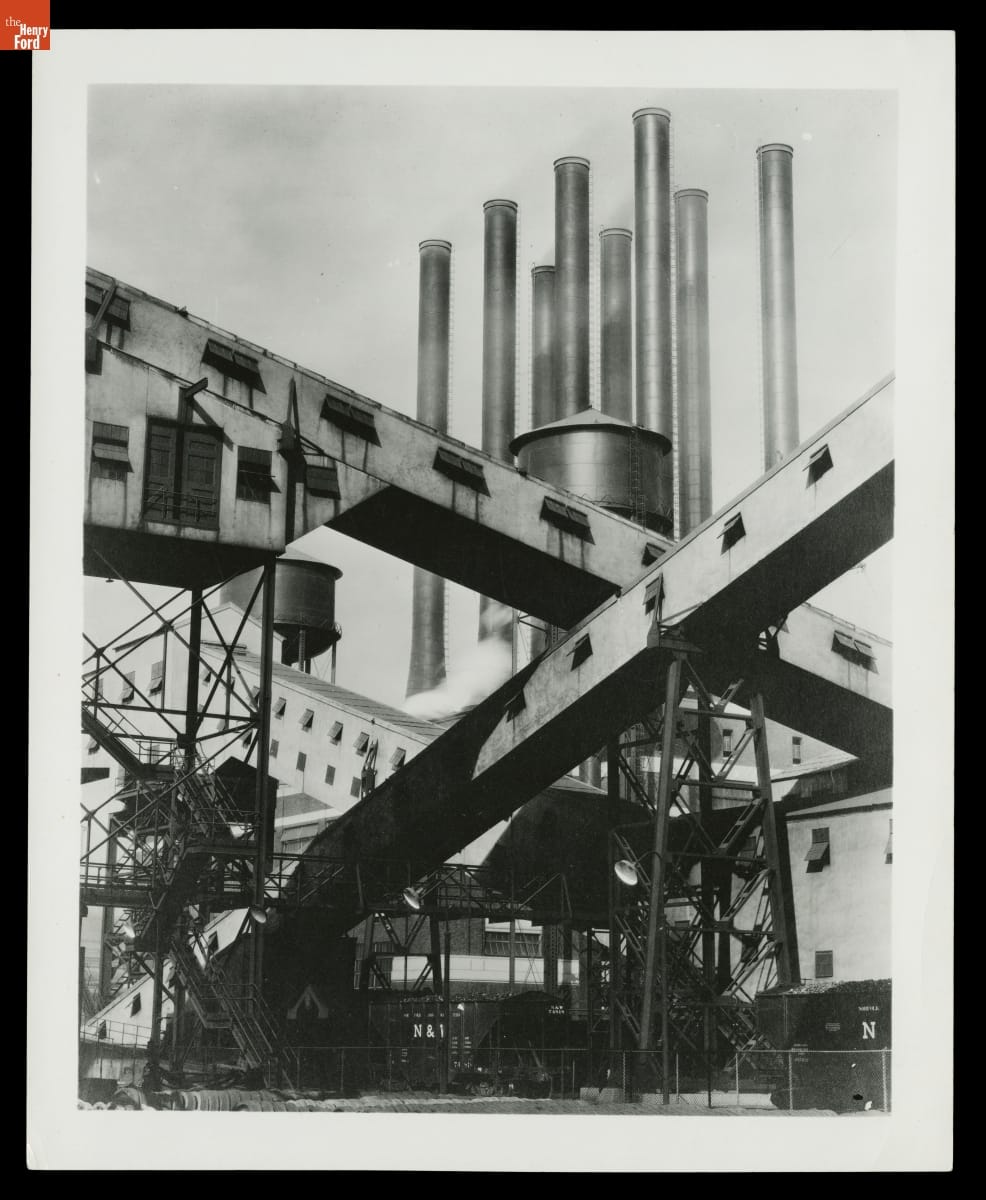
- Criss-crossed Conveyors at Ford Rouge Plant, 1927 - In 1927, Ford Motor Company commissioned Charles Sheeler to do a series of documentary photographs of its River Rouge industrial complex near Dearborn, Michigan. The conveyors moved coal and coke to the pulverizing building and screening stations. Coke made from coal was used in the steelmaking process of the blast furnaces. This vigorous photograph shows Sheeler's ability to form a compelling image from a complicated scene.
- 1927
- Collections - Artifact
Criss-crossed Conveyors at Ford Rouge Plant, 1927
In 1927, Ford Motor Company commissioned Charles Sheeler to do a series of documentary photographs of its River Rouge industrial complex near Dearborn, Michigan. The conveyors moved coal and coke to the pulverizing building and screening stations. Coke made from coal was used in the steelmaking process of the blast furnaces. This vigorous photograph shows Sheeler's ability to form a compelling image from a complicated scene.
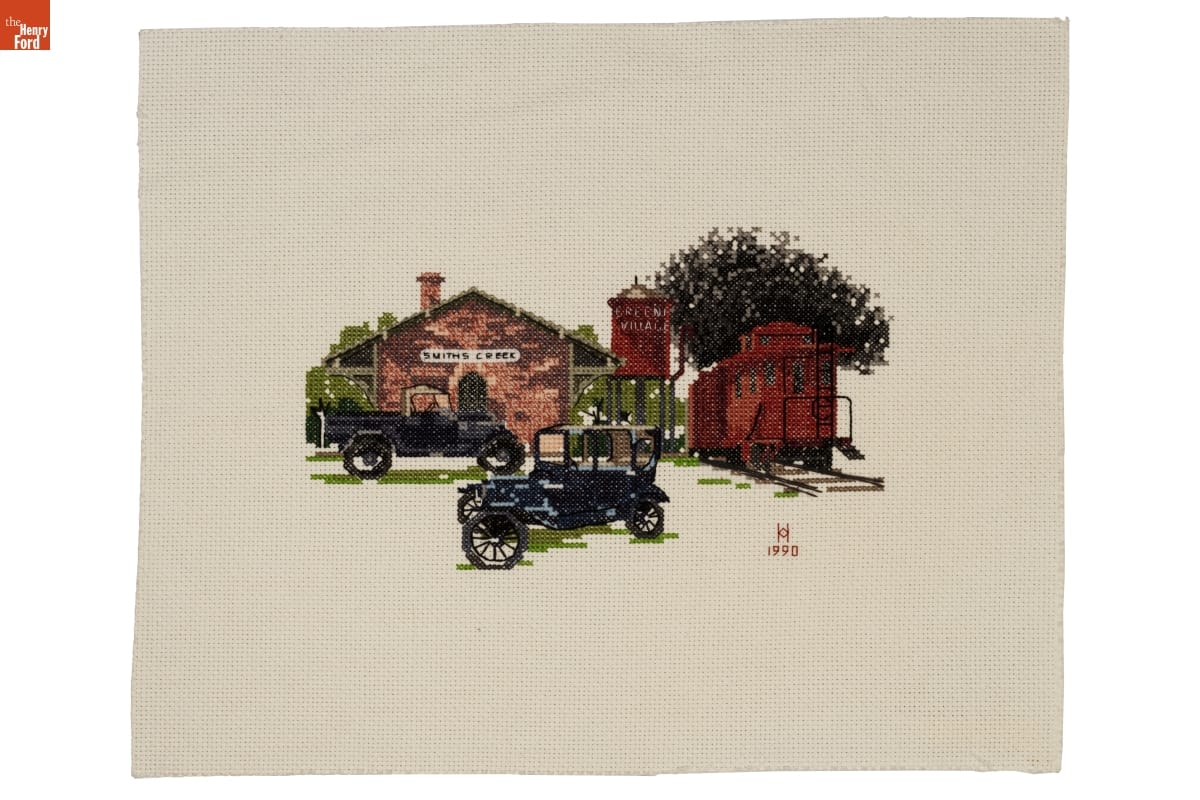
- Smiths Creek Depot Cross Stitch, 1990 -
- 1990
- Collections - Artifact
Smiths Creek Depot Cross Stitch, 1990
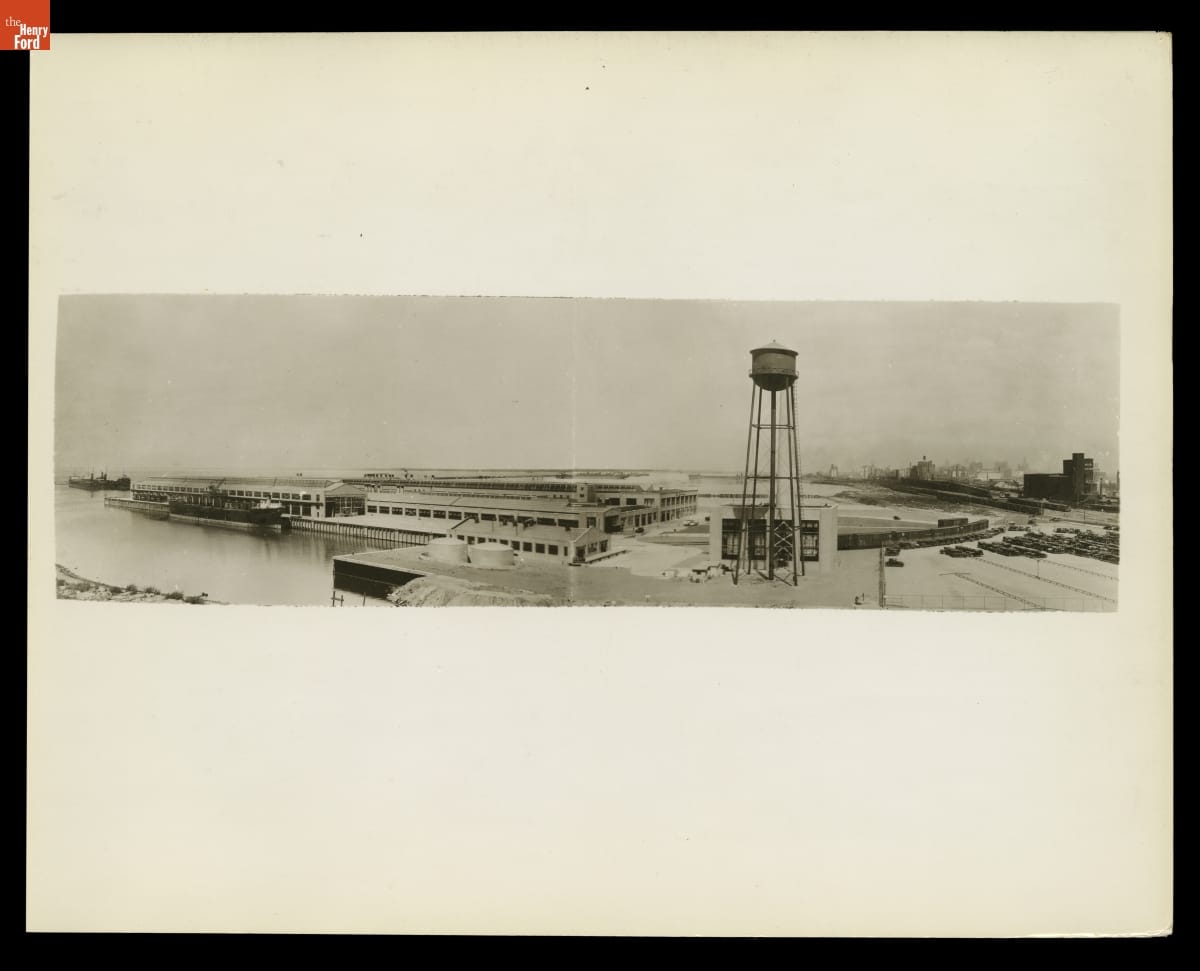
- Ford Motor Company Assembly Plant, Buffalo, New York, 1931 - Starting in the 1910s, Ford Motor Company opened domestic assembly plants throughout the United States. These plants allowed the company to better serve its customers, with facilities located in major American cities. Ford's first plant in Buffalo, New York, opened in 1915. Operations moved to a larger facility on Buffalo's Fuhrmann Boulevard in 1931. The Fuhrmann Assembly Plant closed in 1958.
- August 17, 1931
- Collections - Artifact
Ford Motor Company Assembly Plant, Buffalo, New York, 1931
Starting in the 1910s, Ford Motor Company opened domestic assembly plants throughout the United States. These plants allowed the company to better serve its customers, with facilities located in major American cities. Ford's first plant in Buffalo, New York, opened in 1915. Operations moved to a larger facility on Buffalo's Fuhrmann Boulevard in 1931. The Fuhrmann Assembly Plant closed in 1958.
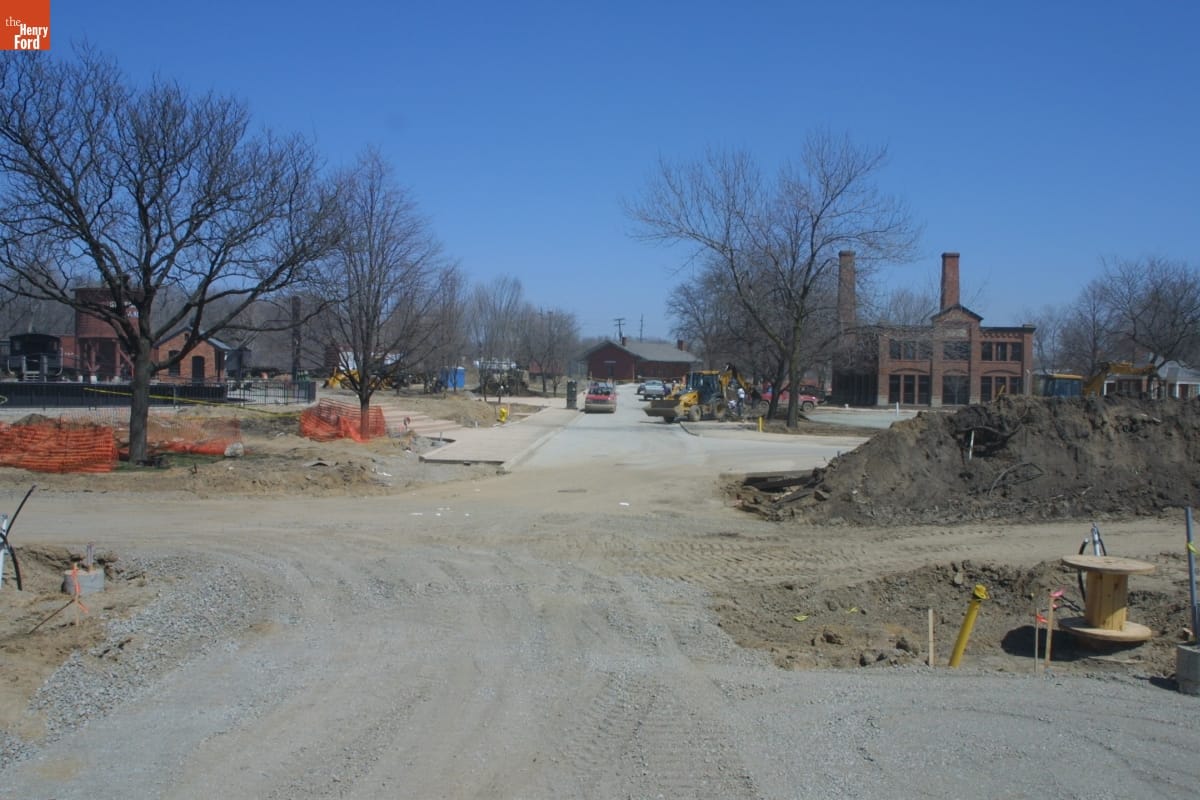
- Paving Junction Street during the Greenfield Village Restoration Project, April 2003 - By 2000, Greenfield Village began showing its age. Buildings and crumbling infrastructure desperately needed repair. Museum planners envisioned a revitalized village. They created themed "Historic Districts" by relocating and refurbishing the historic structures. Workers repaved streets and upgraded water, sewer, electric, and gas lines. In June 2003, nine months after restoration began, visitors passed through a new entrance into a reborn Greenfield Village.
- April 01, 2003
- Collections - Artifact
Paving Junction Street during the Greenfield Village Restoration Project, April 2003
By 2000, Greenfield Village began showing its age. Buildings and crumbling infrastructure desperately needed repair. Museum planners envisioned a revitalized village. They created themed "Historic Districts" by relocating and refurbishing the historic structures. Workers repaved streets and upgraded water, sewer, electric, and gas lines. In June 2003, nine months after restoration began, visitors passed through a new entrance into a reborn Greenfield Village.