
Search
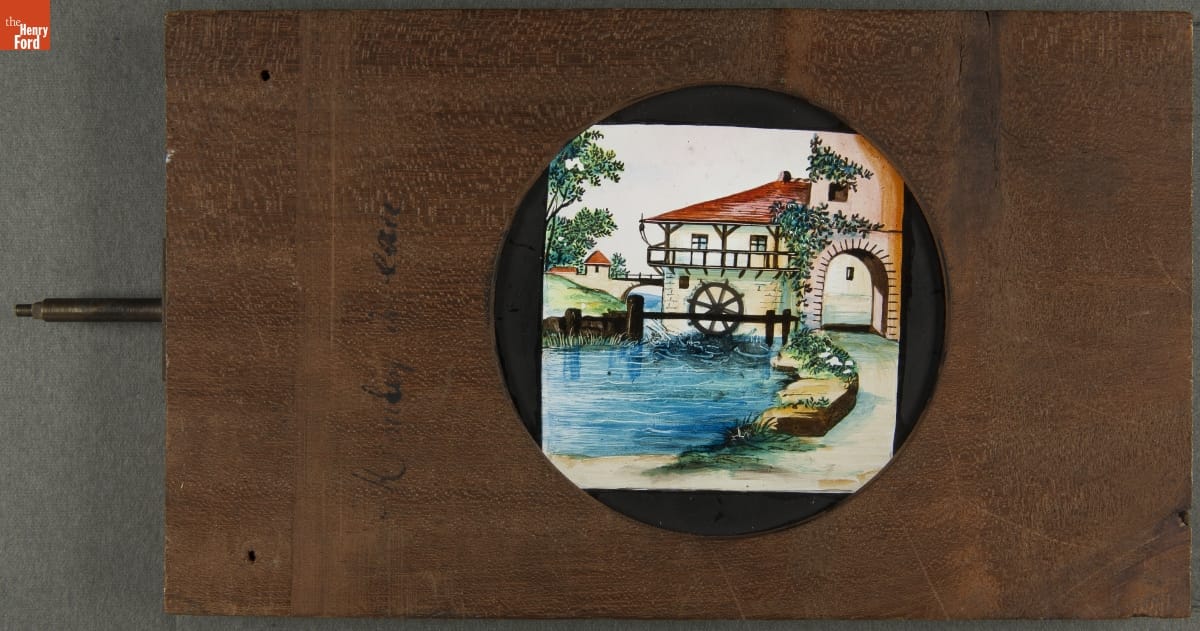
- Mechanical Lantern Slide, "The Water Wheel," 1860-1900 - Magic lanterns use a concave mirror and light source to project images on glass slides with painted or photographic scenes. Developed in the 17th century, magic lanterns predate slide projectors and motion pictures. In the hands of magicians, they became "lanterns of fright," projecting wondrous images and apparitions. Slide themes ranged widely: exotic travel, folklore, advertising, history, science, and art.
- 1860-1900
- Collections - Artifact
Mechanical Lantern Slide, "The Water Wheel," 1860-1900
Magic lanterns use a concave mirror and light source to project images on glass slides with painted or photographic scenes. Developed in the 17th century, magic lanterns predate slide projectors and motion pictures. In the hands of magicians, they became "lanterns of fright," projecting wondrous images and apparitions. Slide themes ranged widely: exotic travel, folklore, advertising, history, science, and art.
- James Leffel Turbine Water Wheel Catalog, 1891 -
- 1891
- Collections - Artifact
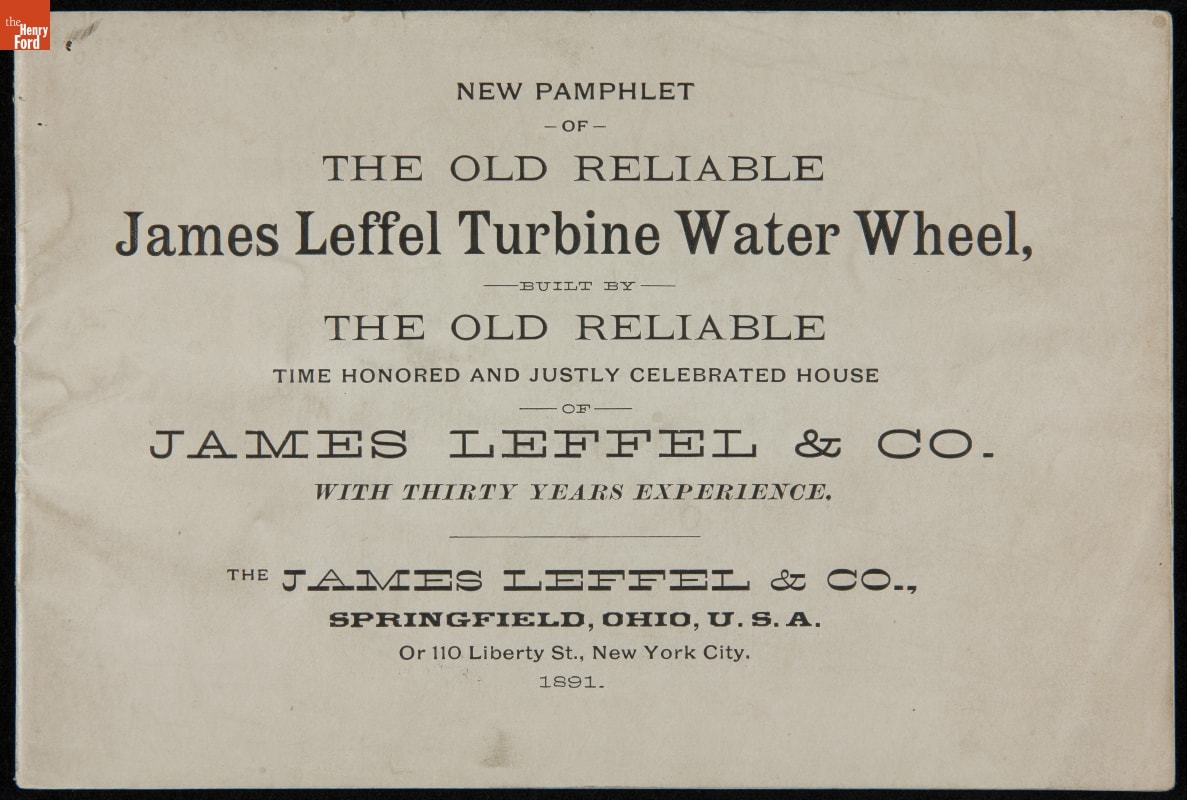
James Leffel Turbine Water Wheel Catalog, 1891
- Henry Ford and Harvey Firestone on a "Vagabonds" Trip near Lexington, Virginia, 1918 -
- 1918
- Collections - Artifact
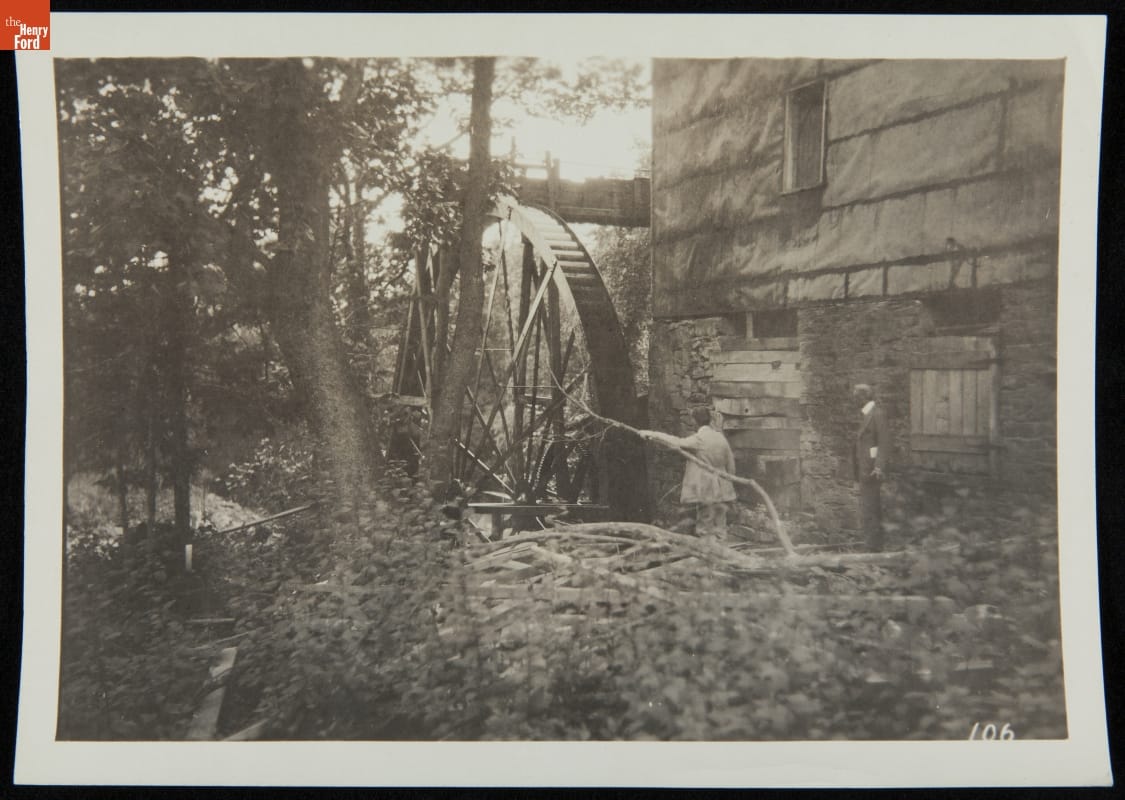
Henry Ford and Harvey Firestone on a "Vagabonds" Trip near Lexington, Virginia, 1918
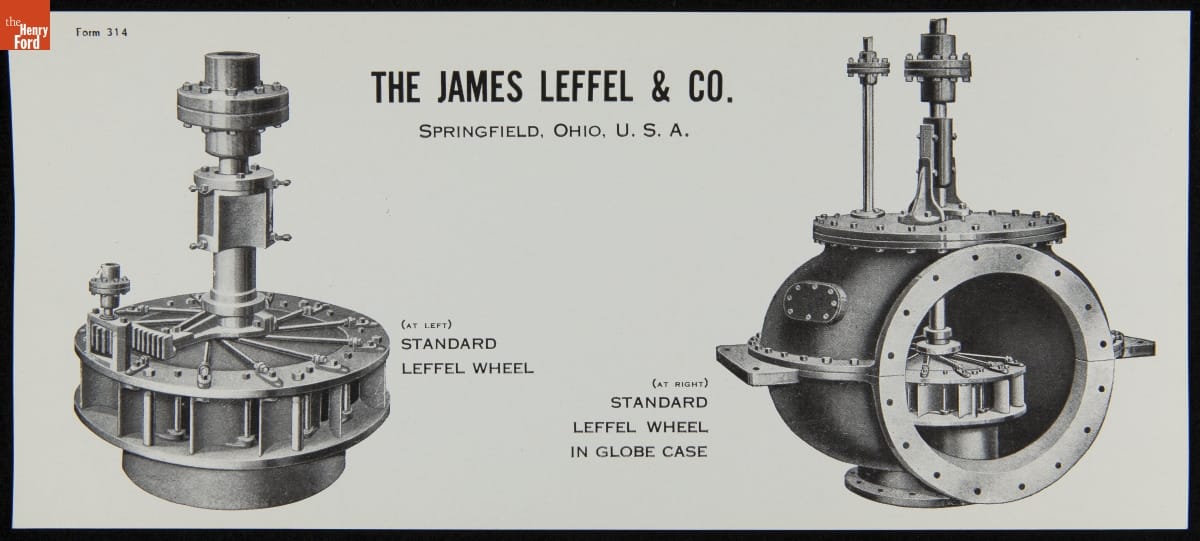
- Trade Card for The James Leffel & Co., "Standard Leffel Wheel," circa 1894 - In the last third of the nineteenth century, an unprecedented variety of consumer goods and services flooded the American market. Advertisers bombarded potential customers with trade cards. Americans enjoyed and saved the often illustrated little advertisements found in product packages or distributed by local merchants. Many survive as historical records of commercialism in the United States.
- circa 1894
- Collections - Artifact
Trade Card for The James Leffel & Co., "Standard Leffel Wheel," circa 1894
In the last third of the nineteenth century, an unprecedented variety of consumer goods and services flooded the American market. Advertisers bombarded potential customers with trade cards. Americans enjoyed and saved the often illustrated little advertisements found in product packages or distributed by local merchants. Many survive as historical records of commercialism in the United States.
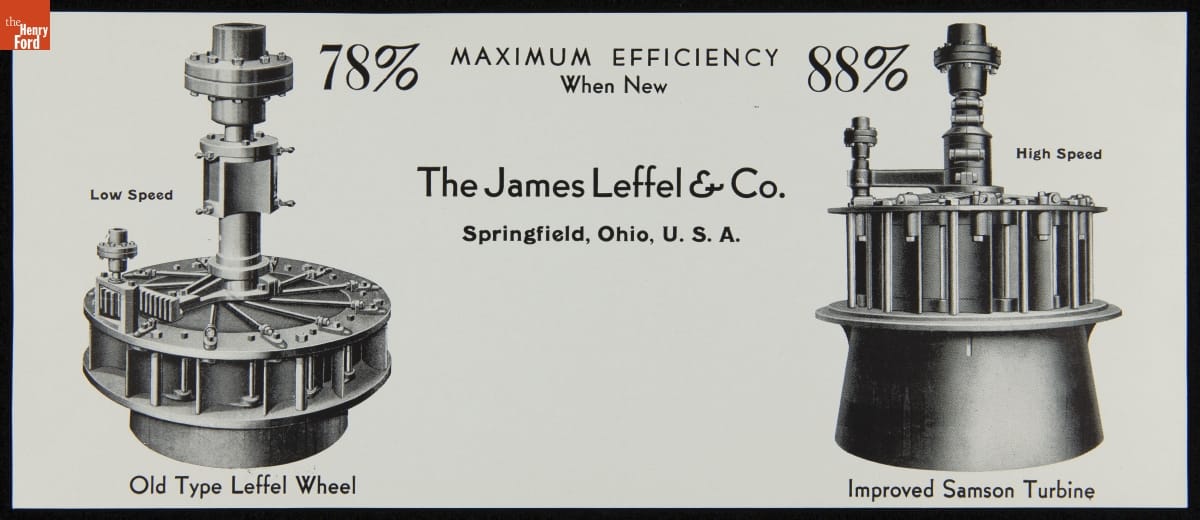
- Advertising Card for Leffel Wheels and Turbines, James Leffel & Company, circa 1894 - In the last third of the nineteenth century, an unprecedented variety of consumer goods and services flooded the American market. Advertisers bombarded potential customers with trade cards. Americans enjoyed and saved the often illustrated little advertisements found in product packages or distributed by local merchants. Many survive as historical records of commercialism in the United States.
- circa 1894
- Collections - Artifact
Advertising Card for Leffel Wheels and Turbines, James Leffel & Company, circa 1894
In the last third of the nineteenth century, an unprecedented variety of consumer goods and services flooded the American market. Advertisers bombarded potential customers with trade cards. Americans enjoyed and saved the often illustrated little advertisements found in product packages or distributed by local merchants. Many survive as historical records of commercialism in the United States.
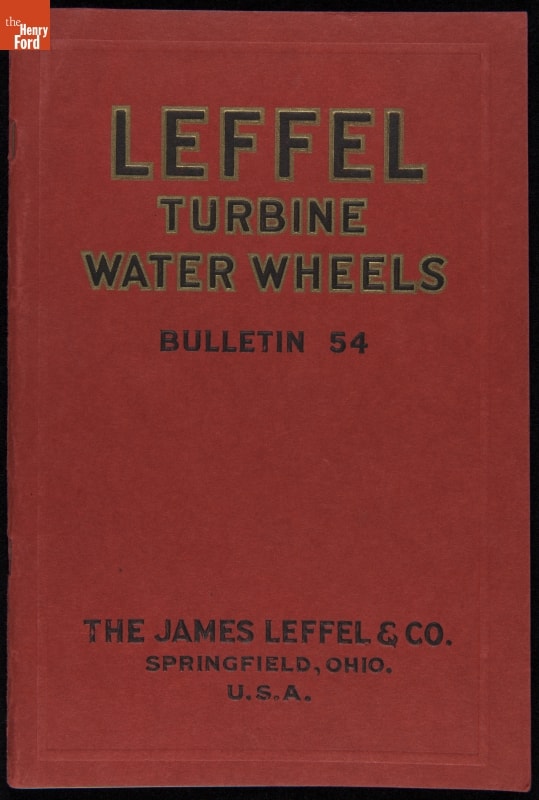
- "Leffel Turbine Water Wheels. Bulletin 54," 1916 -
- 1916
- Collections - Artifact
"Leffel Turbine Water Wheels. Bulletin 54," 1916
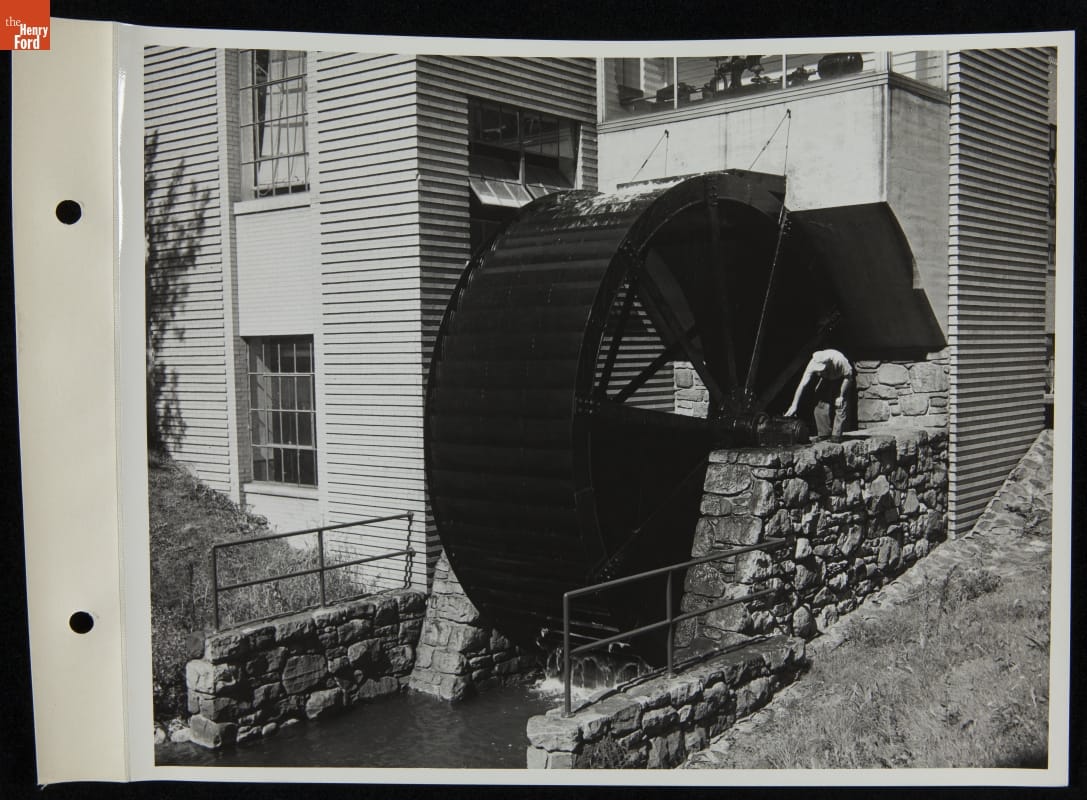
- Overshot Waterwheel at Ford Valve Plant in Northville, Michigan Plant, September 25, 1946 - In the 1920s and '30s, Henry Ford set up small-scale factories throughout southeast Michigan. These "Village Industries" employed local residents and supplied Ford with tools and vehicle parts. The factory at Northville started operations in 1920 and made engine valves. The Northville factory remained productive into the early 1980s, long after Henry's other Village Industries mills had closed.
- September 25, 1946
- Collections - Artifact
Overshot Waterwheel at Ford Valve Plant in Northville, Michigan Plant, September 25, 1946
In the 1920s and '30s, Henry Ford set up small-scale factories throughout southeast Michigan. These "Village Industries" employed local residents and supplied Ford with tools and vehicle parts. The factory at Northville started operations in 1920 and made engine valves. The Northville factory remained productive into the early 1980s, long after Henry's other Village Industries mills had closed.
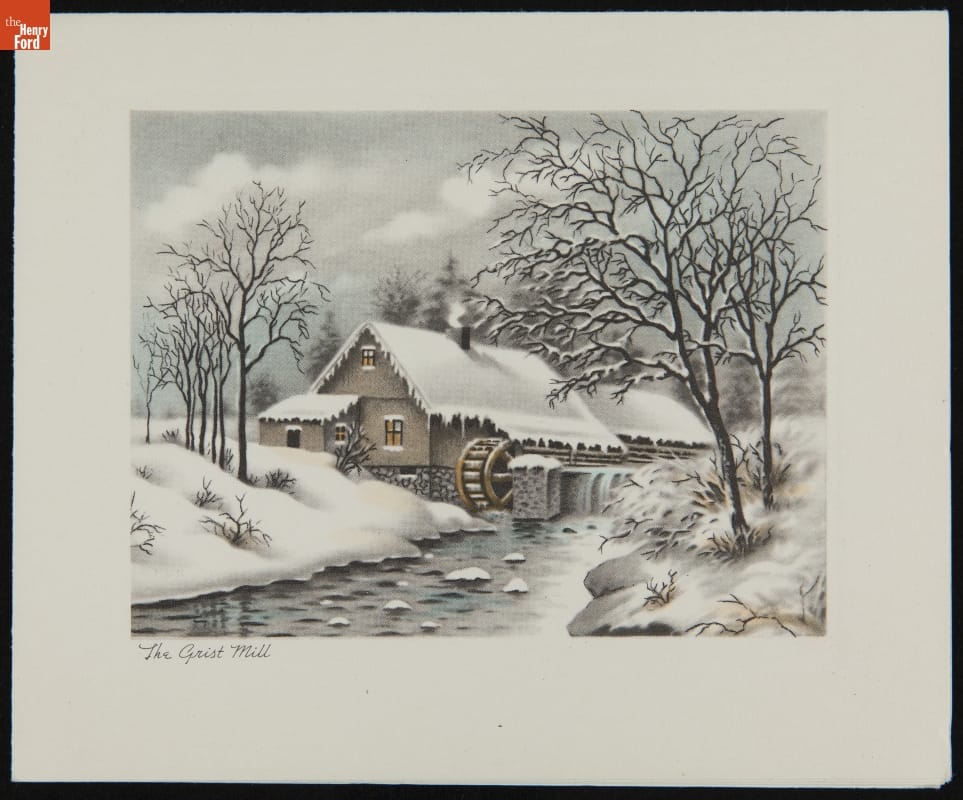
- Christmas Card, "The Grist Mill," 1943 - Mailing colorful, commercially designed greeting cards had become an American tradition by the 1920s and 1930s. Friends and neighbors commonly exchanged cards that wished one another a merry Christmas or happy New Year during the winter holidays. Publishers sometimes decorated these cards with nostalgic images of mills, churches, or covered bridges steeped in snow.
- 1943
- Collections - Artifact
Christmas Card, "The Grist Mill," 1943
Mailing colorful, commercially designed greeting cards had become an American tradition by the 1920s and 1930s. Friends and neighbors commonly exchanged cards that wished one another a merry Christmas or happy New Year during the winter holidays. Publishers sometimes decorated these cards with nostalgic images of mills, churches, or covered bridges steeped in snow.
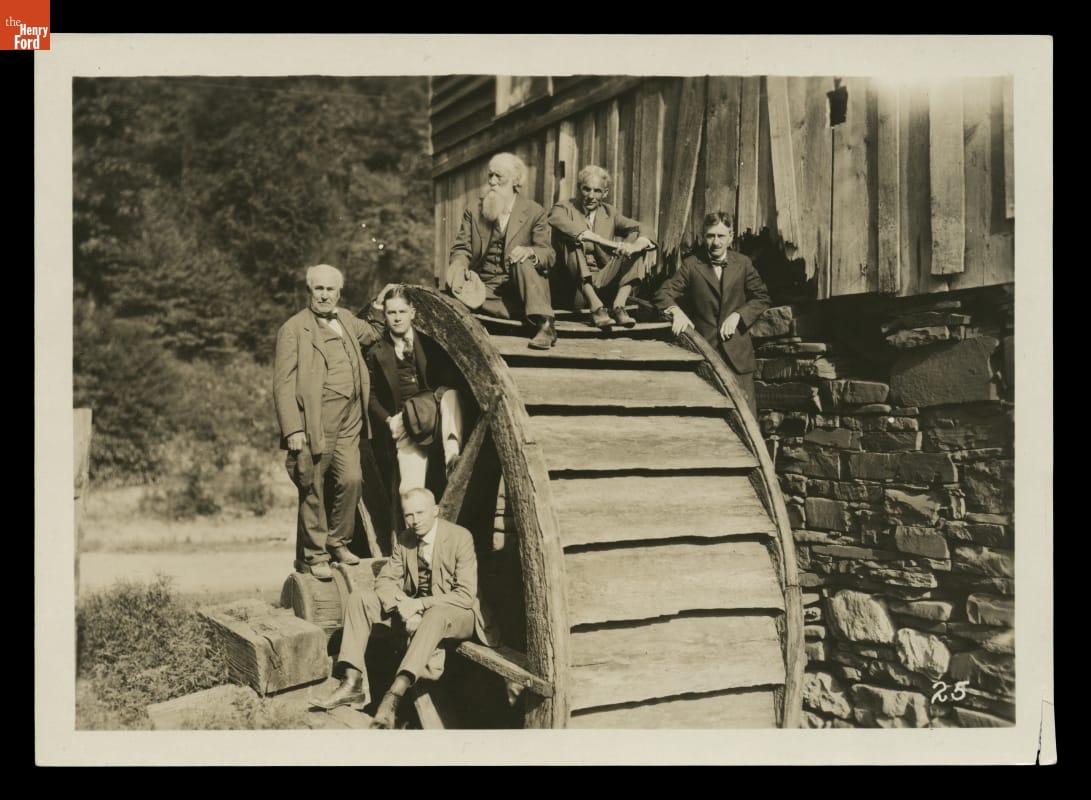
- "Vagabonds" and Others on a Camping Trip, Lead Mine, West Virginia, 1918 - Between 1916 and 1924, Thomas Edison, John Burroughs, Henry Ford, and Harvey Firestone made a series of camping trip. On these trips they communed with nature, explored their personal interests, and acted like boys again. They called themselves Vagabonds. Here they pose with two other members of their camping party on a waterwheel at old Evans Mill near Lead Mine, West Virginia.
- 1918
- Collections - Artifact
"Vagabonds" and Others on a Camping Trip, Lead Mine, West Virginia, 1918
Between 1916 and 1924, Thomas Edison, John Burroughs, Henry Ford, and Harvey Firestone made a series of camping trip. On these trips they communed with nature, explored their personal interests, and acted like boys again. They called themselves Vagabonds. Here they pose with two other members of their camping party on a waterwheel at old Evans Mill near Lead Mine, West Virginia.
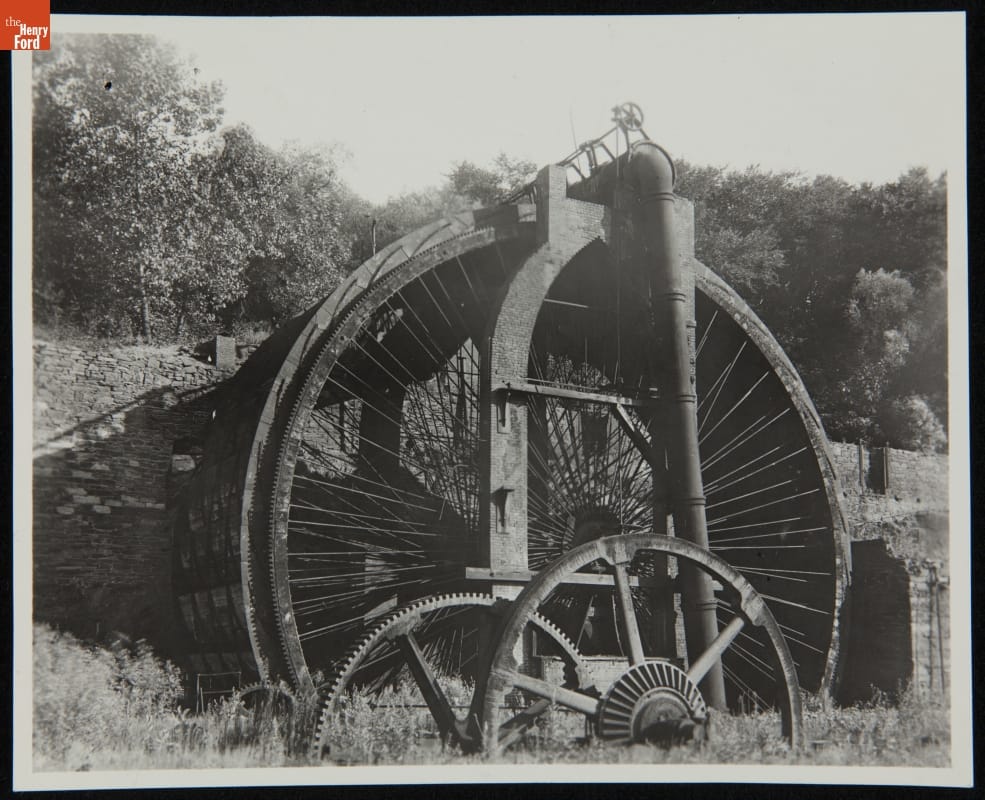
- Burden Water Wheel, circa 1900 - Henry Burden (1791-1871) built this water wheel in 1851 to power his Troy, New York, iron works. Situated on Wynantskill Creek, the massive, 62-foot water wheel powered machinery that created mass-produced horseshoes and railroad spikes. This image shows the wheel around 1900, after it was abandoned in the 1890s. Many still consider Burden's water wheel the most powerful vertical water wheel in history.
- circa 1900
- Collections - Artifact
Burden Water Wheel, circa 1900
Henry Burden (1791-1871) built this water wheel in 1851 to power his Troy, New York, iron works. Situated on Wynantskill Creek, the massive, 62-foot water wheel powered machinery that created mass-produced horseshoes and railroad spikes. This image shows the wheel around 1900, after it was abandoned in the 1890s. Many still consider Burden's water wheel the most powerful vertical water wheel in history.