
Search
- Weaving Demonstration in Plymouth Carding Mill (now Gunsolly Carding Mill), Greenfield Village, 1935 - Craftspeople have presented weaving demonstrations at Greenfield Village since it opened to the public in 1933. Over the years, weavers have used several historic and refurbished looms located in the Plymouth Carding Mill (now Gunsolly Carding Mill) to create hand-crafted textiles. These presentations and resulting products help tell the story of textile production in America.
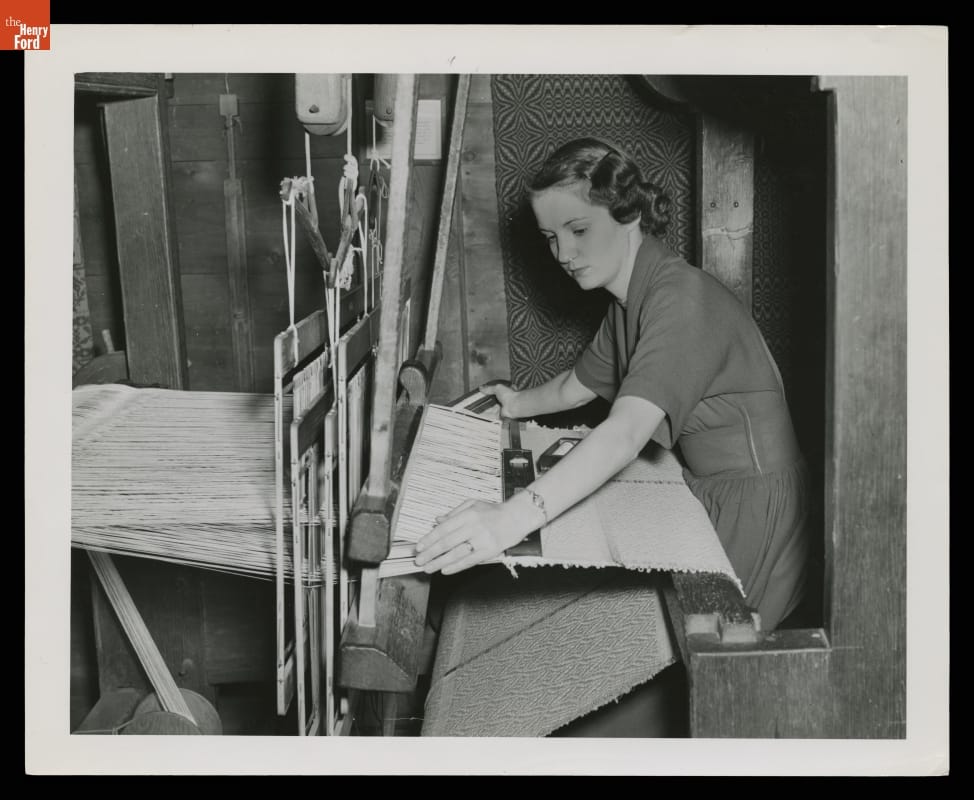
- March 27, 1935
- Collections - Artifact
Weaving Demonstration in Plymouth Carding Mill (now Gunsolly Carding Mill), Greenfield Village, 1935
Craftspeople have presented weaving demonstrations at Greenfield Village since it opened to the public in 1933. Over the years, weavers have used several historic and refurbished looms located in the Plymouth Carding Mill (now Gunsolly Carding Mill) to create hand-crafted textiles. These presentations and resulting products help tell the story of textile production in America.
- Young Man at Power Loom in Plymouth Carding Mill (now Gunsolly Carding Mill), Greenfield Village, circa 1935 - Craftspeople have presented weaving demonstrations at Greenfield Village since it opened to the public in 1933. Over the years, weavers have used several historic and refurbished looms located in the Plymouth Carding Mill (now Gunsolly Carding Mill) to create hand-crafted textiles. These presentations and resulting products help tell the story of textile production in America.
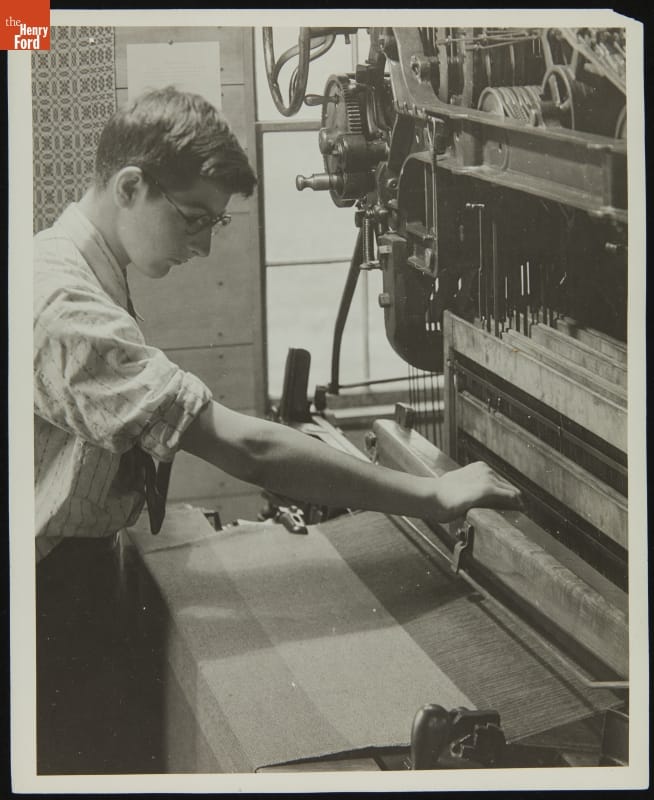
- circa 1935
- Collections - Artifact
Young Man at Power Loom in Plymouth Carding Mill (now Gunsolly Carding Mill), Greenfield Village, circa 1935
Craftspeople have presented weaving demonstrations at Greenfield Village since it opened to the public in 1933. Over the years, weavers have used several historic and refurbished looms located in the Plymouth Carding Mill (now Gunsolly Carding Mill) to create hand-crafted textiles. These presentations and resulting products help tell the story of textile production in America.
- Student Weavers in Plymouth Carding Mill (now Gunsolly Carding Mill), Greenfield Village, 1930 - Henry Ford believed in "learning by doing." Students enrolled in the Edison Institute Schools located on the grounds of Ford's Greenfield Village had ample opportunities for practical, hands-on training. Students, if they desired, could learn to weave. Beginners used small tabletop looms. As they progressed students created woven materials using larger looms located in Greenfield Village's Plymouth Carding Mill and Weaving Shed.
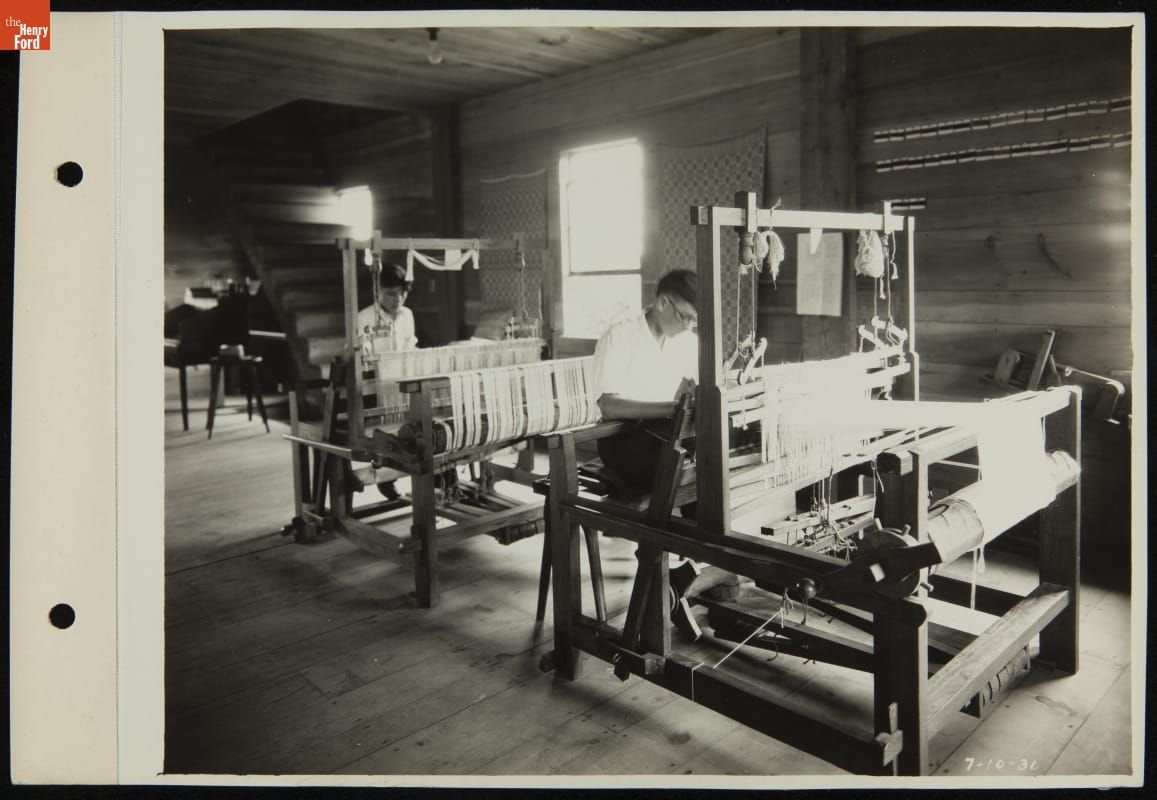
- July 10, 1930
- Collections - Artifact
Student Weavers in Plymouth Carding Mill (now Gunsolly Carding Mill), Greenfield Village, 1930
Henry Ford believed in "learning by doing." Students enrolled in the Edison Institute Schools located on the grounds of Ford's Greenfield Village had ample opportunities for practical, hands-on training. Students, if they desired, could learn to weave. Beginners used small tabletop looms. As they progressed students created woven materials using larger looms located in Greenfield Village's Plymouth Carding Mill and Weaving Shed.
- Trade Card for Weaver Organ and Piano Company, 1898 - In the last third of the nineteenth century, an unprecedented variety of consumer goods and services flooded the American market. Advertisers, armed with new methods of color printing, bombarded potential customers with trade cards. Americans enjoyed and often saved the vibrant little advertisements found in product packages or distributed by local merchants. Many survive as historical records of commercialism in the United States.
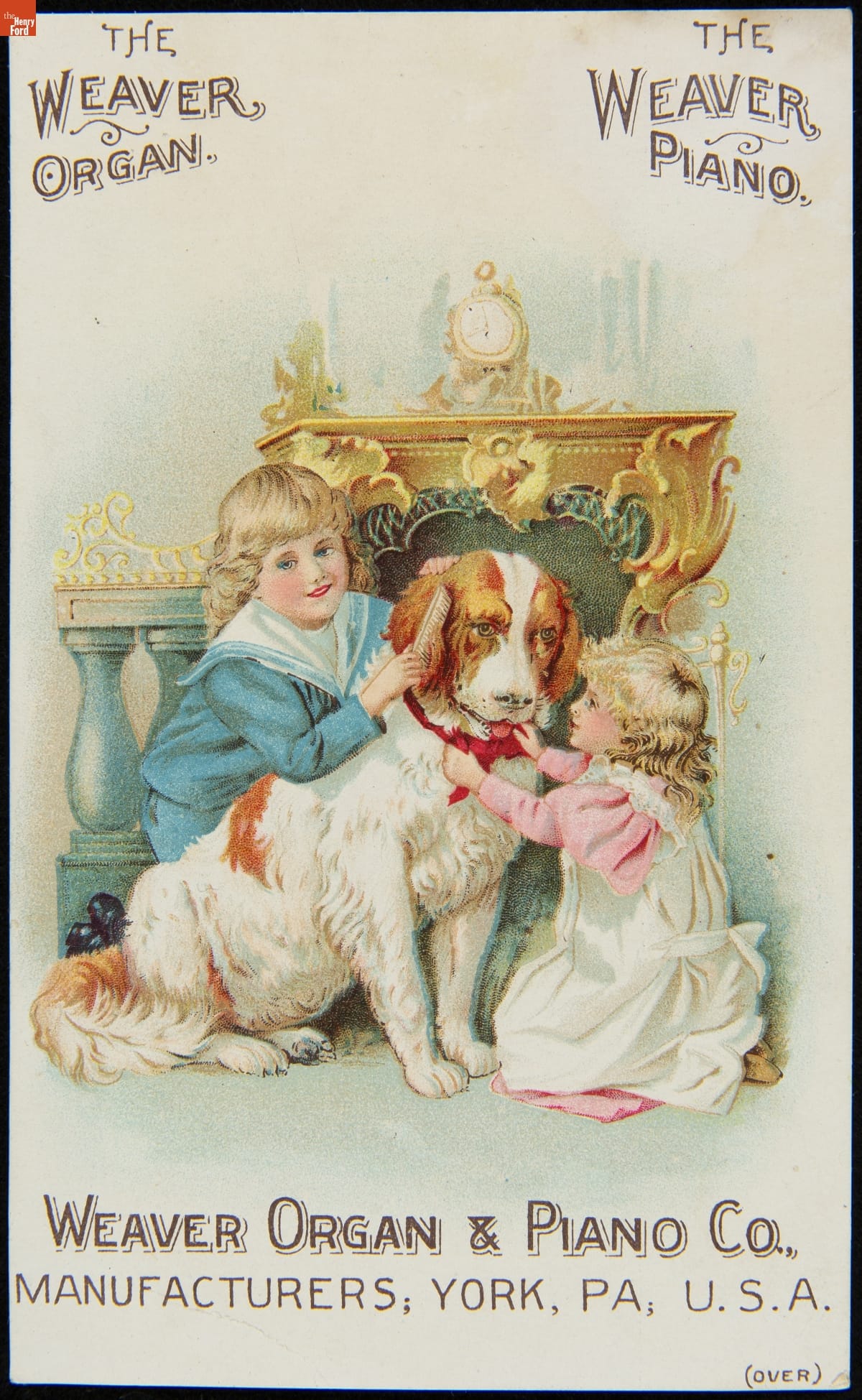
- 1898
- Collections - Artifact
Trade Card for Weaver Organ and Piano Company, 1898
In the last third of the nineteenth century, an unprecedented variety of consumer goods and services flooded the American market. Advertisers, armed with new methods of color printing, bombarded potential customers with trade cards. Americans enjoyed and often saved the vibrant little advertisements found in product packages or distributed by local merchants. Many survive as historical records of commercialism in the United States.
- Weaving Demonstration by Ida Gustafson in Plymouth Carding Mill (now Gunsolly Carding Mill), Greenfield Village, 1954 - Craftspeople have presented weaving demonstrations at Greenfield Village since it opened to the public in 1933. Over the years, weavers have used several historic and refurbished looms located in the Plymouth Carding Mill (now Gunsolly Carding Mill) to create hand-crafted textiles. These presentations and resulting products help tell the story of textile production in America.
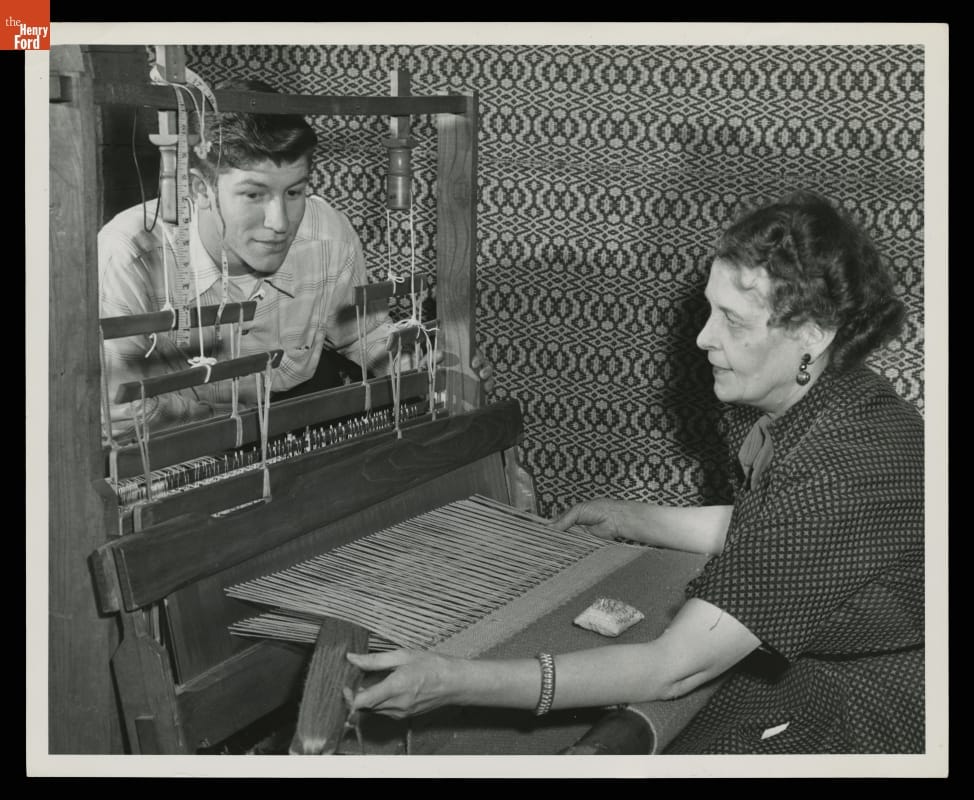
- January 20, 1954
- Collections - Artifact
Weaving Demonstration by Ida Gustafson in Plymouth Carding Mill (now Gunsolly Carding Mill), Greenfield Village, 1954
Craftspeople have presented weaving demonstrations at Greenfield Village since it opened to the public in 1933. Over the years, weavers have used several historic and refurbished looms located in the Plymouth Carding Mill (now Gunsolly Carding Mill) to create hand-crafted textiles. These presentations and resulting products help tell the story of textile production in America.
- Student Weavers in Plymouth Carding Mill (now Gunsolly Carding Mill), Greenfield Village, 1930 - Henry Ford believed in "learning by doing." Students enrolled in the Edison Institute Schools located on the grounds of Ford's Greenfield Village had ample opportunities for practical, hands-on training. Students, if they desired, could learn to weave. Beginners used small tabletop looms. As they progressed students created woven materials using larger looms located in Greenfield Village's Plymouth Carding Mill and Weaving Shed.
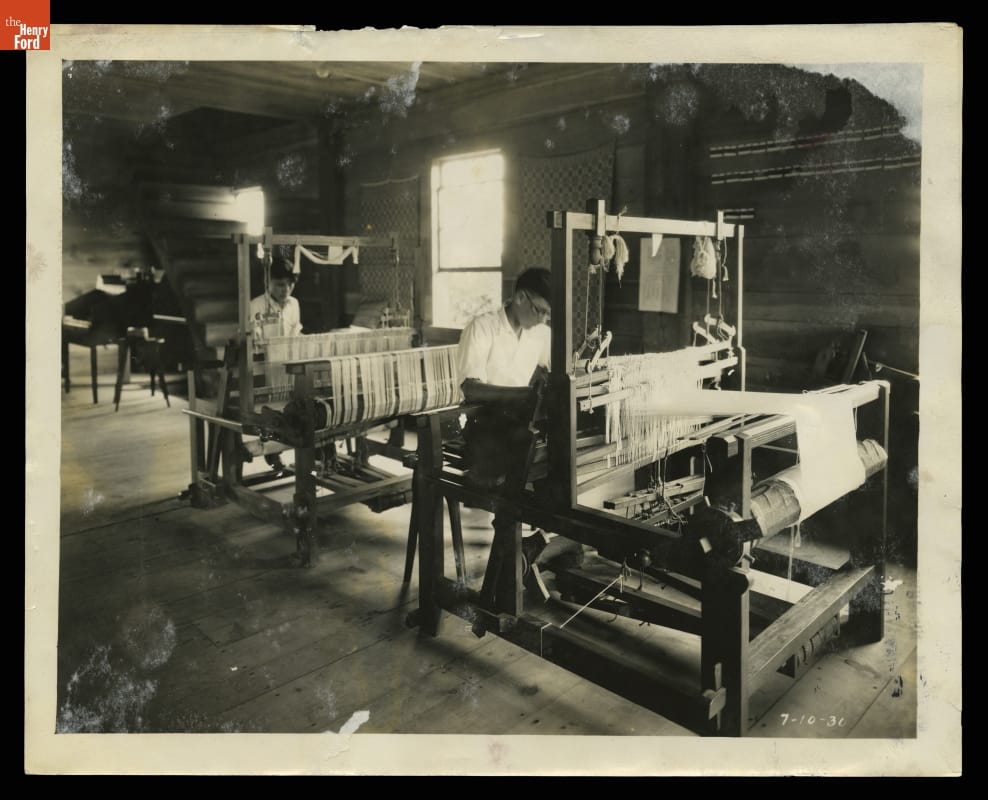
- July 10, 1930
- Collections - Artifact
Student Weavers in Plymouth Carding Mill (now Gunsolly Carding Mill), Greenfield Village, 1930
Henry Ford believed in "learning by doing." Students enrolled in the Edison Institute Schools located on the grounds of Ford's Greenfield Village had ample opportunities for practical, hands-on training. Students, if they desired, could learn to weave. Beginners used small tabletop looms. As they progressed students created woven materials using larger looms located in Greenfield Village's Plymouth Carding Mill and Weaving Shed.
- Edison Institute Schools Student Weaving, circa 1935 - Henry Ford believed in "learning by doing." Students enrolled in the Edison Institute Schools located on the grounds of Ford's Greenfield Village had ample opportunities for practical, hands-on training. Students, if they desired, could learn to weave. Beginners used small tabletop looms. As they progressed students created woven materials using larger looms located in Greenfield Village's Plymouth Carding Mill and Weaving Shed.
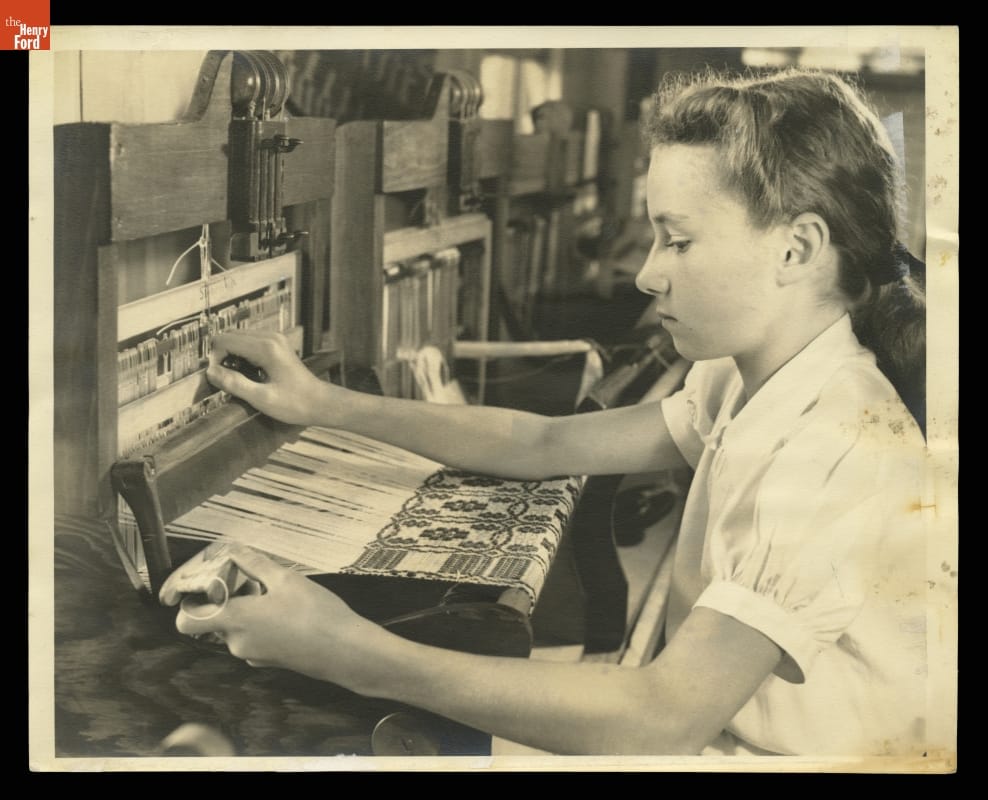
- circa 1935
- Collections - Artifact
Edison Institute Schools Student Weaving, circa 1935
Henry Ford believed in "learning by doing." Students enrolled in the Edison Institute Schools located on the grounds of Ford's Greenfield Village had ample opportunities for practical, hands-on training. Students, if they desired, could learn to weave. Beginners used small tabletop looms. As they progressed students created woven materials using larger looms located in Greenfield Village's Plymouth Carding Mill and Weaving Shed.
- Carole Ashley at the Jacquard Loom, Plymouth Carding Mill (now Gunsolly Carding Mill), Greenfield Village, 1977 - Craftspeople have presented weaving demonstrations at Greenfield Village since it opened to the public in 1933. Over the years, weavers have used several historic and refurbished looms located in the Plymouth Carding Mill (now Gunsolly Carding Mill) to create hand-crafted textiles. These presentations and resulting products help tell the story of textile production in America.
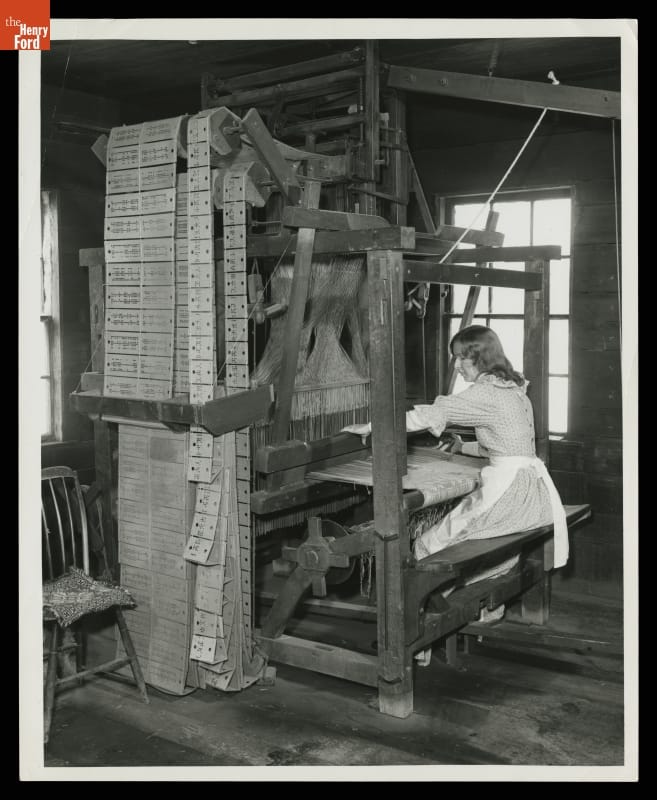
- February 14, 1977
- Collections - Artifact
Carole Ashley at the Jacquard Loom, Plymouth Carding Mill (now Gunsolly Carding Mill), Greenfield Village, 1977
Craftspeople have presented weaving demonstrations at Greenfield Village since it opened to the public in 1933. Over the years, weavers have used several historic and refurbished looms located in the Plymouth Carding Mill (now Gunsolly Carding Mill) to create hand-crafted textiles. These presentations and resulting products help tell the story of textile production in America.
- Interior of Gunsolly Carding Mill in Greenfield Village, July 10, 1930 - Henry Ford believed in "learning by doing." Students enrolled in the Edison Institute Schools located on the grounds of Ford's Greenfield Village had ample opportunities for practical, hands-on training. Students, if they desired, could learn to weave. Beginners used small tabletop looms. As they progressed students created woven materials using larger looms located in Greenfield Village's Plymouth Carding Mill and Weaving Shed.
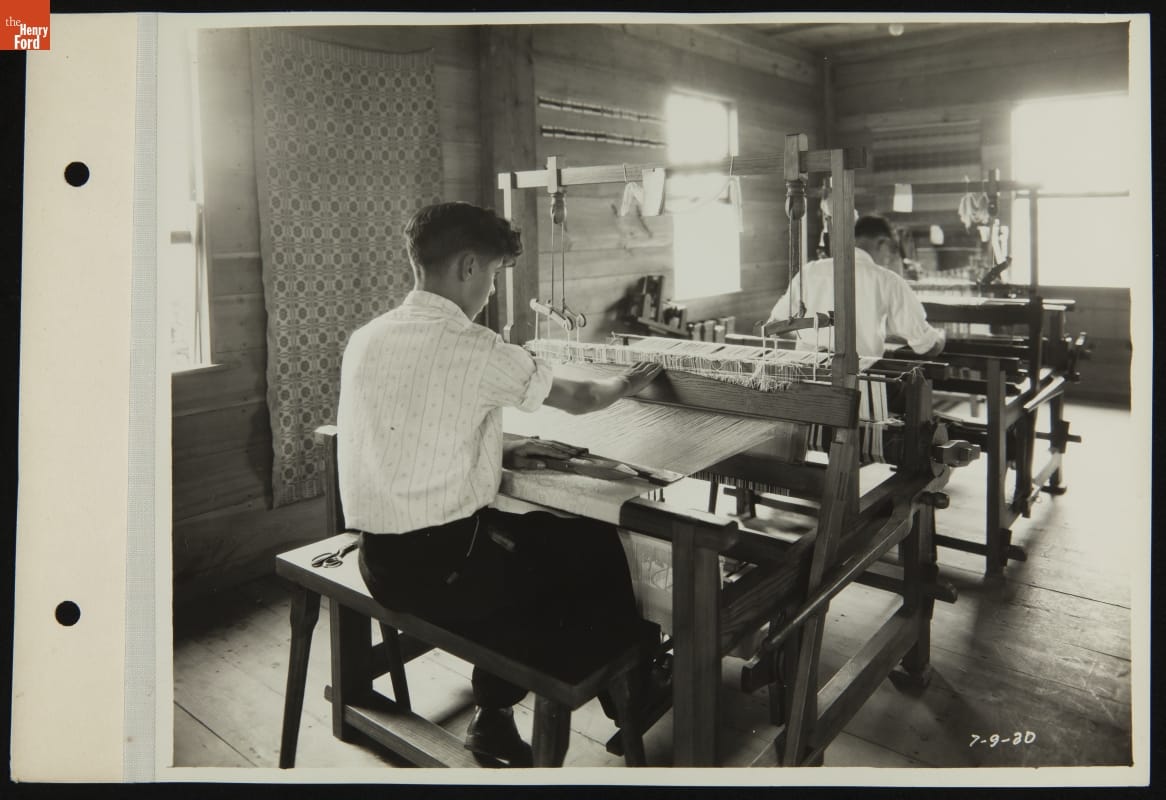
- July 10, 1930
- Collections - Artifact
Interior of Gunsolly Carding Mill in Greenfield Village, July 10, 1930
Henry Ford believed in "learning by doing." Students enrolled in the Edison Institute Schools located on the grounds of Ford's Greenfield Village had ample opportunities for practical, hands-on training. Students, if they desired, could learn to weave. Beginners used small tabletop looms. As they progressed students created woven materials using larger looms located in Greenfield Village's Plymouth Carding Mill and Weaving Shed.
- "Carding Mill, Greenfield Village, Dearborn, Michigan," Published 1954 - Craftspeople have presented weaving demonstrations at Greenfield Village since it opened to the public in 1933. Over the years, weavers have used several historic and refurbished looms located in the Plymouth Carding Mill (now Gunsolly Carding Mill) to create hand-crafted textiles. These presentations and resulting products help tell the story of textile production in America.
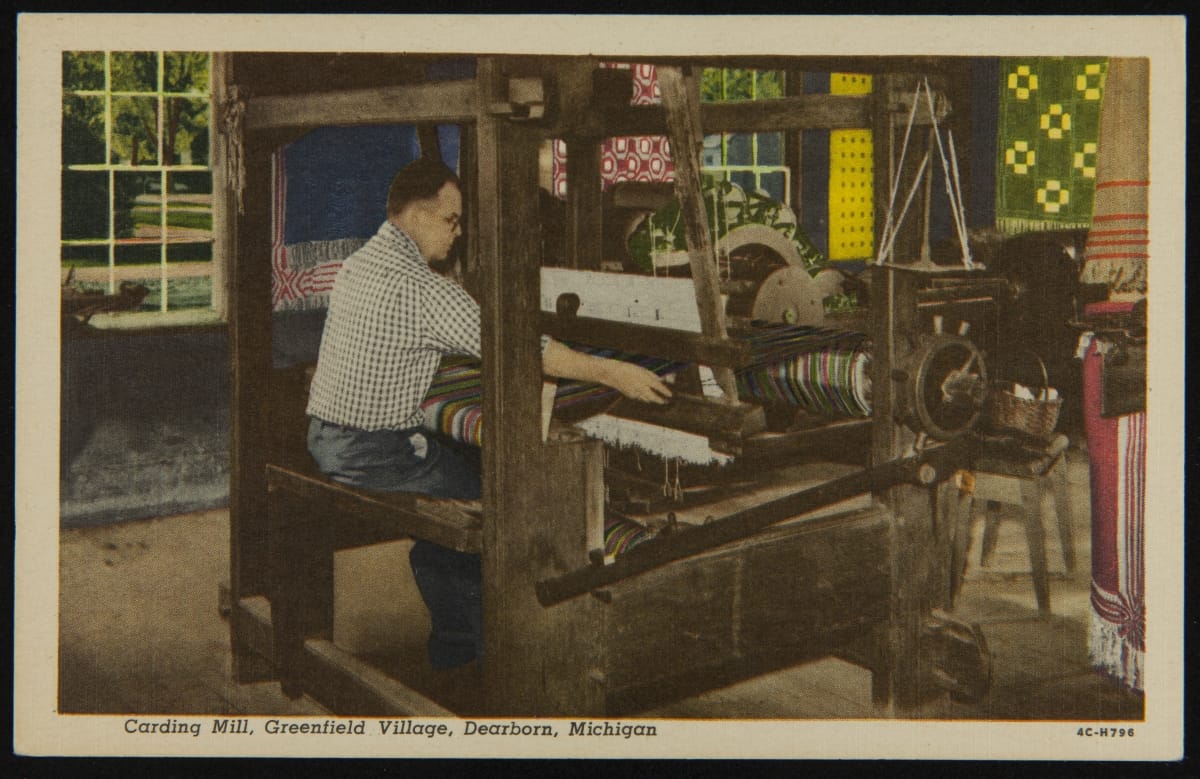
- 1954
- Collections - Artifact
"Carding Mill, Greenfield Village, Dearborn, Michigan," Published 1954
Craftspeople have presented weaving demonstrations at Greenfield Village since it opened to the public in 1933. Over the years, weavers have used several historic and refurbished looms located in the Plymouth Carding Mill (now Gunsolly Carding Mill) to create hand-crafted textiles. These presentations and resulting products help tell the story of textile production in America.