
Search
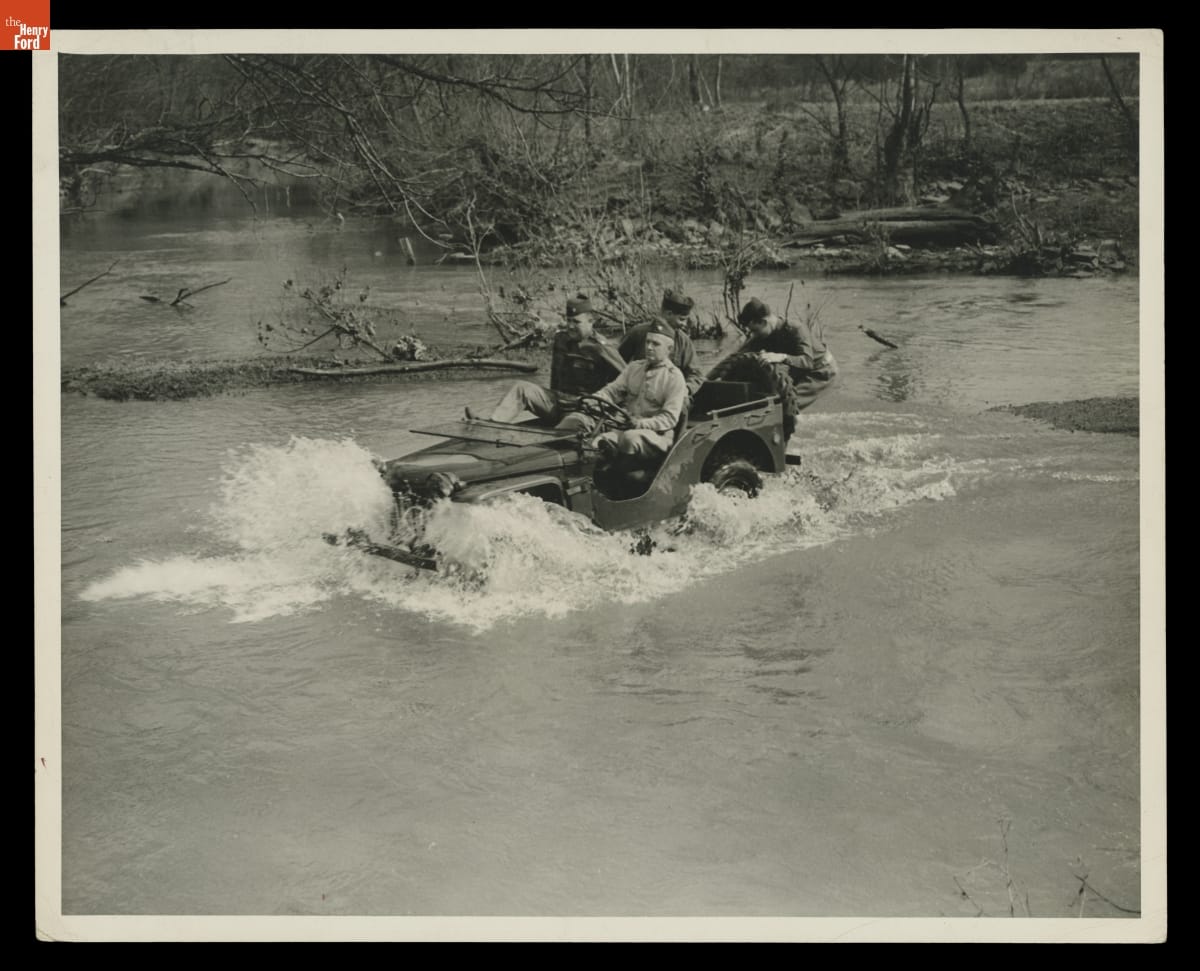
- Crossing a Stream in a Willys Military Jeep, circa 1943 - Few things are as iconic of World War II as the jeep. American Bantam created the design in response to a call from the U.S. Army, but Bantam couldn't produce it in the quantities required. Willys-Overland and Ford built the majority of the 650,000 jeeps manufactured for the war effort. Willys built Jeeps for the civilian market after the war.
- circa 1943
- Collections - Artifact
Crossing a Stream in a Willys Military Jeep, circa 1943
Few things are as iconic of World War II as the jeep. American Bantam created the design in response to a call from the U.S. Army, but Bantam couldn't produce it in the quantities required. Willys-Overland and Ford built the majority of the 650,000 jeeps manufactured for the war effort. Willys built Jeeps for the civilian market after the war.
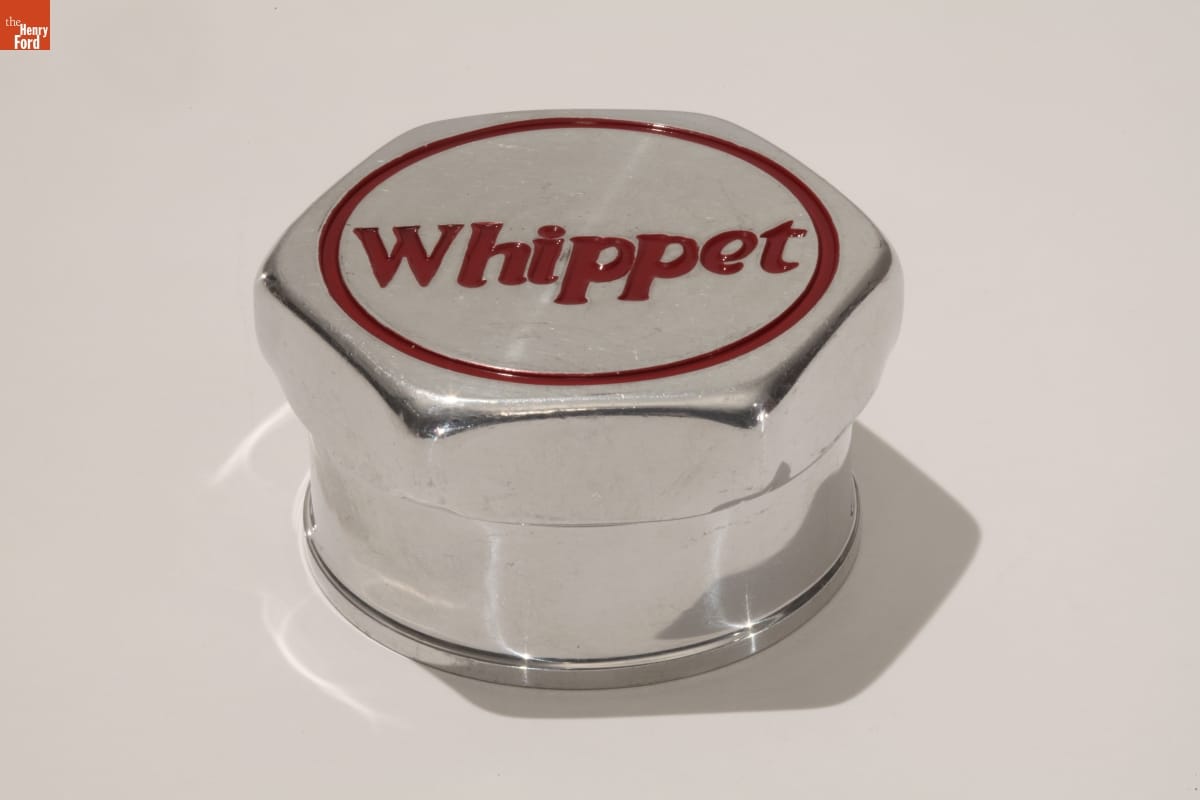
- Whippet Hubcap, circa 1928 - Willys-Overland of Toledo, Ohio, introduced its low-priced Whippet car for 1926. Generally marketed as its own make, the Whippet was slim but quick -- like the breed of dogs for which it was named. The car boasted four-wheel brakes and full-pressure lubrication, and prices started around $525. The Great Depression ended Whippet production in 1931.
- circa 1928
- Collections - Artifact
Whippet Hubcap, circa 1928
Willys-Overland of Toledo, Ohio, introduced its low-priced Whippet car for 1926. Generally marketed as its own make, the Whippet was slim but quick -- like the breed of dogs for which it was named. The car boasted four-wheel brakes and full-pressure lubrication, and prices started around $525. The Great Depression ended Whippet production in 1931.
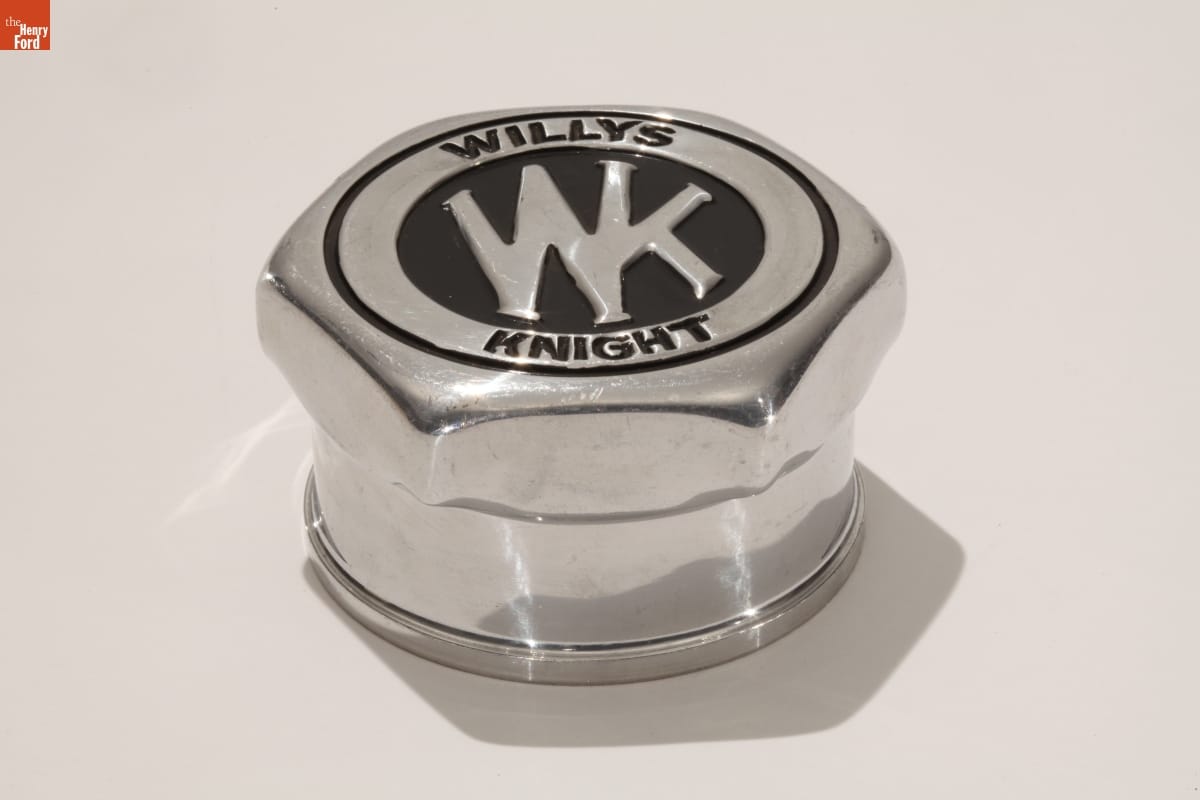
- Willys-Knight Hubcap, 1923-1928 - Willys-Overland introduced the mid-priced Willys-Knight for 1914. Willys-Knight cars used sleeve-valve engines throughout their 19-year production run. Unlike common poppet valves operated by cams and springs, sleeve valves sit inside the cylinders -- forming "sleeves" around the pistons -- and work via sliding or rotating motion. They make for a quieter engine, but they consume more oil.
- 1923-1928
- Collections - Artifact
Willys-Knight Hubcap, 1923-1928
Willys-Overland introduced the mid-priced Willys-Knight for 1914. Willys-Knight cars used sleeve-valve engines throughout their 19-year production run. Unlike common poppet valves operated by cams and springs, sleeve valves sit inside the cylinders -- forming "sleeves" around the pistons -- and work via sliding or rotating motion. They make for a quieter engine, but they consume more oil.
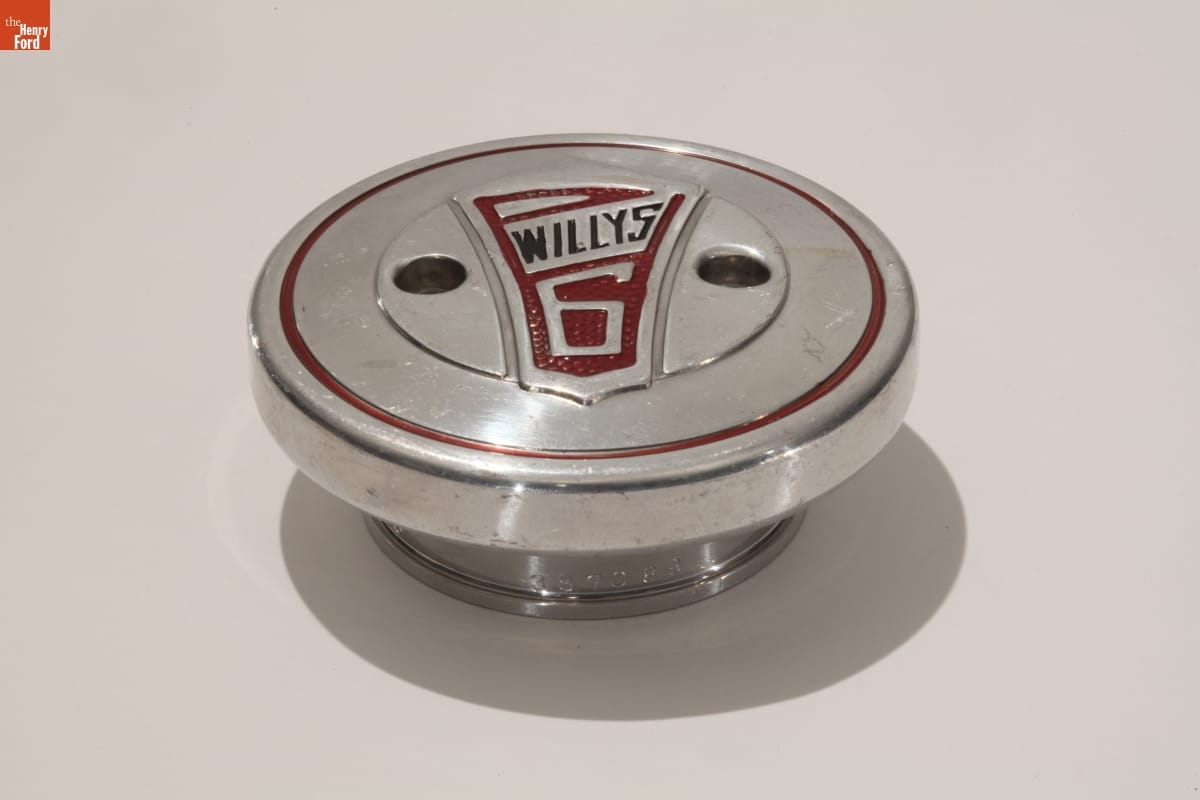
- Willys Six Hubcap, circa 1931 - Willys-Overland of Toledo, Ohio, simplified its product lineup as the company struggled during the Great Depression. Its low-priced Whippet was discontinued in 1931 and replaced by the Willys Six and the Willys Eight -- with each model named for its engine cylinder count. The Six and Eight, in turn, were replaced by the four-cylinder Willys 77 for 1934.
- circa 1931
- Collections - Artifact
Willys Six Hubcap, circa 1931
Willys-Overland of Toledo, Ohio, simplified its product lineup as the company struggled during the Great Depression. Its low-priced Whippet was discontinued in 1931 and replaced by the Willys Six and the Willys Eight -- with each model named for its engine cylinder count. The Six and Eight, in turn, were replaced by the four-cylinder Willys 77 for 1934.
- Willys-Knight Hubcap, 1923-1928 - Willys-Overland introduced the mid-priced Willys-Knight for 1914. Willys-Knight cars used sleeve-valve engines throughout their 19-year production run. Unlike common poppet valves operated by cams and springs, sleeve valves sit inside the cylinders -- forming "sleeves" around the pistons -- and work via sliding or rotating motion. They make for a quieter engine, but they consume more oil.
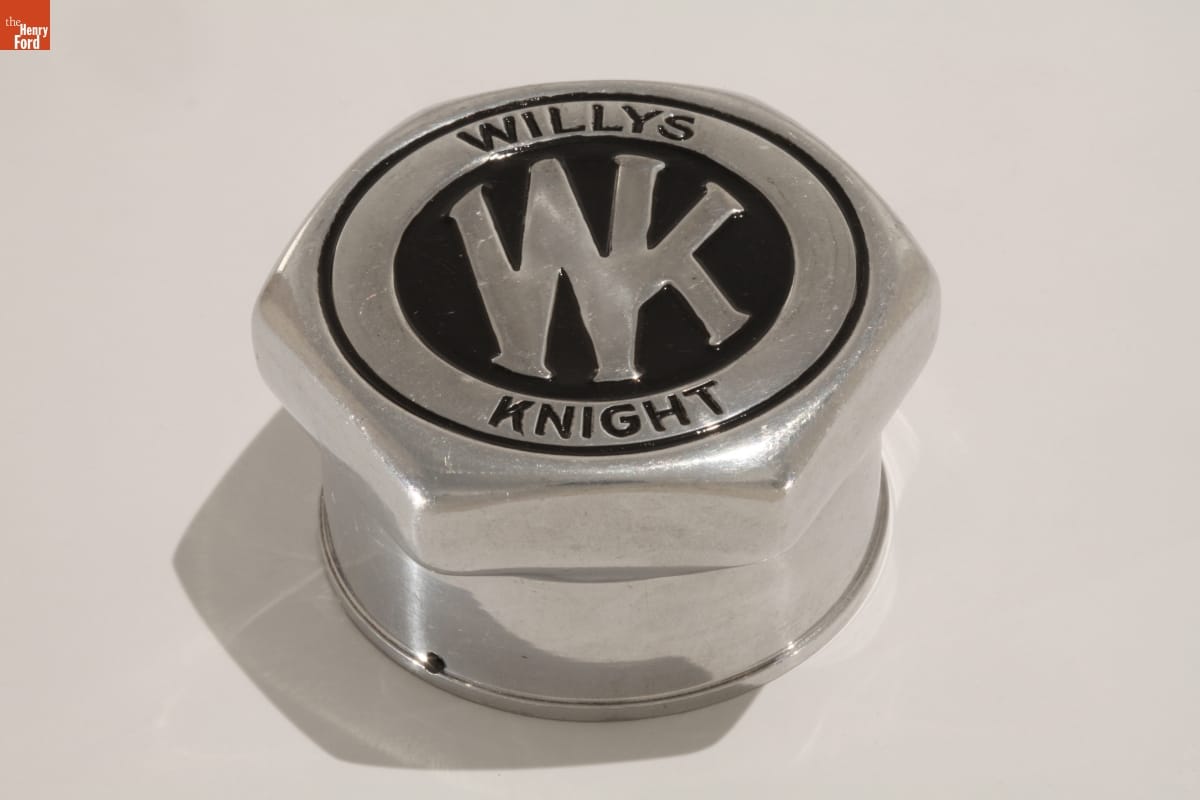
- 1923-1928
- Collections - Artifact
Willys-Knight Hubcap, 1923-1928
Willys-Overland introduced the mid-priced Willys-Knight for 1914. Willys-Knight cars used sleeve-valve engines throughout their 19-year production run. Unlike common poppet valves operated by cams and springs, sleeve valves sit inside the cylinders -- forming "sleeves" around the pistons -- and work via sliding or rotating motion. They make for a quieter engine, but they consume more oil.
- Willys-Knight Hubcap, circa 1930 - Willys-Overland introduced the mid-priced Willys-Knight for 1914. Willys-Knight cars used sleeve-valve engines throughout their 19-year production run. Unlike common poppet valves operated by cams and springs, sleeve valves sit inside the cylinders -- forming "sleeves" around the pistons -- and work via sliding or rotating motion. They make for a quieter engine, but they consume more oil.
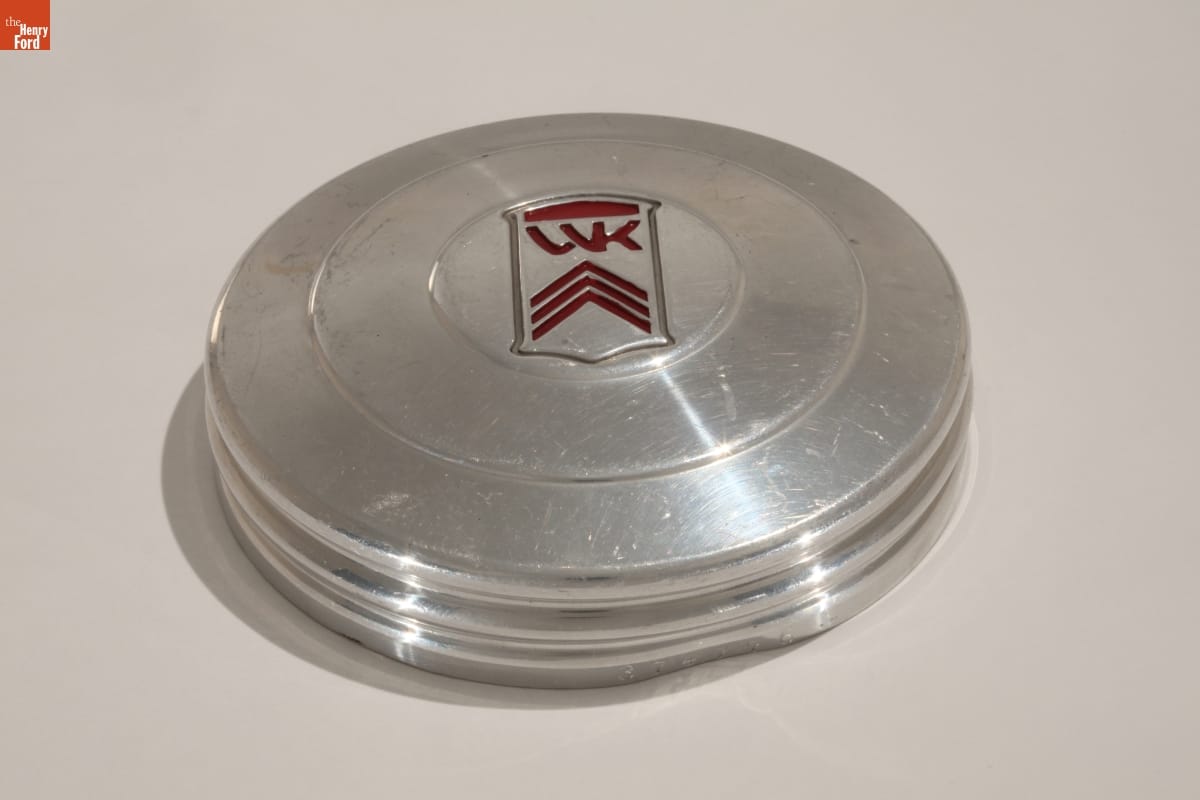
- circa 1930
- Collections - Artifact
Willys-Knight Hubcap, circa 1930
Willys-Overland introduced the mid-priced Willys-Knight for 1914. Willys-Knight cars used sleeve-valve engines throughout their 19-year production run. Unlike common poppet valves operated by cams and springs, sleeve valves sit inside the cylinders -- forming "sleeves" around the pistons -- and work via sliding or rotating motion. They make for a quieter engine, but they consume more oil.
- Willys-Knight Hubcap, 1923-1928 - Willys-Overland introduced the mid-priced Willys-Knight for 1914. Willys-Knight cars used sleeve-valve engines throughout their 19-year production run. Unlike common poppet valves operated by cams and springs, sleeve valves sit inside the cylinders -- forming "sleeves" around the pistons -- and work via sliding or rotating motion. They make for a quieter engine, but they consume more oil.
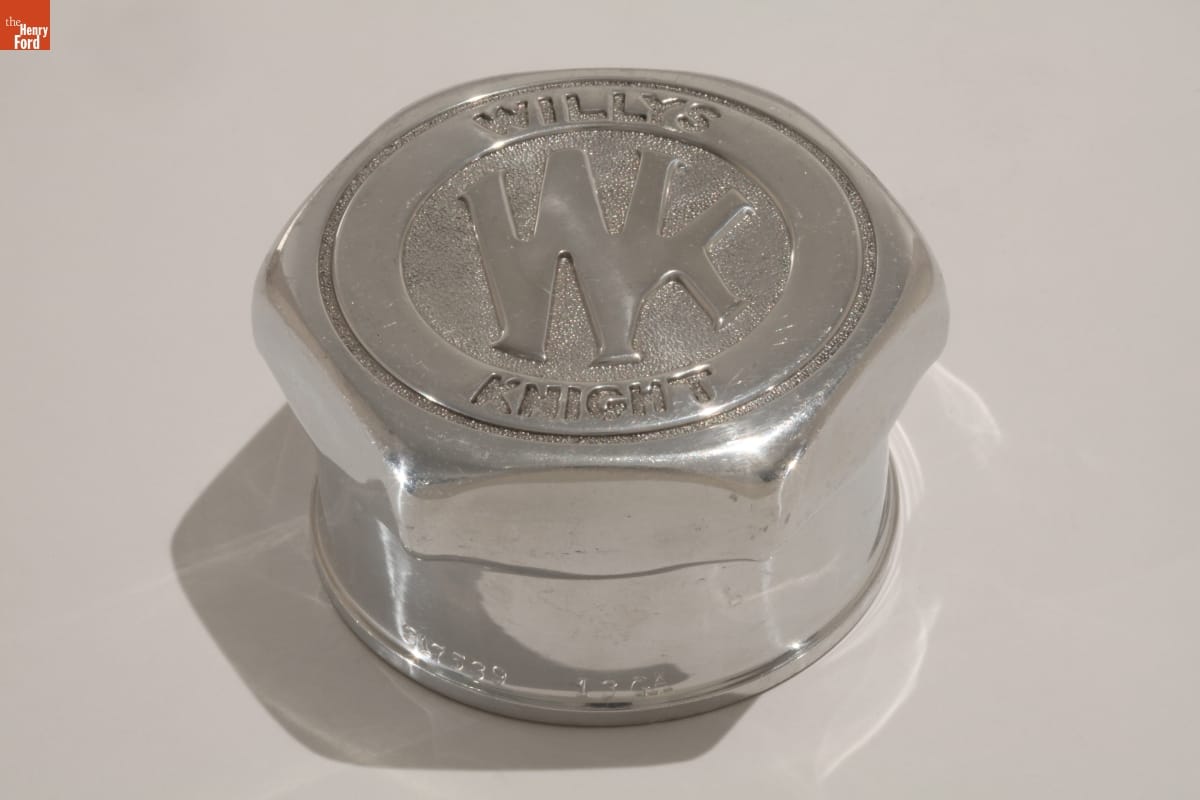
- 1923-1928
- Collections - Artifact
Willys-Knight Hubcap, 1923-1928
Willys-Overland introduced the mid-priced Willys-Knight for 1914. Willys-Knight cars used sleeve-valve engines throughout their 19-year production run. Unlike common poppet valves operated by cams and springs, sleeve valves sit inside the cylinders -- forming "sleeves" around the pistons -- and work via sliding or rotating motion. They make for a quieter engine, but they consume more oil.
- Whippet Hubcap, circa 1928 - Willys-Overland of Toledo, Ohio, introduced its low-priced Whippet car for 1926. Generally marketed as its own make, the Whippet was slim but quick -- like the breed of dogs for which it was named. The car boasted four-wheel brakes and full-pressure lubrication, and prices started around $525. The Great Depression ended Whippet production in 1931.
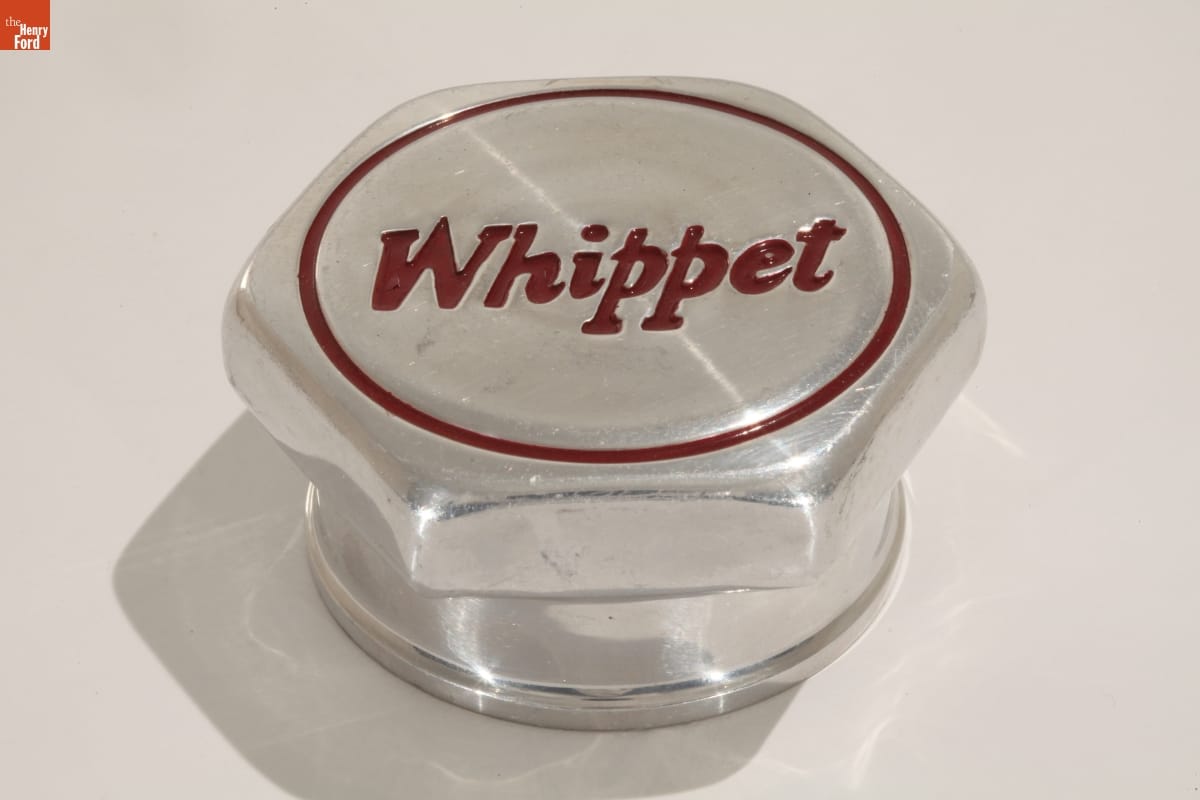
- circa 1928
- Collections - Artifact
Whippet Hubcap, circa 1928
Willys-Overland of Toledo, Ohio, introduced its low-priced Whippet car for 1926. Generally marketed as its own make, the Whippet was slim but quick -- like the breed of dogs for which it was named. The car boasted four-wheel brakes and full-pressure lubrication, and prices started around $525. The Great Depression ended Whippet production in 1931.
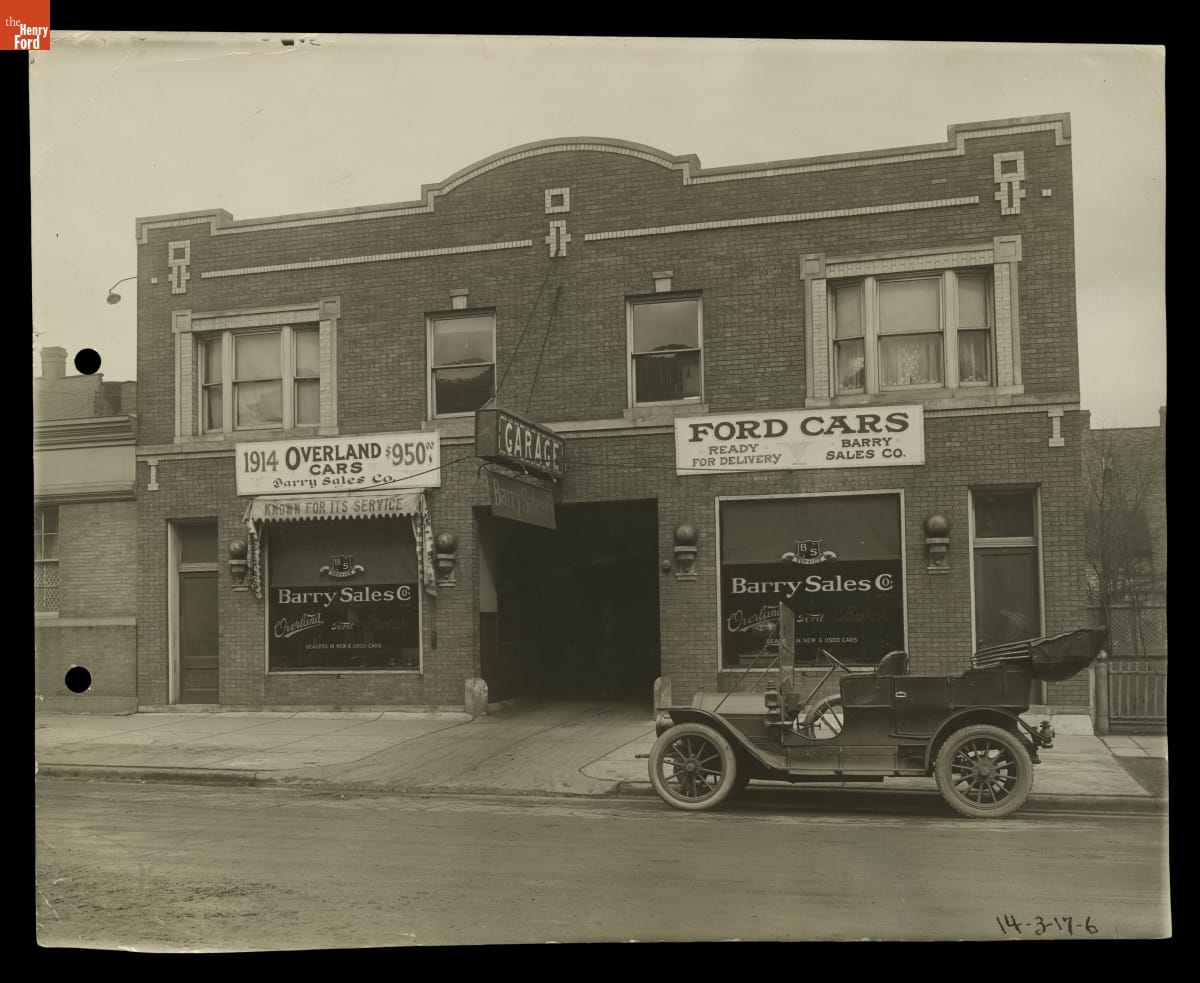
- Barry Sales Co. Automobile Dealership, Chicago, Illinois, 1914 - The franchise system, through which auto dealers had exclusive rights to sell a particular manufacturer's cars in a specific area, did not become common until about 1920. Prior to that, an independent dealer might carry several brands sourced from a distributor who, in turn, bought them from manufacturers. This Chicago dealership carried Overland, Ford and Buick automobiles in 1914.
- 1914
- Collections - Artifact
Barry Sales Co. Automobile Dealership, Chicago, Illinois, 1914
The franchise system, through which auto dealers had exclusive rights to sell a particular manufacturer's cars in a specific area, did not become common until about 1920. Prior to that, an independent dealer might carry several brands sourced from a distributor who, in turn, bought them from manufacturers. This Chicago dealership carried Overland, Ford and Buick automobiles in 1914.
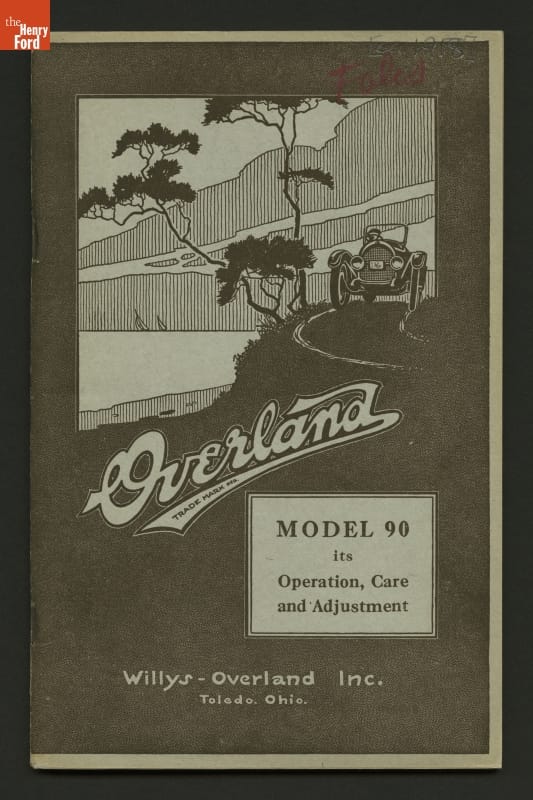
- Owner's Manual for Overland Model 90, Its Operation, Care and Adjustment, Willys-Overland Inc., Toledo, Ohio, circa 1918 - If you wanted a bit more than the basic Ford Model T, the 1918 Willys-Overland offered it. The car had more room, more style, more power, and it had an electric starter and a sliding-gear transmission -- but it also cost a bit more. This 1918 owner's manual laid out the features that owners would find when purchasing an Overland.
- circa 1918
- Collections - Artifact
Owner's Manual for Overland Model 90, Its Operation, Care and Adjustment, Willys-Overland Inc., Toledo, Ohio, circa 1918
If you wanted a bit more than the basic Ford Model T, the 1918 Willys-Overland offered it. The car had more room, more style, more power, and it had an electric starter and a sliding-gear transmission -- but it also cost a bit more. This 1918 owner's manual laid out the features that owners would find when purchasing an Overland.