
Search
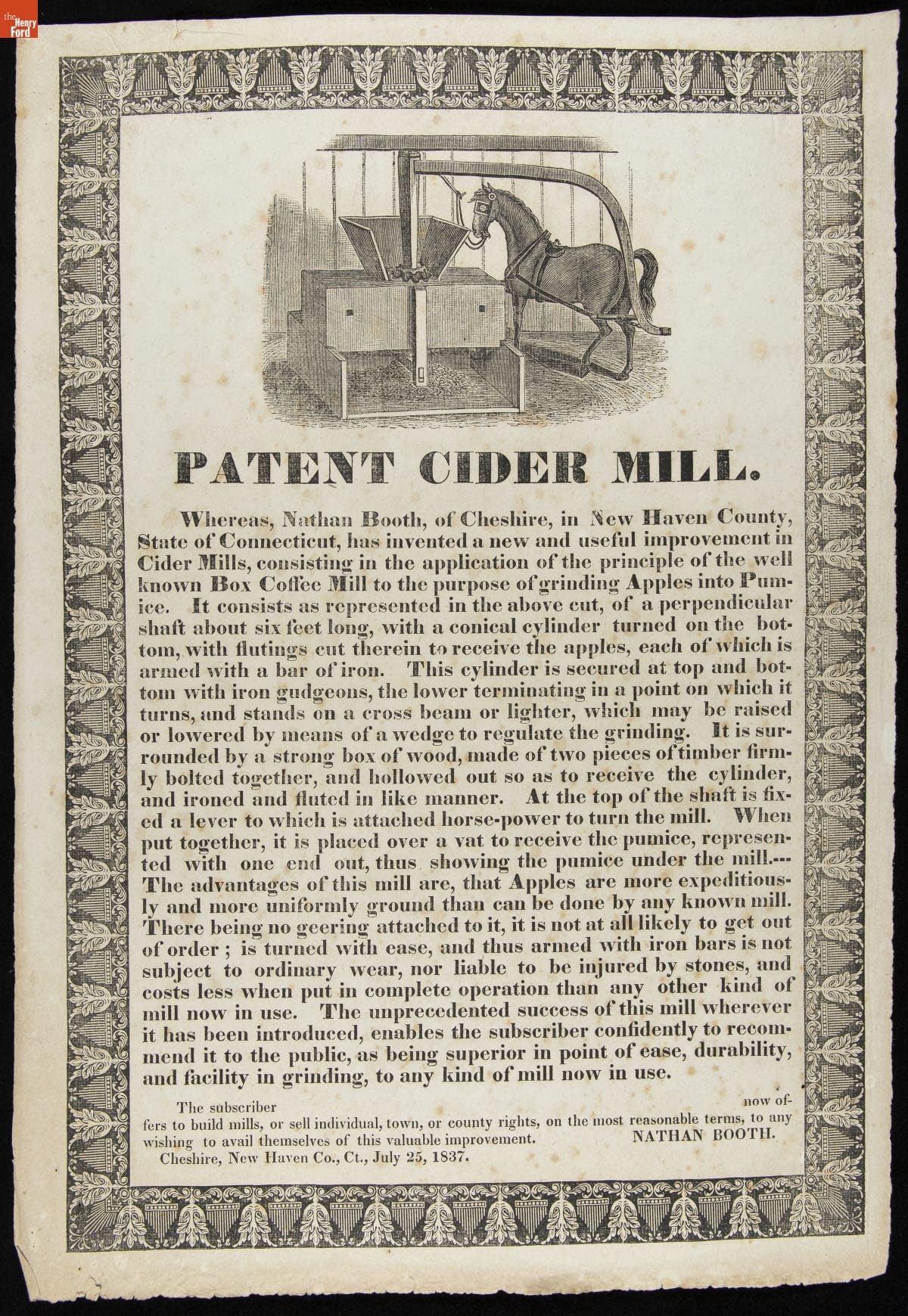
- Patent Cider Mill, 1837 -
- July 25, 1837
- Collections - Artifact
Patent Cider Mill, 1837
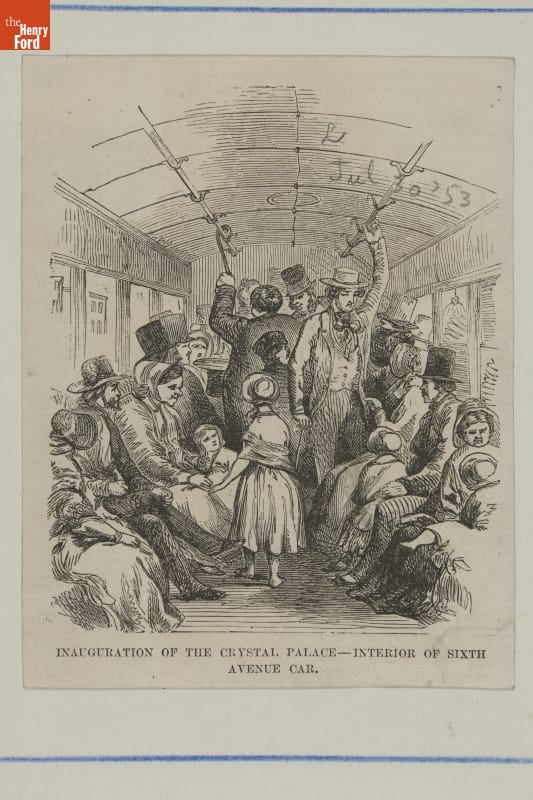
- "Inauguration of the Crystal Palace - Interior of Sixth Avenue Car," 1853 - In the mid-1800s, horse-drawn streetcars provided a convenient and affordable way to get around a growing city. Streetcars traveled the main urban thoroughfares and took passengers to workplaces, local shops and businesses, parks and other destinations. This print from 1853 shows New Yorkers headed to the opening of the city's Crystal Palace exhibition.
- 1853
- Collections - Artifact
"Inauguration of the Crystal Palace - Interior of Sixth Avenue Car," 1853
In the mid-1800s, horse-drawn streetcars provided a convenient and affordable way to get around a growing city. Streetcars traveled the main urban thoroughfares and took passengers to workplaces, local shops and businesses, parks and other destinations. This print from 1853 shows New Yorkers headed to the opening of the city's Crystal Palace exhibition.
- John Burroughs on His 82nd Birthday, Yama Farms, New York, April 3, 1919 -
- April 03, 1919
- Collections - Artifact
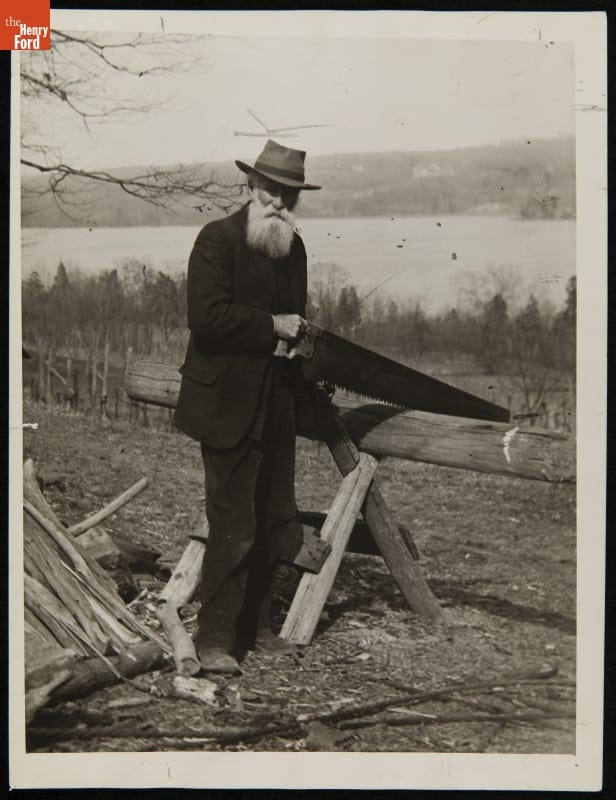
John Burroughs on His 82nd Birthday, Yama Farms, New York, April 3, 1919
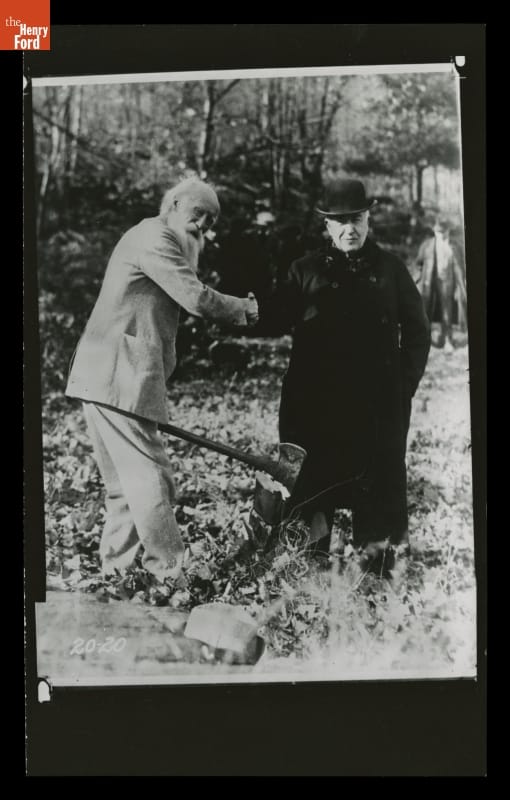
- John Burroughs and Thomas Edison on a "Vagabonds" Camping Trip, 1920 - Between 1916 and 1924, Henry Ford, Thomas Edison, Harvey Firestone and naturalist John Burroughs embarked on a series of camping trips. They called themselves the Vagabonds. These Vagabonds enjoyed camping, hiking, sightseeing and just being in each other's company. Here Burroughs and Edison strike a friendly pose for the camera -- Burroughs appears to be cutting firewood for the group.
- 1920
- Collections - Artifact
John Burroughs and Thomas Edison on a "Vagabonds" Camping Trip, 1920
Between 1916 and 1924, Henry Ford, Thomas Edison, Harvey Firestone and naturalist John Burroughs embarked on a series of camping trips. They called themselves the Vagabonds. These Vagabonds enjoyed camping, hiking, sightseeing and just being in each other's company. Here Burroughs and Edison strike a friendly pose for the camera -- Burroughs appears to be cutting firewood for the group.
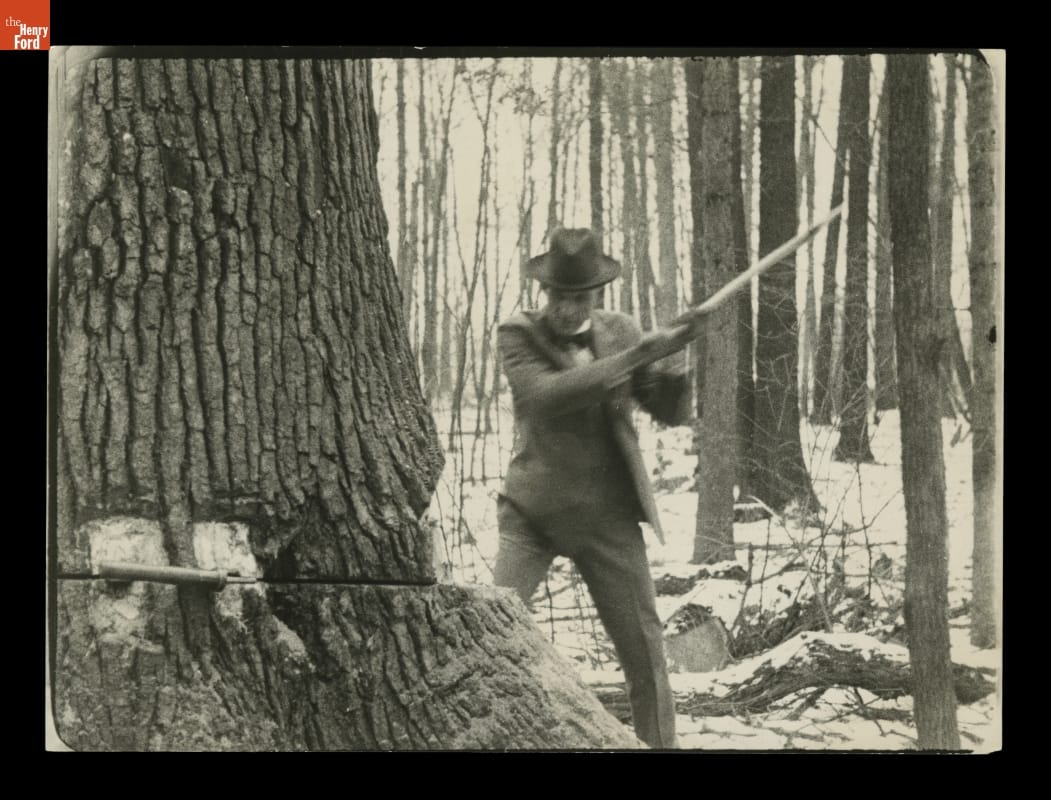
- Henry Ford Chopping a Tree, circa 1915 -
- circa 1915
- Collections - Artifact
Henry Ford Chopping a Tree, circa 1915
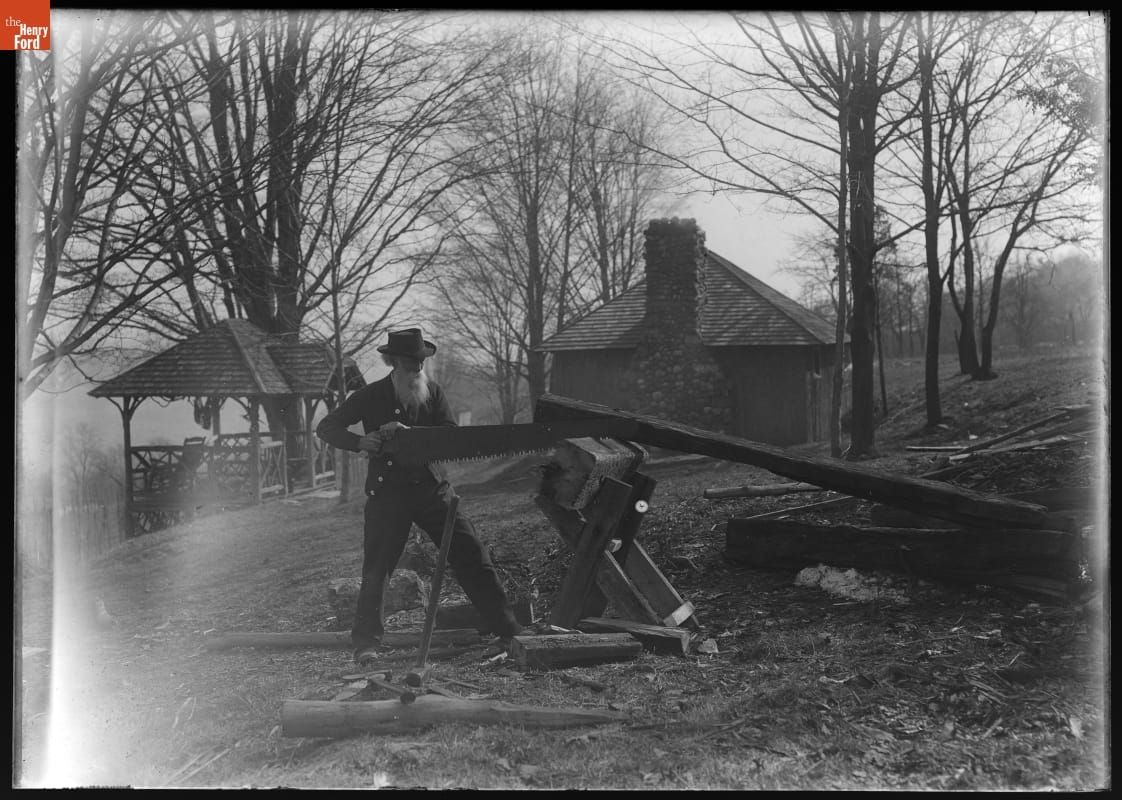
- John Burroughs Sawing Wood near His Study at Riverby, 1910-1920 - John Burroughs (1837-1921) was an internationally known naturalist and essayist who wrote about accessible and familiar landscapes. In 1873, Burroughs bought a plot of land overlooking the Hudson in the Catskills of upstate New York and named it Riverby. Here, he farmed and cultivated grapes and fruit trees. He also erected a family home and built secluded retreats where he penned some of his most famous works.
- 1910-1920
- Collections - Artifact
John Burroughs Sawing Wood near His Study at Riverby, 1910-1920
John Burroughs (1837-1921) was an internationally known naturalist and essayist who wrote about accessible and familiar landscapes. In 1873, Burroughs bought a plot of land overlooking the Hudson in the Catskills of upstate New York and named it Riverby. Here, he farmed and cultivated grapes and fruit trees. He also erected a family home and built secluded retreats where he penned some of his most famous works.
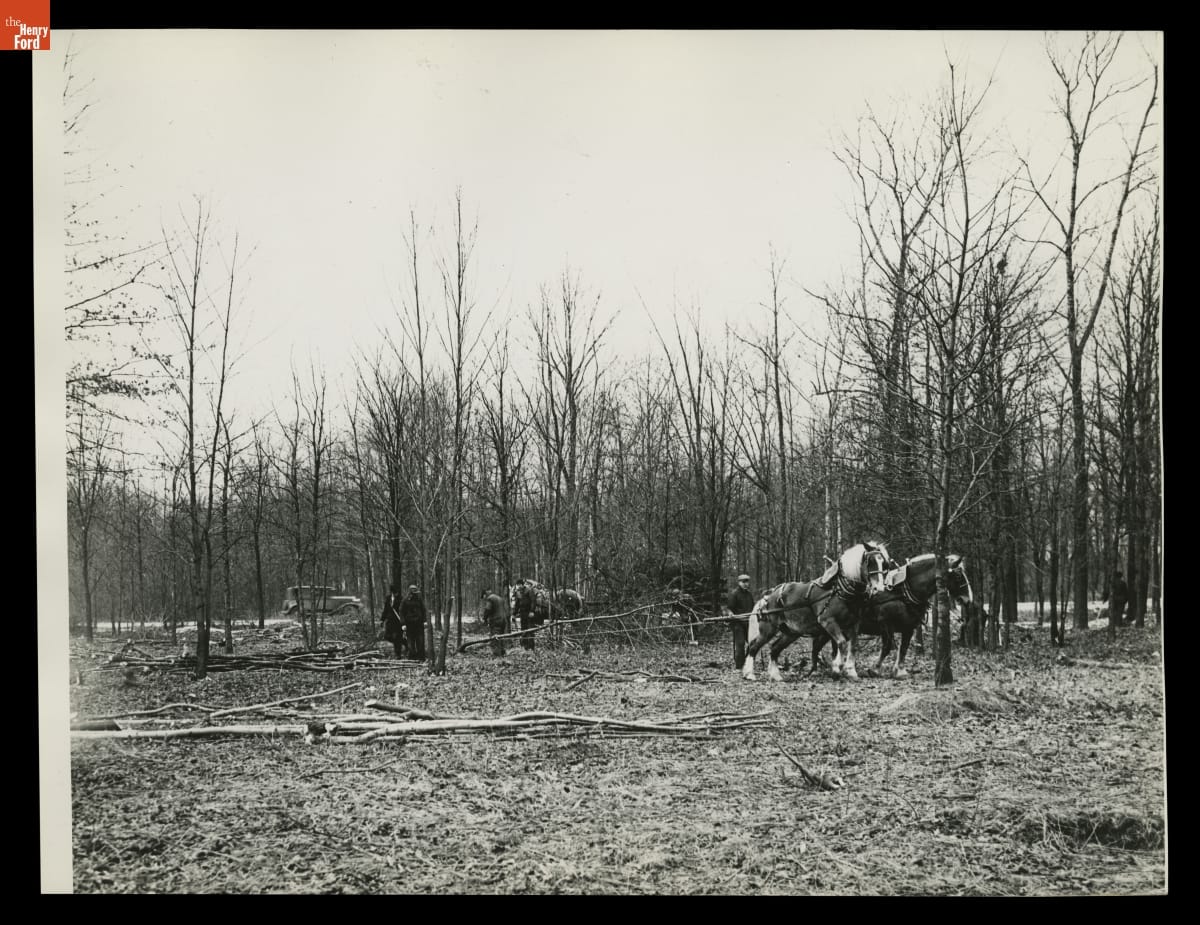
- Clearing Felled Trees at Ford Airport, March 1937 - Ford Airport opened in Dearborn, Michigan, in 1924. The complex grew to include an airship mooring mast, concrete runways, a passenger terminal, an on-site airplane factory, and an adjacent hotel. Aviation activity slowed there in the late 1930s as the facility was converted into a Ford Motor Company proving ground. The airport formally closed in 1947.
- March 26, 1937
- Collections - Artifact
Clearing Felled Trees at Ford Airport, March 1937
Ford Airport opened in Dearborn, Michigan, in 1924. The complex grew to include an airship mooring mast, concrete runways, a passenger terminal, an on-site airplane factory, and an adjacent hotel. Aviation activity slowed there in the late 1930s as the facility was converted into a Ford Motor Company proving ground. The airport formally closed in 1947.
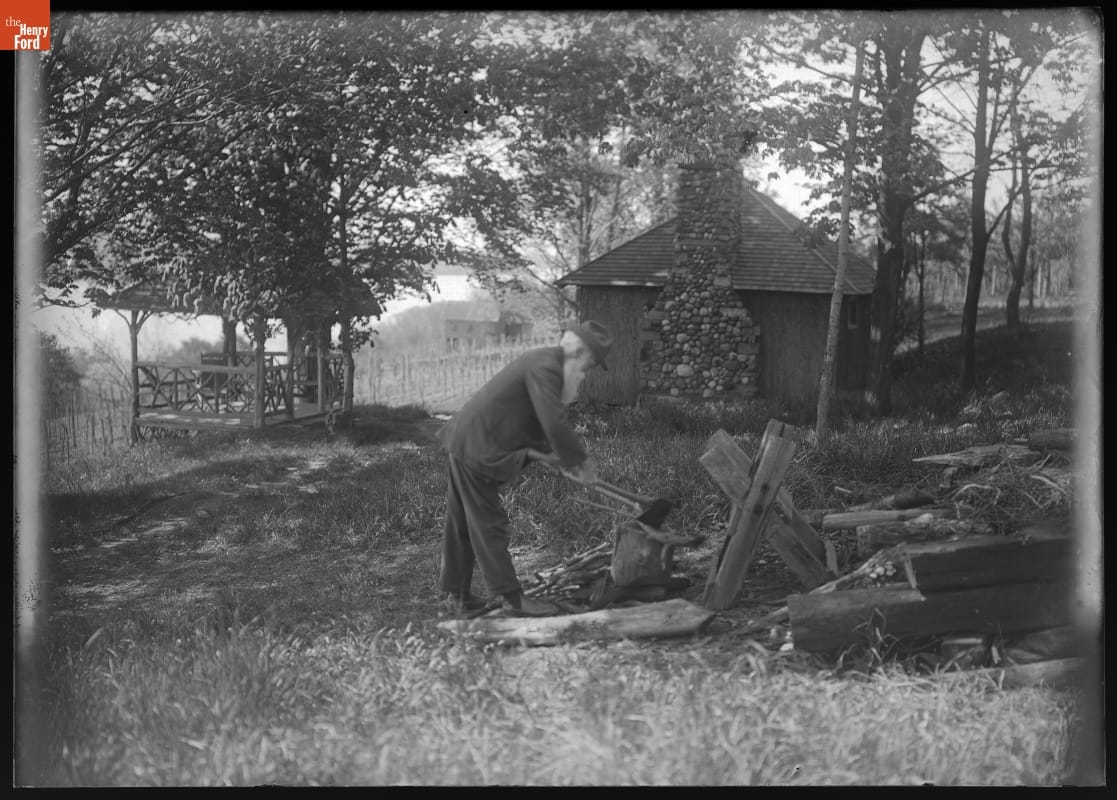
- John Burroughs Chopping Wood near His Study at Riverby, 1910-1920 - John Burroughs (1837-1921) was an internationally known naturalist and essayist who wrote about accessible and familiar landscapes. In 1873, Burroughs bought a plot of land overlooking the Hudson in the Catskills of upstate New York and named it Riverby. Here, he farmed and cultivated grapes and fruit trees. He also erected a family home and built secluded retreats where he penned some of his most famous works.
- 1910-1920
- Collections - Artifact
John Burroughs Chopping Wood near His Study at Riverby, 1910-1920
John Burroughs (1837-1921) was an internationally known naturalist and essayist who wrote about accessible and familiar landscapes. In 1873, Burroughs bought a plot of land overlooking the Hudson in the Catskills of upstate New York and named it Riverby. Here, he farmed and cultivated grapes and fruit trees. He also erected a family home and built secluded retreats where he penned some of his most famous works.
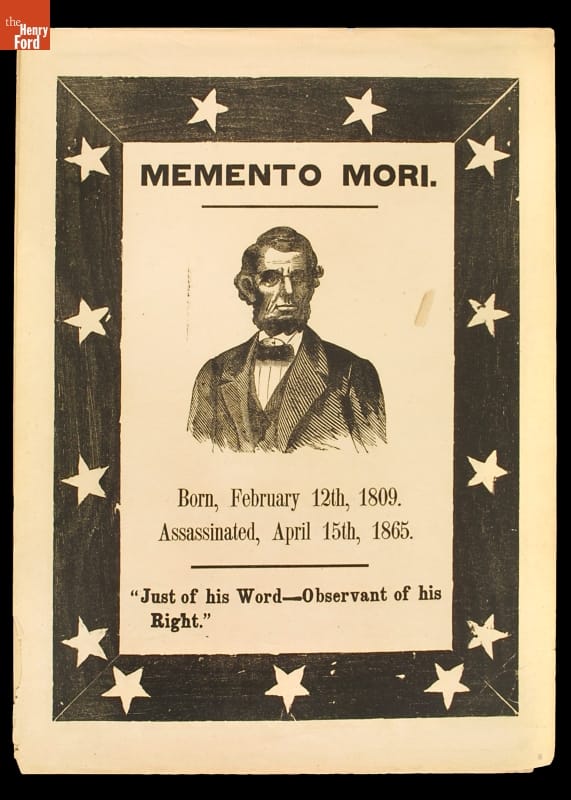
- "Memento Mori," Woodcut Commemorating the Death of Abraham Lincoln, 1865 - President Lincoln's assassination produced an outpouring of grief. His death linked him with the hundreds of thousands of Union soldiers that had sacrificed their lives during the Civil War. His life and the causes he embodied--the Union and Emancipation of enslaved African Americans--touched admirers and detractors alike. This print pays tribute to Lincoln through an image and a quote from the Roman poet, Virgil.
- 1865
- Collections - Artifact
"Memento Mori," Woodcut Commemorating the Death of Abraham Lincoln, 1865
President Lincoln's assassination produced an outpouring of grief. His death linked him with the hundreds of thousands of Union soldiers that had sacrificed their lives during the Civil War. His life and the causes he embodied--the Union and Emancipation of enslaved African Americans--touched admirers and detractors alike. This print pays tribute to Lincoln through an image and a quote from the Roman poet, Virgil.
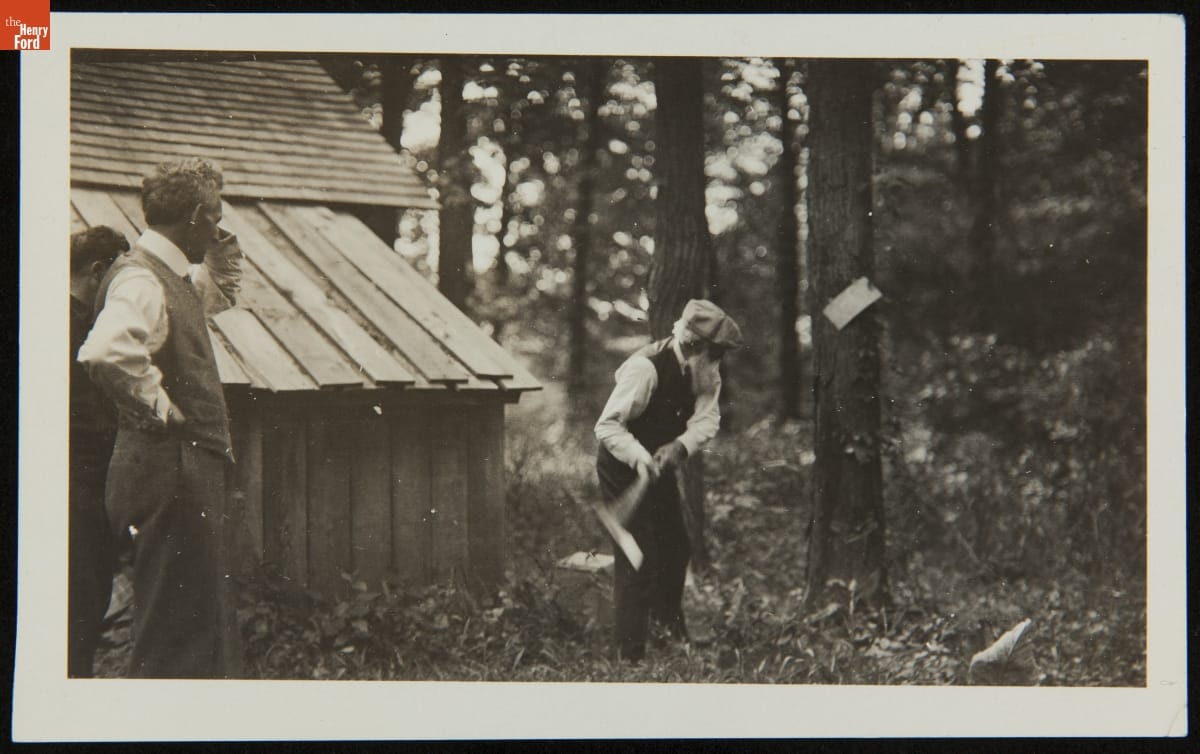
- Henry Ford Watching John Burroughs Chopping Wood, Fair Lane, 1916 - In the early 1910s, Henry Ford befriended John Burroughs, an internationally known naturalist and writer. The two bonded over their love of birds and nature. In 1916, Burroughs traveled to Dearborn, Michigan, to visit Ford at his home -- Fair Lane. This photo shows the pair near the Sugar House on the 1300-acre estate.
- 1916
- Collections - Artifact
Henry Ford Watching John Burroughs Chopping Wood, Fair Lane, 1916
In the early 1910s, Henry Ford befriended John Burroughs, an internationally known naturalist and writer. The two bonded over their love of birds and nature. In 1916, Burroughs traveled to Dearborn, Michigan, to visit Ford at his home -- Fair Lane. This photo shows the pair near the Sugar House on the 1300-acre estate.