
Search
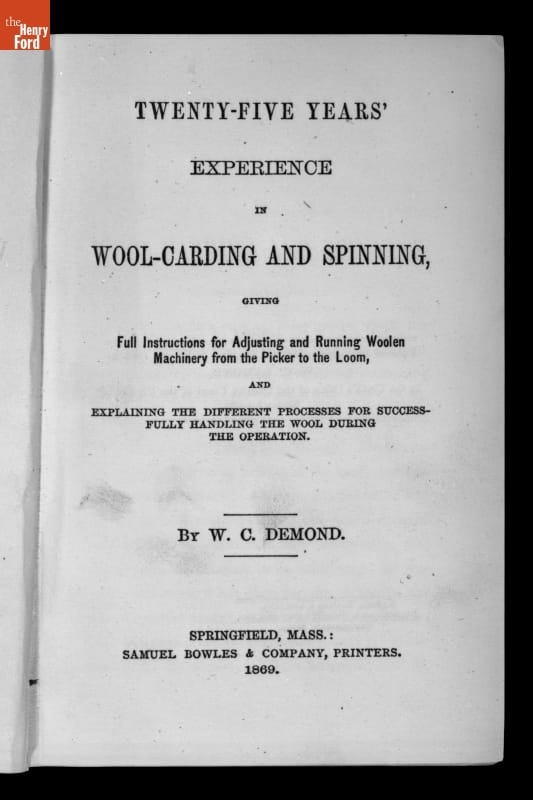
- "Twenty-Five Years' Experience in Wool-Carding and Spinning," 1869 -
- 1869
- Collections - Artifact
"Twenty-Five Years' Experience in Wool-Carding and Spinning," 1869
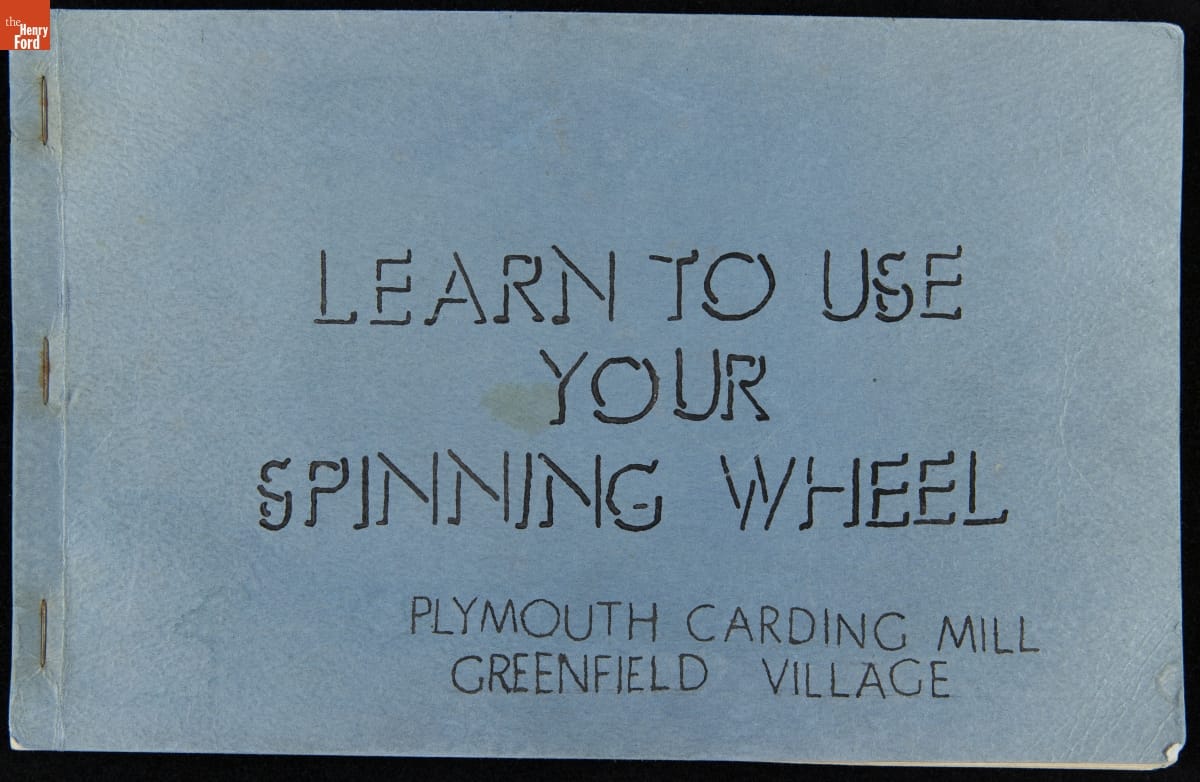
- Learn to Use Your Spinning Wheel, 1960 -
- 1960
- Collections - Artifact
Learn to Use Your Spinning Wheel, 1960
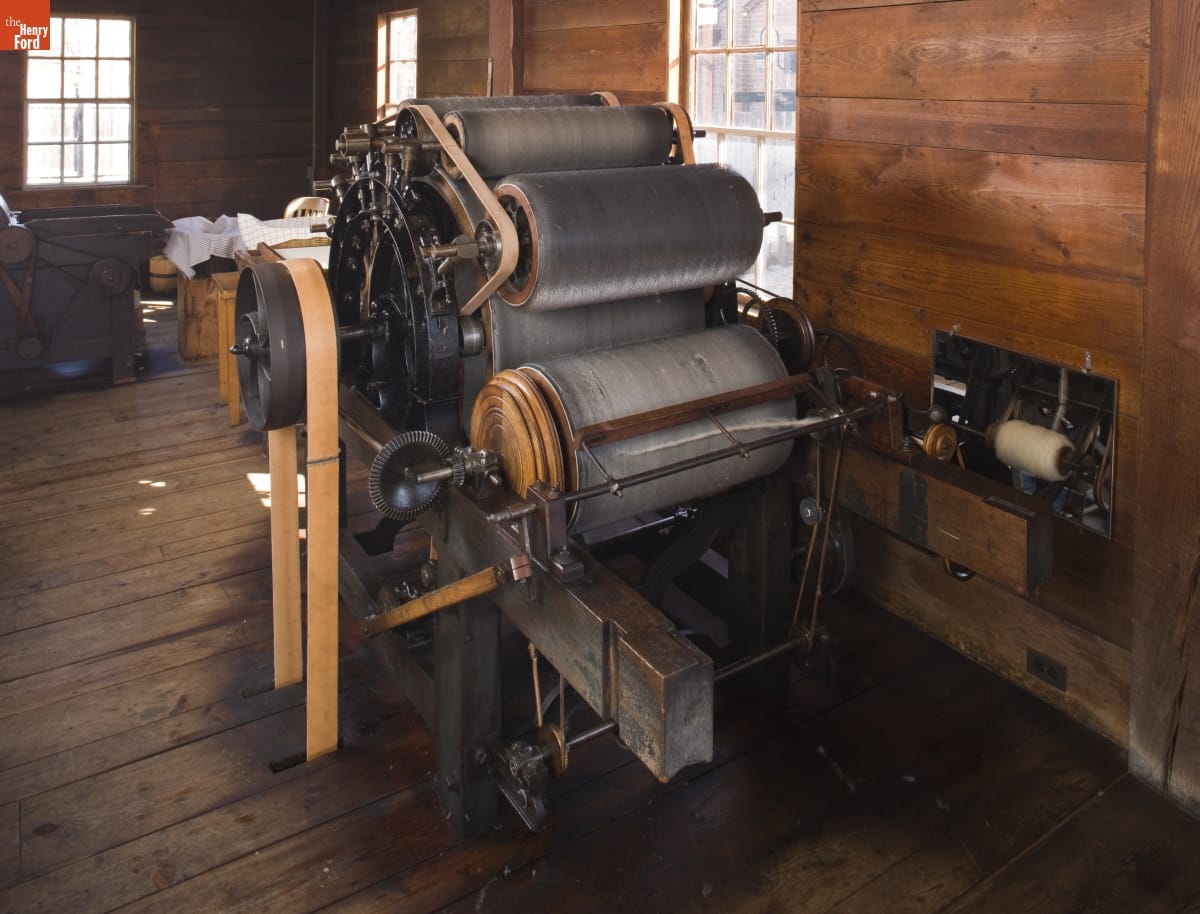
- Carding Machine, 1850-1880 - For much of the nineteenth century, the American textile industry was at the forefront of processing and precision machine technology. Carding is a crucial step in the processing of raw cotton or wool; machines like this were used singly in tiny rural mills or in multiple in the largest textile factories.
- 1850-1880
- Collections - Artifact
Carding Machine, 1850-1880
For much of the nineteenth century, the American textile industry was at the forefront of processing and precision machine technology. Carding is a crucial step in the processing of raw cotton or wool; machines like this were used singly in tiny rural mills or in multiple in the largest textile factories.
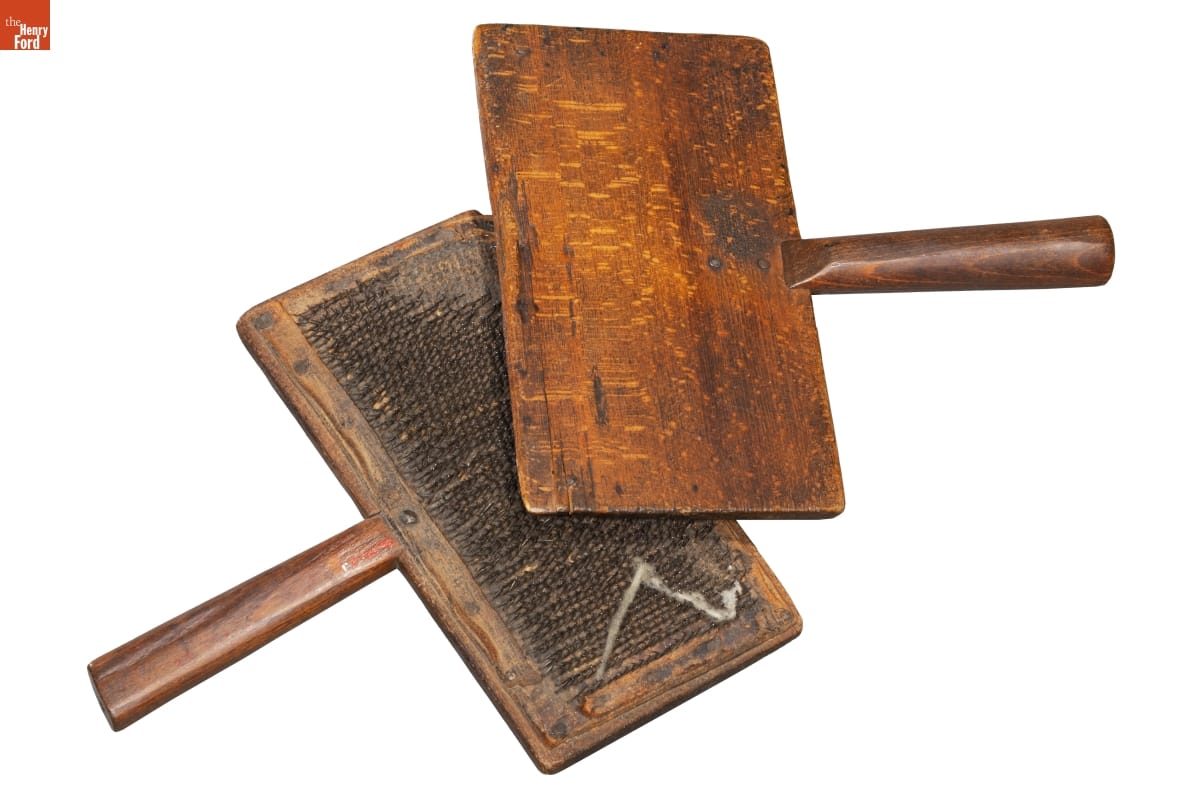
- Pair of Hand Cards, circa 1800 - Before wool is spun into yarn, the fibers are untangled and aligned, making it easier to produce a smooth, consistent yarn. In this process, called carding, clean wool fleece is passed between small, bent wire teeth to align the fibers. Hand cards, like this pair, were used in 18th and 19th century American homes to card wool prior to spinning. Younger children were often given this necessary, but monotonous, task.
- circa 1800
- Collections - Artifact
Pair of Hand Cards, circa 1800
Before wool is spun into yarn, the fibers are untangled and aligned, making it easier to produce a smooth, consistent yarn. In this process, called carding, clean wool fleece is passed between small, bent wire teeth to align the fibers. Hand cards, like this pair, were used in 18th and 19th century American homes to card wool prior to spinning. Younger children were often given this necessary, but monotonous, task.
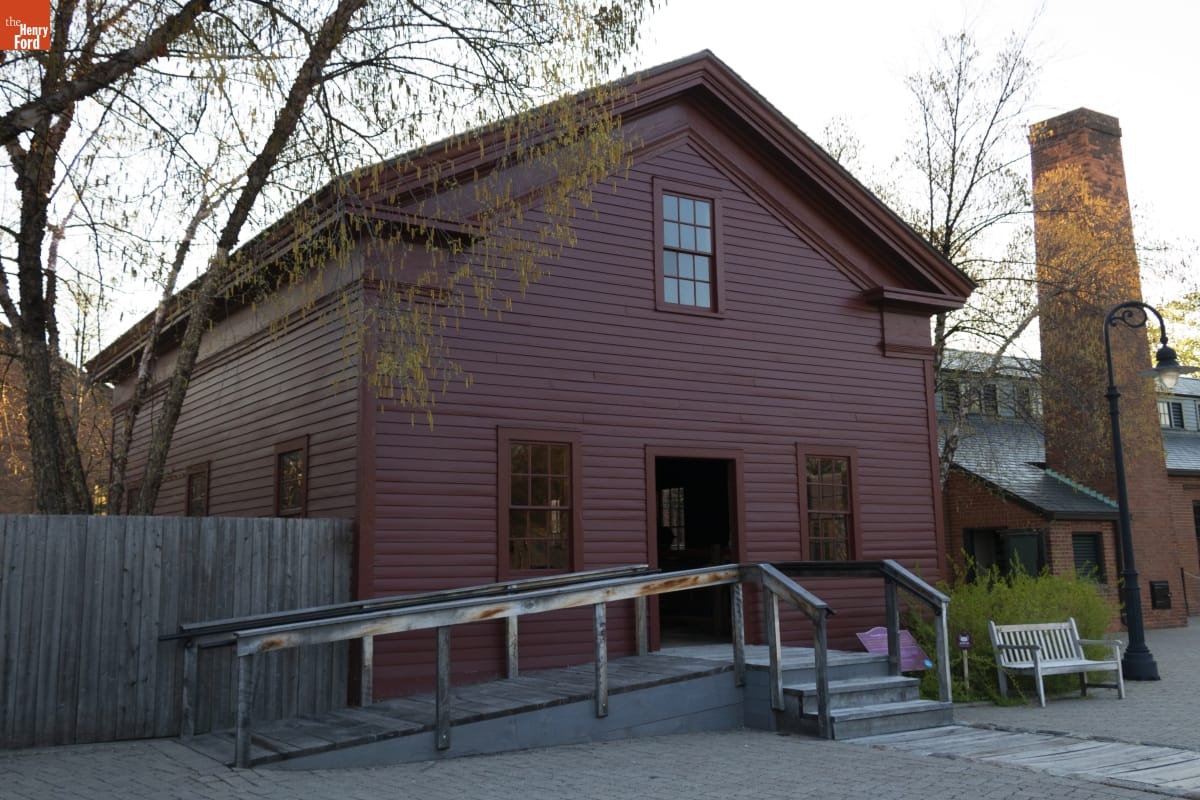
- Gunsolly Carding Mill - John Gunsolly operated this water-powered carding mill as well as a saw and cider mill on the Middle Rouge River near Plymouth, Michigan, beginning in the 1850s. Area farmers brought their wool to this mill to have it carded (combed) so it could be spun into thread.
- circa 1850
- Collections - Artifact
Gunsolly Carding Mill
John Gunsolly operated this water-powered carding mill as well as a saw and cider mill on the Middle Rouge River near Plymouth, Michigan, beginning in the 1850s. Area farmers brought their wool to this mill to have it carded (combed) so it could be spun into thread.
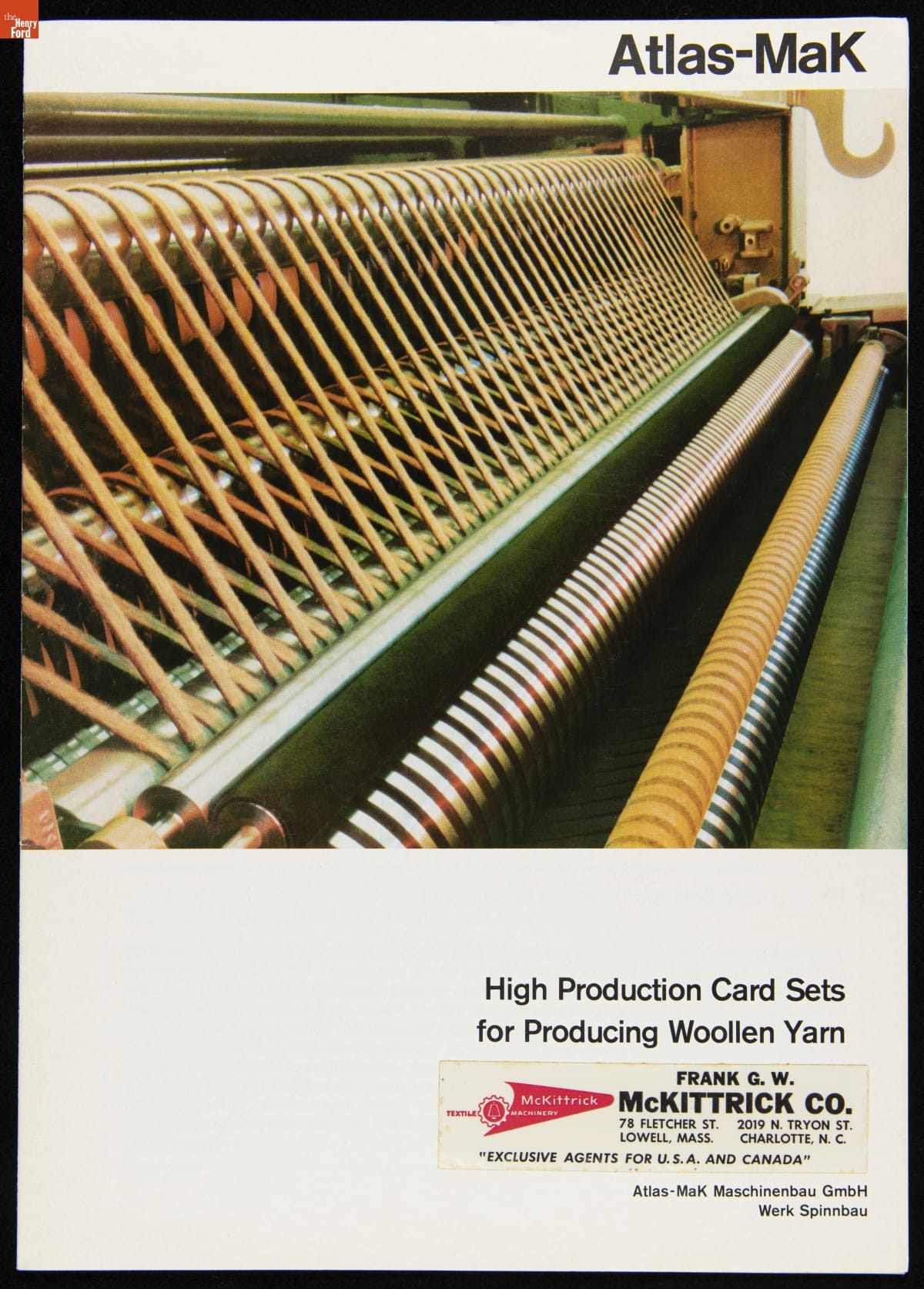
- Atlas-MaK Maschinenbau GmbH Trade Catalog, "High Production Card Sets for Woolen Yarn," 1960-1969 -
- 1960-1969
- Collections - Artifact
Atlas-MaK Maschinenbau GmbH Trade Catalog, "High Production Card Sets for Woolen Yarn," 1960-1969
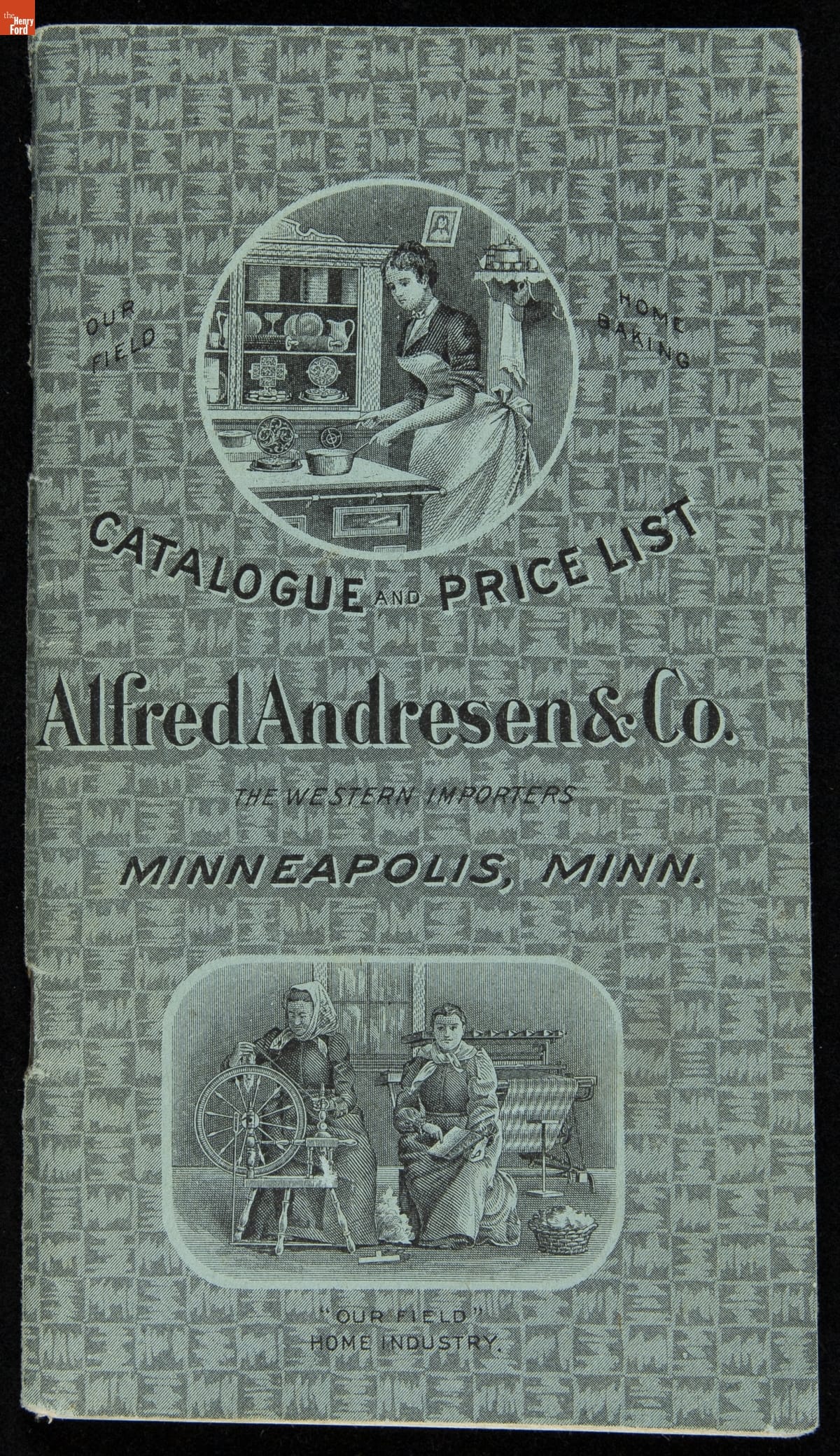
- Alfred Anderson & Co. Trade Catalog, "Illustrated Catalogue with Prices and Descriptions of Imported and Other Hardware Specialties," circa 1901 -
- circa 1901
- Collections - Artifact
Alfred Anderson & Co. Trade Catalog, "Illustrated Catalogue with Prices and Descriptions of Imported and Other Hardware Specialties," circa 1901
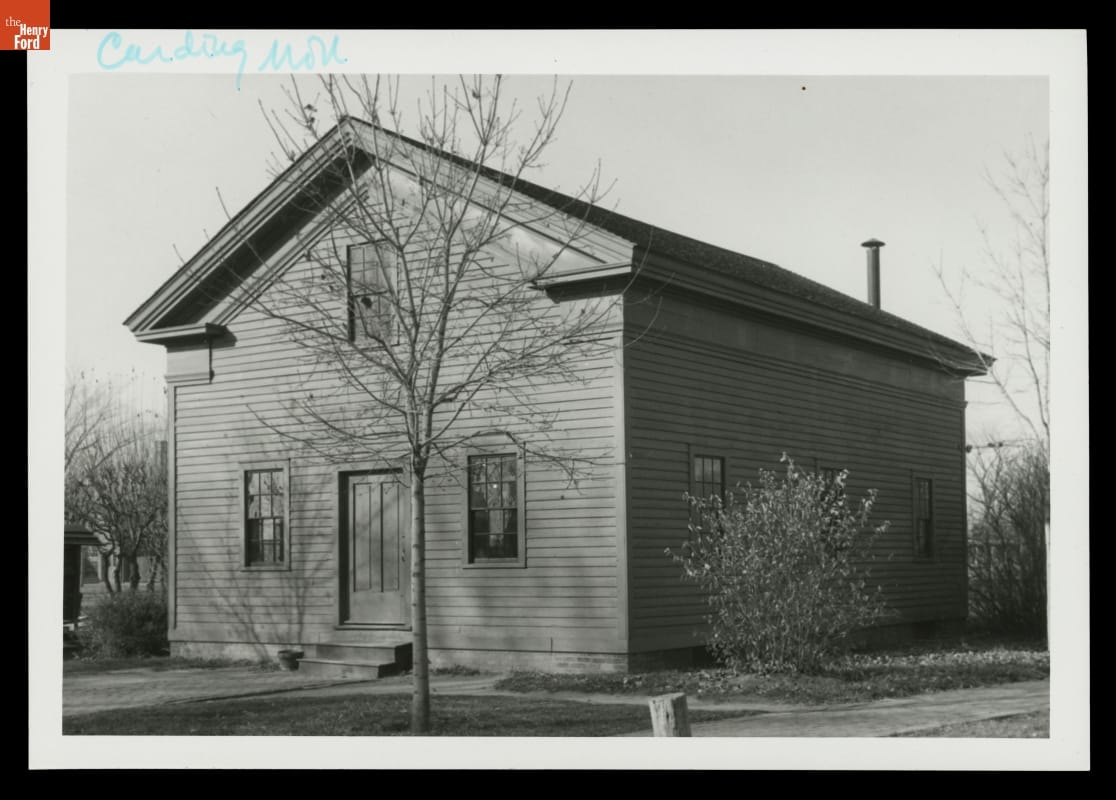
- Plymouth Carding Mill (now Gunsolly Carding Mill) in Greenfield Village, 1976 -
- 1976
- Collections - Artifact
Plymouth Carding Mill (now Gunsolly Carding Mill) in Greenfield Village, 1976
- Carding Machine, circa 1840 -
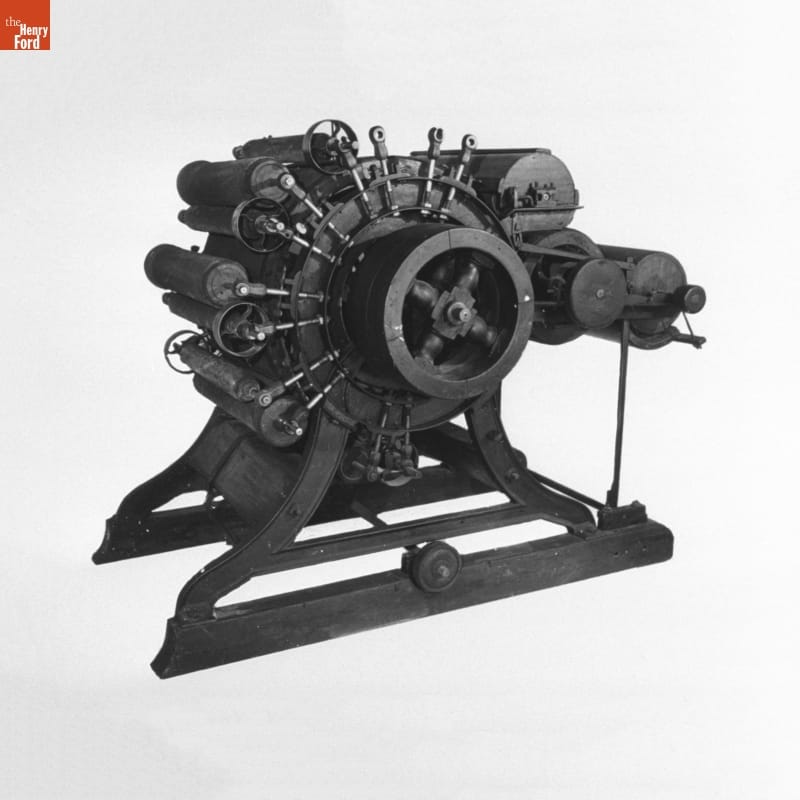
- circa 1840
- Collections - Artifact
Carding Machine, circa 1840
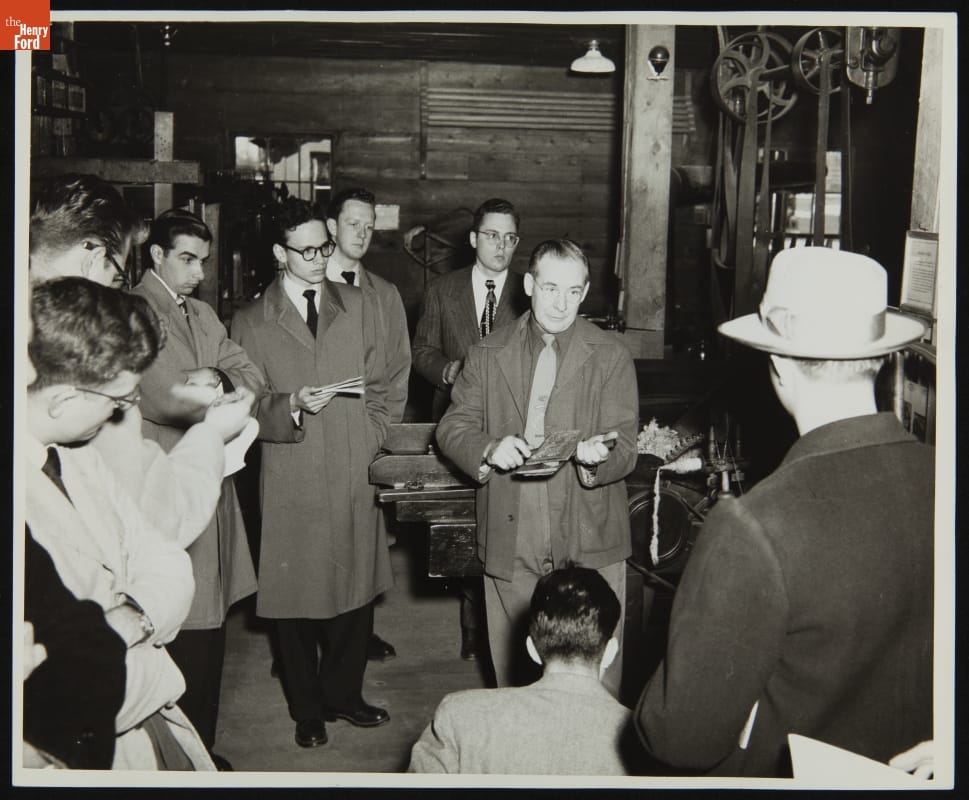
- Sidney Holloway Demonstrating Hand Carding in Plymouth Carding Mill (now Gunsolly Carding Mill), Greenfield Village, circa 1949 - Sidney Holloway (1901-1960) was instrumental in establishing the weaving program at Greenfield Village. Holloway, once employed in the Ford Motor Company's Textile Department, began working with Henry Ford's textile-making collections in 1930. Through hands-on experience and self-study, he mastered the weaving craft. Holloway would engage Greenfield Village visitors for thirty years and pass on his skills to the next generation of artisans.
- circa 1949
- Collections - Artifact
Sidney Holloway Demonstrating Hand Carding in Plymouth Carding Mill (now Gunsolly Carding Mill), Greenfield Village, circa 1949
Sidney Holloway (1901-1960) was instrumental in establishing the weaving program at Greenfield Village. Holloway, once employed in the Ford Motor Company's Textile Department, began working with Henry Ford's textile-making collections in 1930. Through hands-on experience and self-study, he mastered the weaving craft. Holloway would engage Greenfield Village visitors for thirty years and pass on his skills to the next generation of artisans.