
Search
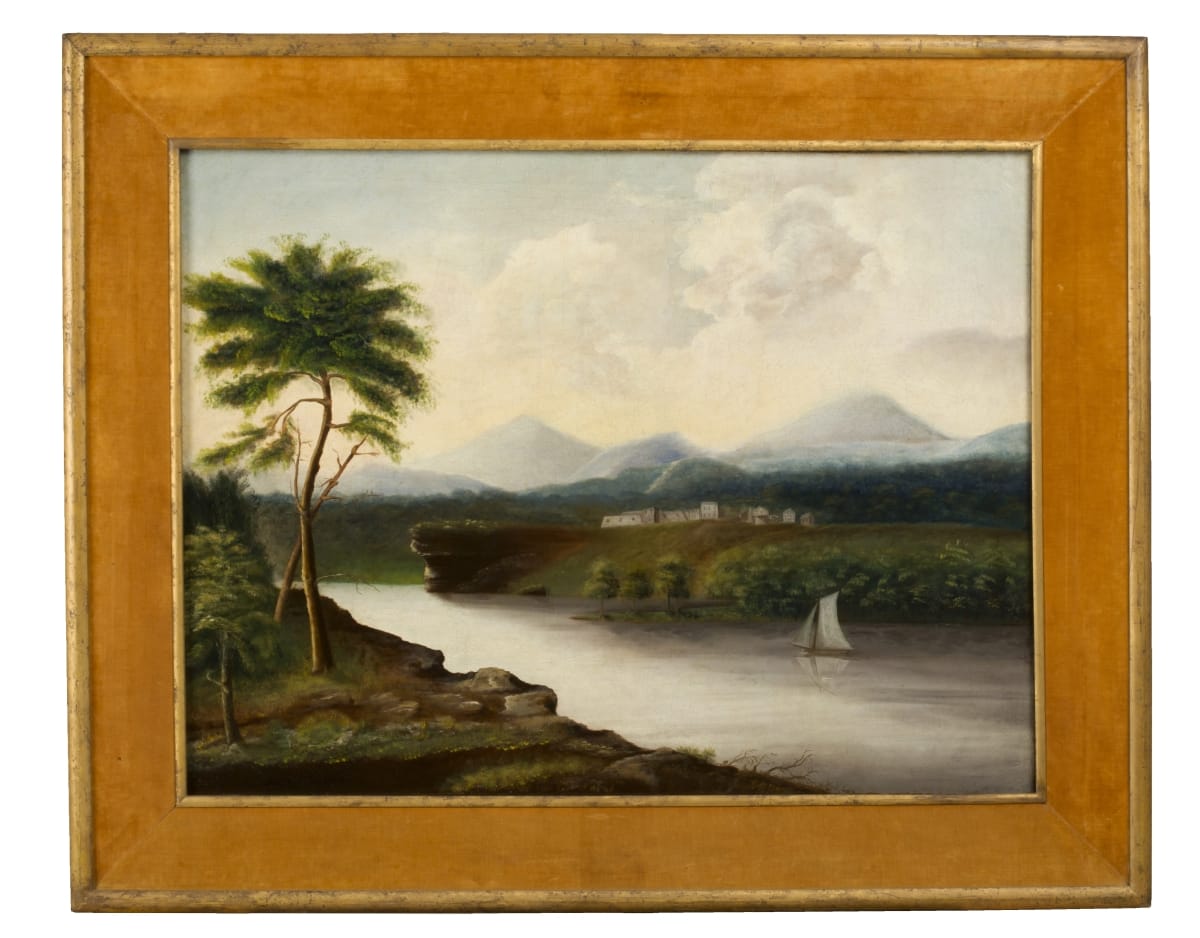
- Oil Painting, Fort Ticonderoga by George Washington Mark, circa 1845 - George Washington Mark was a successful house, sign, and furniture painter in Greenfield, Massachusetts, in the early 1800s. Sometime in the 1830s and 40s, he tried his hand at more artistic endeavors creating paintings of local interest -- generally landscapes and historic subjects. Around 1845, Mark painted this work depicting the ruins of New York's historic Fort Ticonderoga.
- circa 1845
- Collections - Artifact
Oil Painting, Fort Ticonderoga by George Washington Mark, circa 1845
George Washington Mark was a successful house, sign, and furniture painter in Greenfield, Massachusetts, in the early 1800s. Sometime in the 1830s and 40s, he tried his hand at more artistic endeavors creating paintings of local interest -- generally landscapes and historic subjects. Around 1845, Mark painted this work depicting the ruins of New York's historic Fort Ticonderoga.
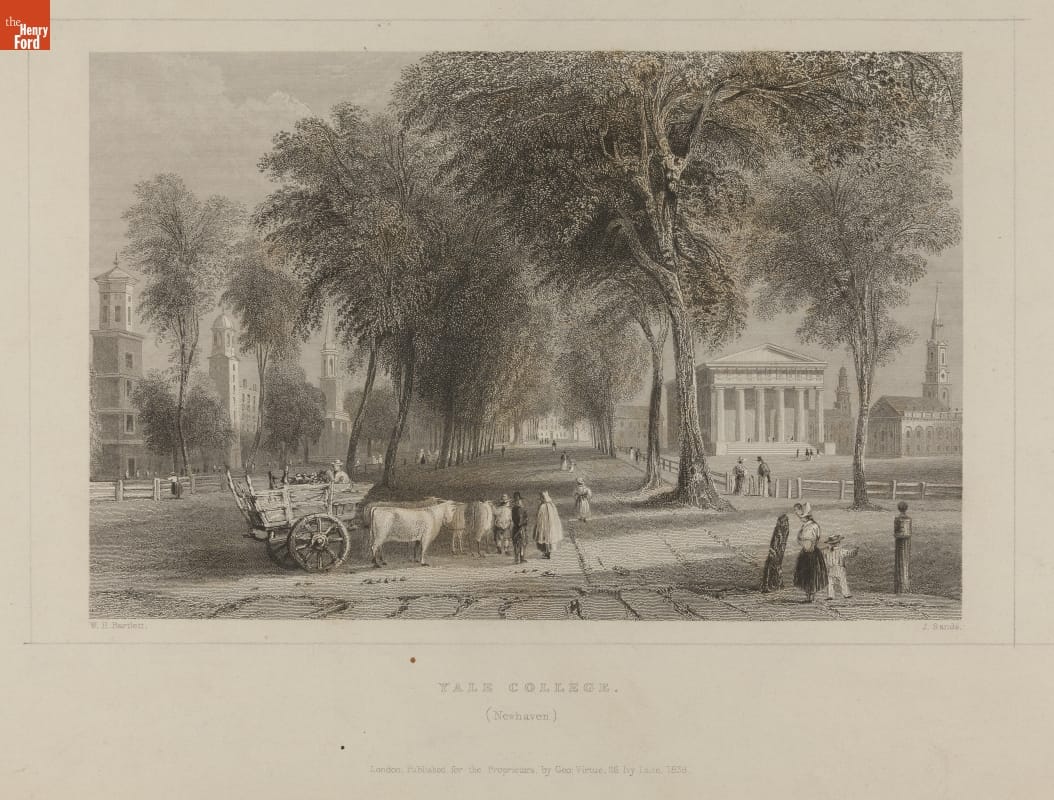
- Engraving, "Yale College, New Haven," 1838 - This 1838 engraving of New Haven, Connecticut, features a two-wheeled New England ox cart in the foreground. The picturesque print also features people strolling through town, with Yale College buildings in the background.
- 1838
- Collections - Artifact
Engraving, "Yale College, New Haven," 1838
This 1838 engraving of New Haven, Connecticut, features a two-wheeled New England ox cart in the foreground. The picturesque print also features people strolling through town, with Yale College buildings in the background.
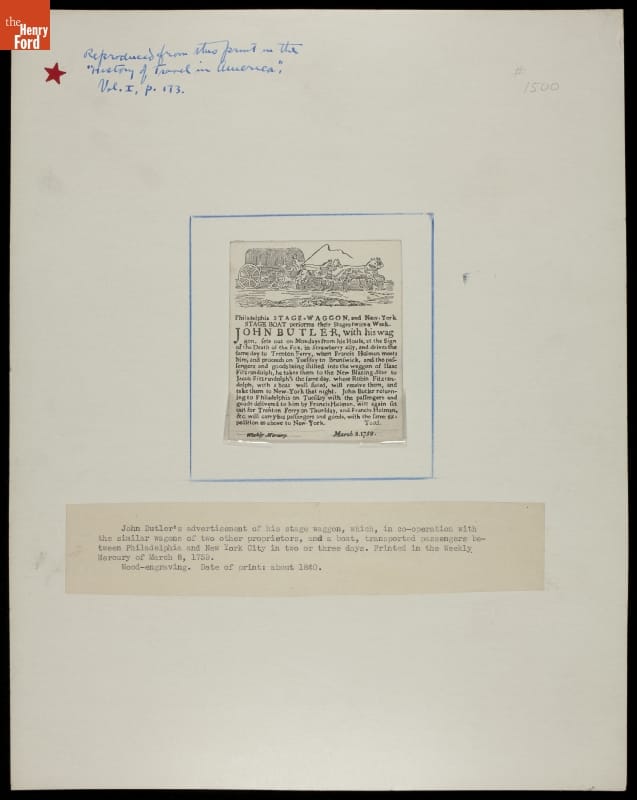
- Advertisement for Stage Wagon and Boat Transportation Between Philadelphia and New York City, circa 1840 - Originally printed March 8, 1759, in the <em>Weekly Mercury</em>, this advertisement features a wood engraving of John Butler's stage wagon. This stage line ran between Philadelphia, Pennsylvania, and New York City.
- March 08, 1759
- Collections - Artifact
Advertisement for Stage Wagon and Boat Transportation Between Philadelphia and New York City, circa 1840
Originally printed March 8, 1759, in the Weekly Mercury, this advertisement features a wood engraving of John Butler's stage wagon. This stage line ran between Philadelphia, Pennsylvania, and New York City.
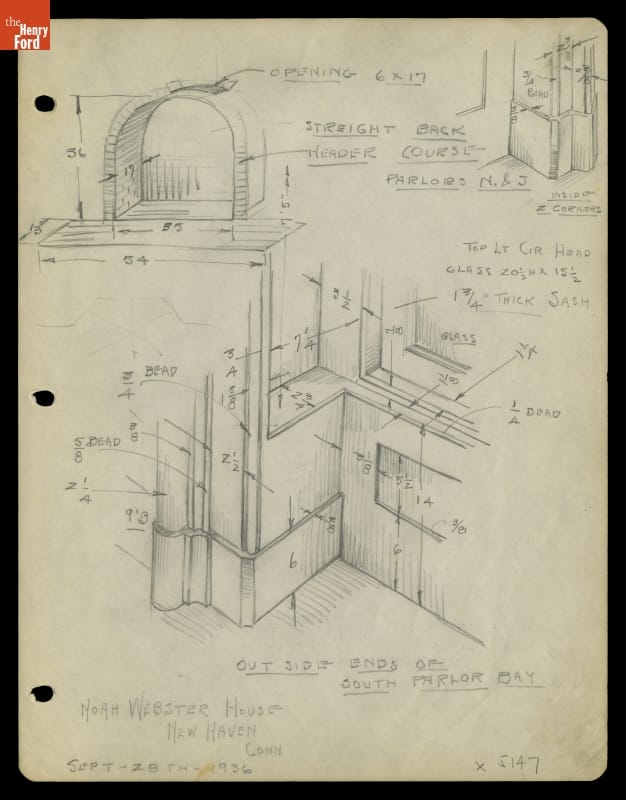
- Drawing, Outside Ends of South Parlor Bay, Noah Webster House, New Haven, Connecticut, September 28, 1936 -
- September 28, 1936
- Collections - Artifact
Drawing, Outside Ends of South Parlor Bay, Noah Webster House, New Haven, Connecticut, September 28, 1936
- Lithograph by Currier & Ives, "The Roadside Mill," 1870 -
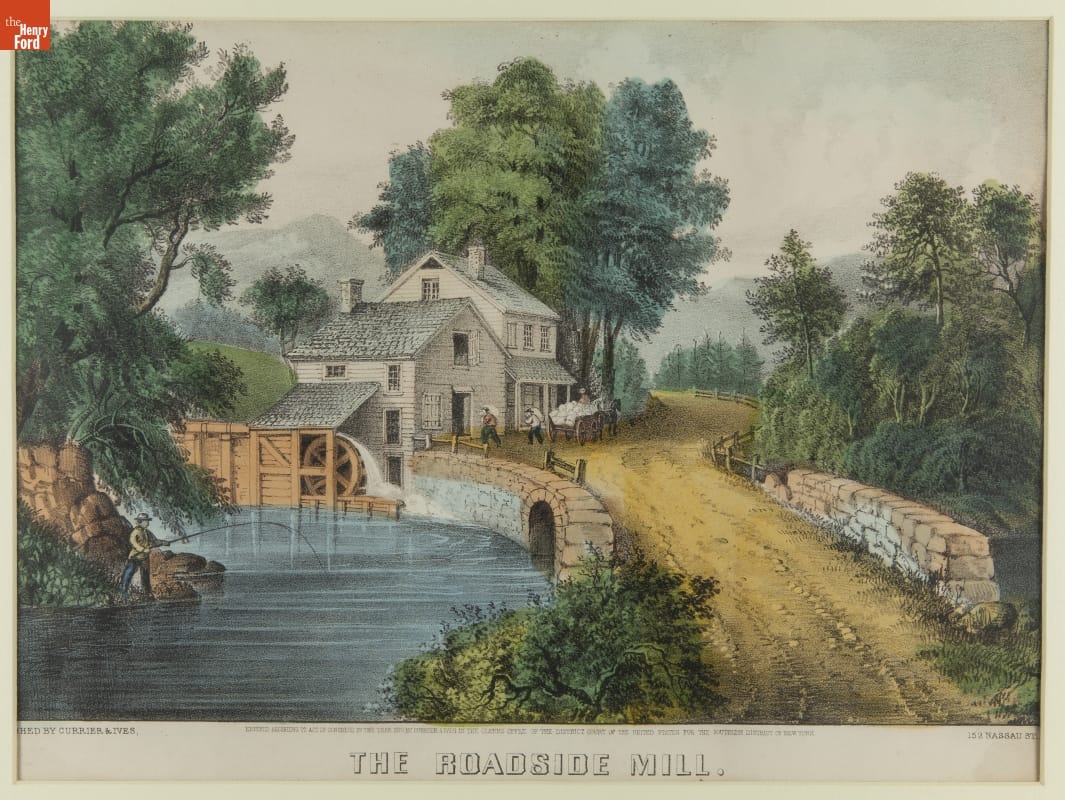
- 1870
- Collections - Artifact
Lithograph by Currier & Ives, "The Roadside Mill," 1870
- "Amerikanischen Postwagen" (American Stage Coach, 1800-1810), Lithograph, circa 1815 - Stage wagons were light and open, though not as comfortable as later Concord stagecoaches. They could go about five miles per hour, barring bad weather or road obstructions. The gaily painted signboards of roadside taverns beckoned weary travelers, promising rest, meals, and a chance to catch up on news. Stage wagon drivers used the stop to care for their horses.
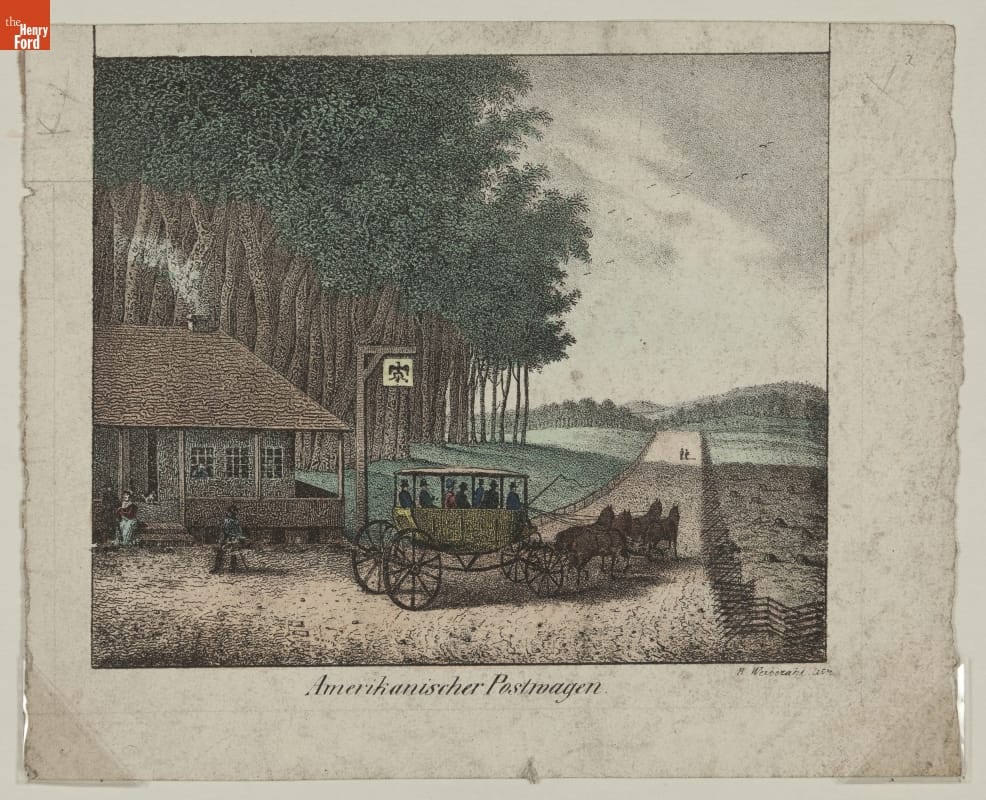
- 1800-1810
- Collections - Artifact
"Amerikanischen Postwagen" (American Stage Coach, 1800-1810), Lithograph, circa 1815
Stage wagons were light and open, though not as comfortable as later Concord stagecoaches. They could go about five miles per hour, barring bad weather or road obstructions. The gaily painted signboards of roadside taverns beckoned weary travelers, promising rest, meals, and a chance to catch up on news. Stage wagon drivers used the stop to care for their horses.
- Testing Batches of Glass at the Ford Rouge Glass Plant, 1940 - Unsatisfied with glass from outside suppliers, Ford Motor Company established its own glass plant at the Rouge in 1923. Furnaces produced molten glass, while overhead grinders and polishers worked the material to a perfectly smooth and clear finish. Two other Ford glass plants, in Pennsylvania and Minnesota, combined with the Rouge to manufacture 20 million feet of glass each year.
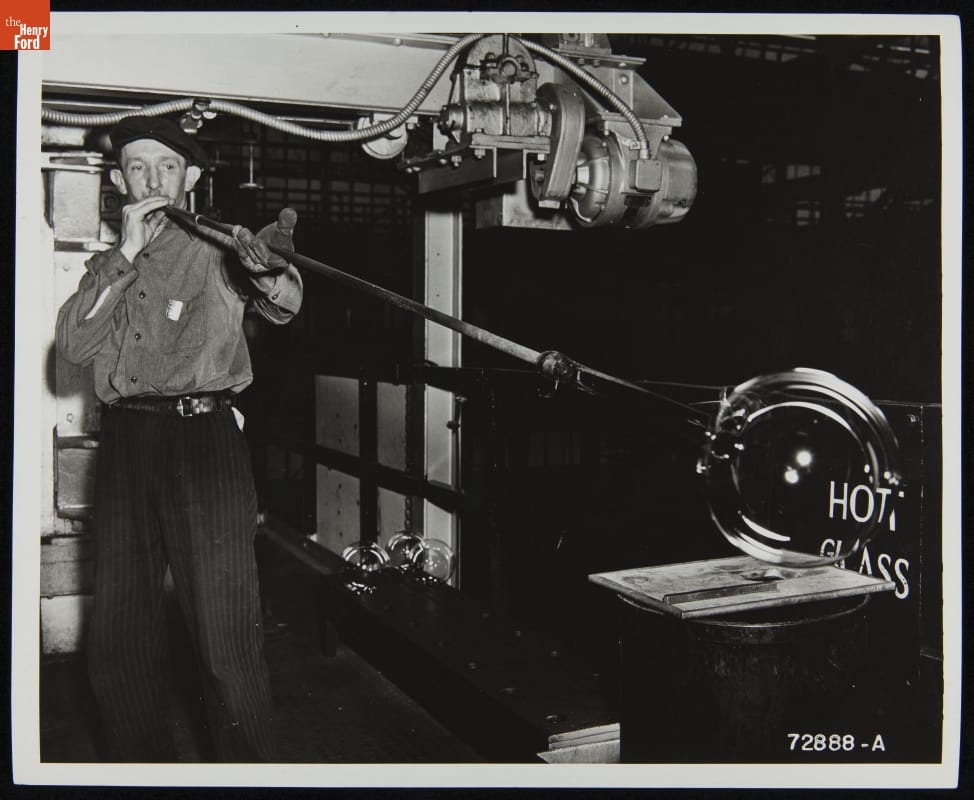
- January 03, 1940
- Collections - Artifact
Testing Batches of Glass at the Ford Rouge Glass Plant, 1940
Unsatisfied with glass from outside suppliers, Ford Motor Company established its own glass plant at the Rouge in 1923. Furnaces produced molten glass, while overhead grinders and polishers worked the material to a perfectly smooth and clear finish. Two other Ford glass plants, in Pennsylvania and Minnesota, combined with the Rouge to manufacture 20 million feet of glass each year.
- Employee Working at Heinz Glass Factory, Sharpsburg, Pennsylvania, 1885-1910 - Before complete mechanization of the manufacturing process, many tasks at the Heinz factory were done by hand. The H.J. Heinz Company made their own boxes, glassware, cans, advertisements, and labels, allowing most production to be completed in-house. This photograph features a worker at the Heinz Glass Factory.
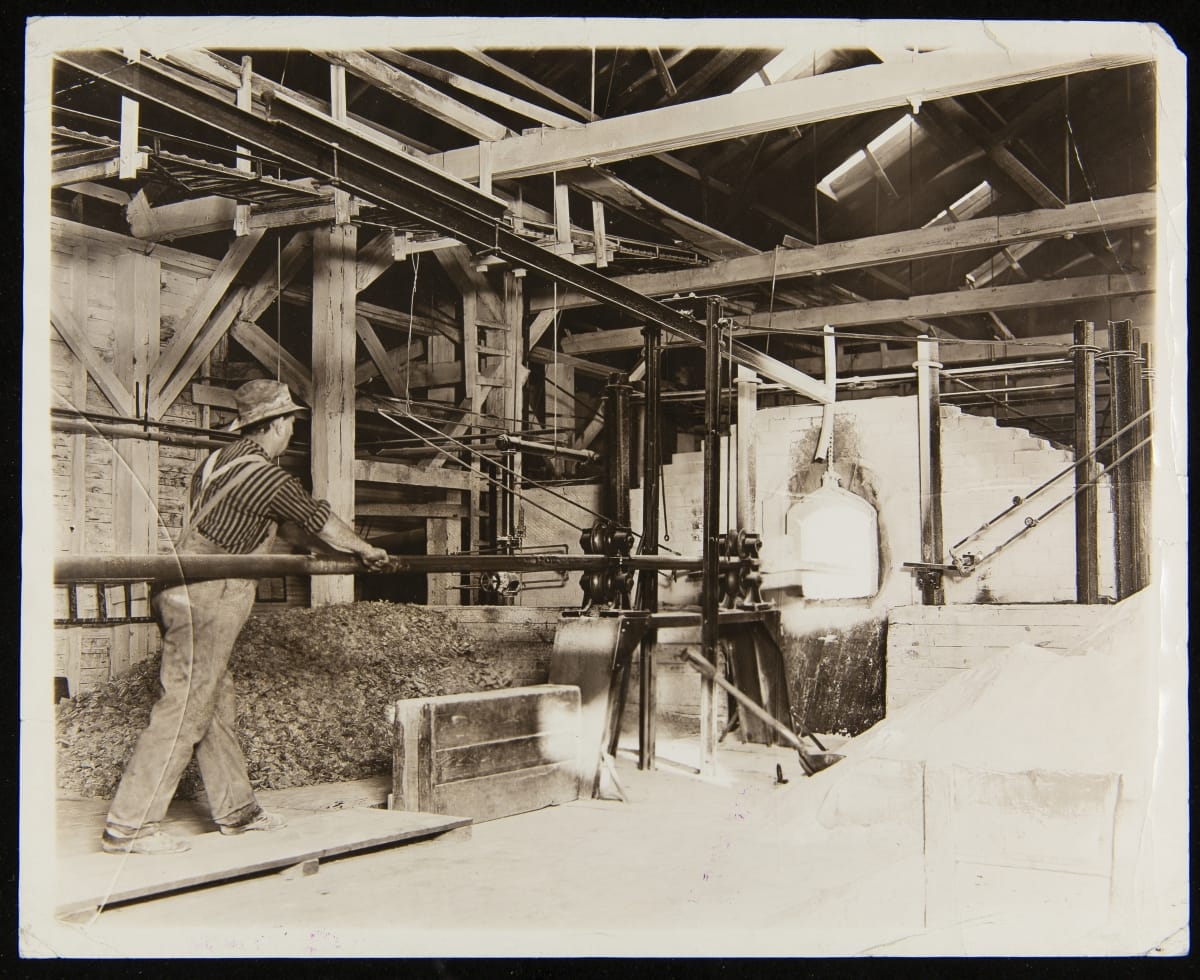
- 1885-1910
- Collections - Artifact
Employee Working at Heinz Glass Factory, Sharpsburg, Pennsylvania, 1885-1910
Before complete mechanization of the manufacturing process, many tasks at the Heinz factory were done by hand. The H.J. Heinz Company made their own boxes, glassware, cans, advertisements, and labels, allowing most production to be completed in-house. This photograph features a worker at the Heinz Glass Factory.
- Music Sheet Cover, "Arouse Ye, Patriot Whigs!," 1840 -

- 1840
- Collections - Artifact
Music Sheet Cover, "Arouse Ye, Patriot Whigs!," 1840
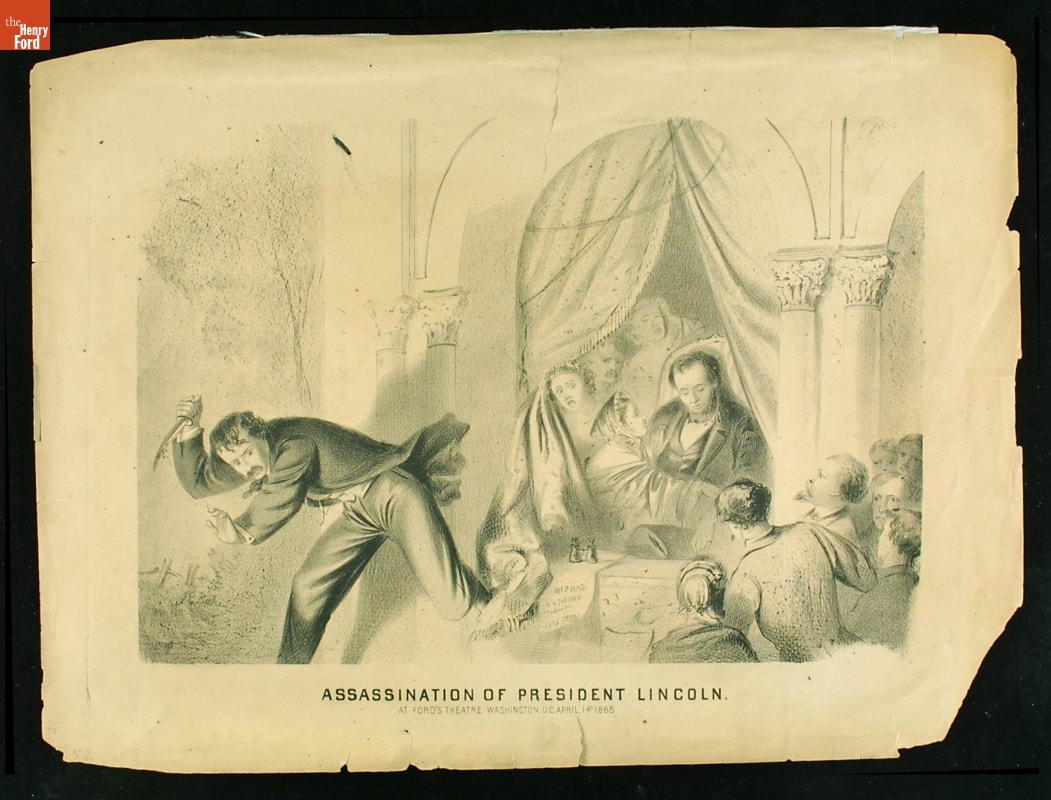
- Print, Assassination of President LIncoln, 1865-1870 - Before the existence of newspaper photos and television, lithographs helped people to understand the tragic event of President Abraham Lincoln's death in April 1865. This shows the assassin escaping after shooting President Lincoln at Ford's Theatre in Washington, D.C., on April 14, 1865. Printmakers produced various versions of this event, based on verbal reports.
- April 14, 1865
- Collections - Artifact
Print, Assassination of President LIncoln, 1865-1870
Before the existence of newspaper photos and television, lithographs helped people to understand the tragic event of President Abraham Lincoln's death in April 1865. This shows the assassin escaping after shooting President Lincoln at Ford's Theatre in Washington, D.C., on April 14, 1865. Printmakers produced various versions of this event, based on verbal reports.