
Search
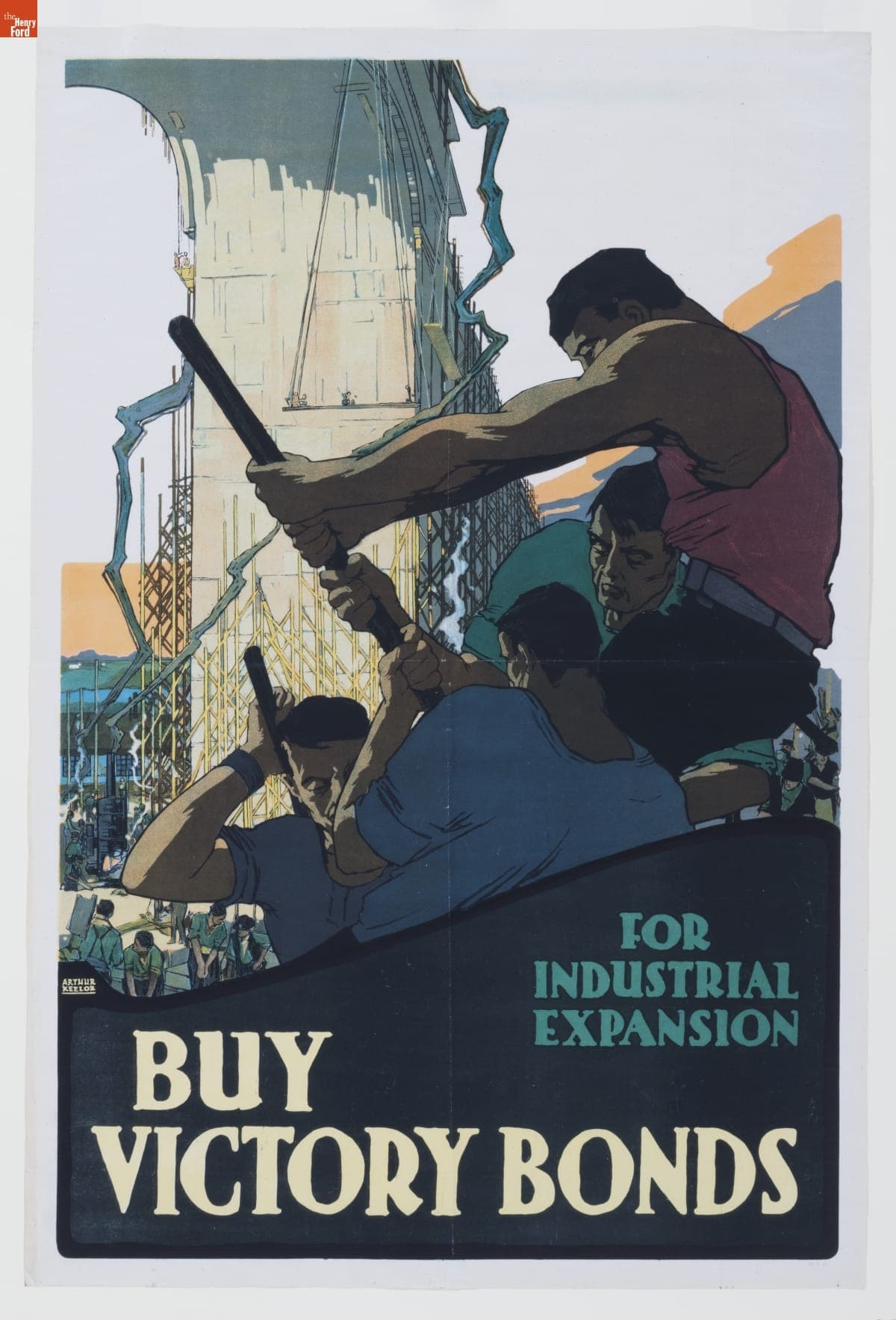
- Buy Victory Bonds for Industrial Expansion, circa 1917 -
- circa 1917
- Collections - Artifact
Buy Victory Bonds for Industrial Expansion, circa 1917
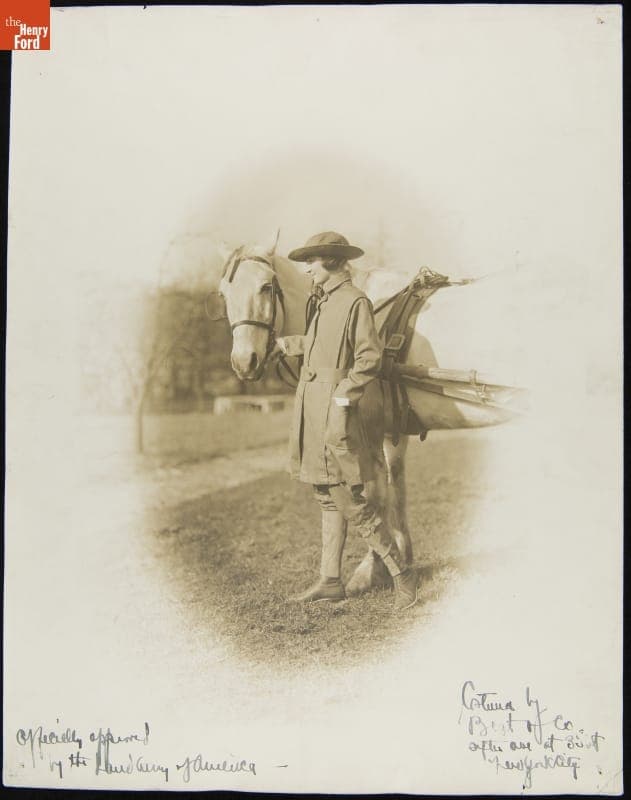
- Woman in Work Costume Officially Approved by the Land Army of America, 1918 - After the United States entered World War I in 1917, Americans worried about labor and food shortages as a result of men going off to fight. Organizations like the Woman's Land Army of America and the Woman's National Farm and Garden Association recruited and trained women to perform agricultural work across the country. This woman modeled the Land Army uniform.
- 1918
- Collections - Artifact
Woman in Work Costume Officially Approved by the Land Army of America, 1918
After the United States entered World War I in 1917, Americans worried about labor and food shortages as a result of men going off to fight. Organizations like the Woman's Land Army of America and the Woman's National Farm and Garden Association recruited and trained women to perform agricultural work across the country. This woman modeled the Land Army uniform.
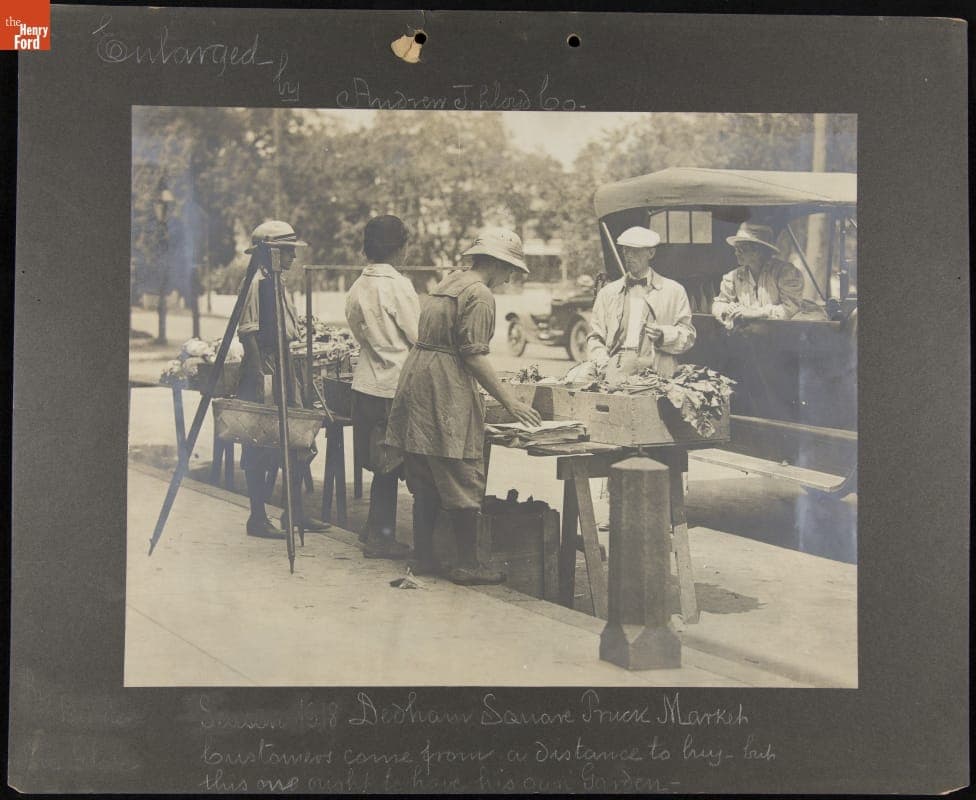
- Woman's National Farm and Garden Association at Dedham Square Truck Market, 1918 - After the United States entered World War I in 1917, Americans worried about labor and food shortages as a result of men going off to fight. Organizations like the Woman's Land Army of America and the Woman's National Farm and Garden Association recruited and trained women to perform agricultural work across the country. The work occasionally included roadside markets such as this one.
- 1918
- Collections - Artifact
Woman's National Farm and Garden Association at Dedham Square Truck Market, 1918
After the United States entered World War I in 1917, Americans worried about labor and food shortages as a result of men going off to fight. Organizations like the Woman's Land Army of America and the Woman's National Farm and Garden Association recruited and trained women to perform agricultural work across the country. The work occasionally included roadside markets such as this one.
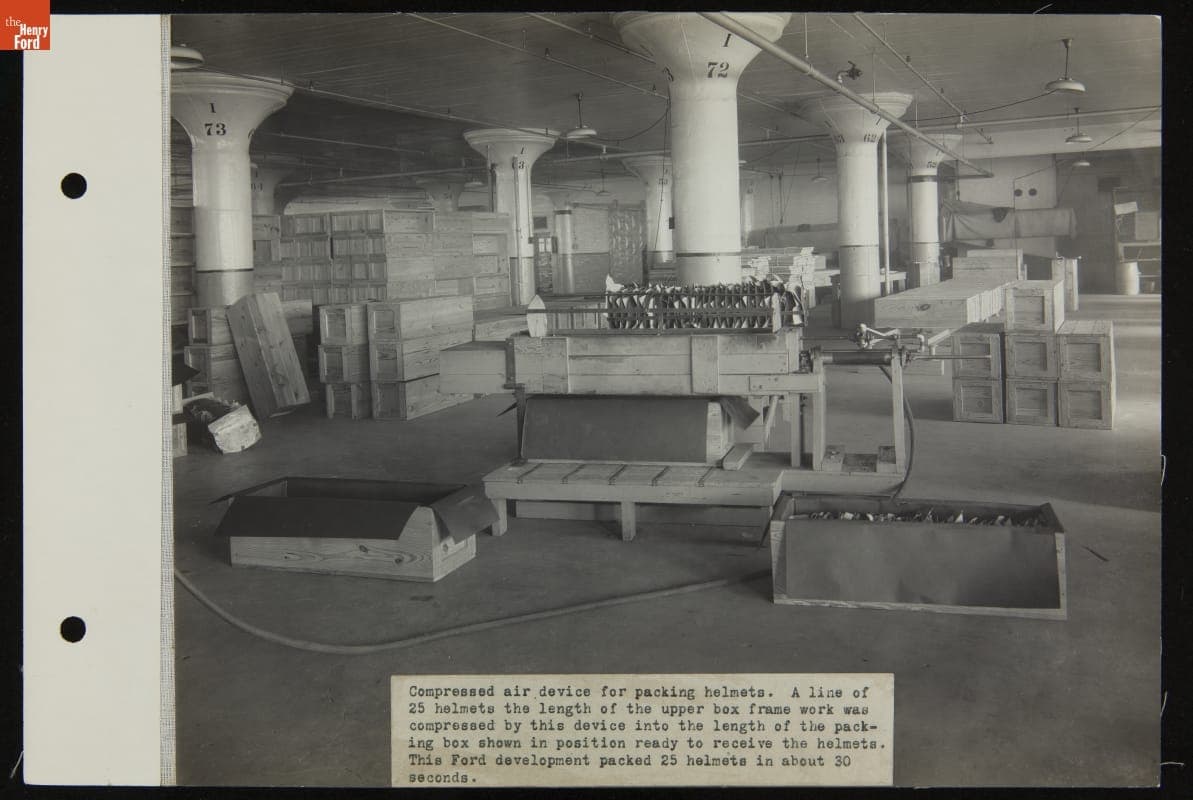
- Compressed Air Device for Packing Helmets during World War I, Ford Motor Company Philadelphia Plant, 1917-1918 - When the United States entered World War I, American automobile companies turned some of their manufacturing capacity to the production of war materiel. Ford Motor Company received a contract to paint, assemble, and crate steel helmets for American soldiers. Altogether, Ford's Philadelphia plant processed more than 2.7 million helmets at a rate as high as 40,000 each day.
- 1917-1918
- Collections - Artifact
Compressed Air Device for Packing Helmets during World War I, Ford Motor Company Philadelphia Plant, 1917-1918
When the United States entered World War I, American automobile companies turned some of their manufacturing capacity to the production of war materiel. Ford Motor Company received a contract to paint, assemble, and crate steel helmets for American soldiers. Altogether, Ford's Philadelphia plant processed more than 2.7 million helmets at a rate as high as 40,000 each day.
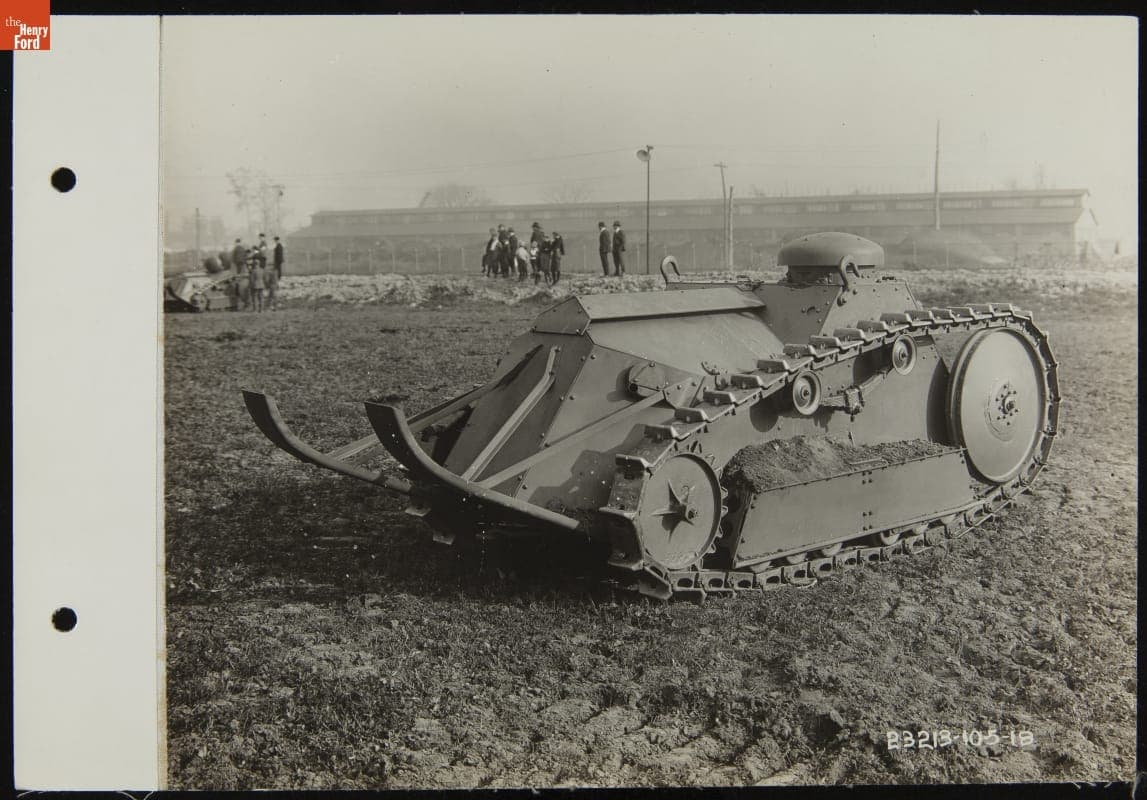
- New Ford Tank on Grounds North of Factory, October 5, 1918 - Tanks emerged during World War I in response to trenches, barbed wire, and machine guns. Their tracks -- rather than tires -- handled rough ground, and their armor protected against wire and gunfire. Ford designed a 2 1/2-ton, 2-man tank and sent several examples to France for testing. Results were encouraging, but the war ended before mass production could begin.
- October 05, 1918
- Collections - Artifact
New Ford Tank on Grounds North of Factory, October 5, 1918
Tanks emerged during World War I in response to trenches, barbed wire, and machine guns. Their tracks -- rather than tires -- handled rough ground, and their armor protected against wire and gunfire. Ford designed a 2 1/2-ton, 2-man tank and sent several examples to France for testing. Results were encouraging, but the war ended before mass production could begin.
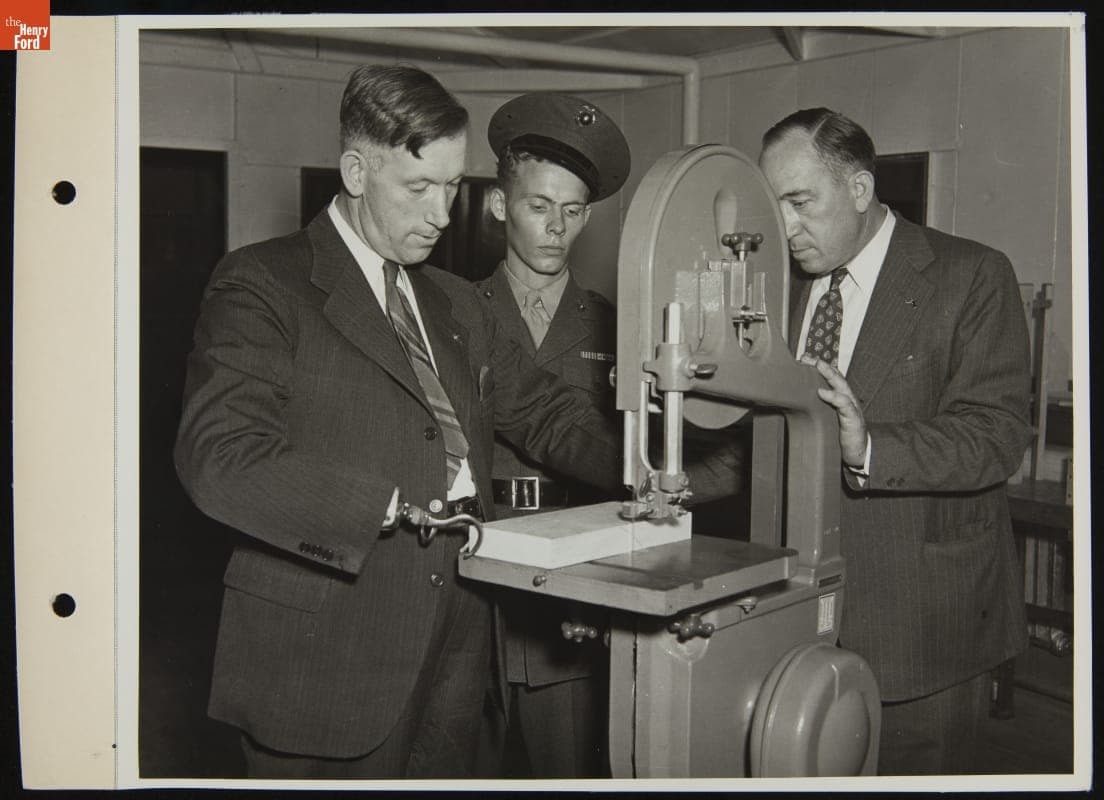
- World War I Veterans Demonstrate Use of Their Artificial Limbs to World War II Veterans at Camp Legion, July 1944 - Henry Ford opened Camp Legion, near Dearborn, Michigan, in 1938 for sons of dead or disabled World War I veterans. The young men earned steady wages working there seasonally from April-November. The camp's mission was modified in 1944 to include rehabilitation of World War II veterans with disabilities. Veterans learned new skills to help them reenter the workforce.
- July 18, 1944
- Collections - Artifact
World War I Veterans Demonstrate Use of Their Artificial Limbs to World War II Veterans at Camp Legion, July 1944
Henry Ford opened Camp Legion, near Dearborn, Michigan, in 1938 for sons of dead or disabled World War I veterans. The young men earned steady wages working there seasonally from April-November. The camp's mission was modified in 1944 to include rehabilitation of World War II veterans with disabilities. Veterans learned new skills to help them reenter the workforce.
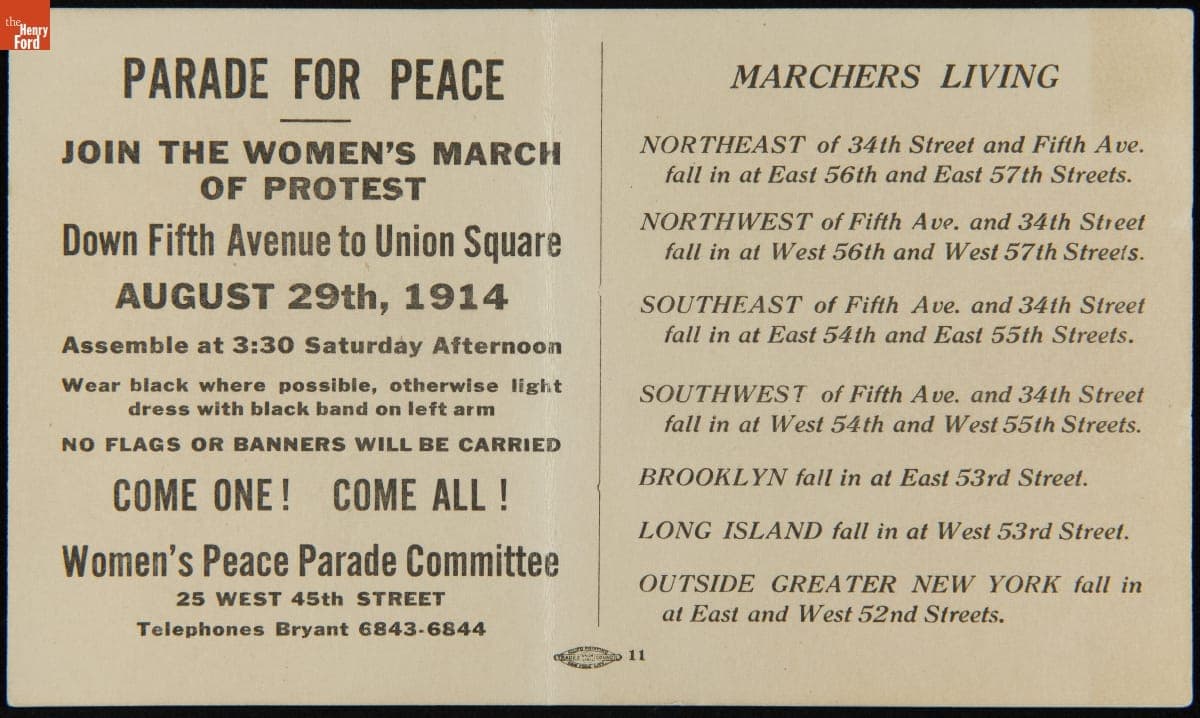
- Parade for Peace - Join the Women's March of Protest, August 29, 1914 -
- August 29, 1914
- Collections - Artifact
Parade for Peace - Join the Women's March of Protest, August 29, 1914
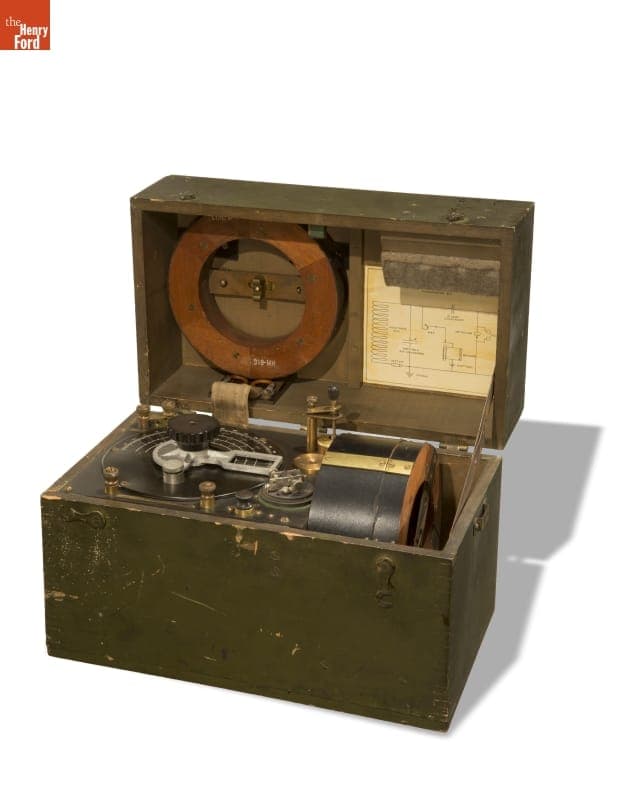
- Radio Wavemeter, Type SCR-61, 1918 - This wavemeter was likely developed by the US Army Signal Corp for military use. Its purpose is twofold: to detect the frequency of an incoming signal, and to check the frequency and harmonics of an outgoing signal. Early radio operators, working with multiple and specialized technical components, used wavemeters to determine the clarity and strength of their transmitters.
- August 27, 1918
- Collections - Artifact
Radio Wavemeter, Type SCR-61, 1918
This wavemeter was likely developed by the US Army Signal Corp for military use. Its purpose is twofold: to detect the frequency of an incoming signal, and to check the frequency and harmonics of an outgoing signal. Early radio operators, working with multiple and specialized technical components, used wavemeters to determine the clarity and strength of their transmitters.
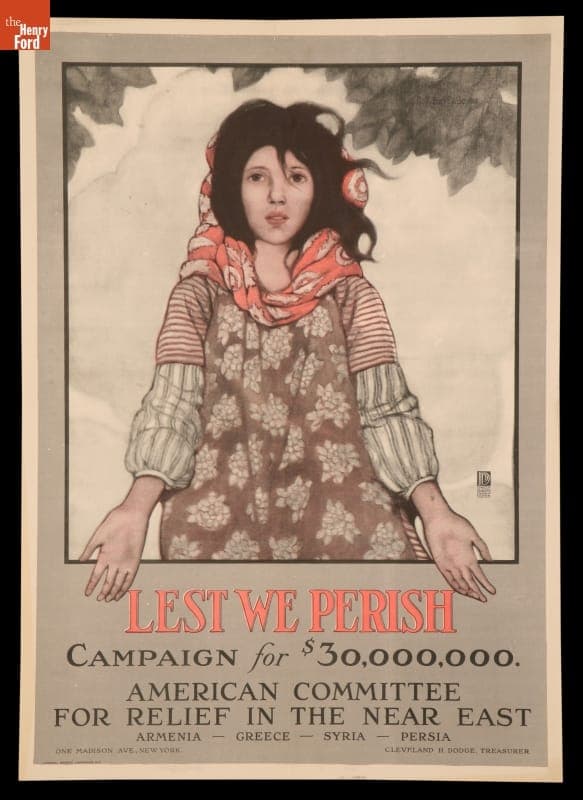
- World War I Poster, "Lest We Perish," circa 1917 - During the First World War, governments of all the warring nations used poster campaigns to encourage civilian and military support of the war effort. Artists widely used an innovative advertising technique for these posters that moved away from a factual depiction of a product's material or event's subject to an emphasis on appealing to the viewer's emotions.
- circa 1917
- Collections - Artifact
World War I Poster, "Lest We Perish," circa 1917
During the First World War, governments of all the warring nations used poster campaigns to encourage civilian and military support of the war effort. Artists widely used an innovative advertising technique for these posters that moved away from a factual depiction of a product's material or event's subject to an emphasis on appealing to the viewer's emotions.
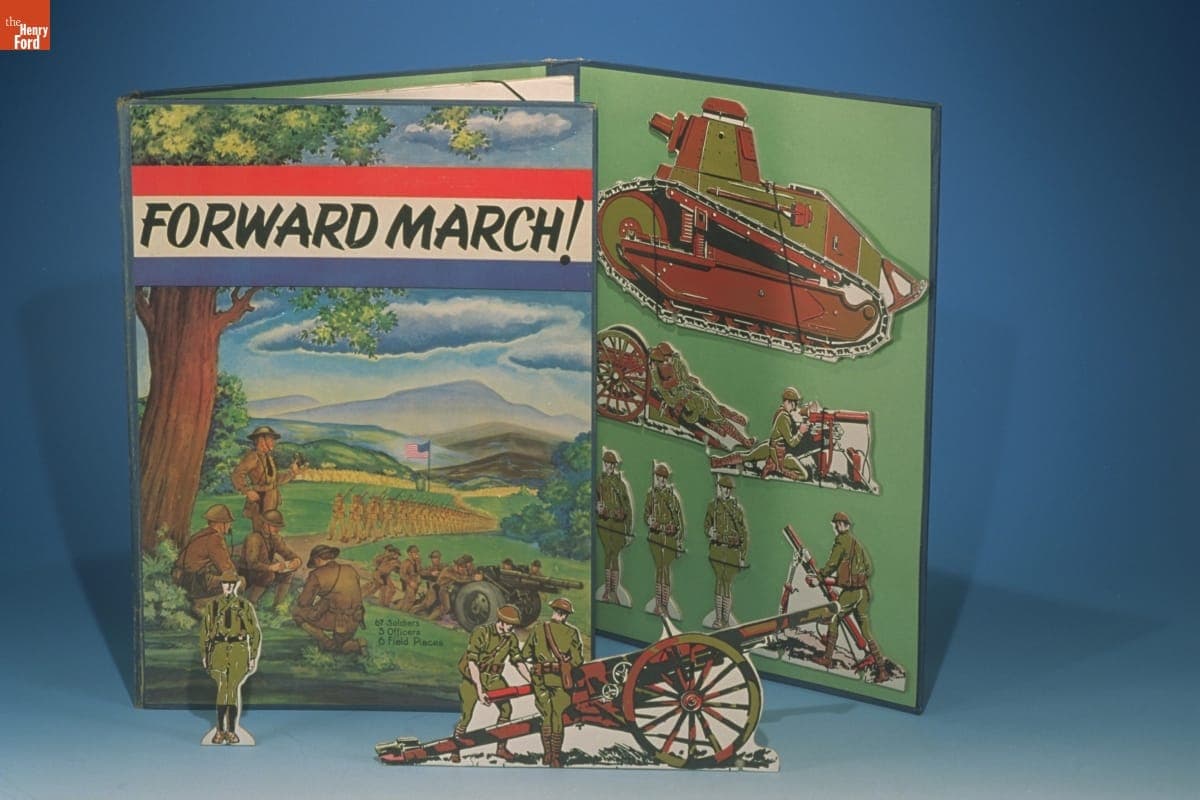
- "Forward March!" Military Play Set, 1941-1945 - Leading game manufacturer Milton Bradley acquired the McLoughlin Bros. publishing firm, known for its pioneering use of color printing technologies, in 1920. The company continued publishing books and other products through its McLoughlin division into the 1940s. This McLoughlin-branded playset included World War I-era soldiers and military equipment.
- 1941-1945
- Collections - Artifact
"Forward March!" Military Play Set, 1941-1945
Leading game manufacturer Milton Bradley acquired the McLoughlin Bros. publishing firm, known for its pioneering use of color printing technologies, in 1920. The company continued publishing books and other products through its McLoughlin division into the 1940s. This McLoughlin-branded playset included World War I-era soldiers and military equipment.