
Sulky, 1892-1893
THF80562 / Sulky, 1892-1893
01
Artifact Overview
Harness racing enjoyed wide popularity in the late 19th century with competitions staged at dirt tracks, at state and county fairs, and sometimes on the streets. The "bicycle" sulky -- named for its bicycle-style wheels -- quickly proved superior over wooden high-wheel sulkies when introduced in 1892. Alma Bedford of Coldwater, Michigan, built this bicycle sulky and later manufactured them commercially.
Artifact Details
Artifact
Sulky
Date Made
1892-1893
Creators
Place of Creation
Location
Not on exhibit to the public.
Object ID
00.204.22
Credit
From the Collections of The Henry Ford. Gift of Ray C. Dahlinger.
Material
Wood (Plant material)
Technique
Handmade
Color
Red
Black (Color)
Dimensions
Height: 43.5 in
Width: 58.75 in
Length: 92 in
Diameter: 25.25 in (Wheel Diameter)
Inscriptions
Plate attached to rear driver's seat: A. BEDFORD / COLDWATER, MICH.
The two wood wheels have pneumatic tires marked:
HOUGHTON ROADSTER / THE HOUGHTON SULKY COMPANY MARION O. U.S.A. "GUARANTEED" UNITED STATES RUBBER COMPANY U-S-A
Keywords |
|---|
02
Related Content
 Set
SetOnline Horse-Drawn Vehicles Collection
- 29 Artifacts
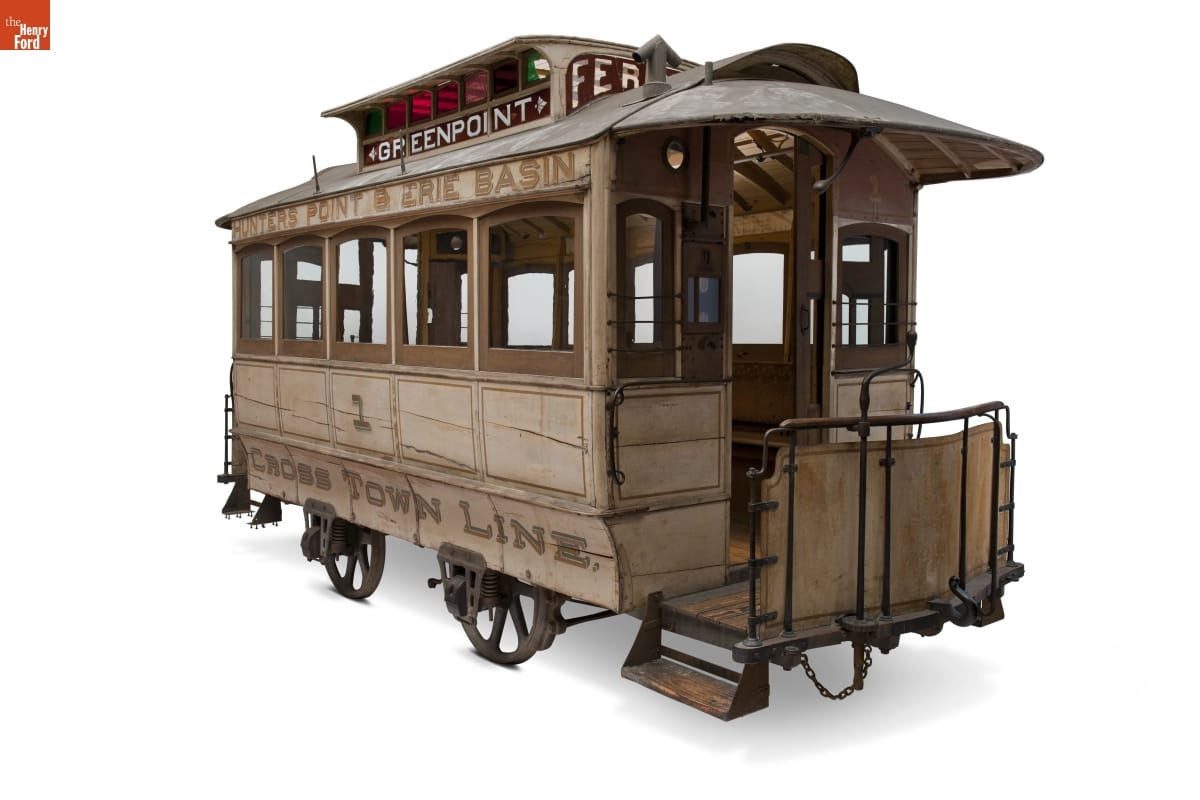
The horse-drawn streetcar was an important means of public transportation in 19th-century American cities. New York's Brooklyn City Railroad ran this car on its line between Hunters Point in Long Island City, and Erie Basin in South Brooklyn. But horses were expensive to stable and feed -- and messy too. Operators embraced electric streetcars starting in the late 1880s.