
Design & Making
Curated sets
Design and Making
- 50 Artifacts
The Industrial Revolution in America radically altered how things were made and how workers did their jobs. With many new products on the market, manufacturers depended upon advertisers and designers to ensure that their products would stand out. By the mid-1900s, design came to imply not only aesthetic refinement of products but also an emphasis on problem-solving. These artifacts represent design and making landmarks across our collection.

Article
Mary Chase Perry and the Origins of Pewabic Pottery
Before establishing what would become Detroit’s renowned Pewabic Pottery, Mary Chase Perry got her start in china painting. She was among countless women taking up the hobby as the Arts & Crafts movement gained momentum in late-19th-century America.

Article
The Fashions of Elizabeth Parke Firestone
Elizabeth Parke Firestone was destined to develop a refined sense of fashion. Learn more about the clothing she owned, now in our collections, providing a rich and sweeping view of fashion history.
-600x600%2F432-thf152010.png%3Fsfvrsn%3Dfb008492_1&w=3840&q=75)
Article
Sparking Innovation: Aeron Chair
Learn how the iconic Herman Miller Aeron chair was developed, and how prototypes in the collections of The Henry Ford illuminate that process of design and engineering.

Article
Tiffany and Art Glass
Explore the history of Art Glass from early works in the 1880s, through its most well-known creator, Louis Comfort Tiffany, to TIffany's competitors and the end of the movement in the early 20th century.
Curated sets
Weaving in Greenfield Village
- 20 Artifacts
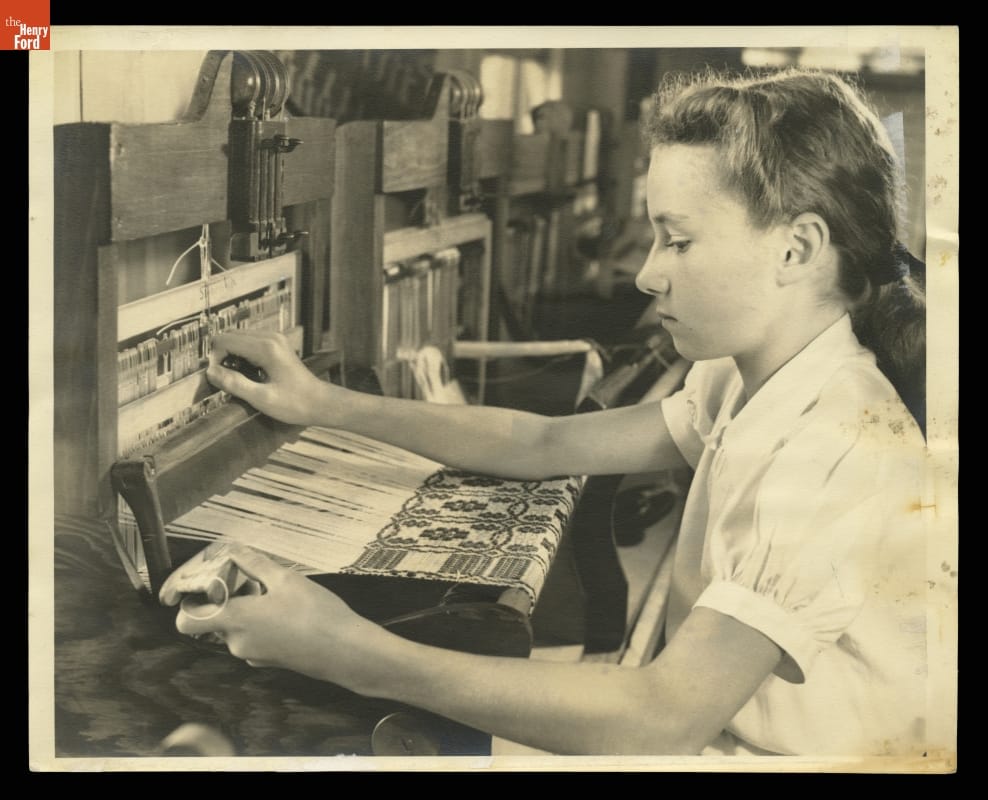
Students of Henry Ford’s Edison Institute Schools learned traditional crafts, including textile weaving. In Greenfield Village, presenters continue to practice and demonstrate the weaving process on a variety of looms.
2:21
-600x600%2Fglassmodern.png%3Fsfvrsn%3D1f7007e9_1&w=3840&q=75)
video
How Glass Got Modern
From millions of artifacts in The Henry Ford’s collections, our experts choose three and reveal the surprisingly curious connections between them. In the featured video below, discover what two pieces of heavy machinery and a communal drinking vessel have in common.
01
Charles and Ray Eames
Husband-and-wife team Ray and Charles Eames are icons of mid-century modern design.
Curated sets
Favorite Eames Artifacts
- 13 Artifacts
Husband-and-wife team Ray and Charles Eames are icons of mid-century modern design. Here, some of our design-loving staff members select a favorite Eames artifact from our collections and elaborate on their choice.

Article
What If Collaboration is Design?
Charles and Ray Eames took learning by doing — and collaboration — to new heights.

Article
Ray Eames: One Part of a Design Team Legend
Join design lovers in celebrating the 100th birthday of Ray Eames, one half of the renowned Eames design duo.

Article
The Artistic Approach of Ray Eames
Guest blogger Mindy Koschmann reflects on Ray Eames' artistic and design legacy on Ray's 100th birthday.

Article
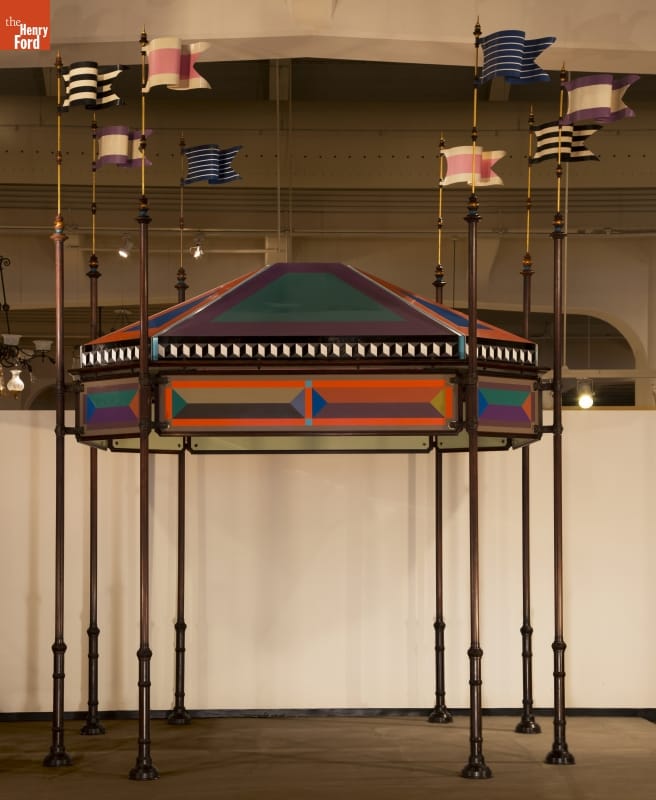
Eames Kiosk from the 1964 NY World’s Fair: A Collaboration and Case for its Missing Finials
In 2013, The Henry Ford acquired one of the kiosks that was originally installed in the IBM Pavilion at the 1964 New York World’s Fair. You can learn more about the kiosk’s installation and construction in this blog.
02
Furniture
Amazing examples of American furniture.
Curated sets
Turning Technology into Furniture
- 7 Artifacts
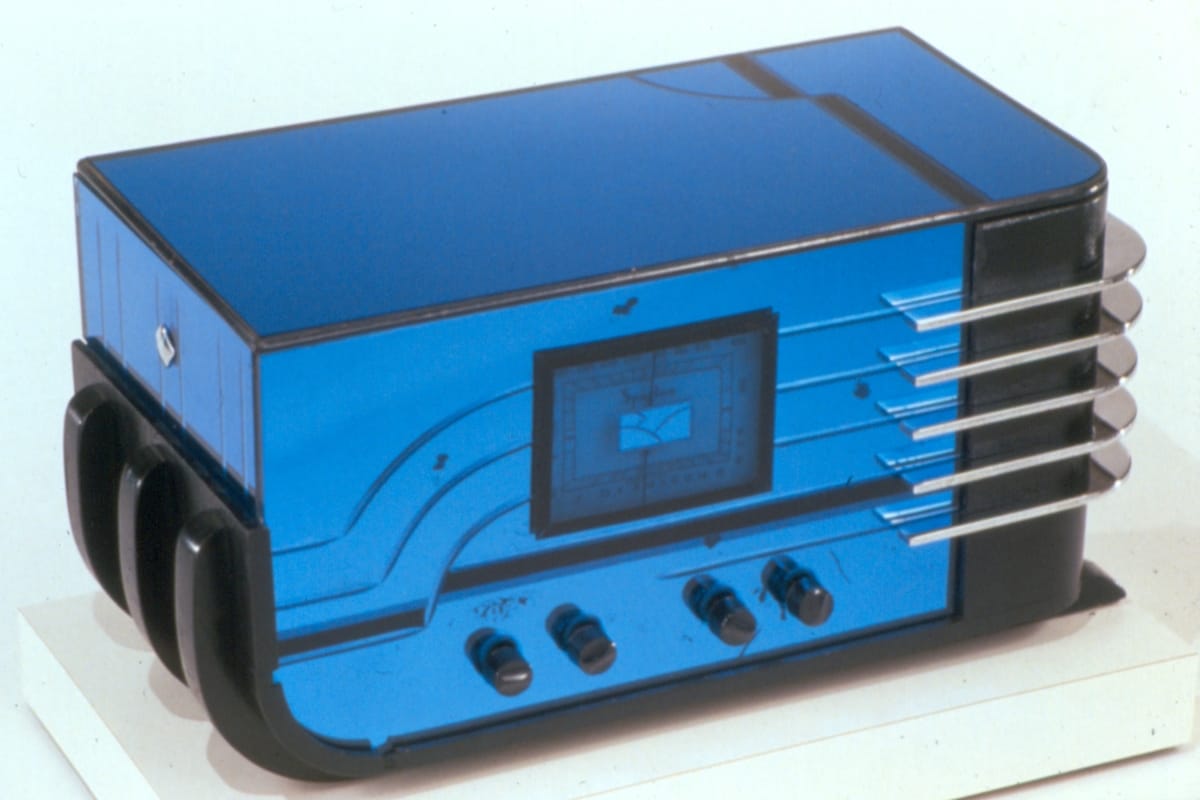
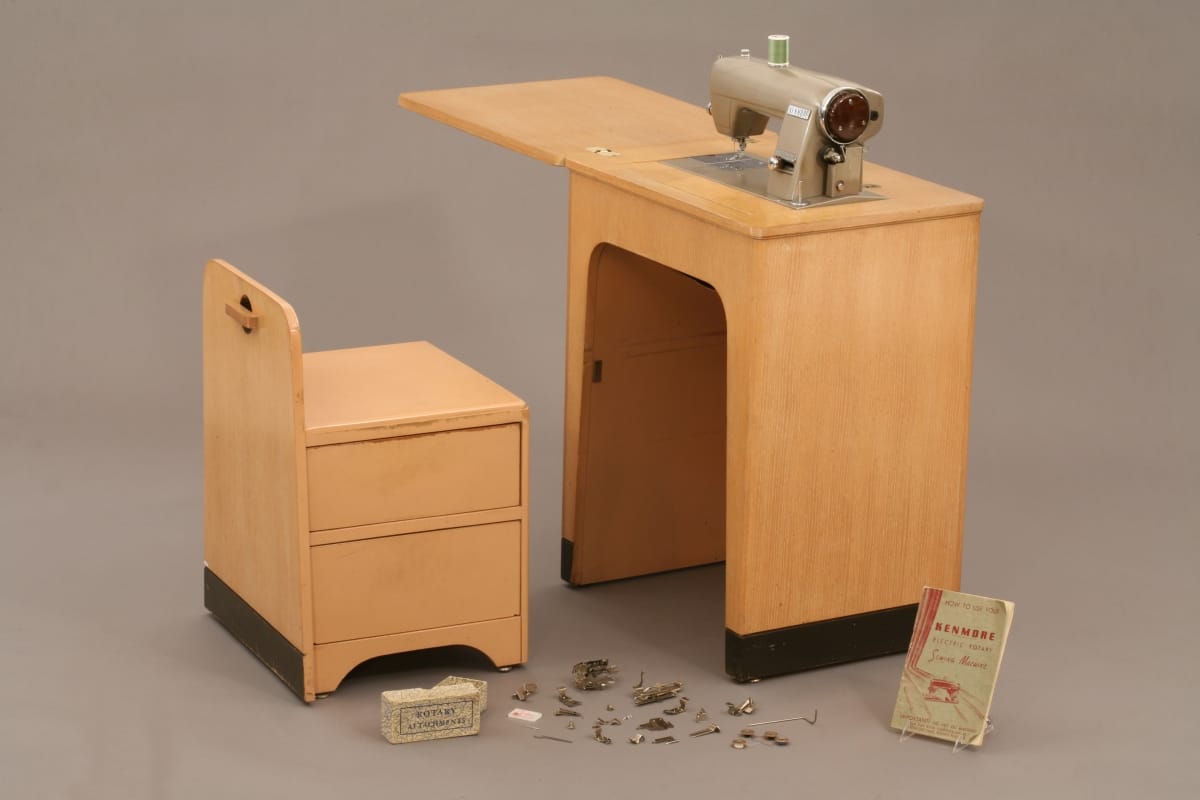
The first heating stoves, sewing machines, radios, and televisions seemed out of place next to furniture, so designers used cabinetry to conceal functional parts and make them blend into their environments.

Article
Gilbert Rohde and D.J. De Pree: The Partnership that Modernized the Herman Miller Furniture Company
Learn how Gilbert Rohde and D.J. De Pree transformed the Herman Miller Furniture Company from one manufacturing reproductions. Read more!
Curated sets
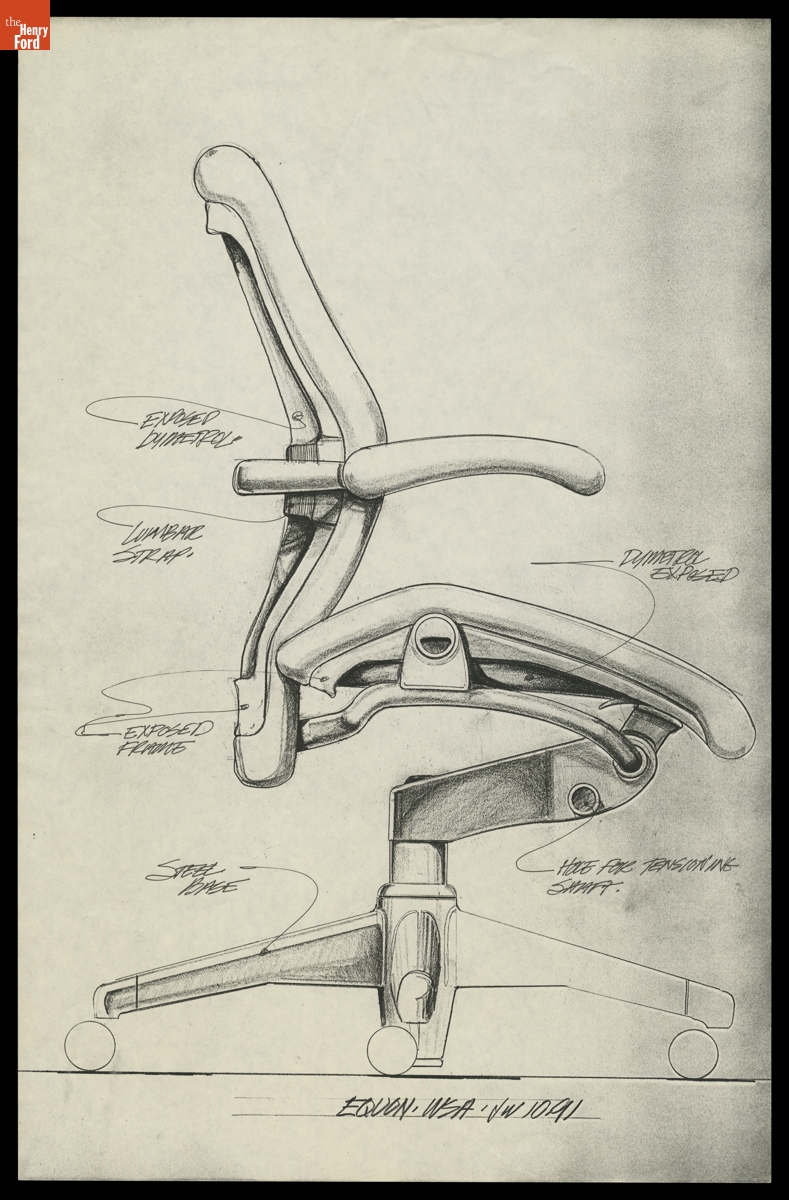
Designing Aeron
- 24 Artifacts
Bill Stumpf and Don Chadwick studied human sitting habits and explored new materials and production methods to design Herman Miller’s groundbreaking Aeron task chair. Extensive research and prototyping led to the distinctive Aeron finally introduced in 1994.

Article
Behind the Scenes: Furniture Conservation
Learn how we cared for a beautifully embellished Federal-style chest of drawers, likely made between 1800 and 1810 in New England, after it was damaged in storage during flooding caused by heavy rain.
Curated sets
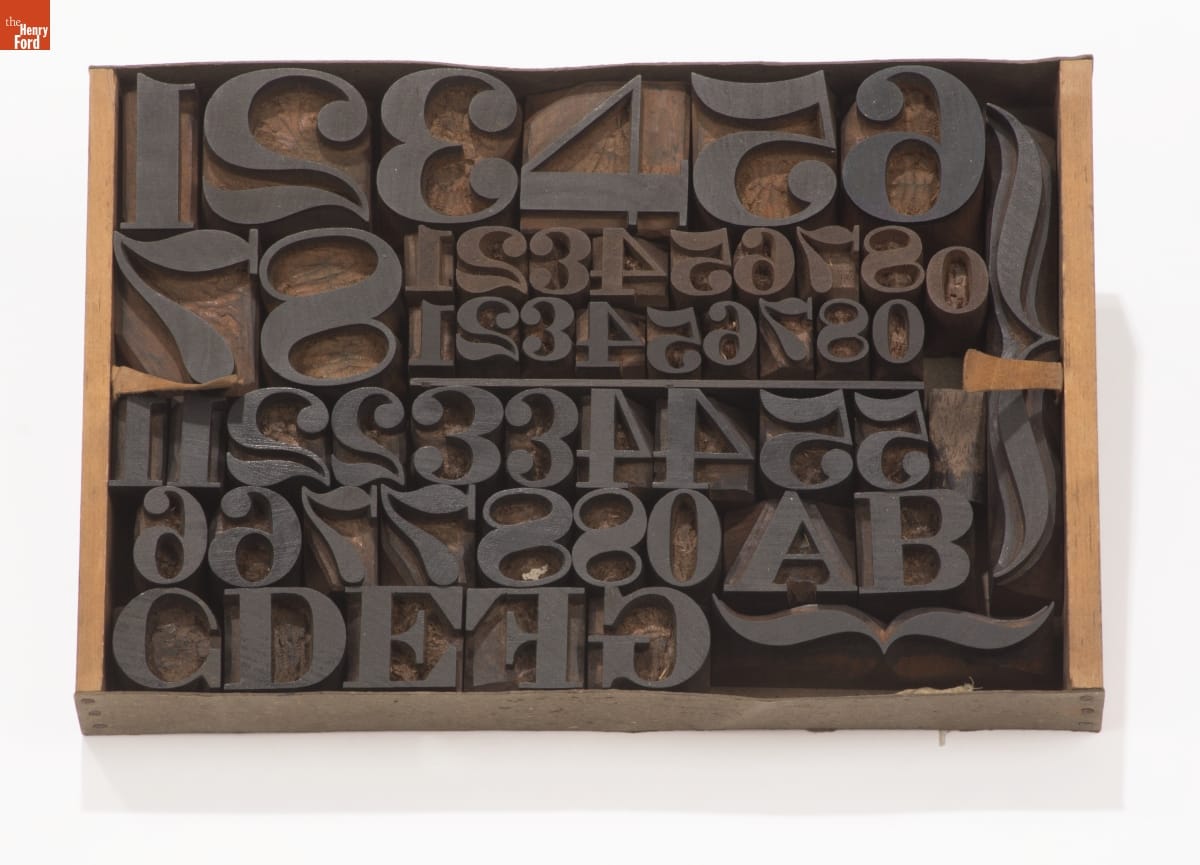
The Henry Ford and House Industries
- 10 Artifacts
The Henry Ford and House Industries, two institutions committed to celebrating the spirit of innovation, joined forces to create House Industries: A Type of Learning, an exhibit in Henry Ford Museum of American Innovation from May 27 through September 4, 2017. Artifacts provided by House and others are complemented by the pieces from our own collections shown below—objects that showcase design and might just spark your own creative moment.

Article
Playing Detective: Mashups and Myths in the Decorative Arts
Our collections sometimes surprise us at The Henry Ford, as Curator of Decorative Arts Charles Sable has often experienced.
03
Artifacts
Representing design and making landmarks across our collection.
Artifact
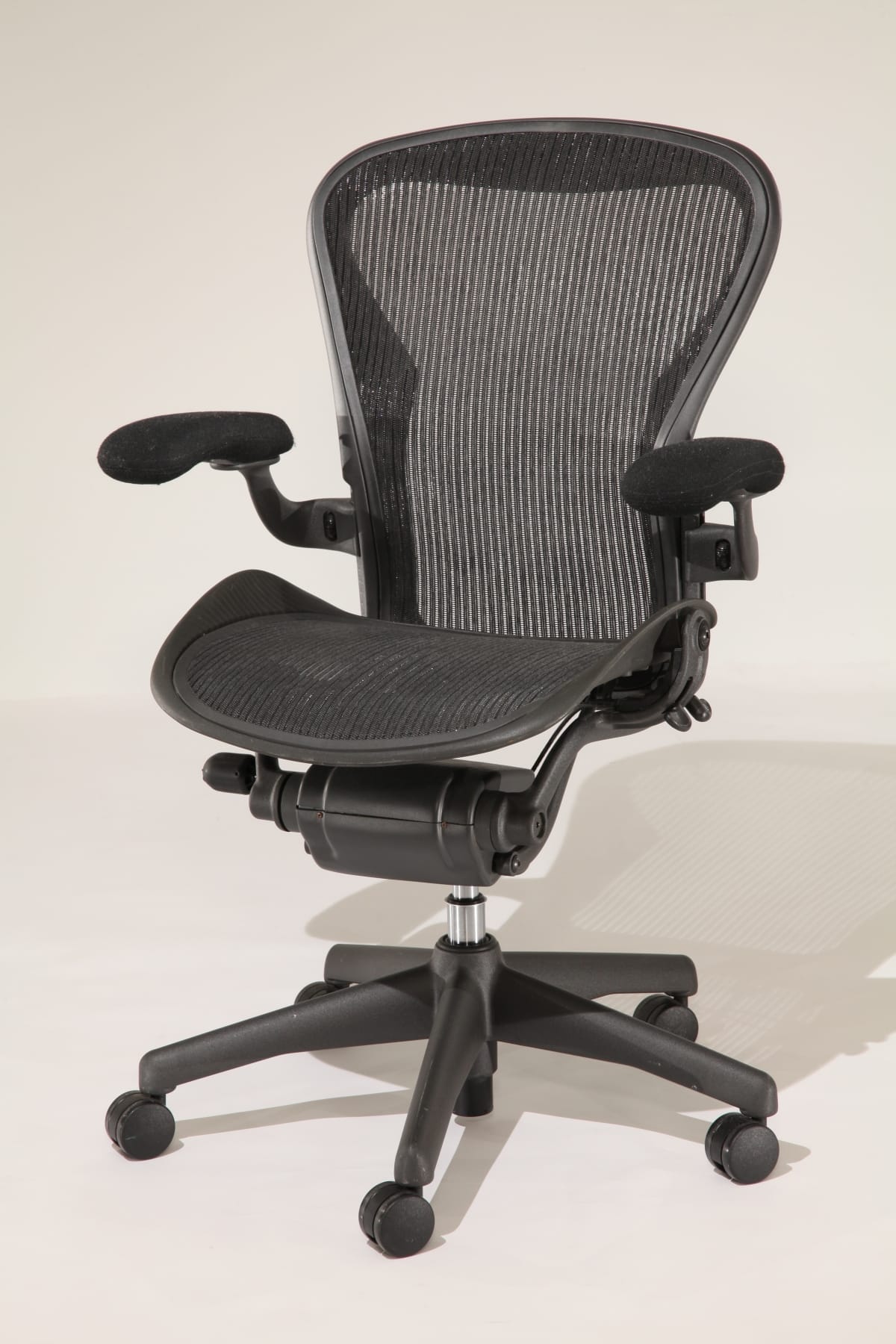
Aeron Task Chair, Pre-Production Prototype, 1994
Designers Don Chadwick and Bill Stumpf explored new materials that could replicate the cooling effect of historic wicker furniture and studied human sitting habits to create Herman Miller's groundbreaking Aeron task chair. One of the last in a series of experimental prototypes, this 1994 version incorporates the distinctive skeletal appearance that exemplified the production Aeron introduced later that year.
Artifact
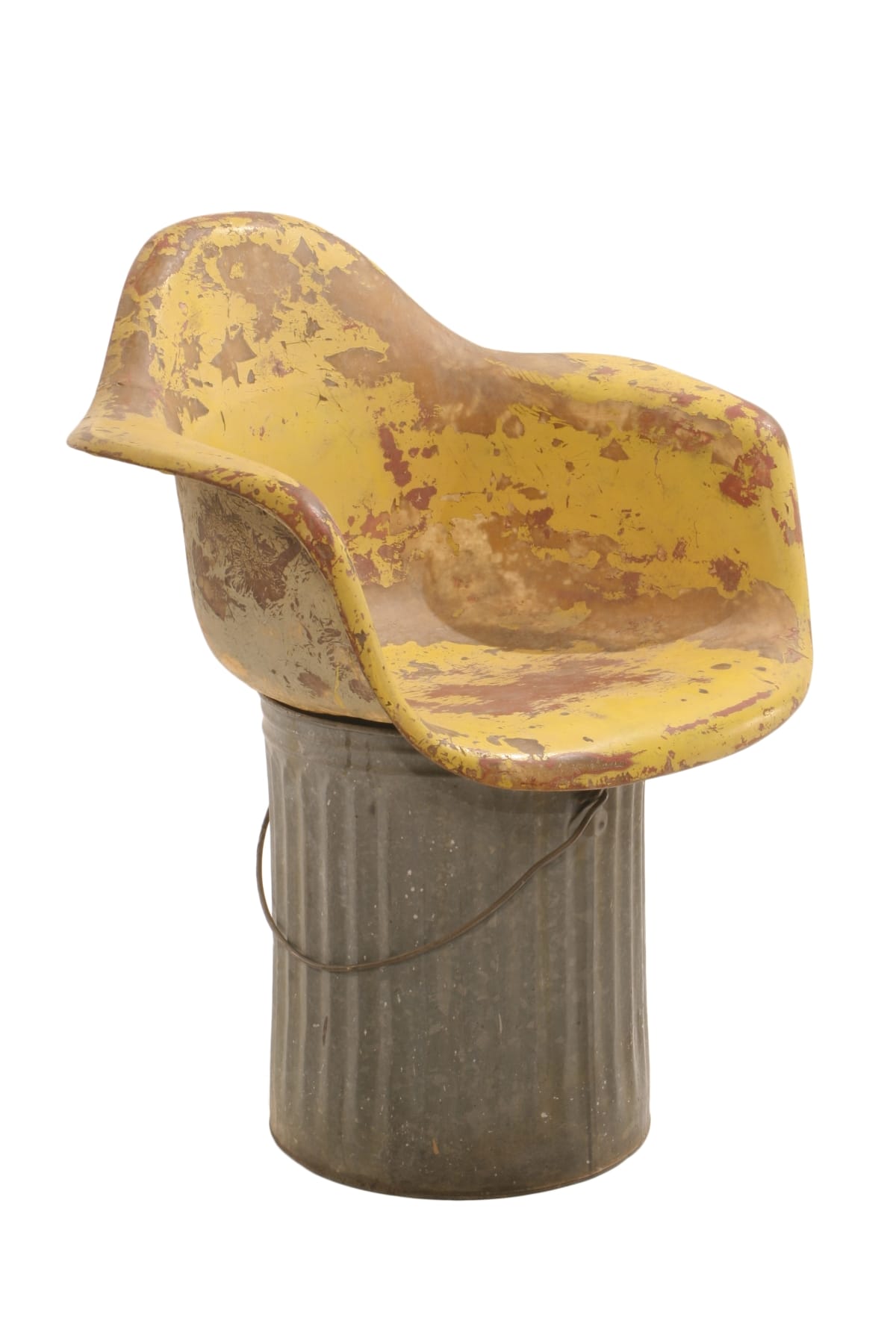
Prototype Eames Fiberglass Chair, circa 1949
Charles and Ray Eames wanted to design affordable high-quality furniture. To this end, Charles brought a mock-up of a chair to John Wills, a boat builder and fiberglass fabricator, who created two identical prototypes. Charles took one: it became the basis for what would become a modern design icon. This is the other: it lingered in Will's workshop, used over four decades as a utility stool.
Artifact
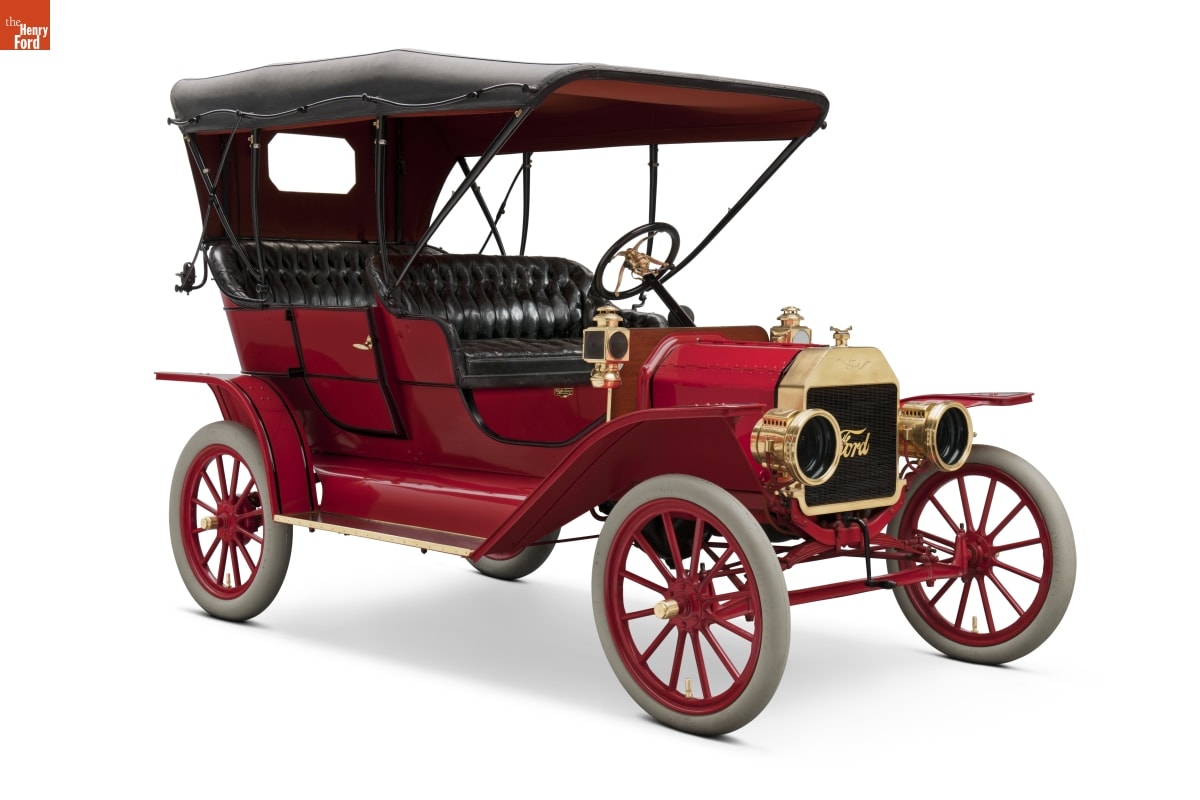
1909 Ford Model T Touring Car
Henry Ford crafted his ideal car in the Model T. It was rugged, reliable and suited to quantity production. The first 2,500 Model Ts carried gear-driven water pumps rather than the thermosiphon cooling system adopted later. Rarer still, the first 1,000 or so -- like this example -- used a lever rather than a floor pedal to engage reverse.
Artifact
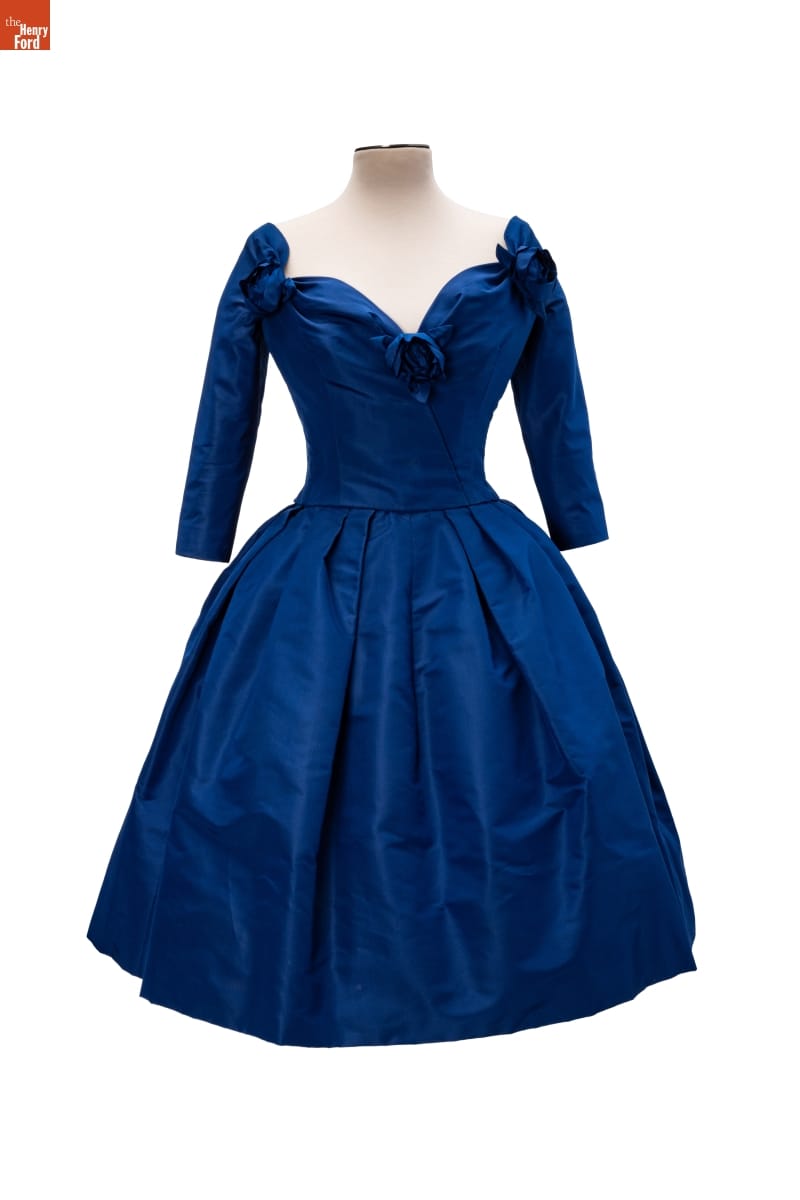
Christian Dior Cocktail Dress, "Rococo," Worn by Elizabeth Parke Firestone, 1957
Elizabeth Parke Firestone, wife of tire magnate Harvey S. Firestone, Jr., cultivated a refined sense of fashion through years of interest in clothing design and collaboration with world-renowned couturiers. Paris designer Christian Dior created a design drawing of this dress in red--a favorite color choice in his clothing line. Firestone preferred blue.
Artifact
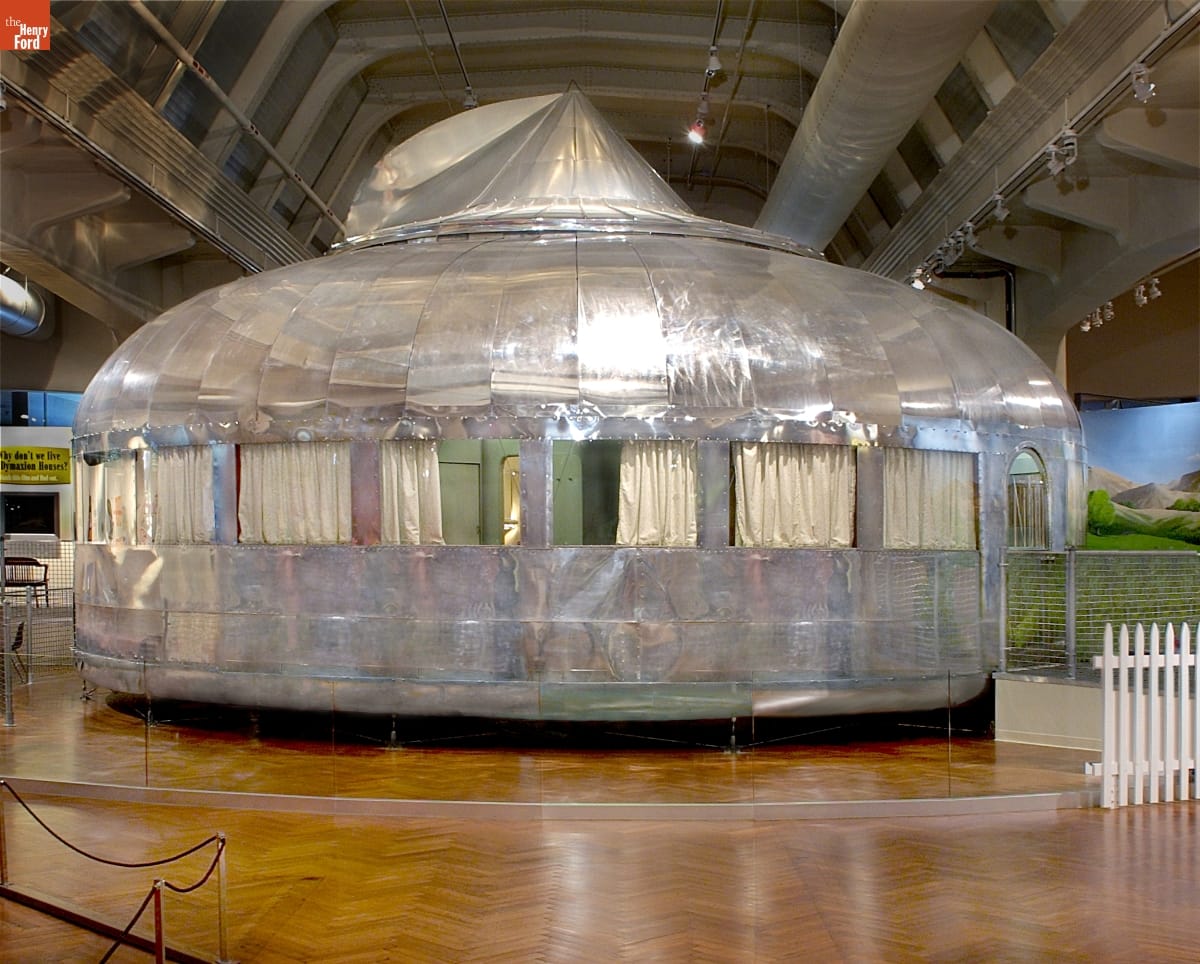
Dymaxion House
Buckminster Fuller was a multi-disciplinary designer. This house, his re-thinking of human shelter, was rooted in Fuller's understanding of industrial production -- particularly methods developed in the automobile industry and especially those advocated by Henry Ford for whom Fuller had immense admiration. More an engineering solution than a home, the structure was prototyped but never produced.
Artifact
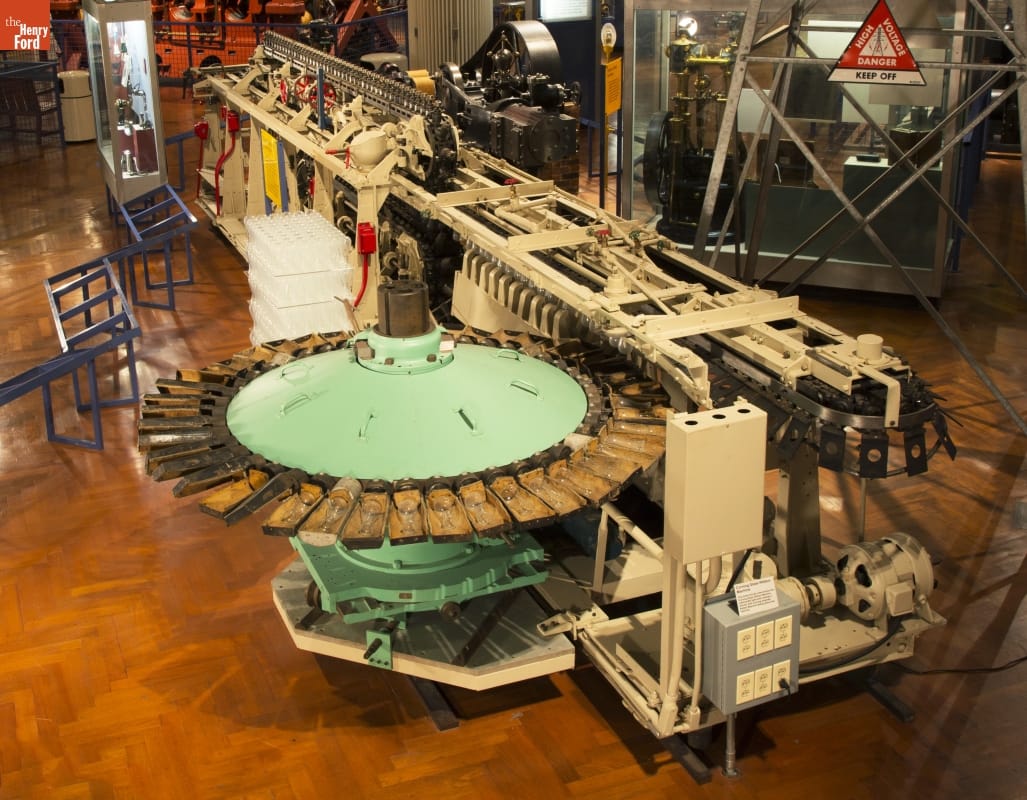
Corning Glass Ribbon Machine, 1928
Design as a discipline is rooted in craft but revealed in industry. Similarly the story of incandescent lamp manufacture begins with craft (the earliest ones offered for sale were exquisite hand-made objects) and ends with mass production. This high output machine (ten bulb blanks a second) was developed by a former glass blower and a mechanical engineer.
Artifact
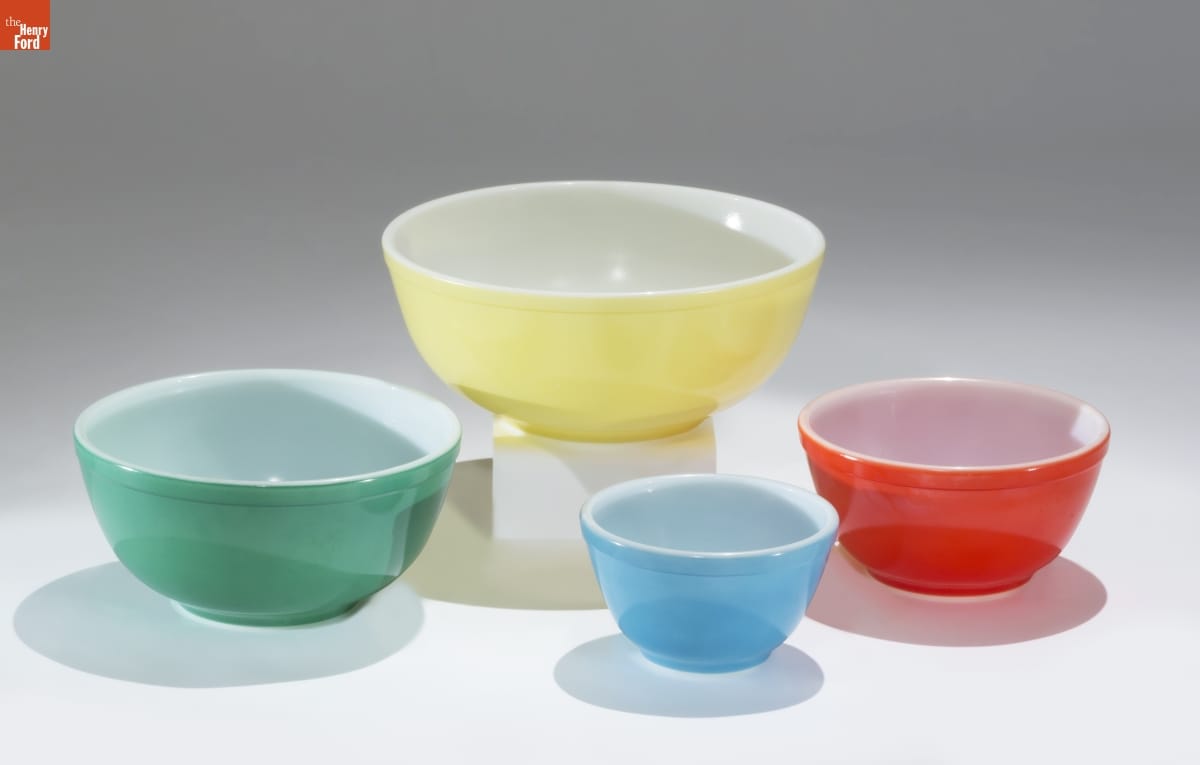
Corning Pyrex Mixing Bowl Set, 1949-1957
Corning Glass Works' heat-resistant glass bakeware, called Pyrex, was introduced in the mid-1910s. Pyrex products were inexpensive, with an easy-to-clean smooth surface. Pyrex glassware could travel from refrigerator to oven to table. Colored Pyrex kitchenware was introduced in 1947. These appealing mixing bowl sets, made from 1949 to 1957, were among the most popular of Corning's Pyrex products ever made.
Artifact
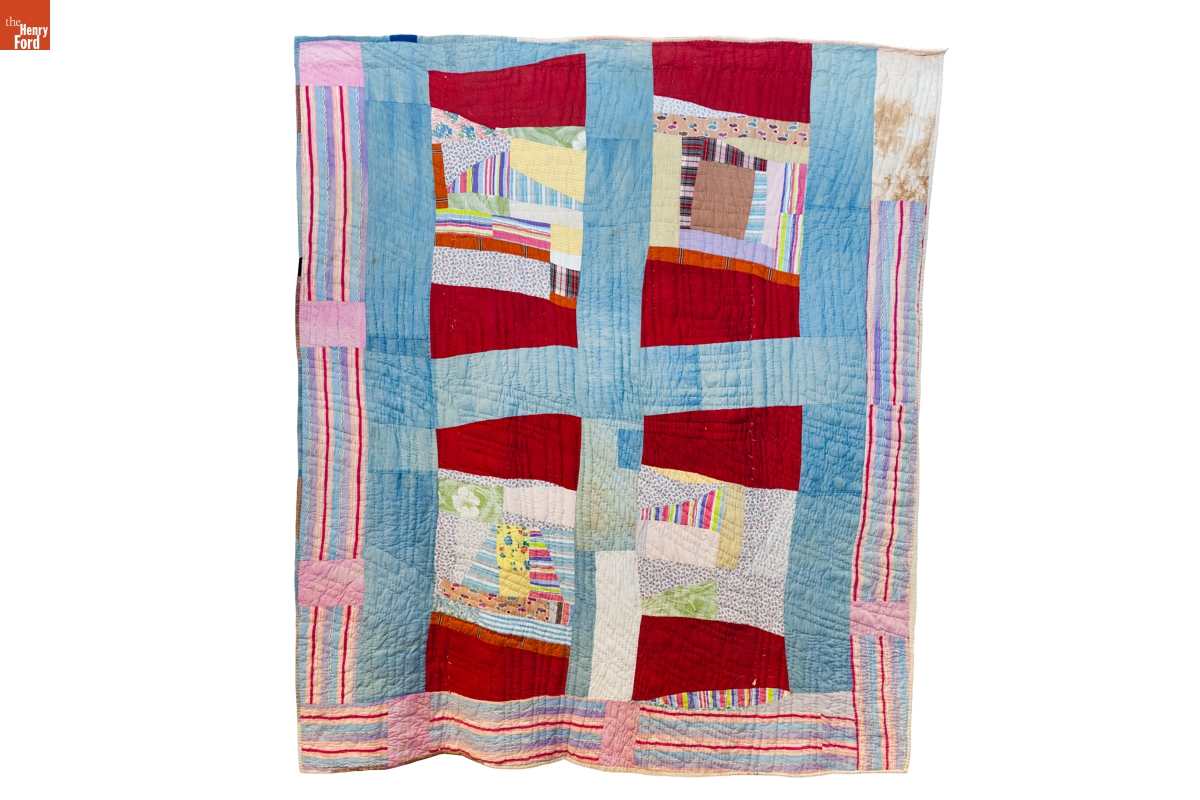
Pig Pen Variation and Mosaic Medallion Quilt by Susana Allen Hunter, 1950-1955
After working the fields of her rural Alabama tenant farm and tending to her family's needs, Susana Hunter sat down to lavish her creativity on quilt making. On-the-fly inspiration -- rather than tradition -- guided this African-American quilt maker's improvisational creations. Susana made over a hundred quilts -- each of them unique -- from the worn clothing and fabric scraps available to her.
04
Videos
06
More to Explore

View Articles
Explore stories from the collections of The Henry Ford.

Explore Popular Research Topics
Get authoritative information on key topics related to our collections.