
Communications & Information Technology
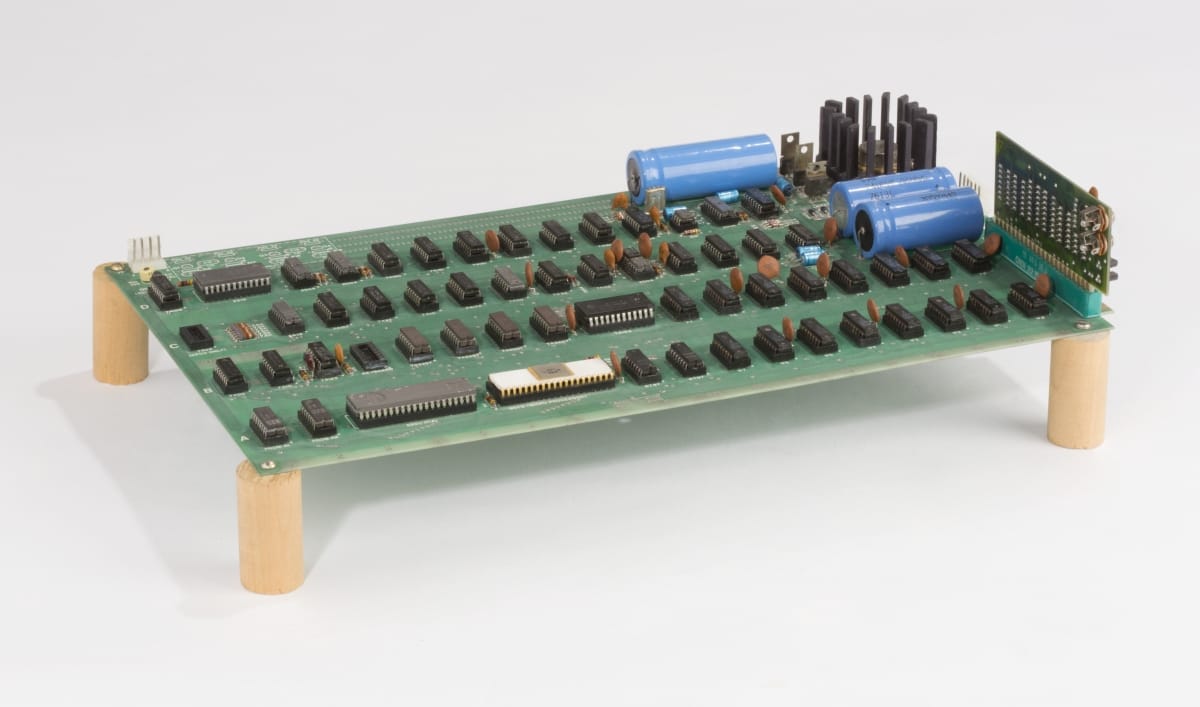
Curated sets
Communications and Information Technology
- 50 Artifacts
The Henry Ford's communications and information technology collections, dating from the 17th-century to the present day, document how technologies and systems are used to provide access to knowledge and to move information at increased speeds. From the printing press to the Internet (and beyond), these collections document the physical hardware as well as the ephemeral ways we live through technology.

Article
Unearthing the Atari Tomb: How E.T. Found a Home at The Henry Ford
Learn the story of the fabled "Atari Video Game Burial” of 1983, and how related artifacts found a home at The Henry Ford.
Artifact
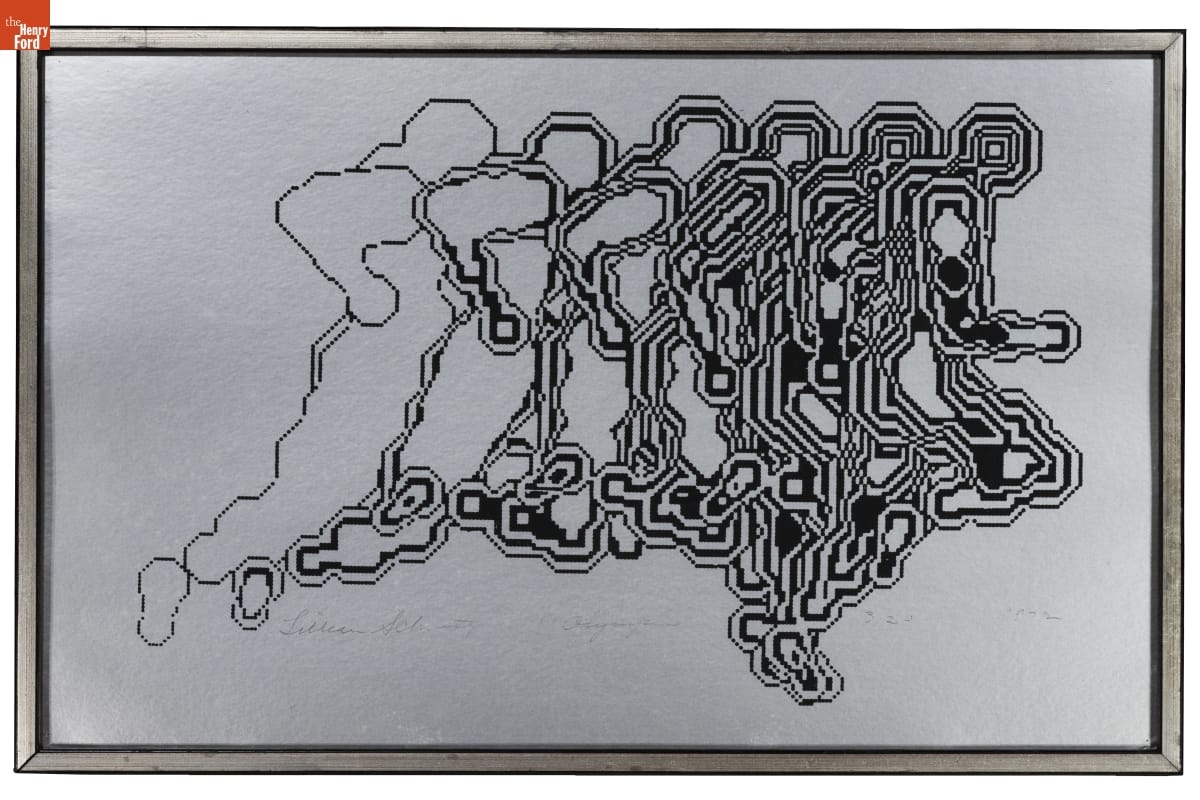
"Olympiad" by Lillian F. Schwartz, 1972
Lillian Schwartz is a pioneer of computer-generated art. From 1969-2002, she was a "resident visitor" at Bell Laboratories, producing groundbreaking films, videos, and multimedia works. The Schwartz Collection spans Lillian's childhood into her late career, documenting an expansive mindset, mastery over traditional and experimental mediums alike--and above all--an ability to create inspirational connections between science, art, and technology.
Curated sets
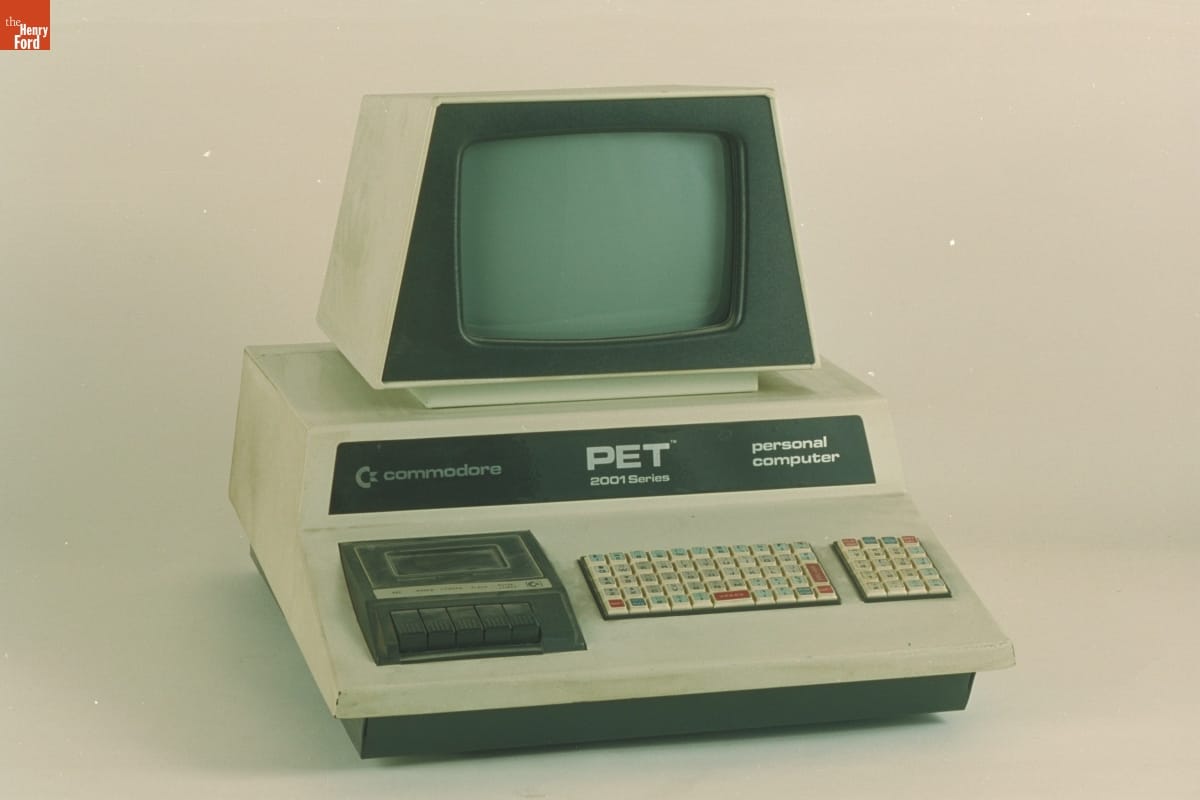
A Decade of Personal Computing
- 10 Artifacts
From kit computers soldered together at workshop benches — to affordable desktop systems with refined graphical interfaces — these computers illustrate the rapid development of personal computing in the 1970s-80s.

Article
What If Everyone Could Have a Personal Computer?
Fueled with profound originality and resourcefulness, a twentysomething idealist changed the world with a machine built from the cheapest parts he could find.

Article
Can Objects Talk?
Explore the philosophy behind creating stories from collections artifacts.
01
Lillian Schwartz
A pioneer of computer art.

Article
“Creating in my head”: How Lillian Schwartz turned Life’s Obstacles into Opportunities
In 1949, Lillian Schwartz — an artist who became well known for her experimental spirit — packed her bags and boarded the U.S. Army Transport Ship General Daniel I. Sultan. Lillian's husband, Jack Schwartz, was a doctor and military service member.
Curated sets
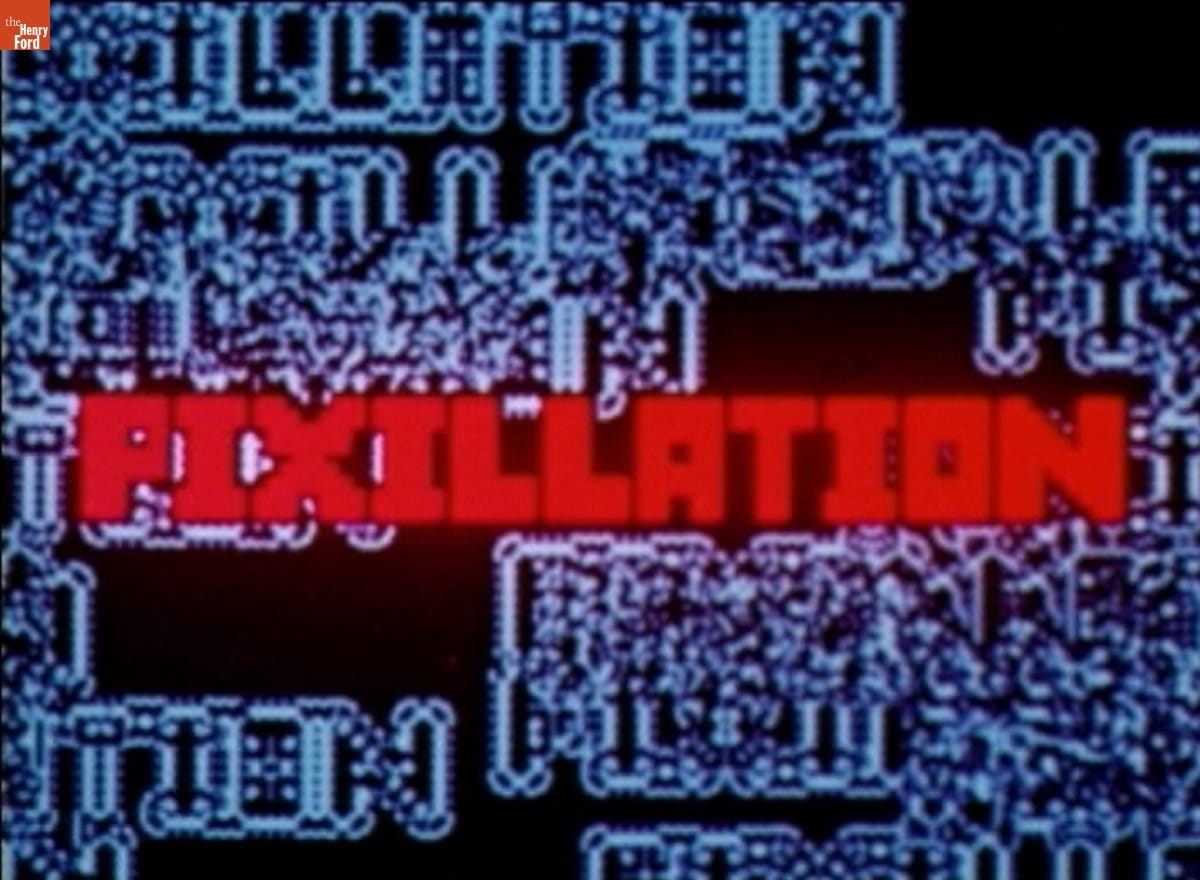
Best of Lillian Schwartz
- 8 Artifacts
Lillian Schwartz is a pioneer of computer-generated art. From 1969-2002, she was a "resident visitor" at Bell Laboratories and Lucent Technologies, producing groundbreaking films and multimedia works. The Schwartz Collection spans Lillian's childhood to her late career. It documents her expansive mindset, mastery over traditional and experimental mediums, and ability to create inspirational connections between science, art, and technology.

Article
Lillian Schwartz Collection: Beginning the Journey
The papers of technologist and artist Lillian Schwartz are perhaps the most complex set of materials ever brought into the holdings of the archives and library at The Henry Ford. Go behind the scenes to see how we're caring for them.

Article
Lillian Schwartz: Artist and Inspiration
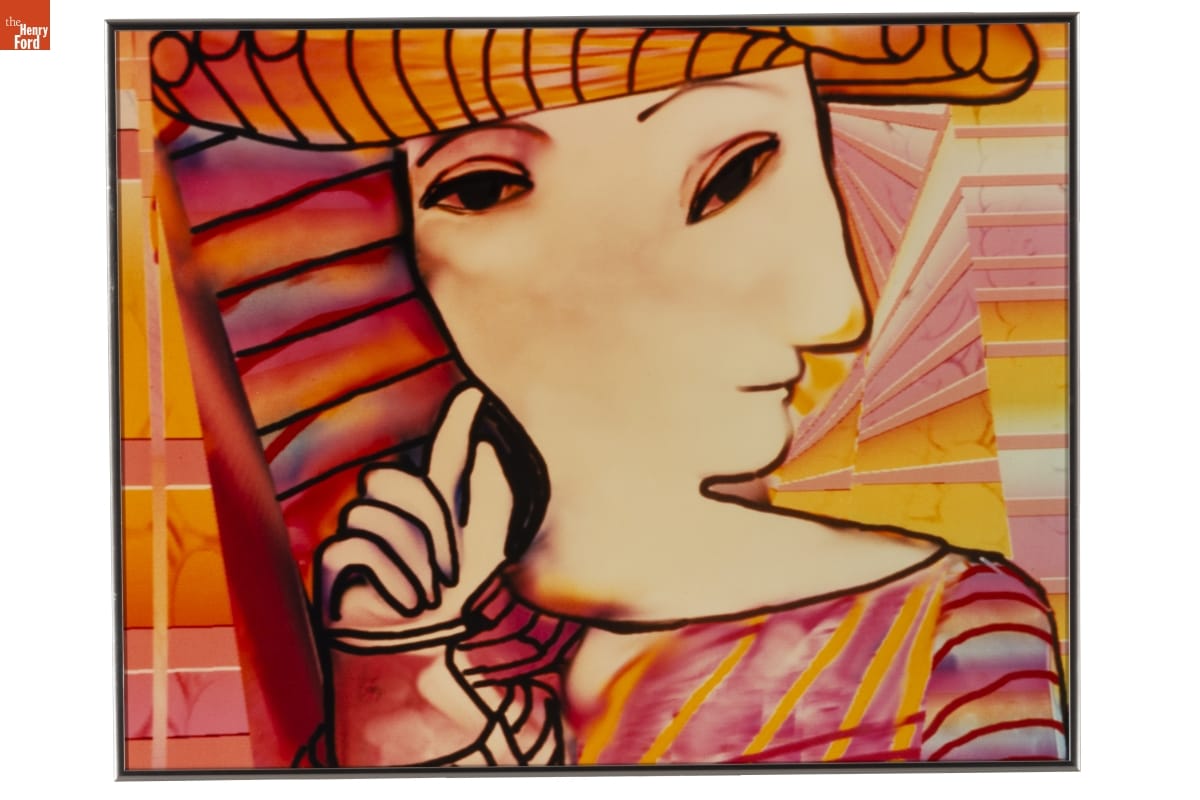
As we enter the final month of the Lillian Schwartz: Whirlwind of Creativity exhibit at The Henry Ford — which also happens to be Women’s History Month — it seems a good time to acknowledge Lillian’s life and work as an artist who made groundbreaking c
Curated sets
Lillian Schwartz: Remixing Art History
- 8 Artifacts
Lillian Schwartz was a pioneer of computer art. She experimented with art of the past, bridging the gap between traditional techniques and computing technology. She learned from and remixed other artists' works and built upon the art of her peers, producing fun and innovative creations. From digital forensics to optical illusions, Lillian added a unique twist to the "canon" of art history.

Article
Lillian Schwartz’s Works on Paper
Lillian Schwartz (1927-2024) was a unique cultural figure as one of the American pioneers in digital art. Her work is immediately identifiable through her artistic flare. Her pieces tend to be visually jarring in a delightful way, compelling the vi

Article
Remembering Lillian Schwartz
Lillian was a visionary multimedia artist — an early adopter, innovator, and life-long learner in creative computing and digital art. At Bell Laboratories, she held the role of "resident visitor" from 1968-2002, where she created her celebrated films.
.png%3Fsfvrsn%3Dd140a530_1&w=3840&q=75)
Article
Is it really art? Lillian Schwartz, Computer Art and Artificial Intelligence
“An oil painting by Matisse of a humanoid robot playing chess.” “An astronaut riding a horse in photorealistic style.” “An armchair in the shape of an avocado.” These are only a few input suggestions for the image generation platform known as Dall-E
02
Mathematica
The wonder of mathematics and the beauty of post-modern design.

Article
Mid-Century Math
In 2015, The Henry Ford acquired an original Mathematica exhibit designed by Charles and Ray Eames, and we've begun to digitize some of the signage and reading material from the exhibit.
Artifact
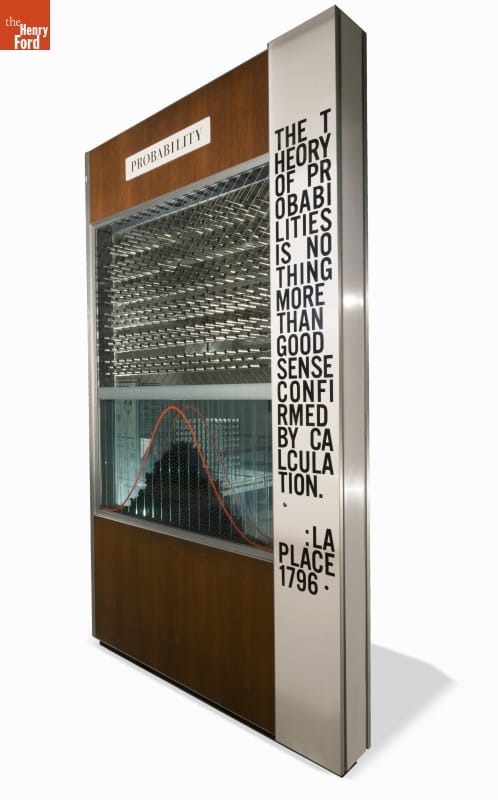
"Probability Board" from Mathematica: A World of Numbers and Beyond Exhibition, 1960-1961

Article
Digging Into Mathematica
Go behind the scenes with Henry Ford Academy student Jamison Van Andel to see how he conducted research to improve the representation of diverse mathematicians within our Mathematica exhibit.
Artifact
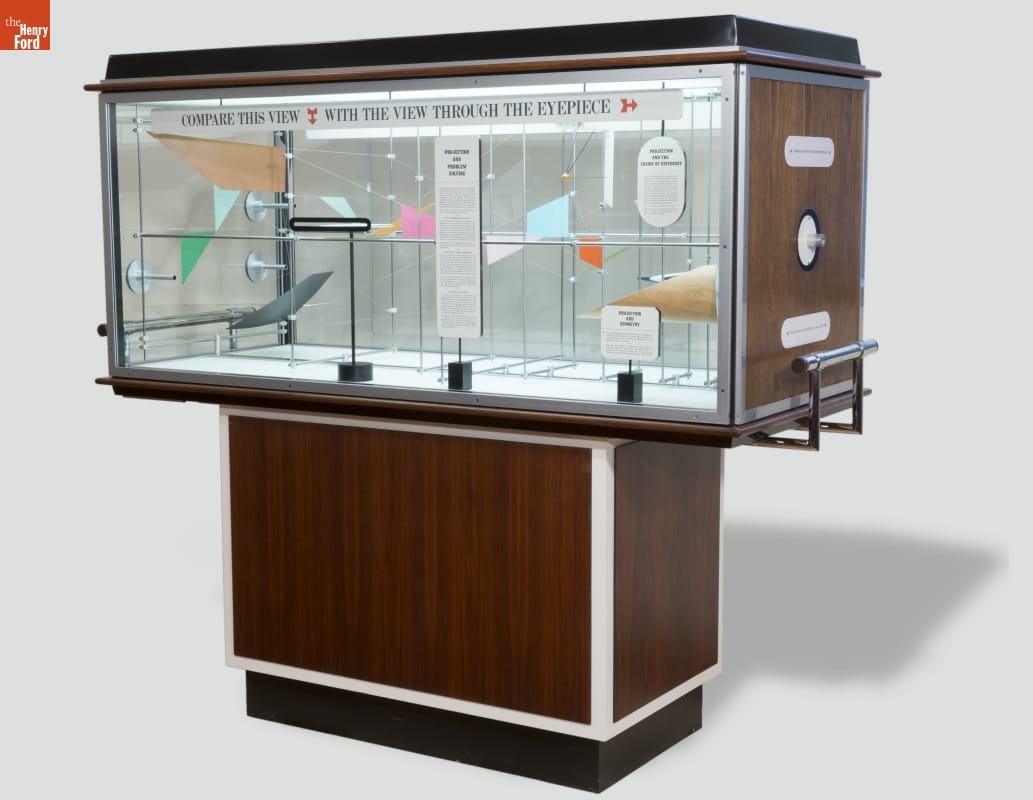
"Projective Geometry" from Mathematica: A World of Numbers and Beyond Exhibition, 1960-1961
Artifact
Apple 1 Computer, 1976
This is one of the first 50 Apple 1 computers. Apple 1s were the first pre-assembled personal computers; Steve Wozniak assembled this one in Steve Jobs's family home. Before the release of the Apple 1, owning a personal computer meant building it yourself. Wozniak's refined engineering skills, coupled with Jobs's bold marketing abilities, led to a revolutionary and affordable product--as well as a successful company.
Artifact
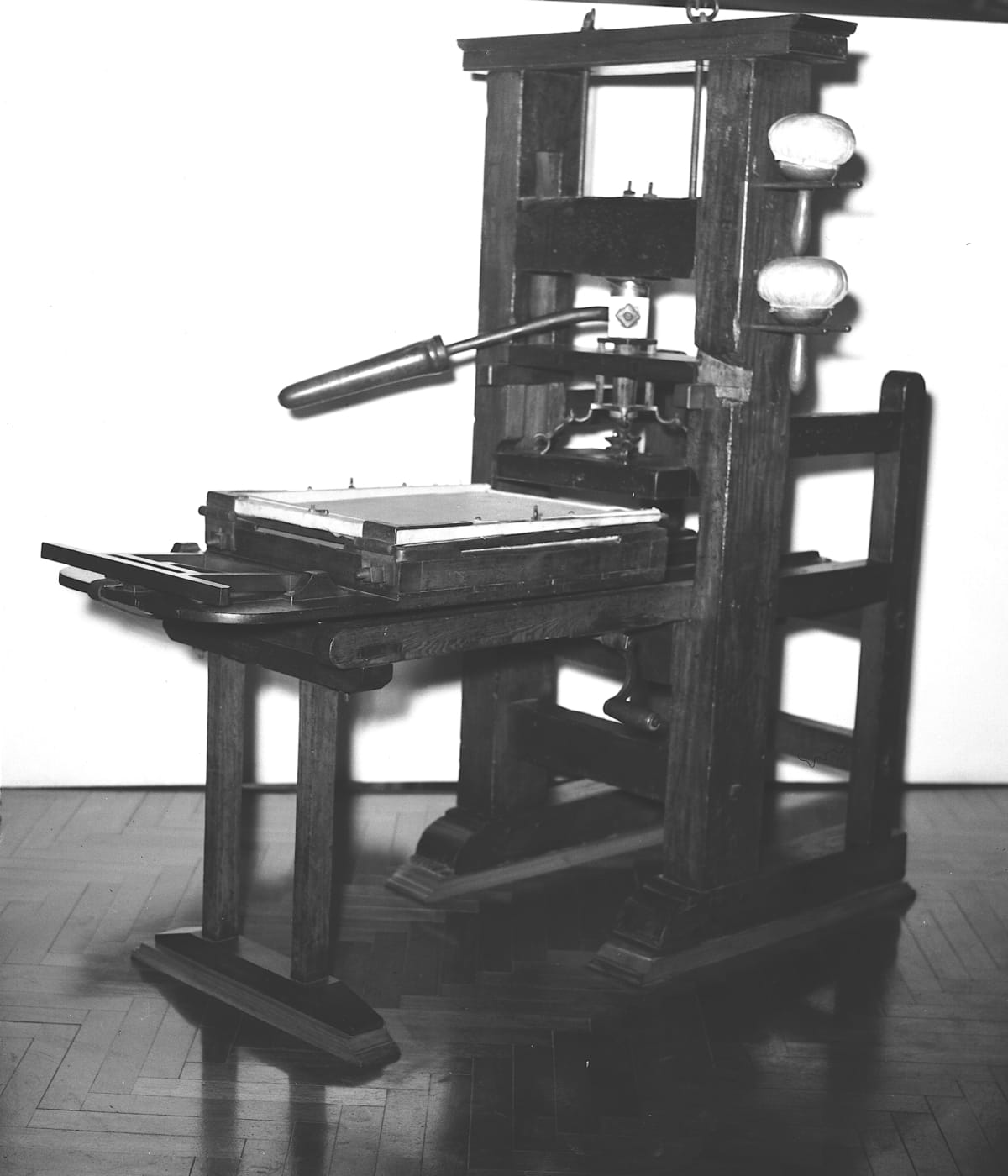
Ramage Hand-lever Printing Press, circa 1809
This hand-operated printing press is one of the oldest remaining in the United States. America's premier press maker, Adam Ramage, made it in Philadelphia in about 1809. He was the first American to improve printing presses and began a tradition of American innovations in printing press design. With this press, two journeymen printers printed about 250 one-sided sheets per hour.
Artifact
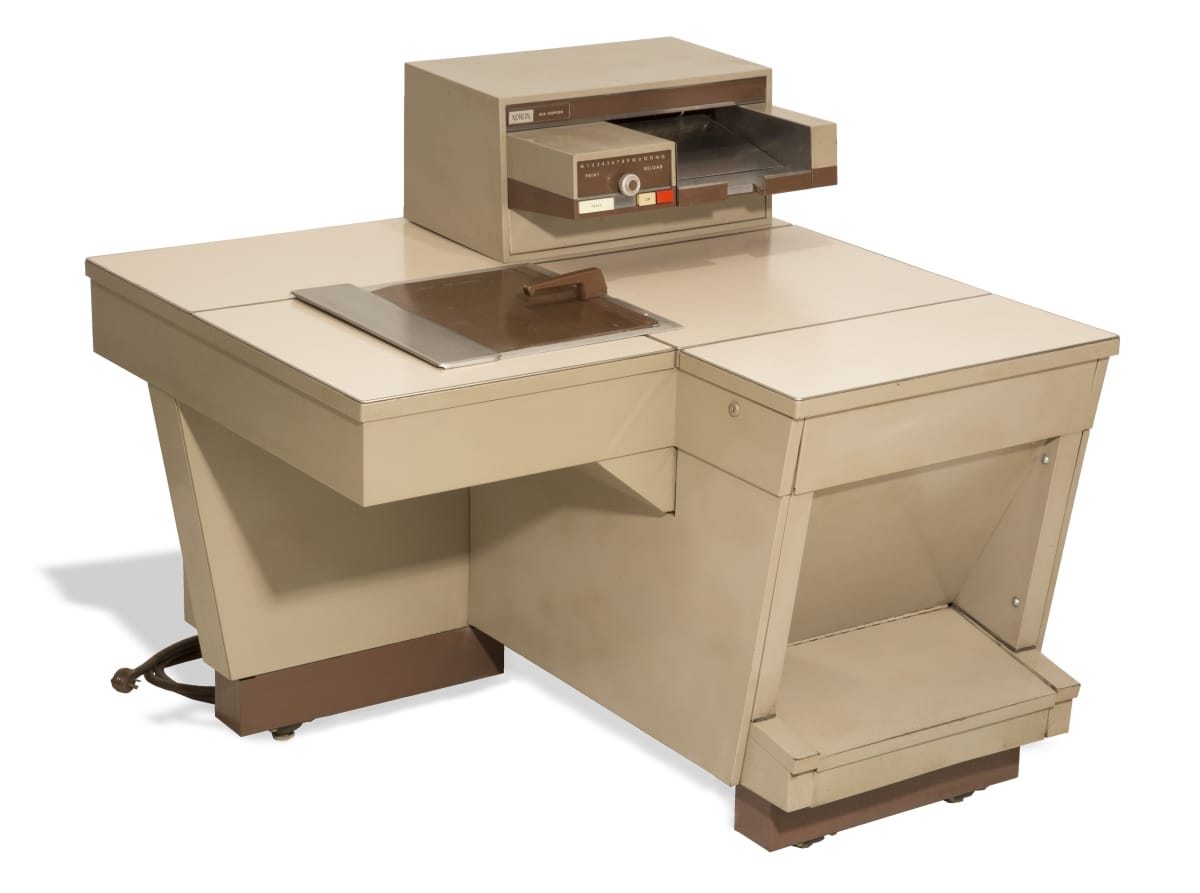
Xerox Photocopier Model 914, Introduced in 1959
The Xerox 914 was the first commercially successful automatic office copier. Using Chester Carlson's xerography process, documents were produced electrostatically, using powdered toner. This copier weighed 650 pounds and made one copy every 26 seconds on paper up to 9 x 14 inches. The 914 also came with a "scorch eliminator" -- a small fire extinguisher for taming fires caused by overheating.
Artifact
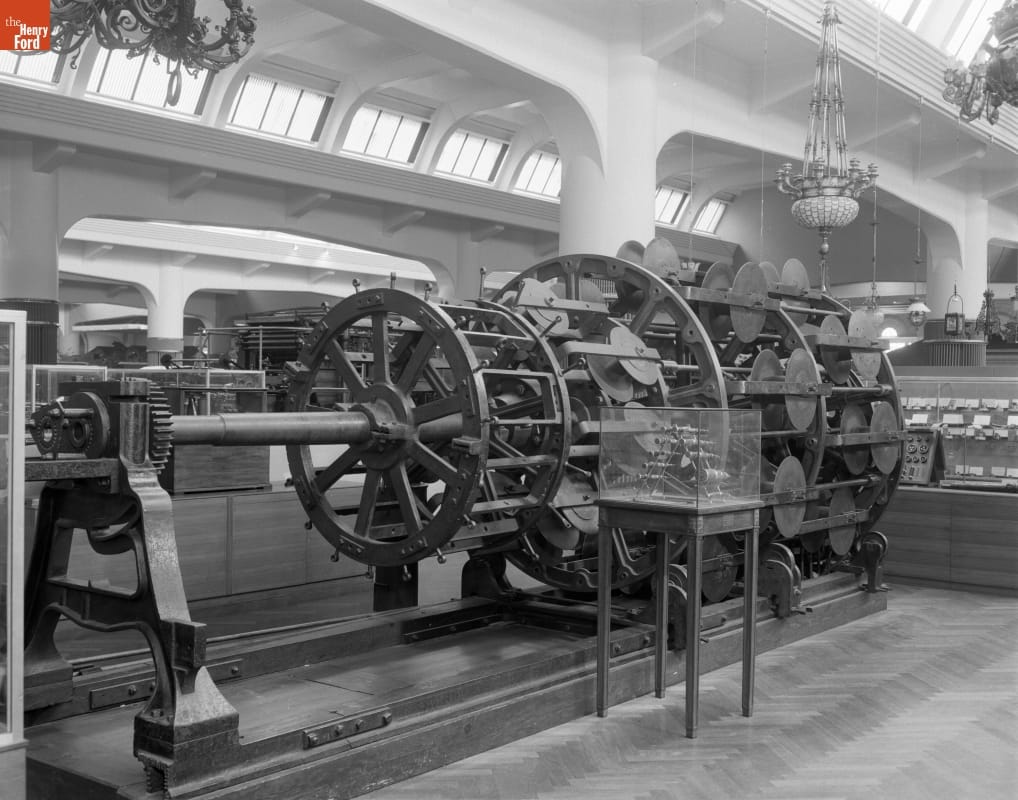
Machine Used to Strand Transatlantic Cable, 1860-1865
Laying telegraph cable across the Atlantic Ocean in the 1860s was a huge undertaking. This massive cable stranding machine was used in Greenwich, England, to wind together the different elements of the cable: iron for strength, copper for conductivity, gutta-percha rubber for insulation, and tarred hemp for durability. Following several failed attempts, the heavy, flexible cable was laid successfully by the SS Great Eastern in 1866.
Artifact
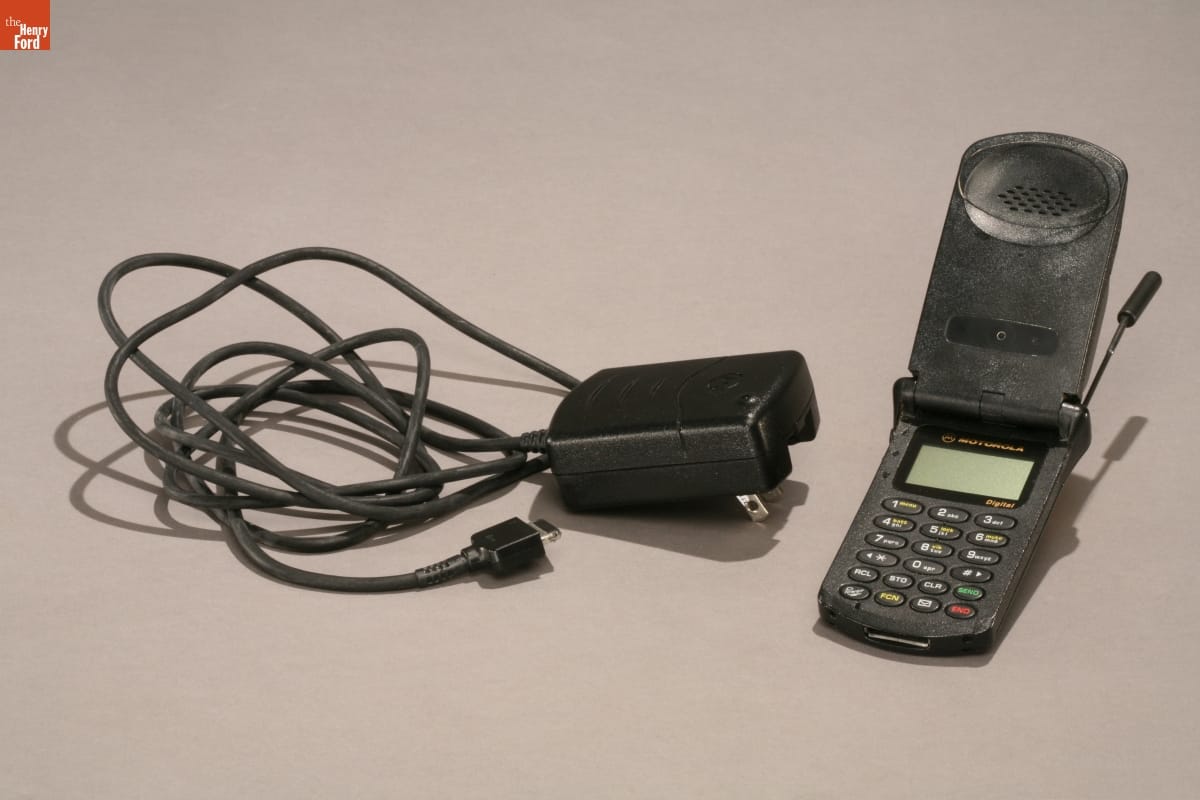
Motorola StarTac Cellular Telephone with Charger, 1996-1999
Motorola's StarTAC was the first flip phone. It was released in 1996, and its small, portable size and light weight (less than 4 ounces) helped make it popular among consumers for several years. The StarTAC's popularity helped everyday Americans develop a familiarity and comfort with cellphones.
Artifact
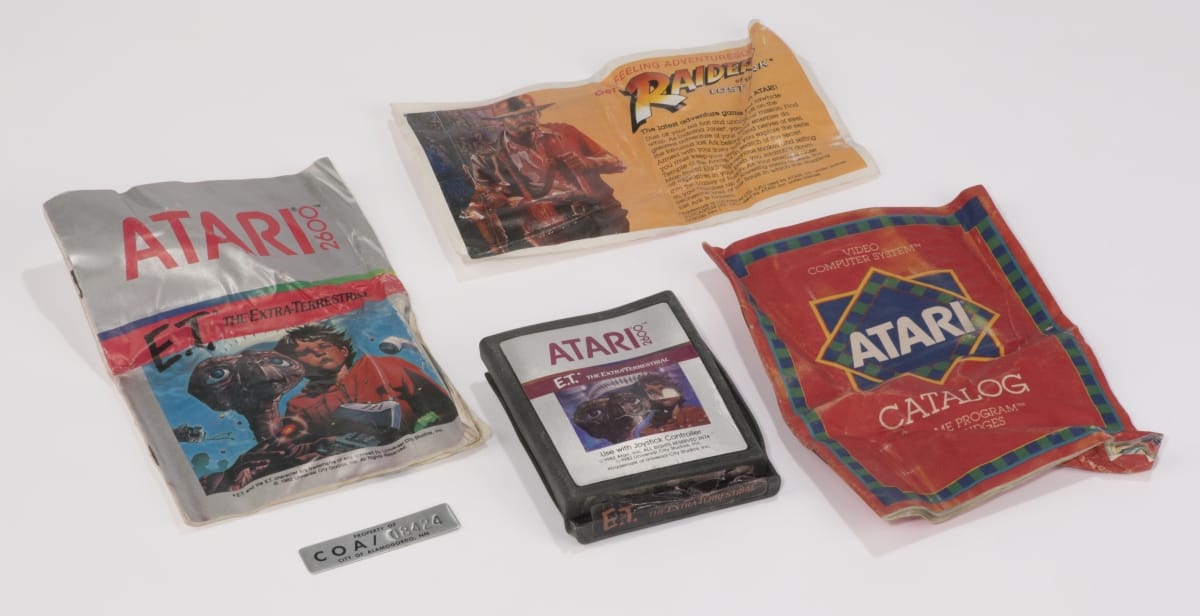
Video Game, "E.T. the Extra-Terrestrial," Recovered from Landfill, Alamogordo, New Mexico, April 26, 2014, Site of the Atari Video Game Burial of 1983
In 1983, rumors circulated: Atari was bankrupt, and was dumping truckloads of games into a New Mexico landfill. Victim to the "Video Game Crash," the company buried 700,000 cartridges in the desert. The story became an obscure pop culture legend -- until "The Atari Tomb" was unearthed in 2014. This recovered cartridge is evidence of the world's first video game excavation.
04
Videos
05
Discover More Themes
06
More to Explore

View Articles
Explore stories from the collections of The Henry Ford.

Explore Popular Research Topics
Get authoritative information on key topics related to our collections.