
Chariot Made by William Ross for Angelica Campbell, 1792-1802
THF90762 / Chariot Made by William Ross for Angelica Campbell, 1792-1802
01
Artifact Overview
Angelica Bratt Campbell purchased this sporty, two-passenger carriage from coachmaker William Ross of New York City. She used it in and around Schenectady, New York, where her husband had made a fortune as a merchant. In the 1790s carriages were much rarer than cars today -- especially for city dwellers. Only the wealthy could afford closed carriages like this one.
Artifact Details
Artifact
Chariot (Carriage)
Date Made
1792-1802
Place of Creation
Creator Notes
Constructed by William S. Ross in New York, New York, with assistance from blacksmith, I. Horton.
Location
at Henry Ford Museum in Transportation - Carriages
Object ID
29.1126.79.1
Credit
From the Collections of The Henry Ford.
Material
Cloth
Lace (Needlework)
Leather
Metal
Plate (Material)
Silver (Metal)
Wood (Plant material)
Wool (Textile)
Technique
Hand-painted
Plating (Metal coating)
Upholstering
Color
Black (Color)
Gold (Color)
Green
Red
Dimensions
Height: 95.75 in
Width: 75 in
Length: 160.5 in
Wheelbase: 96 in
Diameter: 40.5 in (Wheel Diameter)
Diameter: 58 in (Wheel Diameter)
Inscriptions
Location not noted: MADE BY / WILLM ROSS / COACH MAKER / 208 BROADWAY / N.YORK
Location not noted: MADE BY WM ROSS / COACHMAKER / BROADWAY / 208
Painted on the lower door panels, and repeated on the front, under the driver's feet and rear body, below the coat-of-arms: NE OBLIVIS CARIS
Painted on panels to the back the the doors on both sides: AC
Imprinted on the lower portion of the upright springs at the front and back of the carriage: * I. HORTON *
Keywords |
|---|
02
Related Content
 Set
SetOnline Horse-Drawn Vehicles Collection
- 29 Artifacts
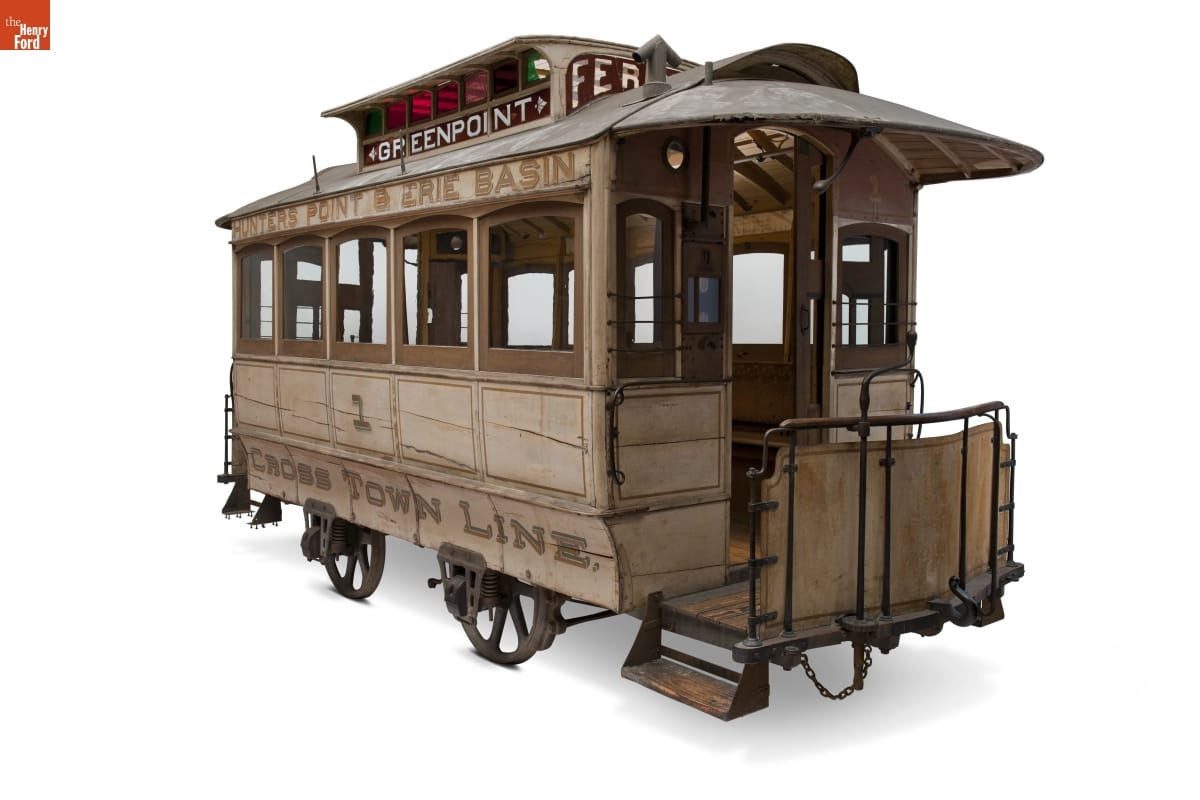
The horse-drawn streetcar was an important means of public transportation in 19th-century American cities. New York's Brooklyn City Railroad ran this car on its line between Hunters Point in Long Island City, and Erie Basin in South Brooklyn. But horses were expensive to stable and feed -- and messy too. Operators embraced electric streetcars starting in the late 1880s.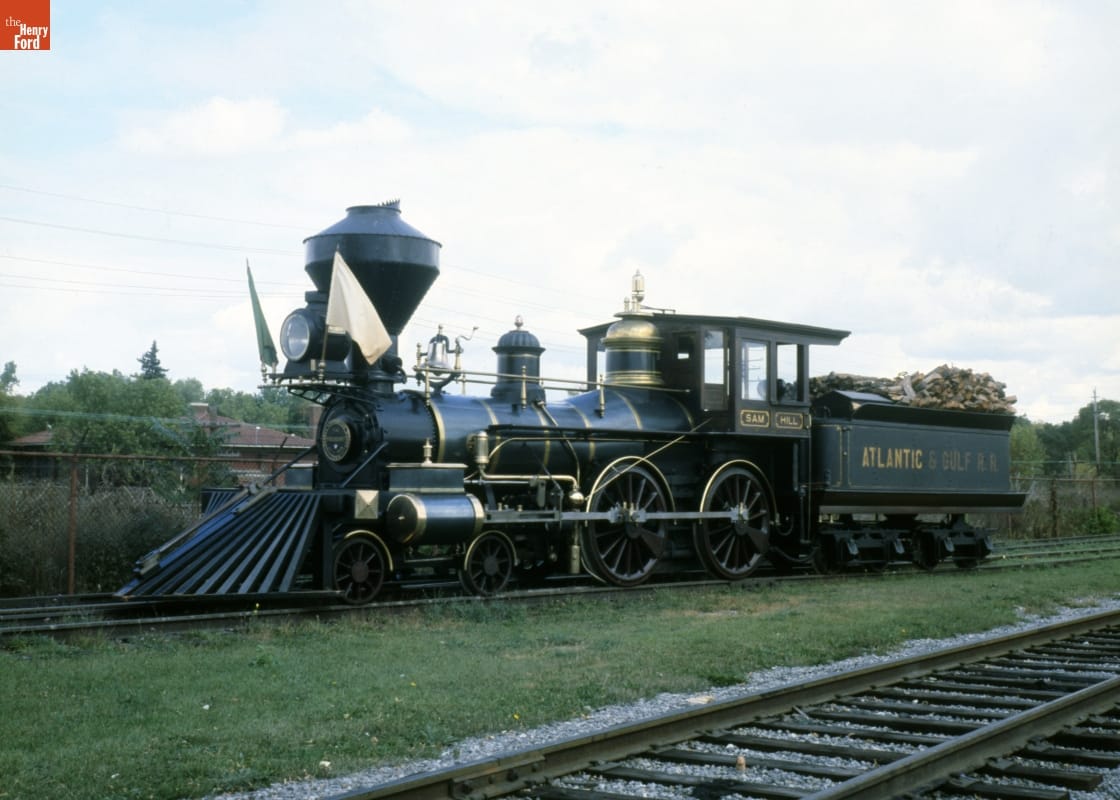 Set
SetMobility
- 49 Artifacts
This 1858 Rogers steam locomotive is typical of those used in the United States in the second half of the 19th century. Its flexible wheel arrangement, high power output, and light weight were well suited to the tight curves, steep grades, and hastily constructed track that characterized American railroads. This locomotive struck an agreeable balance between practicality, safety, and economy.