
Carousel Figure of a Frog or "Hop-toad," 1910-1914
THF113716 / Carousel Figure of a Frog or "Hop-toad," 1910-1914
01
Artifact Overview
In the early 20th century, amusement park goers dressed in their Sunday best climbed aboard colorful, hand-carved animals to enjoy a carousel ride. Horses were most common, but riders could choose from more exotic creatures found on some carousels. Herschell-Spillman made this whimsical frog -- the only carousel manufacturer to do so. It's the only American carousel animal you'll see wearing human clothing.
Artifact Details
Artifact
Carousel animal
Date Made
1910-1914
Creators
Place of Creation
Location
at Greenfield Village in Carousel
Object ID
73.209.1.12
Credit
From the Collections of The Henry Ford.
Material
Paint (Coating)
Wood (Plant material)
Technique
Hand-painted
Woodcarving
Color
Black (Color)
Brown
Dark blue
Red
Reddish orange
Turquoise (Color)
Yellow (Color)
Dimensions
Height: 41 in
Width: 10.5 in
Length: 39.5 in
Keywords |
|---|
02
Related Content
 Set
Set1913 Herschell-Spillman Carousel
- 11 Artifacts
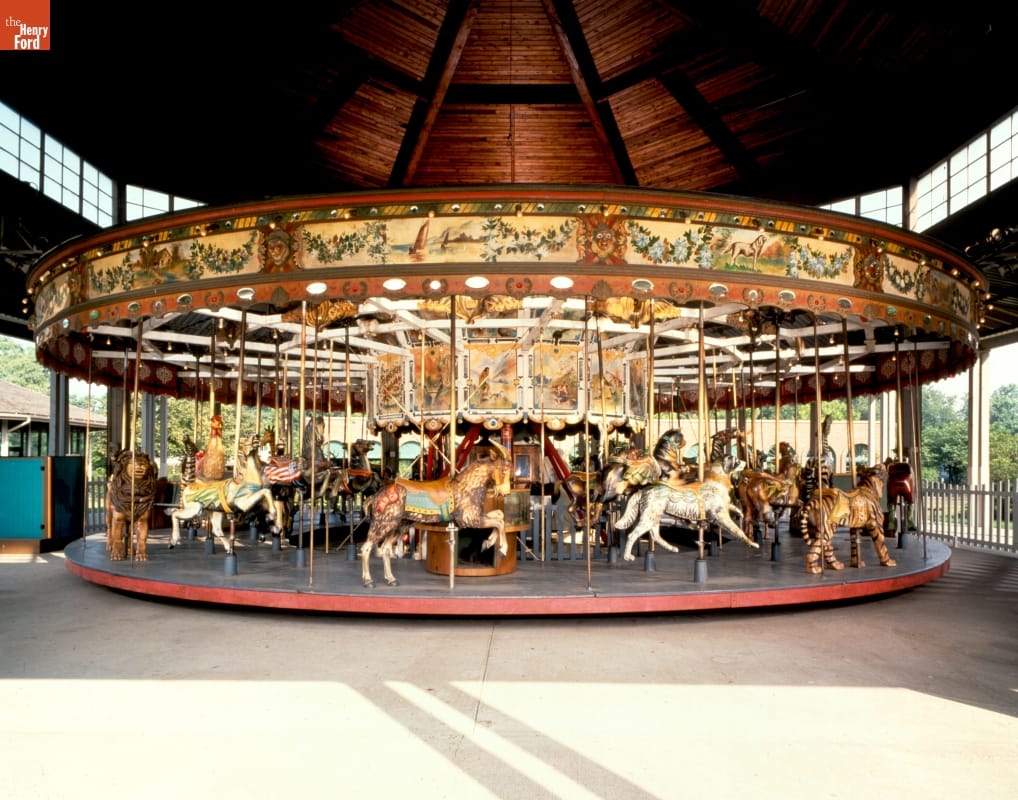
Colorful carousels were at the height of their popularity during the early 1900s and could be found all across America in amusement parks, city parks, and seaside resorts. Built in 1913, this "menagerie" carousel's hand-carved animals include storks, goats, zebras, dogs, and even a frog. Although its original location is uncertain, this carousel operated in Spokane, Washington, from 1923 to 1961.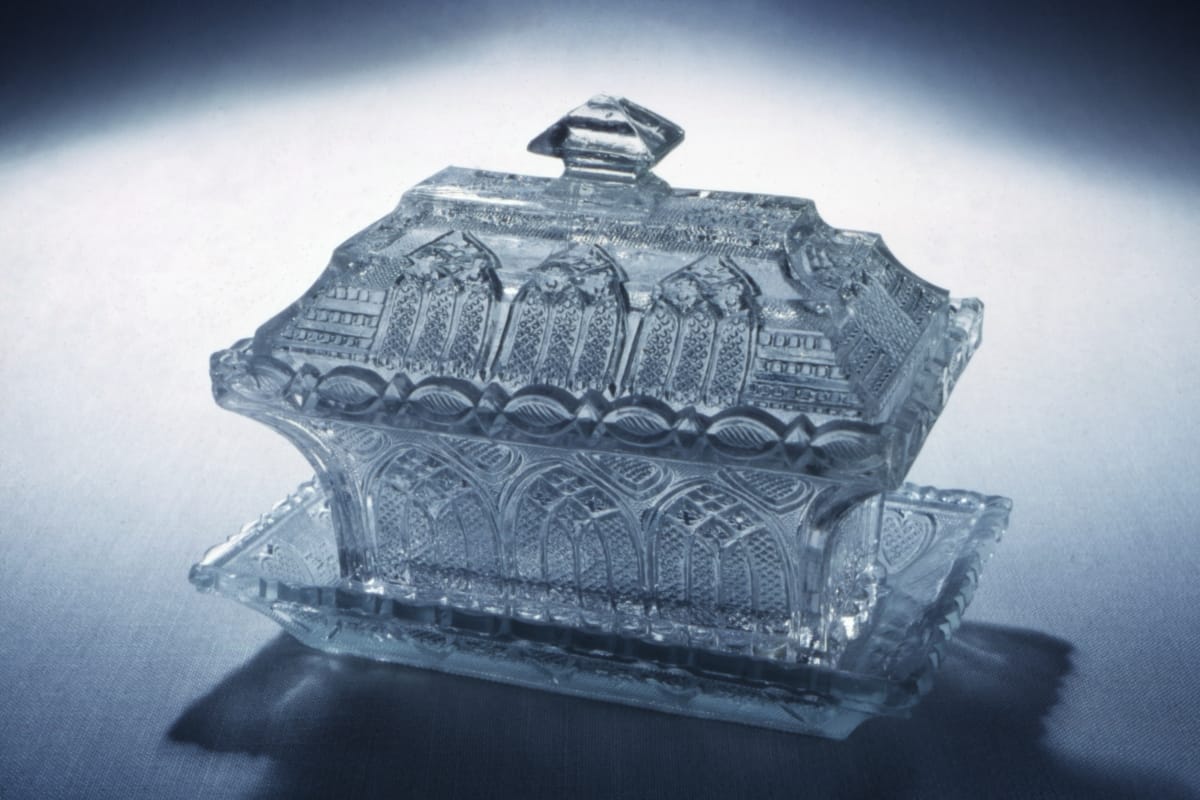 Set
SetCurators' Choice: Home & Community Life
- 24 Artifacts
This mold-made, pressed glass box was intended to hold a middle class lady's jewelry. It was made in the lacy glass technique, in which decoration covers the entire surface of the mold, and is raised against a background of small dots, to create a stippled appearance on the surface. The dots catch any ambient light, making the surface shimmer.