
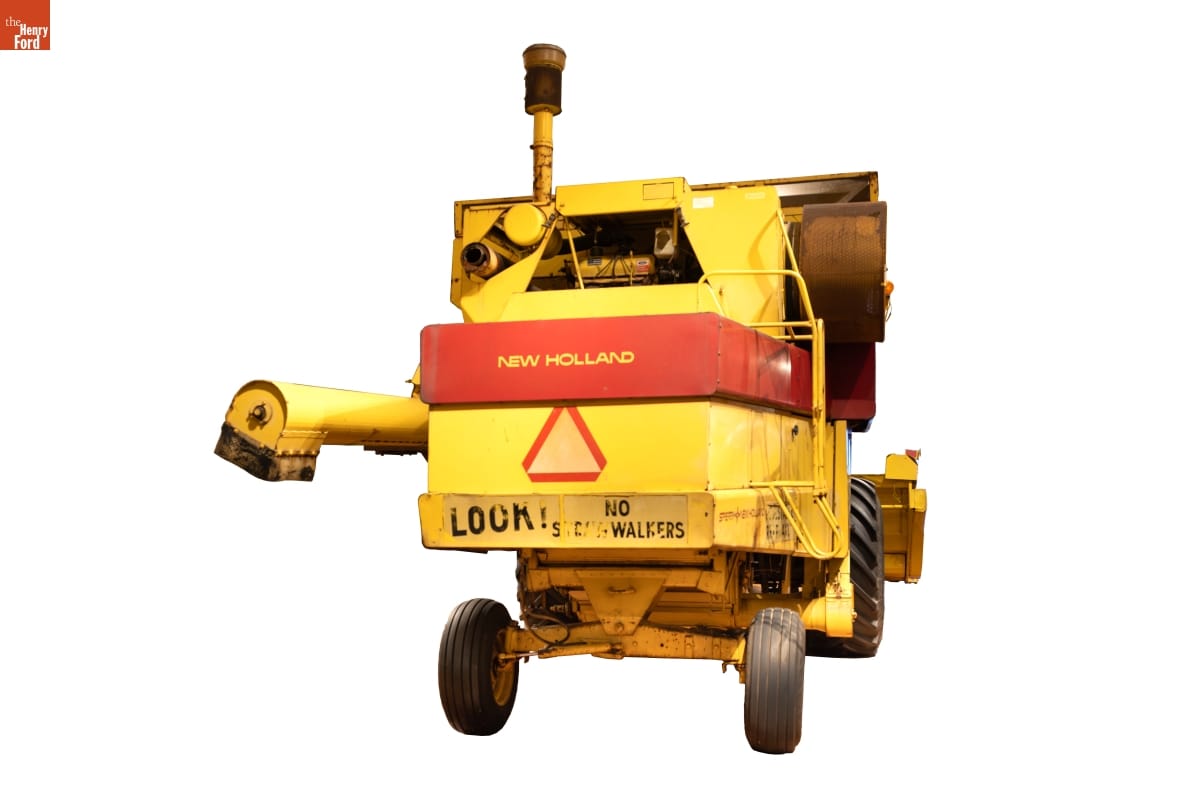
Massey-Harris Model 20 Self-Propelled Combine, 1938
THF133854 / Massey-Harris Model 20 Self-Propelled Combine, 1938
01
Artifact Overview
"Combines" combine the major tasks of grain harvest: cutting and gathering the crop, threshing and separating the kernels from the chaff, and disposing of the straw. The Massey-Harris Model 20, introduced in 1938, culminated over 100 years of mechanical improvements. One driver operated the self-propelled machine, which reduced the need for hired help during the labor shortages of World War II.
Artifact Details
Artifact
Combine (Agricultural equipment)
Date Made
1938
Place of Creation
Creator Notes
Combine manufactured by Massey-Harris Company, Toronto, Ontario; engine made by Chrysler Corporation.
Location
at Henry Ford Museum in Agriculture
Object ID
75.131.1
Credit
From the Collections of The Henry Ford. Gift of Henry L. Oldham.
Material
Metal
Color
Red
Yellow (Color)
Dimensions
Height: 132 in
Width: 204 in
Length: 288 in
Keywords |
|---|
02
Related Content
 Set
SetFeatured on The Henry Ford’s Innovation Nation: Season 9
- 26 Artifacts
Engineers designed the TR70 as a compact machine suitable for hilly terrain. The twin rotors (TR) shelled corn or threshed grain and moved it through the combine's body. Setting the rotors at an angle (axial) shortened the machine. Farmers changed the front-end attachment to harvest corn, beans, or wheat. Stencils on this prototype, exhibited at trade shows, explained additional features. Set
SetAgriculture and the Environment
- 50 Artifacts
"Combines" combine the major tasks of grain harvest: cutting and gathering the crop, threshing and separating the kernels from the chaff, and disposing of the straw. The Massey-Harris Model 20, introduced in 1938, culminated over 100 years of mechanical improvements. One driver operated the self-propelled machine, which reduced the need for hired help during the labor shortages of World War II. Set
SetCurators' Choice: Agriculture & the Environment
- 25 Artifacts
Calling it his "automotive plow," Henry Ford had Joseph Galamb and C.J. Smith construct this experimental machine. It is powered by a 1905 Ford Model B engine with copper water jackets. This tractor represents either the first or, more probably, the second of several experimental lightweight tractor designs which culminated in the production of the Fordson tractor for U.S. markets in 1918.