
Beer Wagon, circa 1900
THF188026 / Beer Wagon, circa 1900
01
Artifact Overview
During the late 19th and early 20th centuries, horse-drawn beer wagons were familiar sights in American cities. Bars and saloons were numerous and provided places for working-class patrons to relax and socialize. This wagon's racks held beer kegs in an inward, sloping position so they wouldn't roll. The top rail supported a cover that shielded kegs from the hot sun.
Artifact Details
Artifact
Wagon
Date Made
circa 1900
Place of Creation
Creator Notes
Maker is unknown; likely made in the United States
Location
Not on exhibit to the public.
Object ID
29.2048.1
Credit
From the Collections of The Henry Ford.
Material
Metal
Paint (Coating)
Wood (Plant material)
Color
Black (Color)
Dark blue
Red
Yellow (Color)
Dimensions
Height: 97 in
Length: 180 in
Wheelbase: 106.5 in
Diameter: 35 in (Wheel Diameter)
Diameter: 43 in (Wheel Diameter)
Keywords |
|---|
02
Related Artifacts
 Artifact
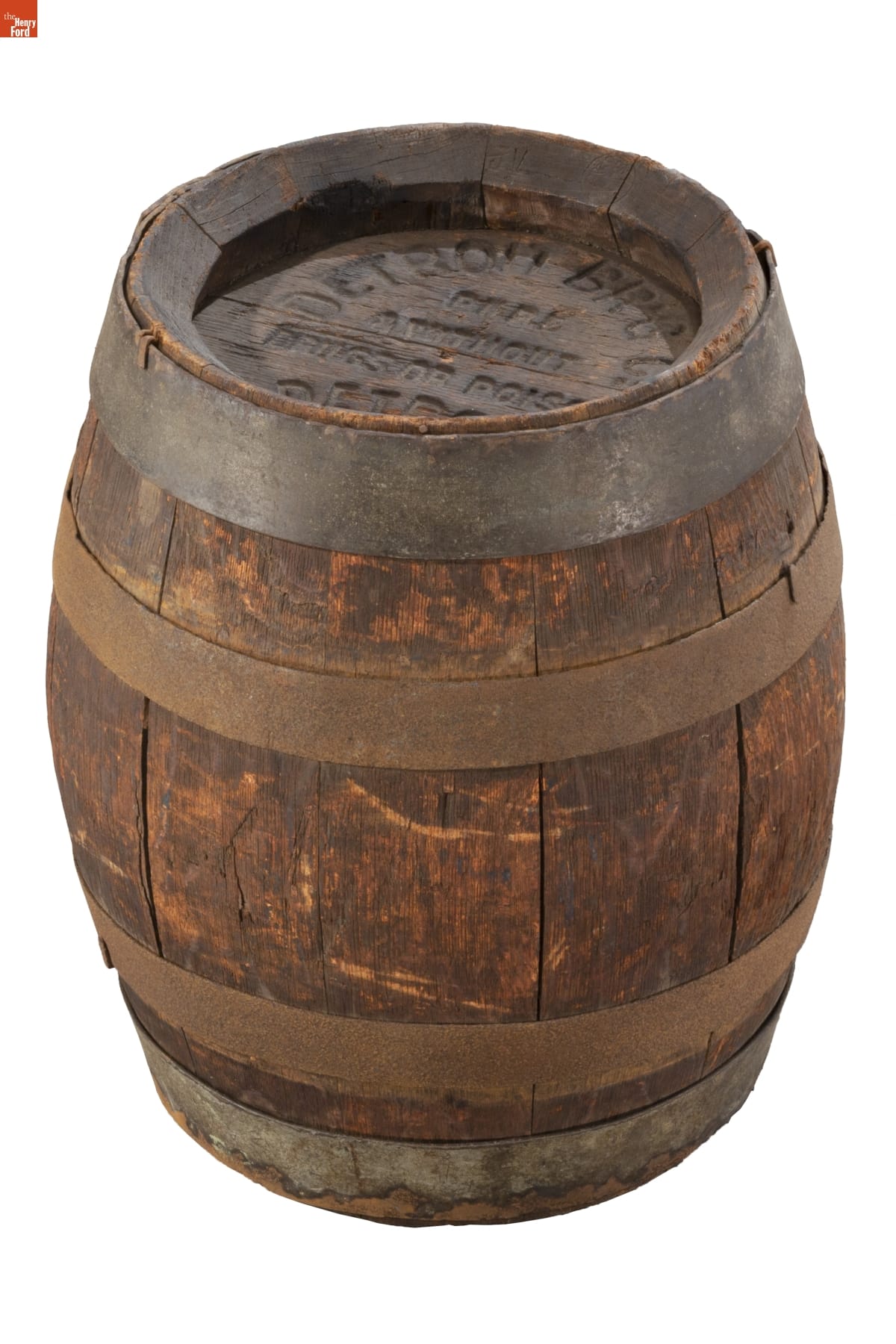
Detroit Brewing Company Beer Keg, 1895-1919
Detroit Brewing Company traced its roots to a brewery established in the city by Frank Martz, John Martz, and John Steiner in 1868. It reformed as Detroit Brewing Company in 1886, focusing on lager, and enlarged its original plant 12 years later. The company closed in 1949, becoming the first of Detroit's major breweries to end operations. Artifact
Stroh Beer Keg, 1895-1919
Stroh Brewery Company was the biggest and best known of Detroit's many breweries. German immigrant Bernhard Stroh established the firm in 1850, brewing a Bohemian-style pilsner. The company survived Prohibition -- in part by manufacturing ice cream -- and in the 1980s became the third-largest brewer in the United States. Weakened by overexpansion and competition, Stroh sold its brands in 1999.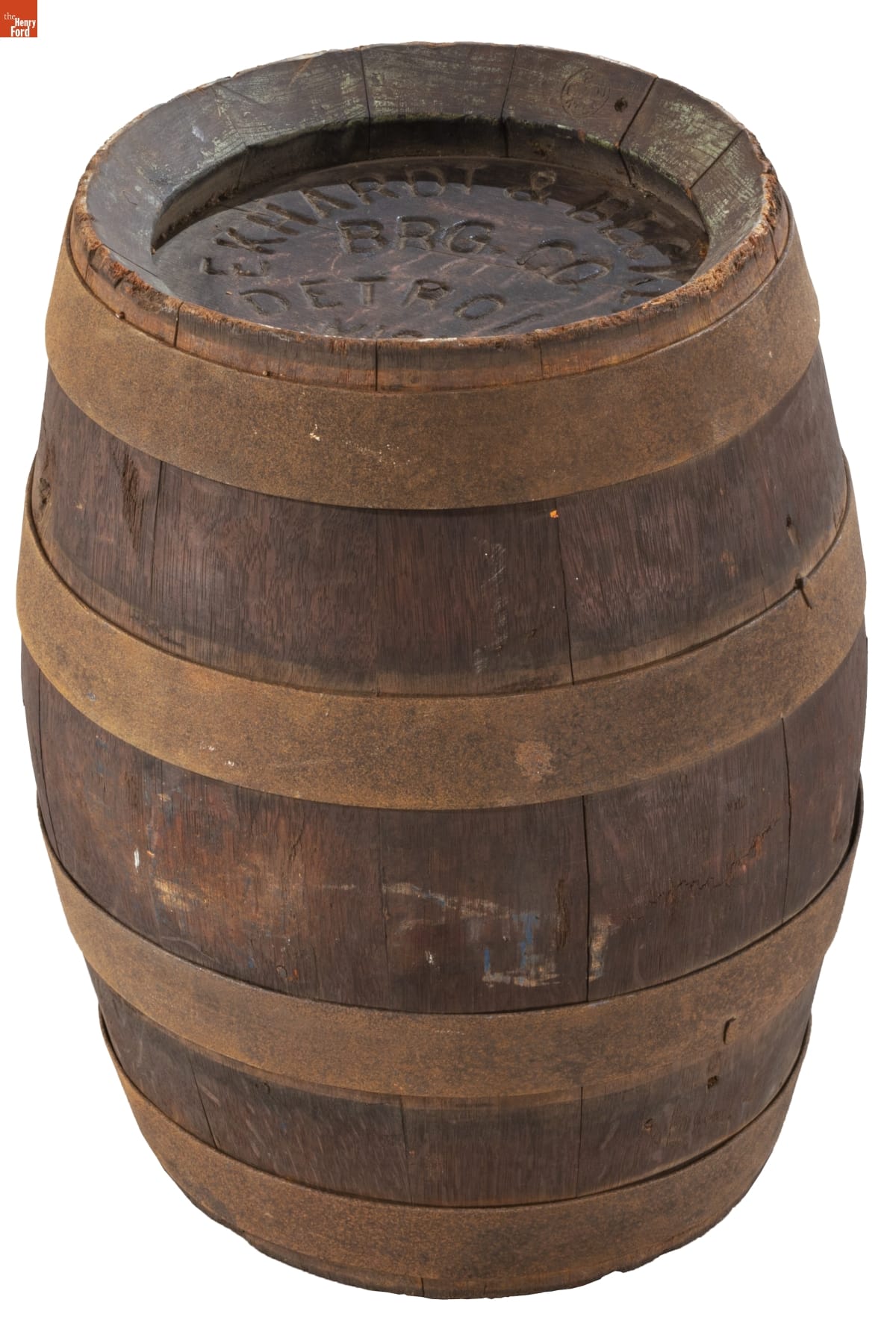 Artifact
Ekhardt & Becker Beer Keg, 1895-1919
German-Americans August Ekhardt and Herman Becker formed their brewing partnership in Detroit, Michigan, in 1873. By 1918, Ekhardt & Becker produced some 150,000 barrels of beer each year. Following a pause from 1919-1933, during Prohibition, the company reformed and operated independently for another 29 years. Ekhardt & Becker was absorbed by Pfeiffer Brewing Company in 1962.
03
Related Content
 Set
SetOnline Horse-Drawn Vehicles Collection
- 29 Artifacts
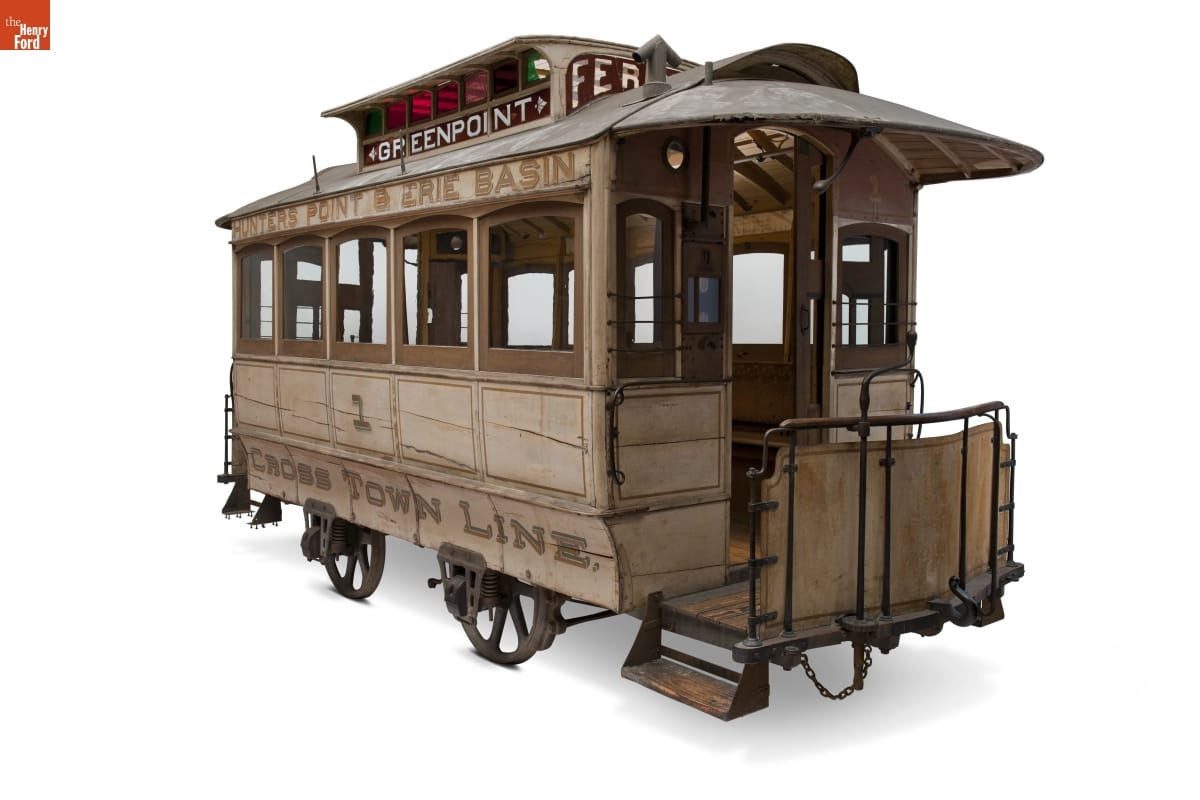
The horse-drawn streetcar was an important means of public transportation in 19th-century American cities. New York's Brooklyn City Railroad ran this car on its line between Hunters Point in Long Island City, and Erie Basin in South Brooklyn. But horses were expensive to stable and feed -- and messy too. Operators embraced electric streetcars starting in the late 1880s.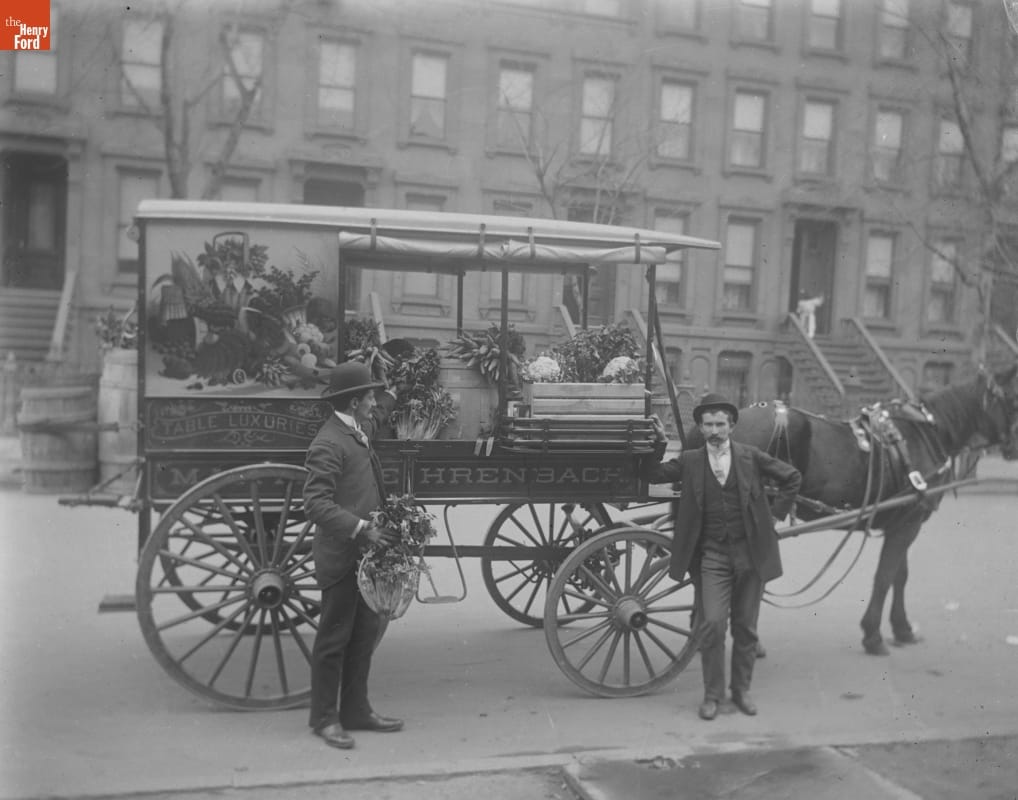 Set
SetHorse-drawn Deliveries
- 11 Artifacts
Horse-drawn delivery wagons remained in use well into the automobile age. Even in the 1920s, it wasn't unusual to see milk, ice, or produce delivered by horse--especially in smaller towns. Horses were well suited to the frequent stops and starts along a route and could negotiate poor roads better than early motorized vehicles. As roads improved and trucks became less expensive to operate and maintain, the horse-drawn delivery wagon faded away. article
Great Lakes Brewing Co.: Brewing Good before and during a Pandemic
Great Lakes Brewing Company's business model addresses profit, people, and planet, with initiatives that include water stewardship, renewable and clean energy, and inclusive economic growth.