
Gunsolly Carding Mill
THF186773 / Gunsolly Carding Mill
01
Artifact Overview
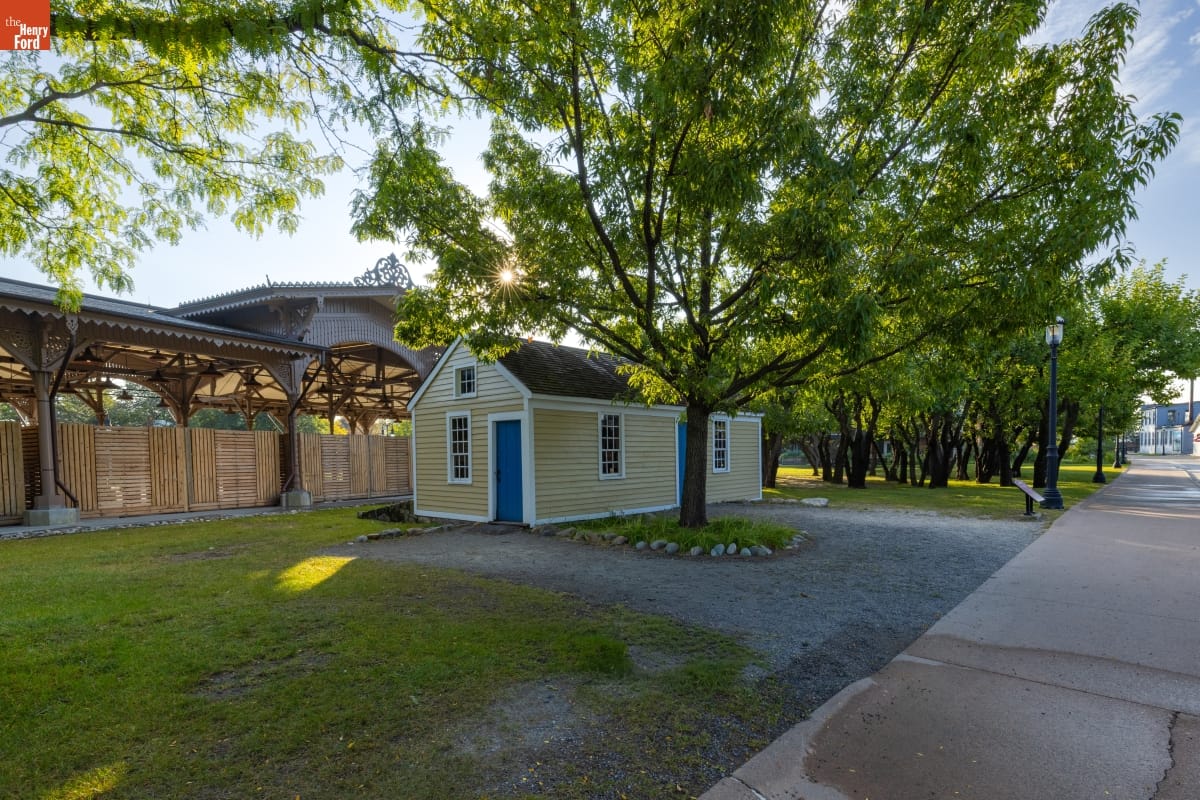
John Gunsolly operated this water-powered carding mill as well as a saw and cider mill on the Middle Rouge River near Plymouth, Michigan, beginning in the 1850s. Area farmers brought their wool to this mill to have it carded (combed) so it could be spun into thread.
Artifact Details
Artifact
Mill (Building)
Date Made
circa 1850
Creators
Place of Creation
Creator Notes
Built by John Gunsolly in Plymouth, Michigan.
Location
at Greenfield Village in Liberty Craftworks District
Object ID
29.3056.1
Credit
From the Collections of The Henry Ford.
Material
Wood (Plant material)
Glass (Material)
Metal
Keywords |
|---|
02
Related Content
 Set
SetGreenfield Village Buildings
- 84 Artifacts
As America was taking its first steps towards industrialization, the Hanks family of Mansfield, Connecticut, made early attempts to mechanize the production of silk thread. Rodney Hanks and his nephew Horatio Hanks built this mill in 1810. It was the first silk mill in America, producing some of the first silk with machines that were powered by a waterwheel. Set
SetFeatured on The Henry Ford's Innovation Nation: Season 7
- 26 Artifacts
The Curtiss JN-4 "Jenny" was the U.S. Army's primary training aircraft in the World War I era. After the war, surplus Jennys formed the core of America's barnstorming fleet. The JN-4D variation employed a control stick rather than the wheel used in the standard version. The JN-4D originally was built for the Canadian market, explaining its "Canuck" nickname. Set
SetAmerica's Industrial Revolution
- 61 Artifacts
The Model T's distinction as a landmark car design can be traced in large part to machines like this -- a high capacity precision machine tool that performed just two production steps on the car engine's cylinder block. The Model T as a design achievement is inseparable from many hundreds of engineering, materials, and production innovations.