
Sears, Roebuck and Company Mail-Order Catalog, "Consumers Guide, 1901," Catalogue No. 111
THF119939 / Sears, Roebuck and Company Mail-Order Catalog, "Consumers Guide, 1901," Catalogue No. 111
01
Artifact Overview
By 1900, Sears, Roebuck and Company was one of the greatest merchandisers in the world. Flipping through the catalogs of this mail order giant brought a visual feast of tens of thousands of products. For farm families especially, mail order catalogs opened a world of new material possibilities, offering many goods similar to those found in America's burgeoning cities.
Artifact Details
Artifact
Trade catalog
Date Made
1901
Subject Date
1901
Creators
Place of Creation
Collection Title
Location
By Request in the Benson Ford Research Center
Object ID
57.118.260
Credit
From the Collections of The Henry Ford.
Material
Paper (Fiber product)
Technique
Printing (Process)
Color
Black-and-white (Colors)
Multicolored
Dimensions
Height: 11 in
Width: 8.5 in
Keywords |
|---|
02
Related Content
 Set
SetFeatured on The Henry Ford’s Innovation Nation: Season 10
- 18 Artifacts
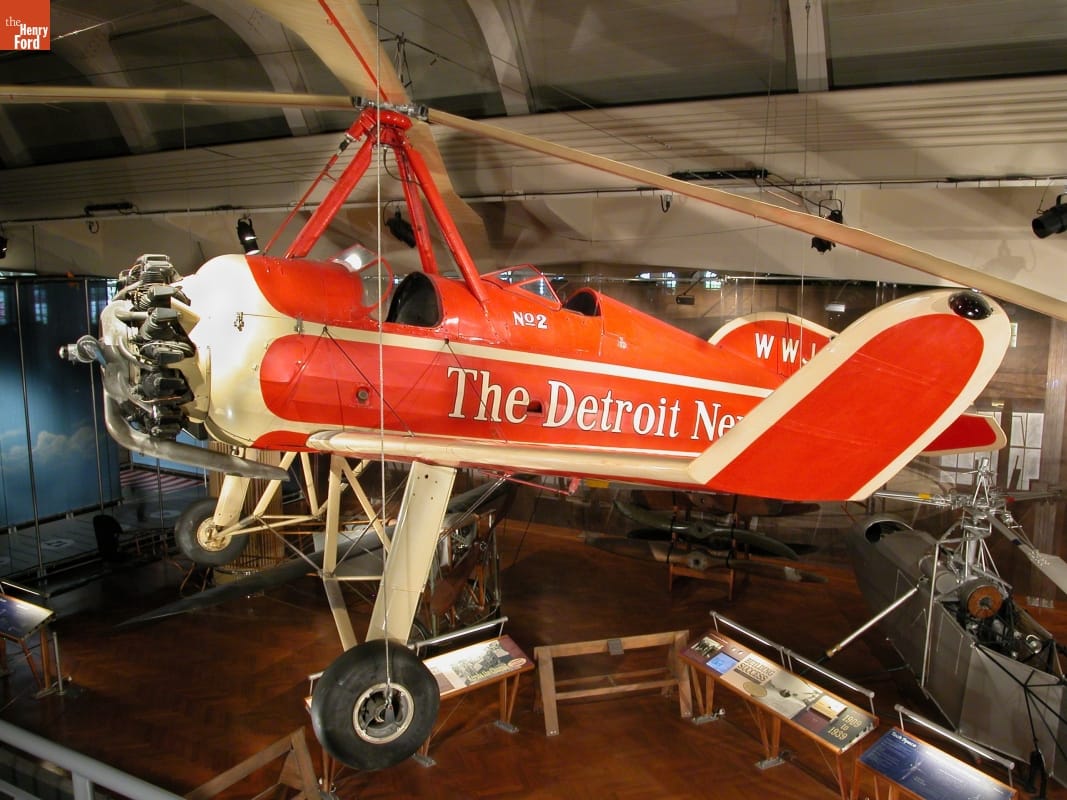
Like an airplane, the autogiro is moved by an engine-powered propeller, but like a helicopter, lift is provided by a rotor. The rotor is not powered, and while the aircraft can land vertically, it cannot take off vertically. The Detroit News purchased this autogiro to gather news. The novel aircraft probably was better at making news! Set
SetCelebrating 90 — Collecting through the Decades: 1950s
- 10 Artifacts
The Henry Ford marks its 90th anniversary in 2019. In celebration, The Henry Ford's curators have taken a decade-by-decade look at how our collections have grown — through significant additions and evolving philosophies. This set looks at some of the objects and archives collected during the 1950s.
 article
Rural America Shops by Mail
During the late 19th century, the advent of mail order shopping opened up a world of new possibilities for Americans who lived on farms or in small villages.