
Veterinary Ambulance, circa 1900
THF133557 / Veterinary Ambulance, circa 1900
01
Artifact Overview
Horses and mules were everywhere on 19th-century American streets pulling cabs, carriages, streetcars, and commercial vehicles. This ambulance wagon, used by Detroit veterinarian Elijah Patterson, transported sick or injured draft animals for medical treatment. The wagon bed was lowered toward the street with a winch, which then pulled the bed, complete with animal, back into the wagon.
Artifact Details
Artifact
Ambulance
Date Made
circa 1900
Place of Creation
Location
Not on exhibit to the public.
Object ID
00.574.1
Credit
From the Collections of The Henry Ford. Gift of Dr. Elijah E. Patterson.
Material
Leather
Metal
Rubber (Material)
Wood (Plant material)
Color
Red
White (Color)
Yellow (Color)
Dimensions
Height: 63.25 in
Width: 73.75 in
Length: 180.75 in
Wheelbase: 115.5 in
Diameter: 36 in (Wheel Diameter)
Diameter: 45.5 in (Wheel Diameter)
Inscriptions
Each side: AMBULANCE
Keywords |
|---|
02
Related Content
 Set
SetOnline Horse-Drawn Vehicles Collection
- 29 Artifacts
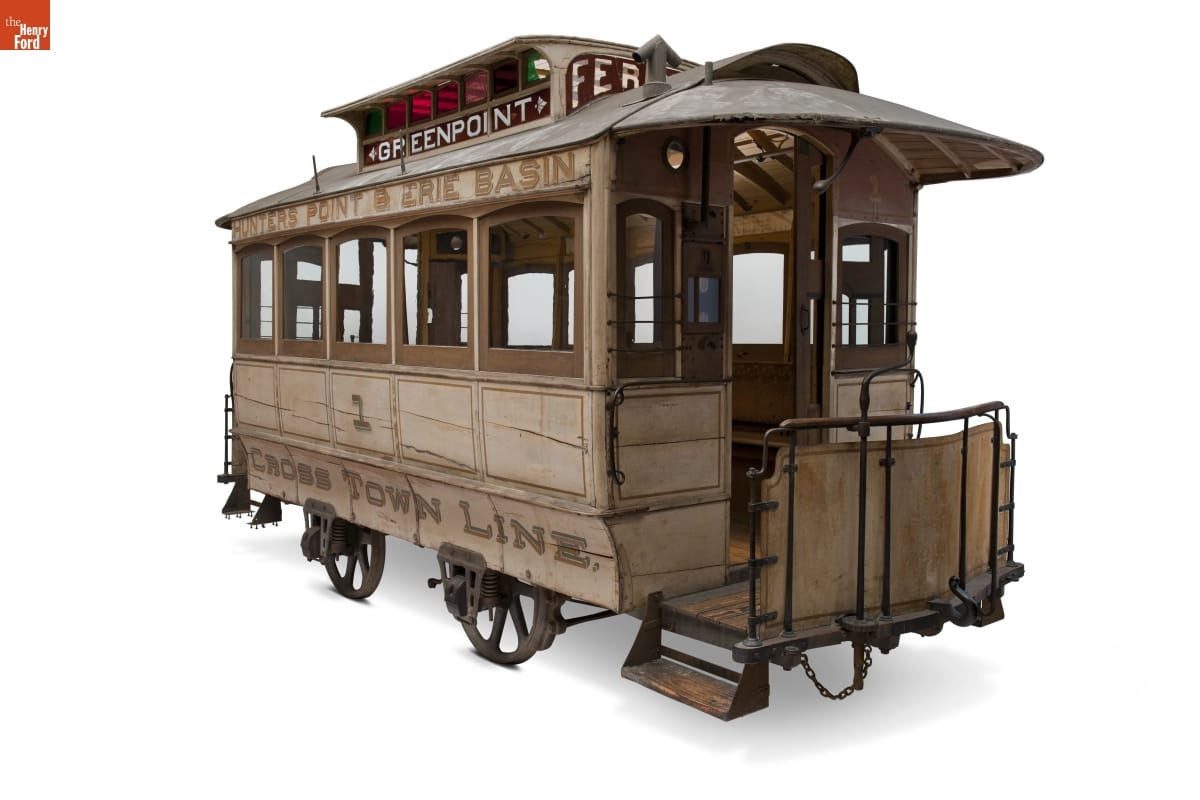
The horse-drawn streetcar was an important means of public transportation in 19th-century American cities. New York's Brooklyn City Railroad ran this car on its line between Hunters Point in Long Island City, and Erie Basin in South Brooklyn. But horses were expensive to stable and feed -- and messy too. Operators embraced electric streetcars starting in the late 1880s. Set
SetBefore Cars
- 23 Artifacts
Abbot, Downing & Company of Concord, New Hampshire, was the largest and best-known maker of stagecoaches. Sturdy, durable, and comfortable, Concord coaches were shipped by rail all over the country. article
Horse-Drawn Vehicles in the City
American cities in the 18th and 19th centuries, the height of the Carriage Era, were horse- powered. Learn more and see examples from our collections.