
Oil Tank Wagon for Standard Oil Company, circa 1892
THF80588 / Oil Tank Wagon for Standard Oil Company, circa 1892
01
Artifact Overview
By the time Standard Oil ordered this wagon in 1892, petroleum products were common in the rural and urban United States. The wagon has three separate compartments -- for kerosene, for lubricating oil, and for gasoline. As late as the 1920s, horse-drawn wagons were still the primary means for moving these products from the railroad depot to the customer.
Artifact Details
Artifact
Wagon
Date Made
circa 1892
Place of Creation
Creator Notes
Made for Standard Oil Company by the Morrison Brothers Company of Dubuque, Iowa
Location
Not on exhibit to the public.
Object ID
65.13.1
Credit
From the Collections of The Henry Ford. Gift of Standard Oil Company.
Material
Cloth
Iron (Metal)
Paint (Coating)
Wood (Plant Material)
Color
Black (Color)
Dark green
Red
Dimensions
Height: 103 in
Width: 52 in
Length: 137 in
Wheelbase: 70 in
Diameter: 50.25 in (Wheel Diameter)
Diameter: 41 in (Wheel Diameter)
Inscriptions
Painted on each side of the tank gold, red and white lettering: STANDARD OIL CO/(INDIANA)
Painted below the driver's seat on each side of the vehicle: 586
Painted on box behind the oil-tank: POLARINE / MOTOR OIL / USE MICA AXLE GREASE
Location not noted: MORRISON BROS. / DUBUQUE, IOWA
Location not noted: DUBUQUE / IOWA / FIG____
Keywords |
|---|
02
Related Content
 Set
SetOnline Horse-Drawn Vehicles Collection
- 29 Artifacts
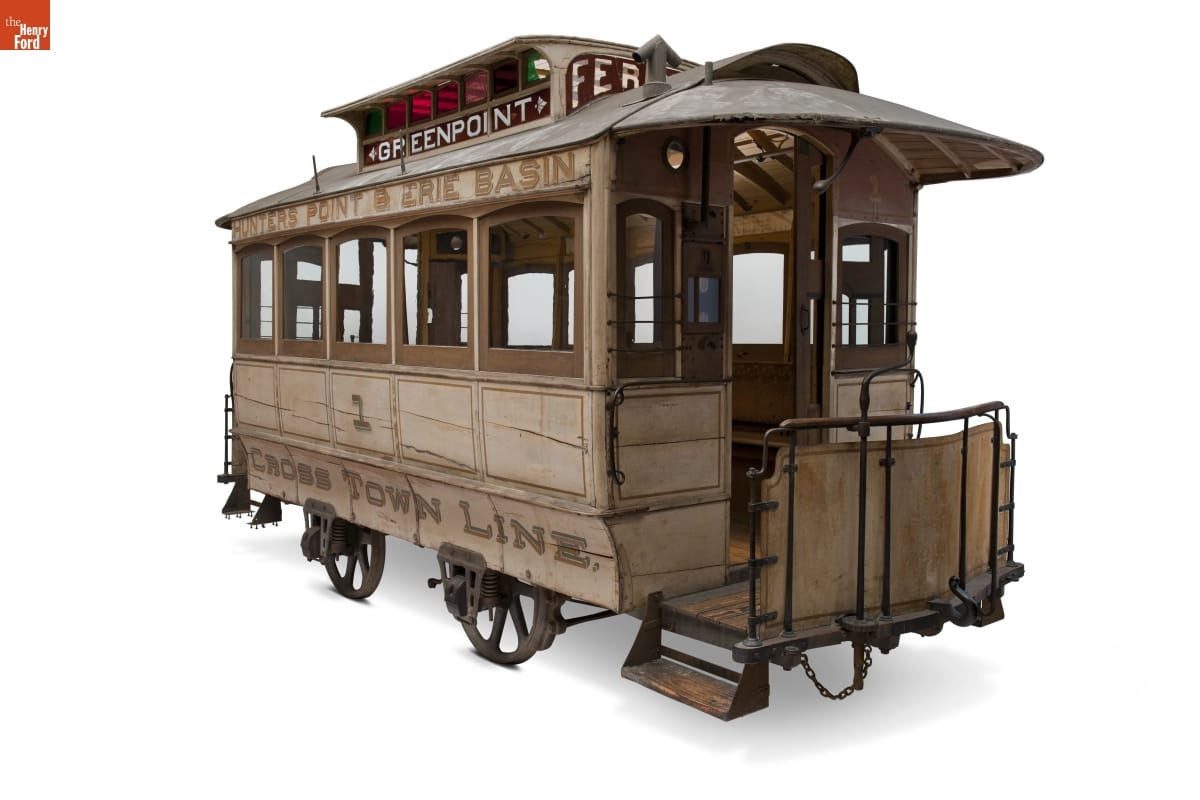
The horse-drawn streetcar was an important means of public transportation in 19th-century American cities. New York's Brooklyn City Railroad ran this car on its line between Hunters Point in Long Island City, and Erie Basin in South Brooklyn. But horses were expensive to stable and feed -- and messy too. Operators embraced electric streetcars starting in the late 1880s.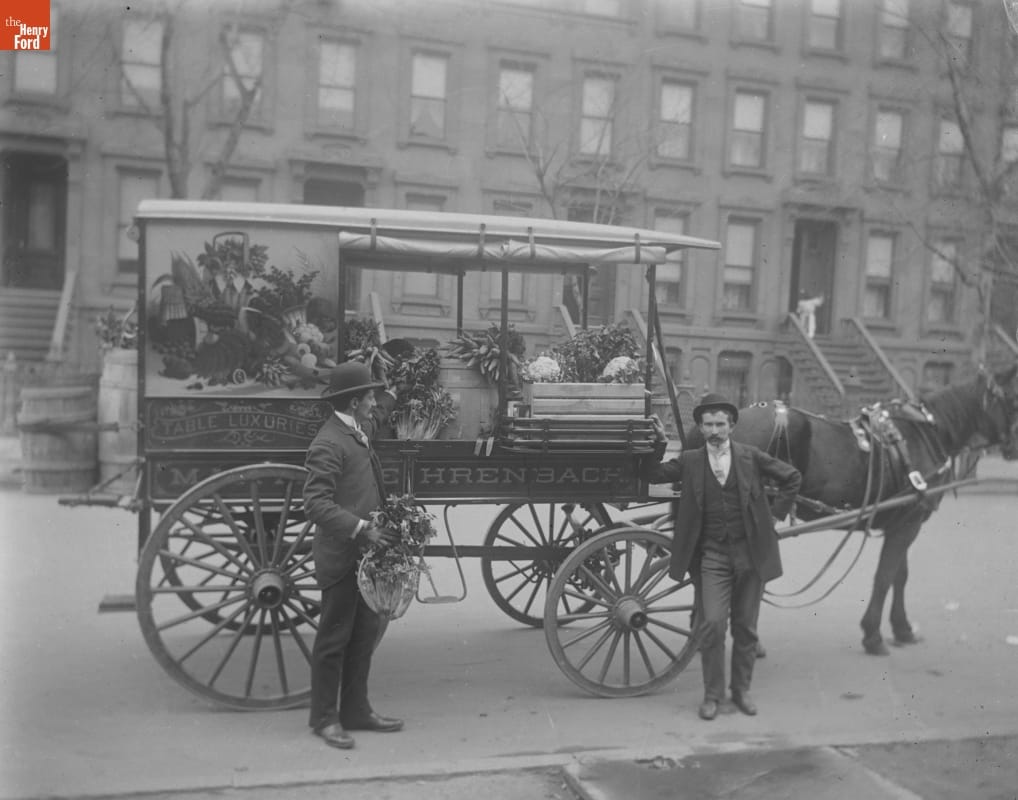 Set
SetHorse-drawn Deliveries
- 11 Artifacts
Horse-drawn delivery wagons remained in use well into the automobile age. Even in the 1920s, it wasn't unusual to see milk, ice, or produce delivered by horse--especially in smaller towns. Horses were well suited to the frequent stops and starts along a route and could negotiate poor roads better than early motorized vehicles. As roads improved and trucks became less expensive to operate and maintain, the horse-drawn delivery wagon faded away. Set
SetAmerica's Industrial Revolution
- 61 Artifacts
The Model T's distinction as a landmark car design can be traced in large part to machines like this -- a high capacity precision machine tool that performed just two production steps on the car engine's cylinder block. The Model T as a design achievement is inseparable from many hundreds of engineering, materials, and production innovations.