
The Many Forms of Literacy
Share
share
When we think of literacy, we often think of mastering the ability to read and write – but literacy is more than that. Literacy can include the ability to communicate effectively not only with words but with numbers, technology, or a host of other physical, social, and informational skills. Here are just a few literacy-related collections from The Henry Ford.
THF91989
Scrabble: Sentence Game for Juniors, 1983
This 1983 adaptation of Scrabble focuses on helping children learn how to build sentences, not just words. True literacy in reading and writing includes more than just knowing how to form and parse letters and turn them into words – it also requires the ability to use those skills to communicate effectively.
View ArtifactTHF137734
Abacus, 1860-1880
Abacuses, like this one from the late 1800s, have been used for thousands of years to do simple calculations. Today, children are often given them as toys and practice mathematical skills with them. Whether they realize it or not, they are practicing numerical literacy – the ability to explain information related to numbers and use mathematical concepts.
View ArtifactTHF728425
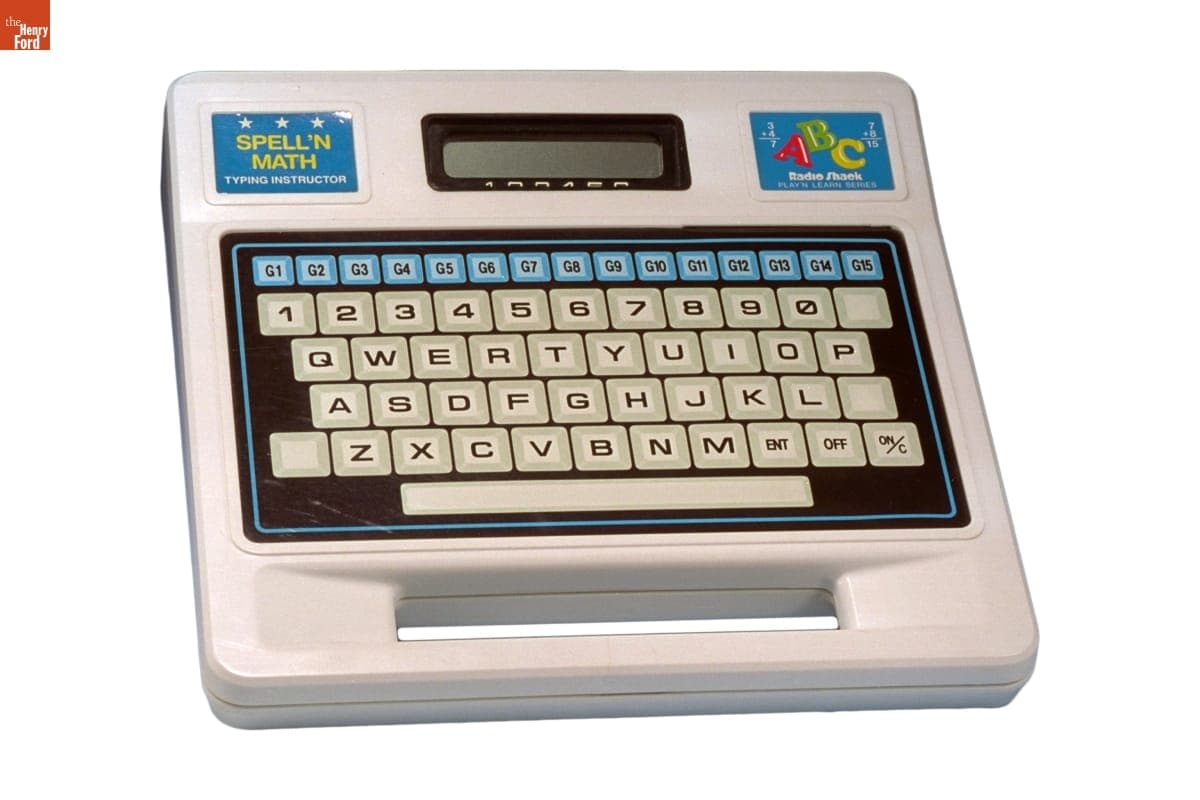
Radio Shack Spell 'N Math, circa 1978
This Spell 'N Math toy from Radio Shack is a triple threat of literacy training. The game itself quizzes users on spelling and math, while the keyboard set-up familiarizes them with the QWERTY layout that is standard on typewriters and computers that use the Latin alphabet.
View ArtifactTHF179772
Logix 0-600 Electronic Computer Toy, 1973
Young people interested in computer programming could develop their technological literacy – the ability to effectively use, understand, and manage technology – by practicing on this computer toy. It had a rudimentary system of snap-in components designed to replicate a real computer. Toys like this one help foster understanding of how computers work – a useful skill in an increasingly computerized world.
View ArtifactTHF91946
Bradley's Telegraph Game, circa 1900
Technological literacy is not just for modern computers -- the skills it requires change as technology itself changes. This Telegraph Game, circa 1900, included everything needed to role-play sending a telegram, including clickers to practice sending the dots and dashes of Morse code. Children could learn about how telegraph machines worked, and practice the types of social interactions required to send a telegram.
View ArtifactTHF94781
Piggy Bank, 1991
A piggy bank like this one can make financial literacy fun. Hopefully, children who save money may also learn to balance a budget, make wise investments, and better manage their finances as adults – all key elements of financial literacy.
View ArtifactTHF711138
"The Michigan Daily Election Issue," October 28, 2020
This issue of The Michigan Daily explained the mechanics of voting and encouraged voter participation, including instructions on how to register to vote. The newspaper also features discussions of numerous topics relevant to the 2020 election cycle. Having knowledge of the issues at hand makes up an important part of political literacy.
View ArtifactTHF315663
Smoking and Health, 1964
The U.S. Surgeon General’s office often prepares health reports – like this 1964 report on the effects of smoking – so that the American public can keep abreast of current science and health recommendations. Health literacy involves the ability to both access and understand information related to personal health, and use that information to make decisions about personal wellness.
View ArtifactTHF370412
Lalaboom Educational Beads, 2018-2019
Toys like these interconnecting beads that can be used by children at multiple developmental stages help them practice the traits necessary for physical literacy, from the very basic to the more advanced. These traits include both gross and fine motor skills, gaining an understanding of how movement works, and having the confidence to be able to use said skills and understanding.
View ArtifactTHF203546
"A Practical Workshop in Cultural Literacy: Americans and Germans Working Together," 1998
This 1998 handbook was created in response to the merger of German automaker DaimlerBenz with American automaker Chrysler, and was designed to help American employees understand their new German colleagues. An understanding of the history, behaviors, and practices of a group of people, and by extension knowing how to interact with and take part in a specific culture, creates cultural literacy.
View Artifact

