
Mourning and Memorialization
Share
share
There are myriad ways that we honor and preserve the memory of those we hold dear. Below is just a small sampling that shows how Americans have mourned and memorialized, from the colonial era until today.
"Cathedral" Burial Quilt, Made by Zak Foster, 2019
Honoring someone’s memory can begin with how they are laid to rest, particularly if it reflects their values. For the eco-conscious, “green” burial is one option. This all-natural-fiber burial quilt is designed to decay with the body, leaving no trace. Zak Foster, the quiltmaker who created this quilt, intends for his quilts to be used to create memories in life, before being used in death.
View ArtifactNorth Beach, Burying Ground, 1890-1915
Cemeteries are places of memory. Amongst physical monuments to those who are gone, the living can gather and remember their loved ones. Although less common now, cemeteries were once also seen as gathering places, often playing host to family picnics, community celebrations, and annual services – creating new memories for new generations who may not remember those who had gone before.
View ArtifactMourning Ring, 1769
Prior to the 20th century, it was common for people to wear mourning jewelry to memorialize loved ones who had died. It was even common for people to leave money in their wills to cover creation of a memorial piece. This hand carved black enamel ring commemorates the death of Stephen van Rensselaer II, a prominent American colonist, by including his name and death date. Jewelry like this would be a daily reminder of a loved one lost.
View ArtifactMourning Dress, Worn by Sara Denton Roddis, circa 1920
The western tradition of wearing black while in mourning dates as far back as ancient Rome. During England’s Victorian Era, wearing mourning clothes became more prescribed, setting out time periods to wear all black before gradually transitioning into other colors. America, too, followed these customs. Although wearing full mourning is rare today, black is still considered the go-to color for a funeral – a physical expression of grief.
View ArtifactMourning Pendant for the Potts Family, 1797 - 1
Often, when we think of what loved ones leave behind, our mind goes to material possessions. But prior to the 20th century, when mourning jewelry was common, it often incorporated locks of a loved one’s hair. While this pendant presents a more discrete use of hair, hair memorial pieces could be large and ornate, shaped into a variety of forms – from flowers, to wall hangings that mimic textiles.
View ArtifactDress Worn by Ellen Hicks, 1856
Memorializing someone can be as simple as holding on to what they leave behind. This dress was worn by Ellen Hicks when she was six years old. When Ellen passed away at the age of fifteen, her family kept this dress. A handwritten note with Ellen’s name and the year she wore the dress accompanied the garment as it was passed down to subsequent generations.
View ArtifactJuan Coronel Rivera, Grandson of Diego Rivera, Works on His "Day of the Dead" Exhibit in the Detroit Institute of Arts, 1991
Día de Muertos is all about remembering the dead. Over the course of the celebrations, the living visit local cemeteries, erect altars in their homes, and leave ofrendas (gifts or offerings) of food, candles, and flowers for the dead. Bright marigolds cover graves, altars, and pathways. In this photo, Juan Coronel Rivera recreates the look of a cemetery during Día de Muertos for the Detroit Institute of Arts.
View Artifact"Wreck of the Edmund Fitzgerald," Drawing by Kathy Jakobsen, 1977
When a tragedy occurs, it can affect people who may not even have known those lost. Such was the case for Kathy Jakobsen, who created this drawing as a memorial piece after being moved by the loss of the Edmund Fitzgerald. The well-known Great Lakes freighter attracted many avid fans over the course of its career, before sinking on November 10, 1975, taking with it all its crew.
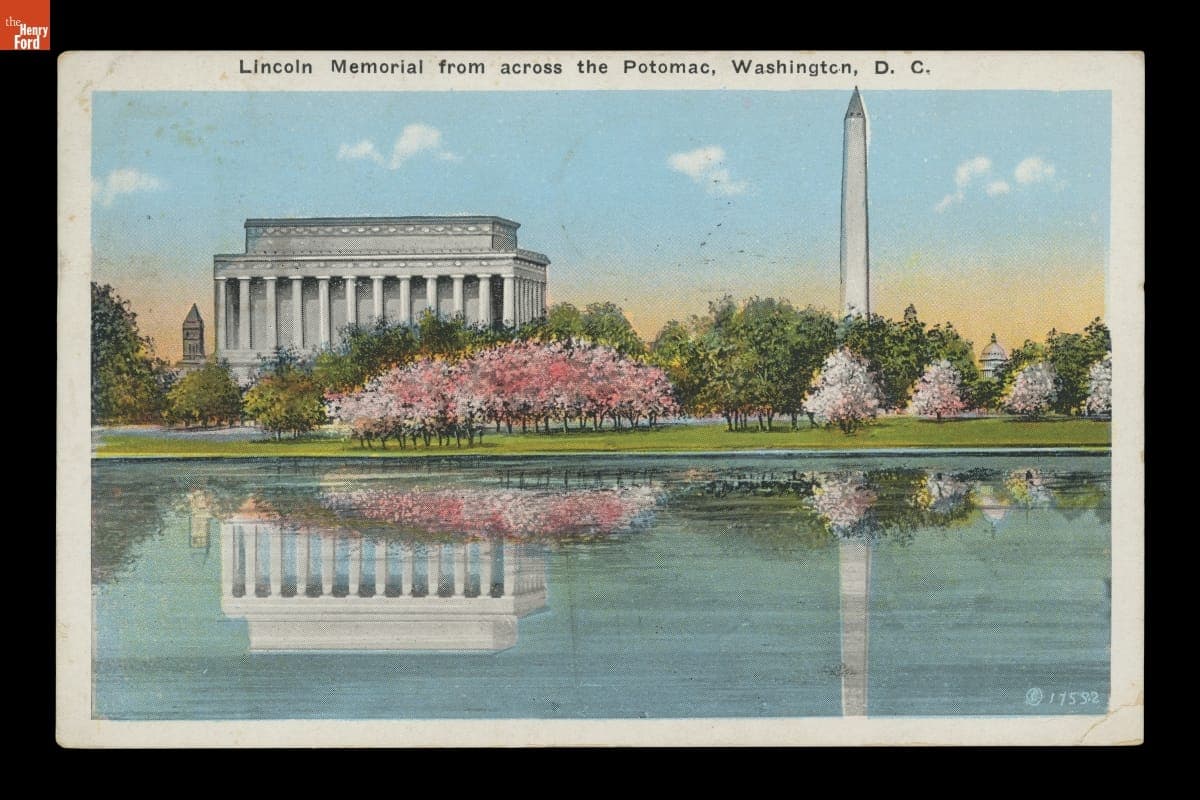
View Artifact"Lincoln Memorial from Across the Potomac, Washington, D.C."
Memorialization is often intimate. Other times, however, it is a public act. Monuments like those in Washington, D.C. both honor the individuals they were created for and preserve aspects of the country’s history and cultural memory. What a community chooses to honor in this way, then, is often a reflection of the values it holds dear.
View Artifact

