
Bird Friends of Greenfield Village
| Written by | |
|---|---|
| Published | 8/3/2026 |
Greenfield Village is home to a wide variety of birds – both permanent residents, and seasonal visitors.
Bird Friends of Greenfield Village
| Written by | |
|---|---|
| Published | 8/3/2026 |
People have always been fascinated by birds: Birds have shown up in artwork, legends, and writings for generations, in cultures all over the world. This is, perhaps, because they are so accessible—their sights and sounds surround us, even in the seemingly least likely places.
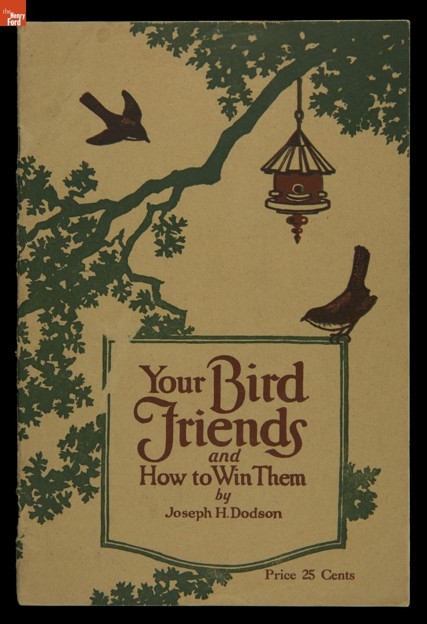
"Your Bird Friends and How to Win Them," 1928 / THF714418
Starting in the late 1800s, Americans began to grow more interested in observing the birds around them. Bird-watching, while originally the purview of the wealthy elite who could afford specialized equipment and had the necessary leisure time, became more democratized and more accessible as the twentieth century went on. Today, more than one in three American adults enjoys bird-watching as a hobby.
Michigan alone is home to more than 450 species of birds. This is in large part due to the diversity of habitats that can be found in the state, from forests and prairies to dunes and lakes. While seeing some of these birds may require a special trip, you might be surprised by the variety of species you can find close to home—or rather, close to historic homes, as is the case with the birds of Greenfield Village. Here are just a few of the feathered friends you might be able to see on your next visit:
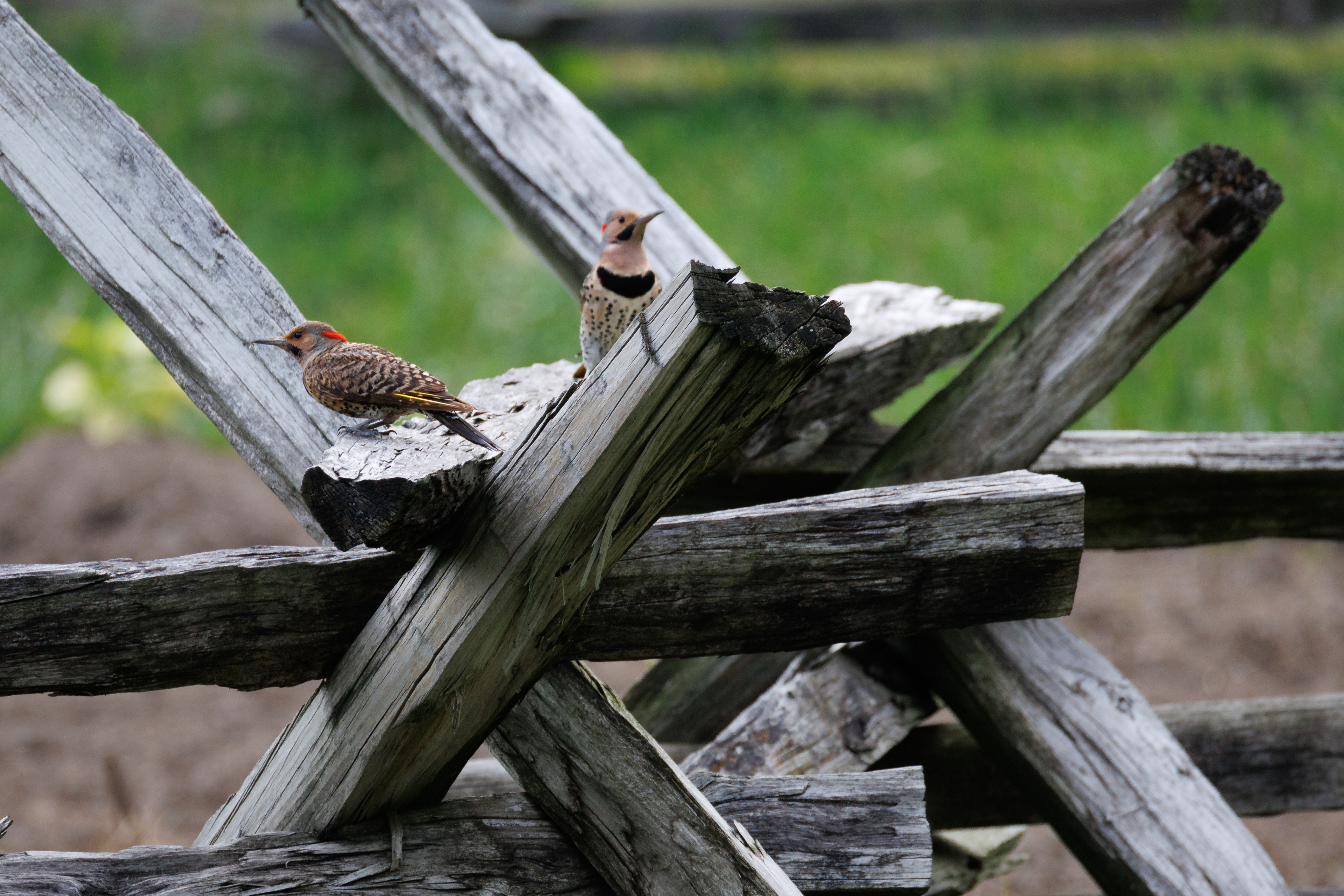
Two male Northern Flickers near Firestone Farm / Photo by staff of The Henry Ford
The Northern Flicker is one of eight species of woodpecker that you can find in Michigan. Unlike most Michigan woodpeckers, the Northern Flicker can often be found on the ground, using their beaks as chisels to dig up insects before lapping them up with their barbed tongues. They also differ from other woodpeckers in how they attract their mates—while most species use their beak against trees or another hard surface to create a “drumming” sound, Northern Flicker males make a distinctive “kekekeke” call to attract a female.
While some Northern Flickers fly south for the winter, those in warm areas stay in Michigan year-round. They can be identified by their loud calls, or by their black-speckled bodies. Eastern Northern Flickers (like those found in Michigan) have yellow coloring under their wings, whereas their more western counterparts have red. Males of the species are easy to identify, as they have black bands on either side of their beak, looking similar to a robust mustache.
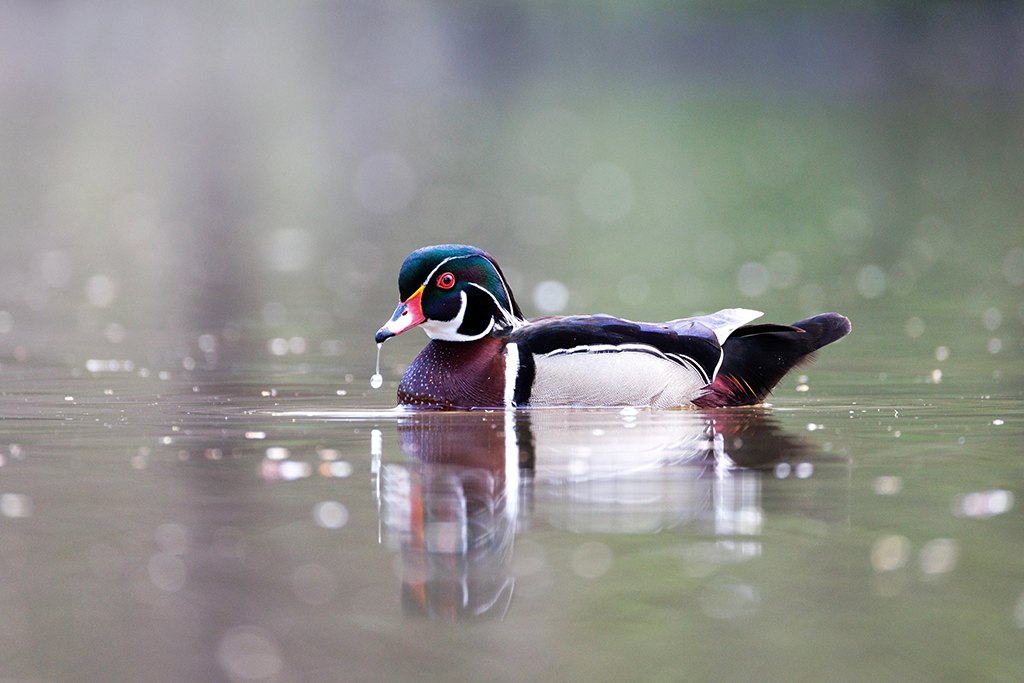
A male Wood Duck in the pond / Photo by staff of The Henry Ford
In March 2026, Michigan named the Wood Duck Michigan’s state duck. Once on the brink of extinction thanks to overhunting and loss of habitats for nesting, Wood Ducks were one of the species that benefited from the Migratory Bird Treaty Act of 1918. Today, their populations are doing well. They typically arrive in Michigan every March for their mating season, although it may be possible to find a few in warmer areas of the state during the winter.
Unlike ground ducks, like Mallards, Wood Ducks make their nests high in the cavities of trees—thus earning their name. The males are distinguishable by their bright coloration (their Latin name, Aix sponsa, means “betrothed waterbird,” referencing how the male looks like a groom on his wedding day), while females are a duller brown with blue accents on their wings. These beautiful ducks are sometimes called “acorn ducks” for their preferred snack, although they also eat other plants and insects.
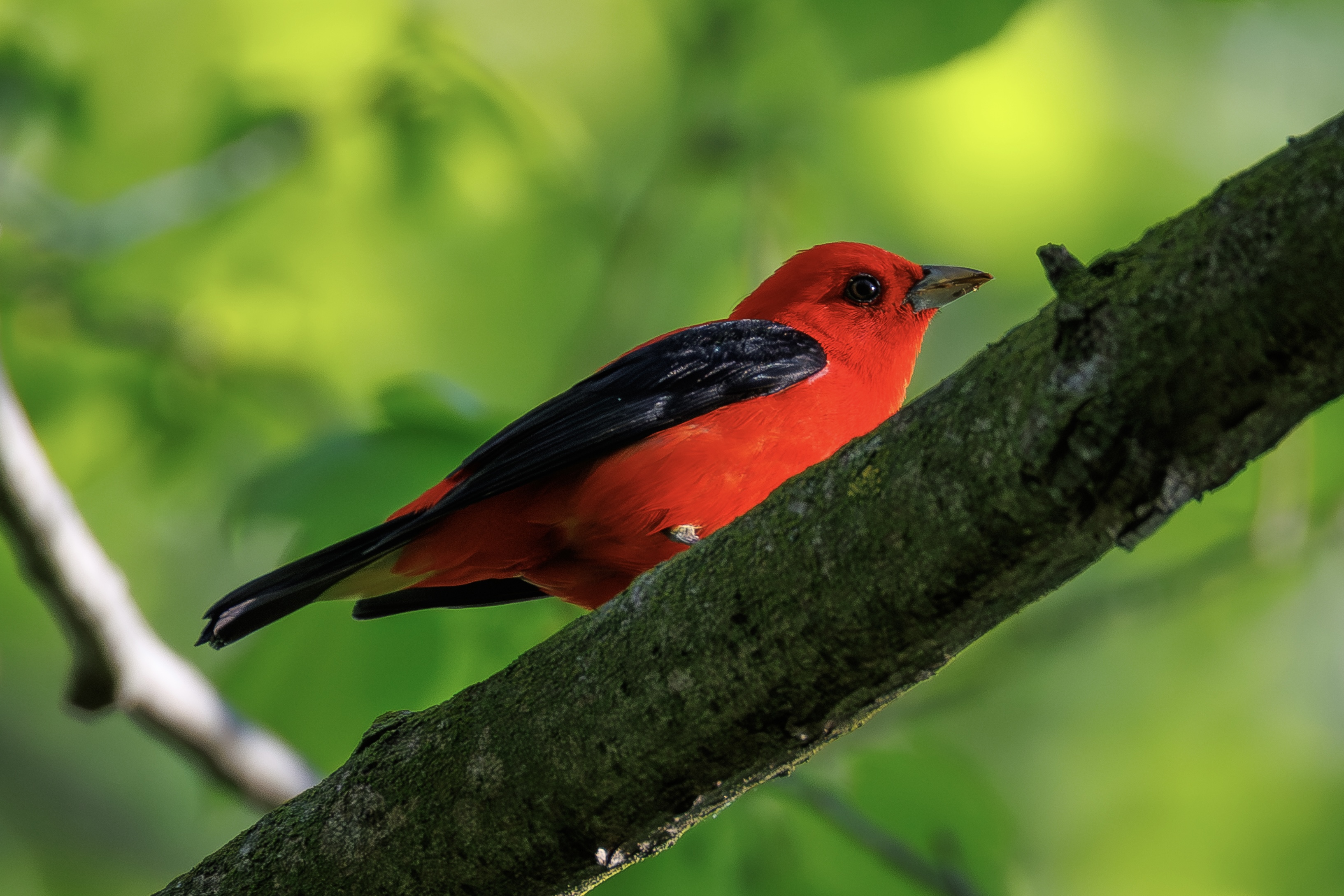
A male Scarlet Tanager high in a tree/ Photo by the staff of The Henry Ford
Scarlet Tanagers are summertime visitors to Greenfield Village. In early summer, the males are a brilliant red color with black wings, before turning a duller yellow-green later in the season; the females are yellow-green all year long. In the fall, the Scarlet Tanager joins other songbirds and migrates from eastern North America to northern and western South America for the winter. While they feed primarily on insects, Scarlet Tanagers can also be particularly drawn to berry bushes and trees.
Despite their bright coloring, Scarlet Tanagers can be difficult to spot, as they prefer to stay high in the tree branches. They do, however, have a distinctive call—a “chick-burr” note that is often likened to a scratchier version of a robin’s song.
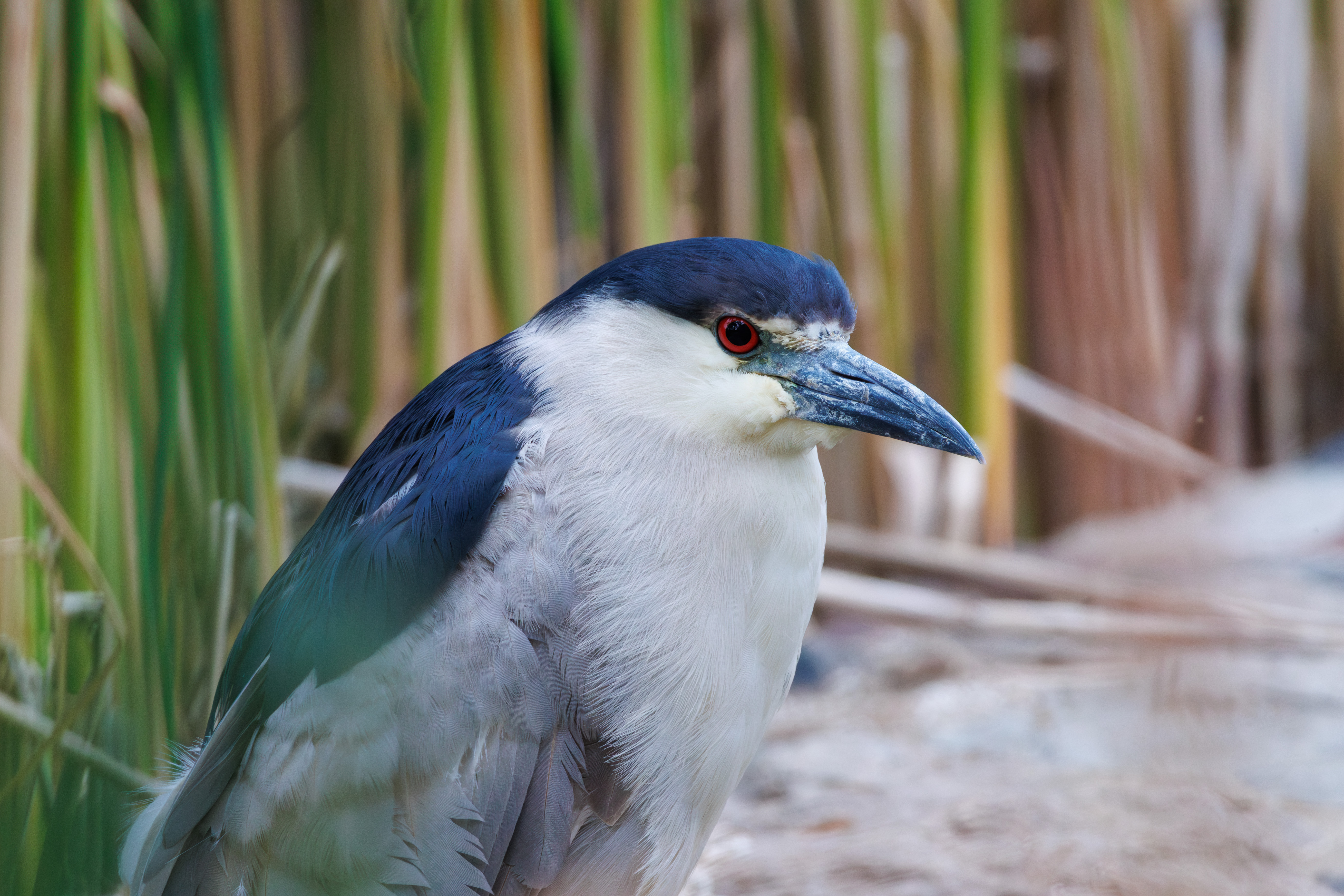
A Black-Crowned Night Heron near Liberty Craftworks / Photo by staff of The Henry Ford
Chunkier than their relative the Great Blue Heron, Black-Crowned Night Herons are common to Michigan wetlands in the summer. During the day, these birds are often found standing still at the edge of bodies of water. They are more active at night, when they stalk the shoreline looking for food: anything from plants and insects to crayfish, fish, and small amphibians. They can be found around many different bodies of water, often making their nests in thick foliage or groves of trees. They are a migratory species, and can be found on five of the seven continents (all but Australia and Antarctica).
These stockily built birds derive their name from the black crown on the top of their head, which extends down their backs and onto their wings. Adults have red eyes and white plumage on their chests and tails. They are most audible around dusk, when their distinct calls—squawks and “wok wok” clucks—sound somewhat like barking.
These are only a few of the many birds that make their home in, or come to visit, Greenfield Village. As the seasons change, so too do the species that can be seen and heard. So whether you come for the history, or come for the birds, Greenfield Village has plenty to offer.
Rachel Yerke-Osgood is an Associate Curator at The Henry Ford.
For more photographs of birds in and around southeast Michigan, check out @smithtelephoto and @outamongbirds, who kindly lent their expertise for this article.
For help identifying birds in Greenfield Village and elsewhere, consider Cornell Lab’s Merlin Bird ID. Michigan Audubon is also an excellent resource for those interested in Michigan birding.
Themes |
|---|