
Giving Our Regards to Broadway
| Written by | |
|---|---|
| Published | 6/16/2026 |
Giving Our Regards to Broadway
| Written by | |
|---|---|
| Published | 6/16/2026 |
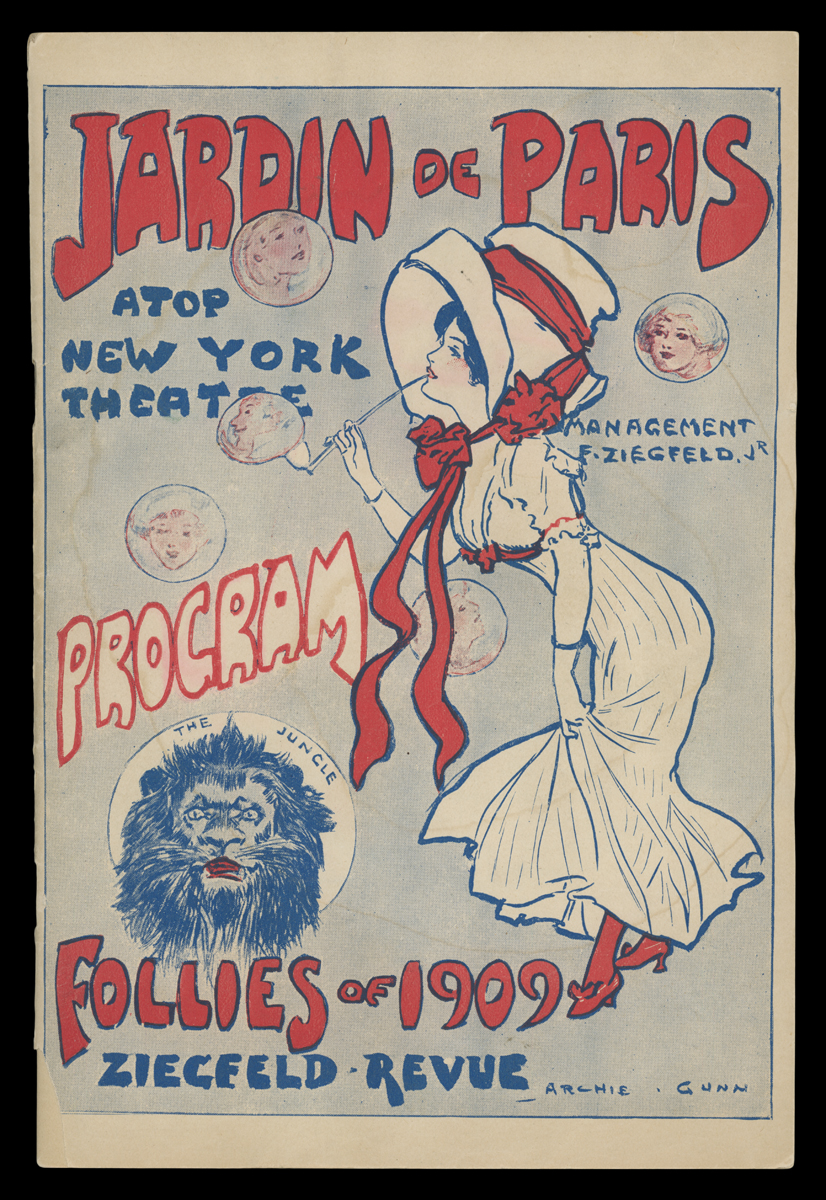 "Follies of 1909," program. In the Follies' early years, it was performed at the Jardin de Paris theater on the rooftop of the Olympia Theatre. / THF735553
From the 1890s until the Second World War, revues — variety stage shows — were the most popular style of theater in the United States. Revues featured an amalgam of performers under a single bill; it was not uncommon for an audience to see short comedic sketches, artistic tableau vivant, and animal acrobatics all in quick succession. One of the most well-known revues was the Follies, performed annually on Broadway from 1907 until 1931.
Florenz Ziegfeld Jr. (1867-1932) wanted a life in the entertainment industry from a young age; he claimed that he ran away as a teenager to avoid taking a clerical job and joined Buffalo Bill's Wild West Show. Ziegfeld's relationship with French singer Anna Held allowed him to become a theater impresario. After the two met in 1896, Ziegfeld moved Held to New York City and became her manager and romantic partner. Early in their romance, Held invited Ziegfeld to the Folies-Bergère, the famed Parisian cabaret venue, home of a bawdy revue and the notorious can-can dancers. In the summer of 1907, Ziegfeld created an American version of the Folies-Bergère show, the Follies.
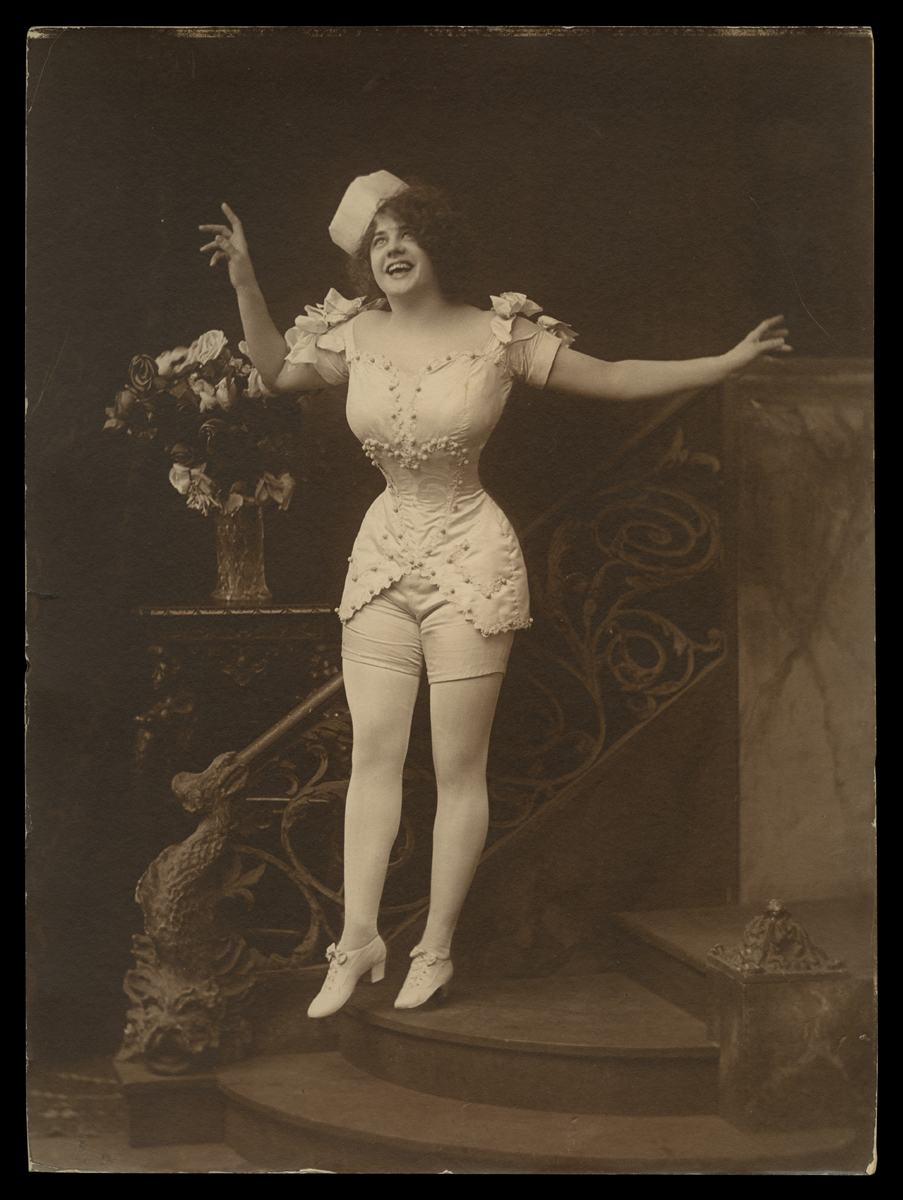 Eva Tanguay in costume, circa 1911-1920. The Follies of 1909 featured the self-proclaimed "Queen of Vaudeville," Eva Tanguay. You can learn more about Tanguay's life as a vaudevillian in this article. / THF132290.
Ziegfeld's Follies appealed to both highbrow and lowbrow tastes by blending American vaudeville tradition with the provocative nature of French cabaret. Ziegfeld updated his roster of performers yearly, making the Follies a new experience every time; however, each iteration featured a chorus of women, dubbed "Ziegfeld Girls," modeling elaborate and risqué costumes onstage. Ziegfeld believed that this part of the show "glorified the American girl," a phrase used to advertise later productions. Those associated with the Follies often became household names like performer Will Rogers and songwriter Irving Berlin. The Follies set the standard of what the American revue show could look like.
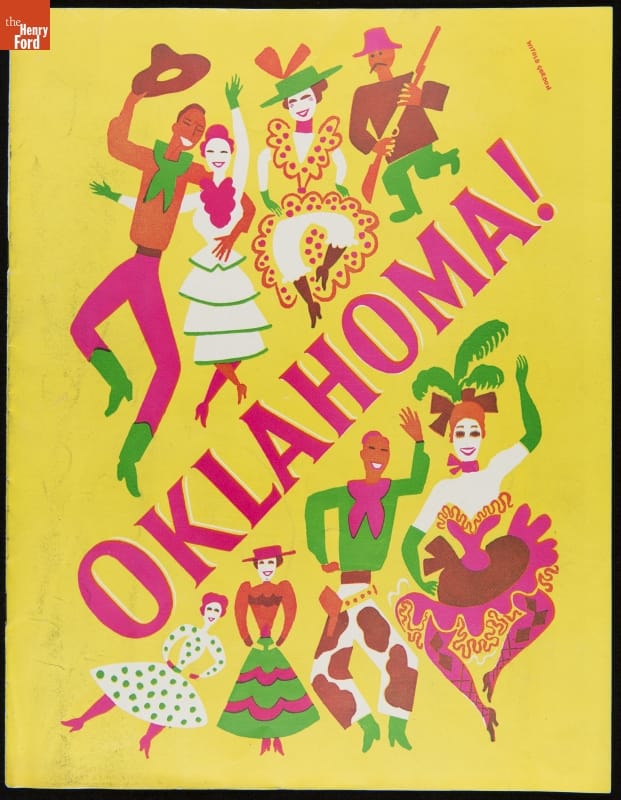 The Theatre Guild National Company of Oklahoma!, 1944. / THF287663
Oklahoma! was the first musical written by the duo Richard Rodgers and Oscar Hammerstein II. Based on the play Green Grow the Lilacs, it follows the romantic struggles of Laurey Williams as she’s courted by cowboy Curly McLain and farmer Jud Fry. It was an early example of a book musical, in which songs are integrated into a larger, more serious plotline that includes scenes of dialogue. Oklahoma! also popularized the inclusion of a “dream ballet” — a special dance scene featuring no singing, often used to show a character’s subconscious – with its 18-minute Act I finale choreographed by Agnes de Mille.
Rodgers and Hammerstein would go on to incredible acclaim, and their partnership would define the 20th century of American musicals. Oklahoma! won a 1944 Pulitzer Prize, and inspired several revivals, international stagings, touring productions, and a 1955 Oscar-winning film.
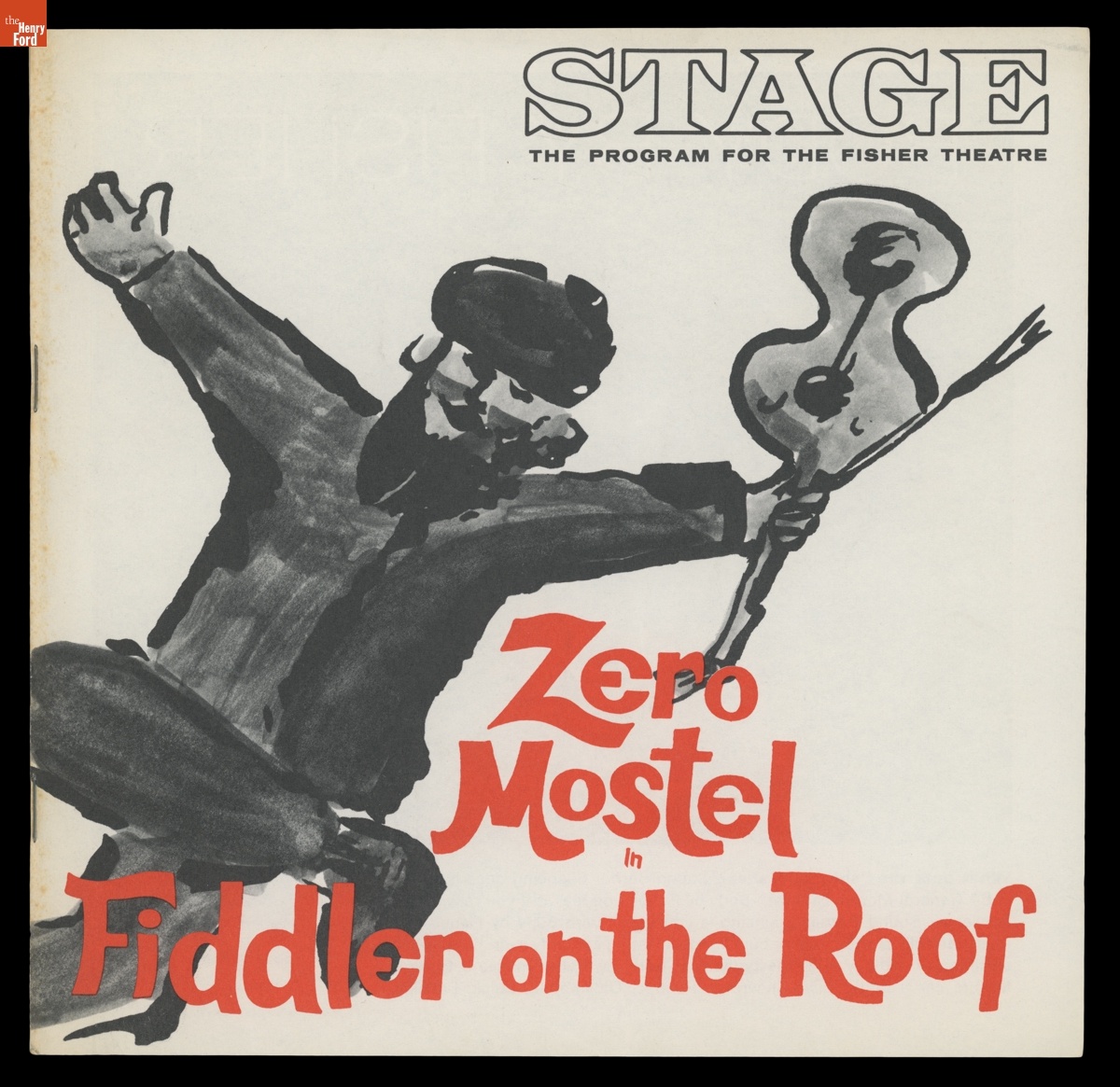 "Fiddler on the Roof," 1964 program from the Detroit tryouts. / THF735564
Before they start their initial Broadway (or West End, in London) run, many musicals will first have out-of-town tryouts. These early performances serve as a test-run for the shows, making sure that the final product is as polished as it can be and giving a sense of how audiences will react, with time to make any final adjustments. In the 1960s and into the early 1970s, Detroit’s own Fisher Theatre hosted the tryouts of several shows that went on to be Broadway hits.
One such show was Fiddler on the Roof. Based on short stories from Yiddish language author Sholem Aleichem, it tells the tale of Jewish milkman Tevye and his family as they struggle to maintain their traditions in the fast-changing world of turn-of-the-century Tsarist Russia. The initial cast included Zero Mostel as Tevye; during tryouts, he fought with new director/choreographer/producer Jerome Robbins, who had cooperated with the House Un-American Activities Committee — the same committee that had famously blacklisted Mostel.
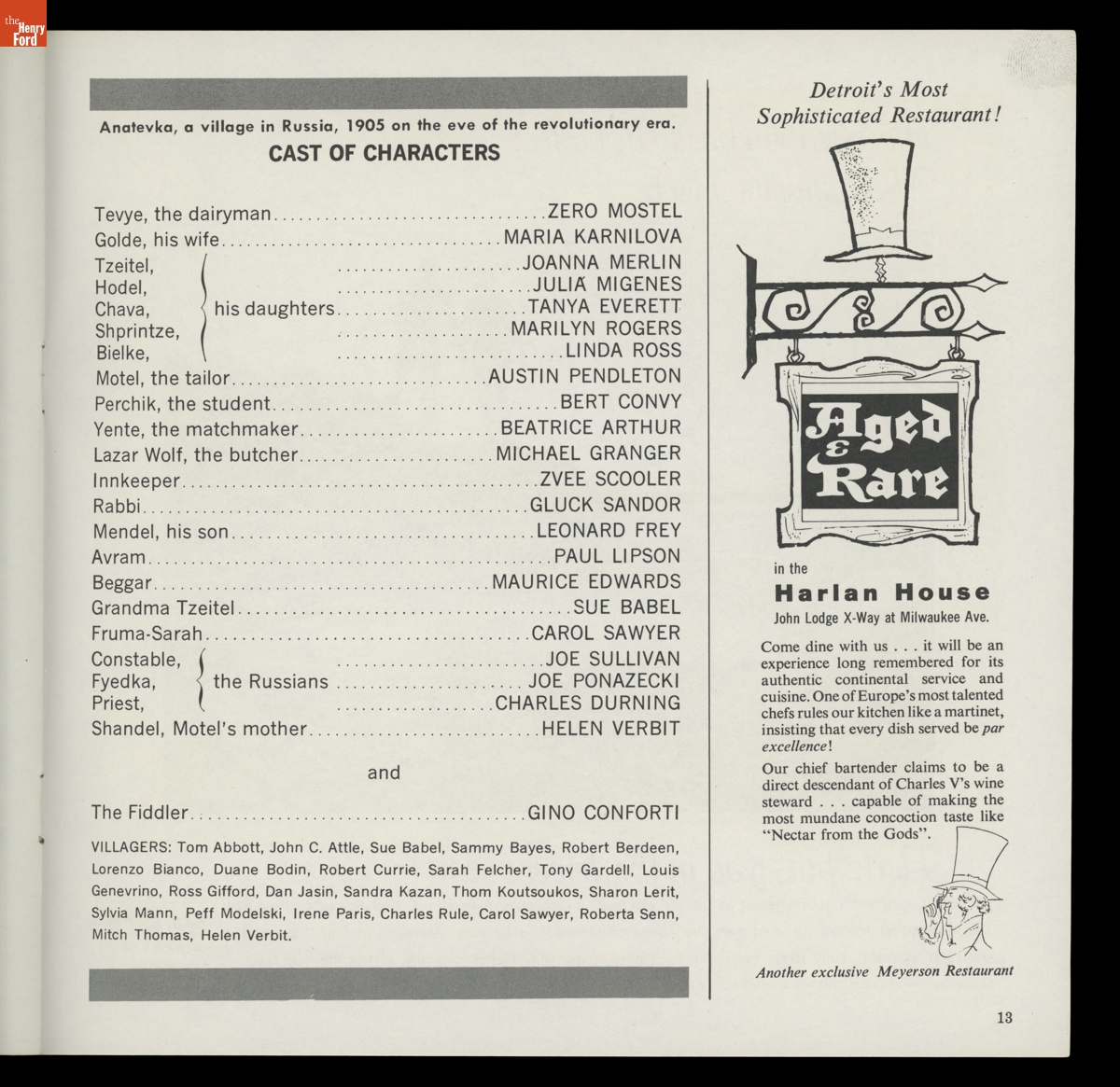 The 1964 cast also included Bea Arthur — later known for her roles in Maude and The Golden Girls — in the role of Yente, the matchmaker. / THF735567
Despite the interpersonal conflict and initial critical skepticism, Fiddler successfully transferred to Broadway, and the original run became the first Broadway show to surpass 3,000 performances. It remains a popular choice for local and high school theater productions, and maintains a strong cultural presence — its iconic song “If I Were a Rich Man” was even sampled by musician Gwen Stefani.
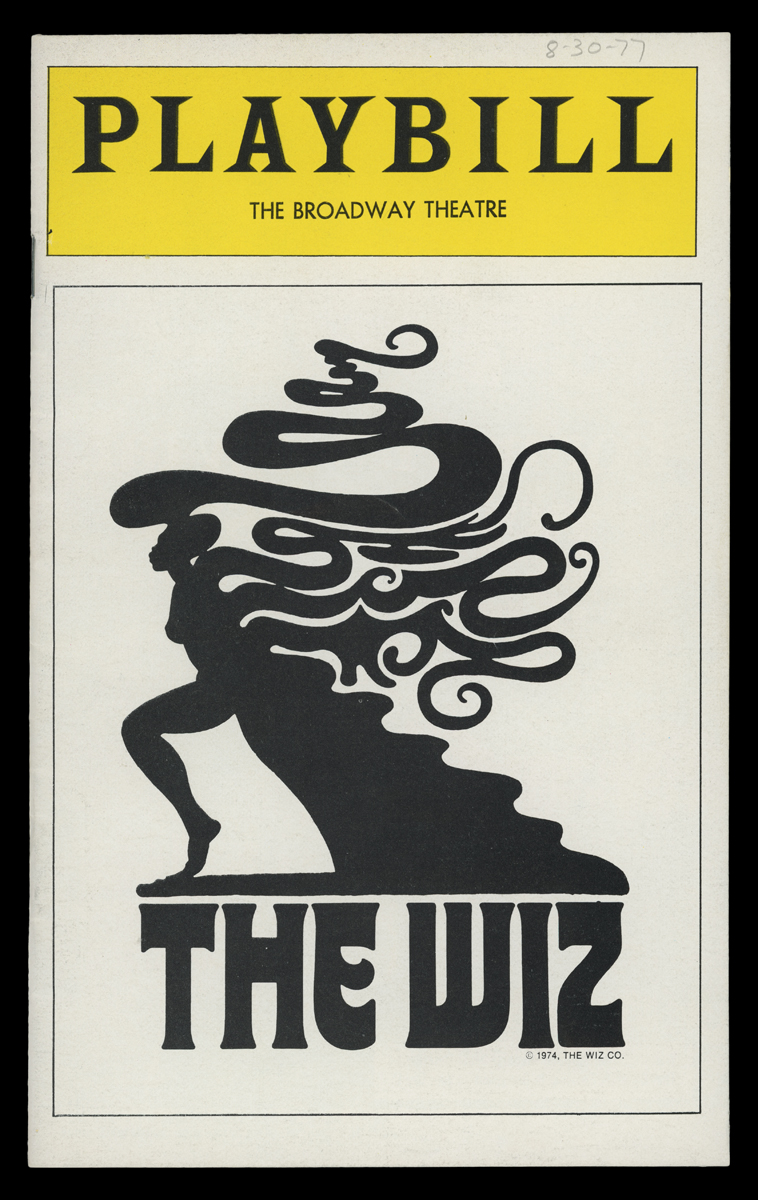 "The Wiz," 1977 program from New York's Majestic Theatre. / THF735571
Ken Harper, a radio personality from New York City, wanted to produce a musical adaptation of L. Frank Baum's The Wonderful Wizard of Oz with an all-Black cast. Harper wanted his version of the story to stand apart from MGM's well-known 1939 film adaptation, and he believed "doing it Black, points up the universality of" Baum's story. While he originally conceived of a made-for-tv movie, he was able to secure the financial backing of Twentieth Century Fox Film Corporation to do an on-stage production instead.
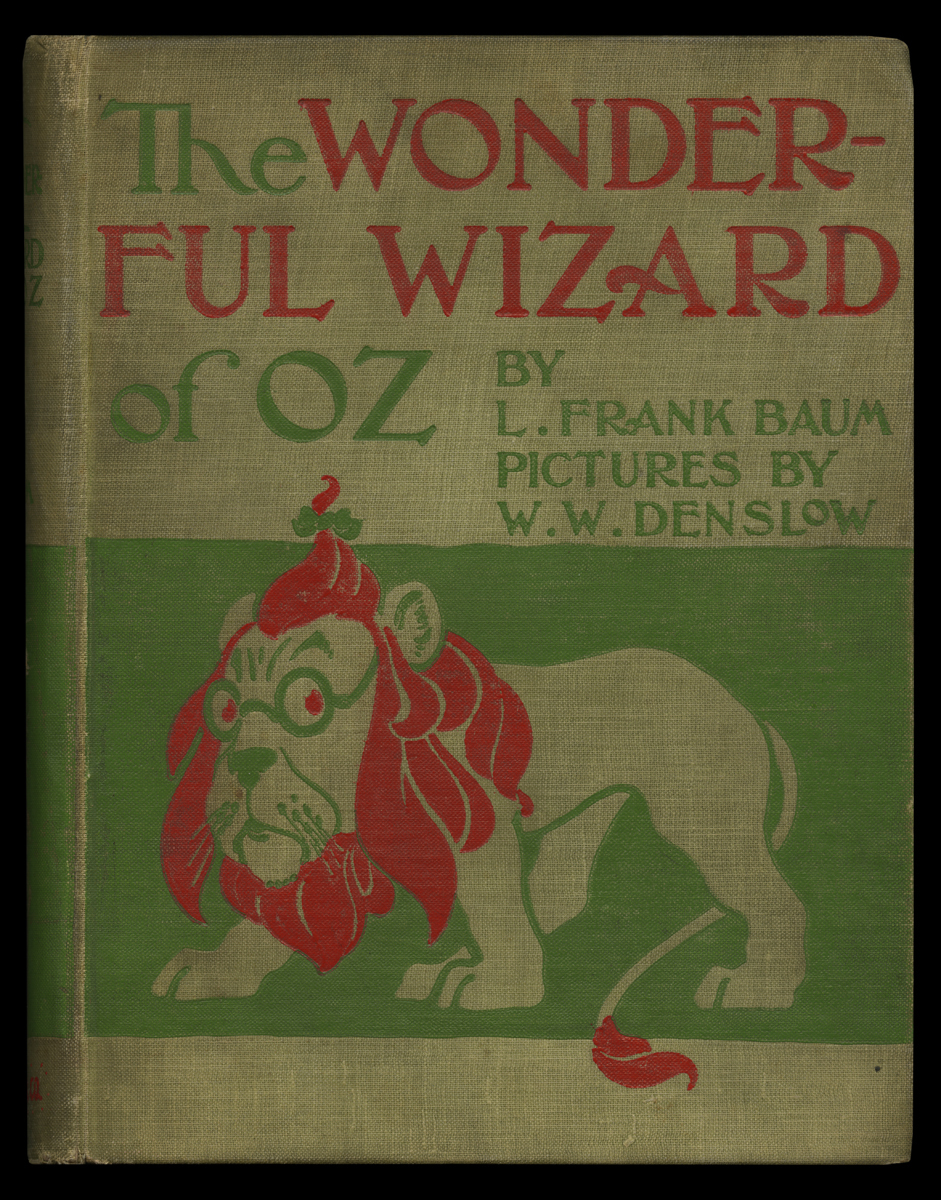 The Wonderful Wizard of Oz, 1900. First published in 1900, the book tells the story of Dorothy, a little girl swept away to a strange and magical land and her quest to return home. The Wiz is a faithful reimagining of Baum's book with Black American culture as a foundation. / THF135495.
The Wiz opened in October 1974 for a tryout in Baltimore where it received mixed to negative reviews. When the show moved to Detroit's Fisher Theatre the next month, reviews remained poor. Critics and audiences praised the cast for their talent but thought the music and the direction were lackluster. To save the show, Ken Harper fired the original director and elevated costume designer, Geoffrey Holder, to the role of director. Holder had a long career in theater and ballet both on stage and behind-the-scenes. Under his direction, the production changed drastically. New songs were added as others were cut. New set design blended elements of African, Caribbean, and Black American art. The character of Dorothy was further developed to highlight the talents of the actress cast in the role. Audiences in Detroit and, later, Philadelphia became the litmus test for Holder's new ideas before the show went to New York.
When The Wiz premiered on Broadway in January 1975, it resonated with audiences. The New York Amsterdam News — the country's oldest Black newspaper — promoted the show with writer Jessica Harris saying in her review: "The Wiz is a microcosm of Black survival in America, it must be seen in all of its splendor and richness to be believed." The production won seven American Theater Wing Tony Awards at the 1975 ceremony, including Best Musical. The Wiz is a testament to how musicals are developed over time and, often, in front of audiences and critics whose reactions help shape them.
The dramas on and off the stage that shaped Broadway musicals allowed the art form to become an enduring part of American culture. These popular shows and their creators shaped the future of theater in this country and continue to delight and inspire audiences around the world.
Kayla Chenault and Rachel Yerke-Osgood are associate curators at The Henry Ford.
Keywords | |
|---|---|
Themes |