
Keeping the Record Straight: Voices from the Civil Rights Movement
| Written by | |
|---|---|
| Published | 10/13/2026 |
Keeping the Record Straight: Voices from the Civil Rights Movement
| Written by | |
|---|---|
| Published | 10/13/2026 |
When The Henry Ford acquired the Jackson Home and began work to open it to the public in Greenfield Village, it was clear that we had a responsibility to tell the story not only of the Jackson family, but of the larger Civil Rights Movement as well. As part of this work, Amber N. Mitchell, Curator of Black History, and Heather Bruegl, Curator of Political and Civic Engagement, spent time both in Alabama and here in Dearborn talking to people who had experienced and shaped the movement -- people who, in Mitchell’s words, are "culture bearers, those people who have been standing in the gap." While that work is ongoing, the richness and humanity of these stories is already evident, and it is our immense privilege to now begin to share these oral histories with a larger audience.
Several of the individuals we talked to were children during the movement's early years. Some recall being sheltered from much of what was going on in the world. For Dr. Cheryl Davis, who was four years old when her family's farm hosted participants of the Selma to Montgomery March. Living rurally meant she was separated from some of what had been going on, and didn't truly understand what it was like. Even for those like Annie Pearl Avery who had more experience with injustice, it was not always something they understood until they were older. Still others grew up seeing their parents involved in the movement, or were themselves involved. Student Nonviolent Coordinating Committee (SNCC) field secretary John Hardy's parents had been "very proactive in terms of getting [their children] involved" in the movement, teaching them about politics at an early age. Longtime civil rights activist Dorothy Dewberry Aldridge had a similar experience – even though she grew up in metro Detroit, her family frequently talked about what was happening across the country.
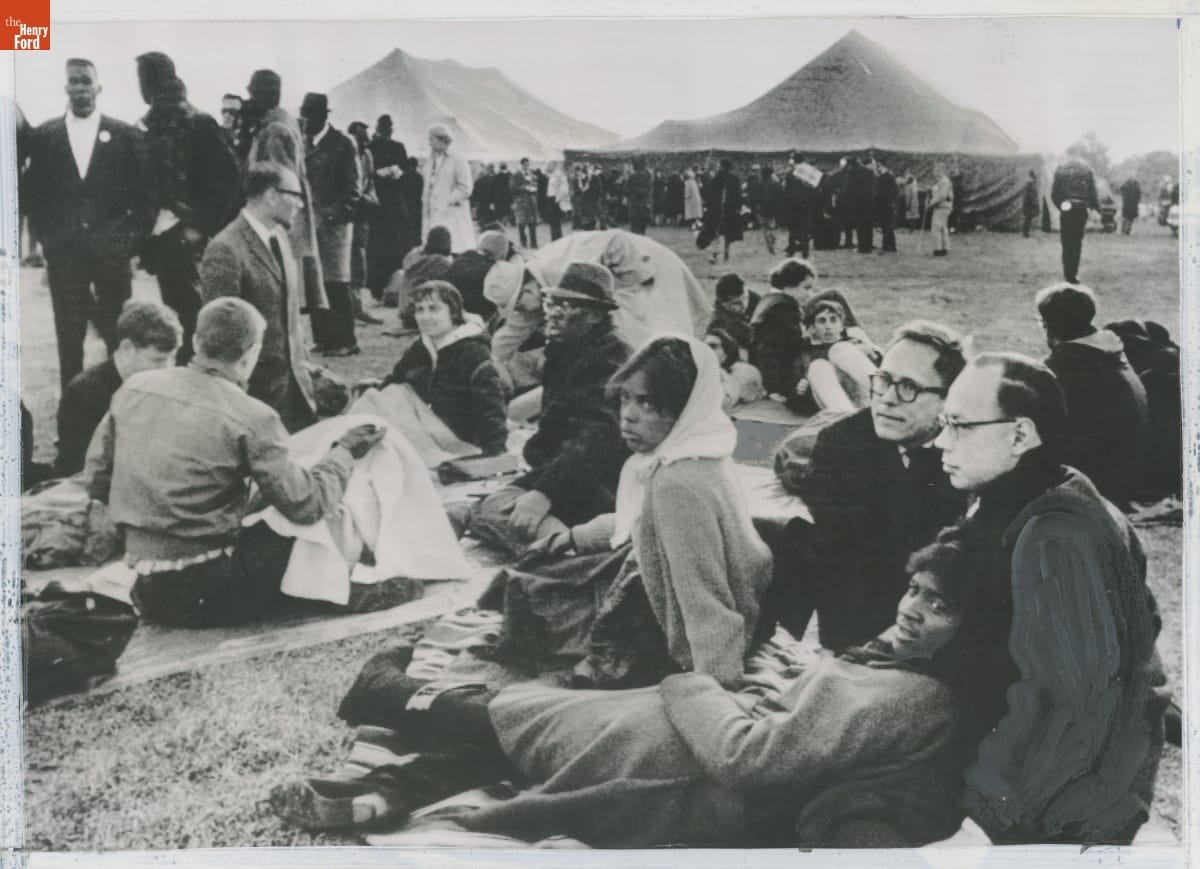
Dr. Cheryl Davis’s family farm was one of the locations—like the farm shown above—that hosted marchers on the way from Selma to Montgomery. Dr. Davis recalled the masses of people coming in and out of her house, and hearing helicopters flying overhead in the night, but then in the morning, “I ran to the door and all of a sudden they were gone as if nobody was there.” / THF730285
Many of the individuals who shared their stories with us were involved in the 1965 Selma to Montgomery marches: a series of marches (Bloody Sunday on March 7, Turnaround Tuesday on March 9, and a final march all the way to Montgomery from March 21-25) planned by Rev. Dr. Martin Luther King Jr. SNCC, the Southern Christian Leadership Conference (SCLC), and others to draw attention to the lack of voting rights for Black Americans. Among them was Sheyann Webb, who at eight years old was the youngest participant in the march that would become known as Bloody Sunday. Despite being warned of the danger, young Sheyann had cried with a desire to go. In her words, "I had already made up in my mind again that I wasn't going to let nobody turn me around."
She went on to describe the scene after crossing the Edmund Pettus Bridge: "And we were asked to kneel down and pray again through the leadership of the late Congressman Lewis. And after we had prayed, I'll never forget, Congressman Lewis was asked to turn the marchers around, but he refused. And after he refused, racism unleashed its brutality upon all of the marchers. Tear gas had begun to burst in the air. . . . People were being beaten down to the ground with billy clubs. The dogs and the horses had begun to push their way into the crowd of the marchers, just trampling people over as if they weren't human beings. And obviously, people had begun to run for their lives trying to make their way back home. And of course, I was trying to run to make my way back to George Washington Carver Projects."
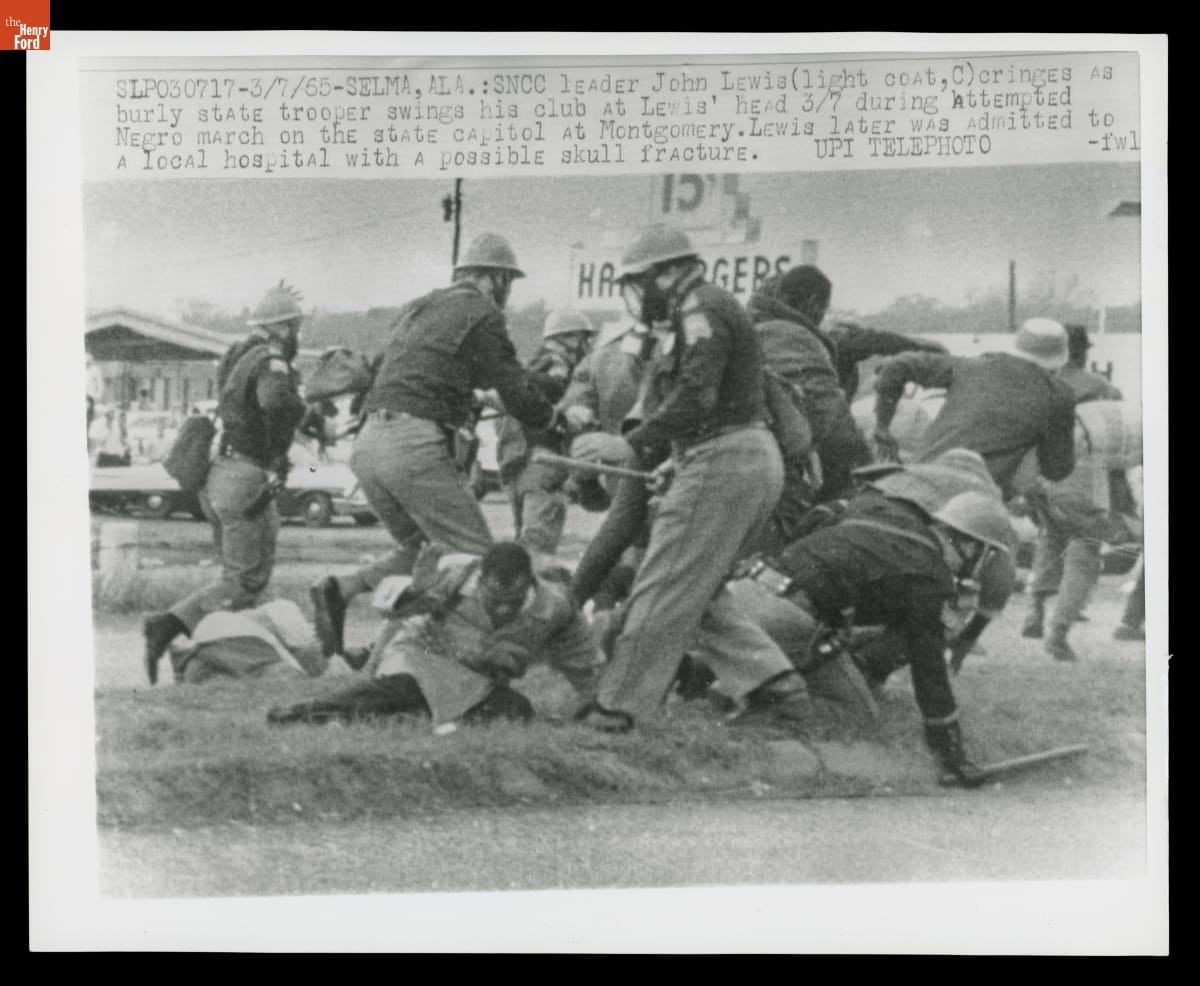
Sheyann Webb recalled the Rev. Hosea Williams picking her up to help her escape the chaos of Bloody Sunday. “My little legs were still galloping in his arms. And I turned him and said, in my own childish voice, ‘Put me down because you are not running fast enough.’ “/ THF730310
Civil rights historian Dr. Richard Bailey described the feeling among the marchers after the third and successful Selma to Montgomery march: "Tired feet, but jubilant souls." It was those feet that stood out to Dr. Valda Harris Montgomery as she watched the activists come in to her high school, St. Jude, the last campsite on the long march to Montgomery. "But my focus, believe it or not, was on the feet. When I saw the feet of these marchers and how battered they were, they were sore, they were torn, they were bloody. People have a tendency to think in today's terms that they had Reeboks or all these fancy tennis shoes, or they had bottled water. No, you didn't have any of that. These people marched in street shoes this distance. So, their feet were very damaged."
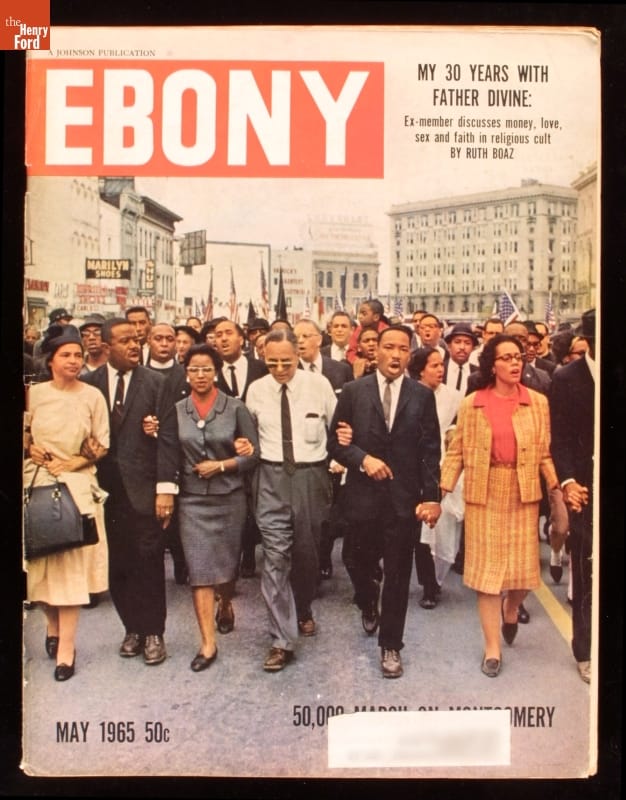
Protestors who marched from Selma to Montgomery covered 54 miles, from Brown Chapel A.M.E. Church in Selma to the steps of the capitol building in Montgomery. / THF92262
Looking back at the work she did with SNCC in Alabama, Dorothy Dewberry Aldridge recalled that Dr. King used to talk about "the beloved community," a vision of a world where justice and love prevail. "The beloved community was right there in Lowndes County. It was just so wonderful to see. . . They did whatever... And when we first went there to SNCC, SNCC people and others. They always had a place at their tables for us. . . . And they welcomed their arms. And to me, it was the beloved community, and one of the most satisfying moments of my entire life was sitting on the porch in Lowndes County. . . And it was just a beautiful experience, a beautiful place." Throughout many of the stories recounted, this thread of beauty and hope could be found, even among the darkness and hate.
Given all that has been gained and lost in the years since the passage of the Voting Rights Act, we asked each person we interviewed what they would pass on to the current generation of activists. Universally, they gave messages of hope, even while acknowledging the work still to be done. Legendary civil rights attorney Dr. Fred Gray perhaps said it best, sharing the advice he had received from the late John Lewis: "Keep pushing, keep going, keep the record straight."
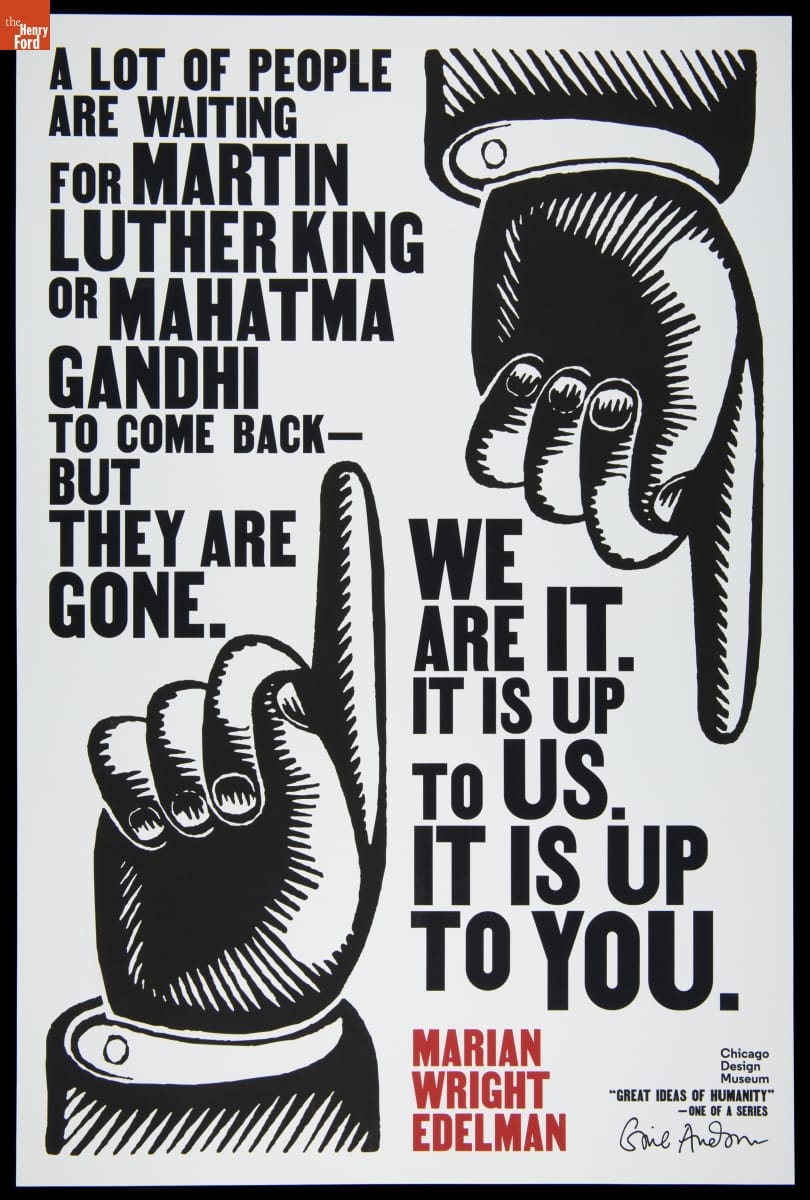
This poster, created by noted Black graphic designer Gail Anderson and featuring a quote from Marian Wright Edelman, who worked on Dr. King’s Poor People’s Campaign, reflects the messages we heard from so many of those we interviewed. / THF721539
Rachel Yerke-Osgood is an Associate Curator at The Henry Ford.
With immense gratitude to all those who gave of their time and spirit so that we might continue to learn from their history.
Keywords | |
|---|---|
Series | |
Themes |