
Parachutes: From Wartime to Wedding
| Written by | |
|---|---|
| Published | 7/14/2026 |
Parachutes: From Wartime to Wedding
| Written by | |
|---|---|
| Published | 7/14/2026 |
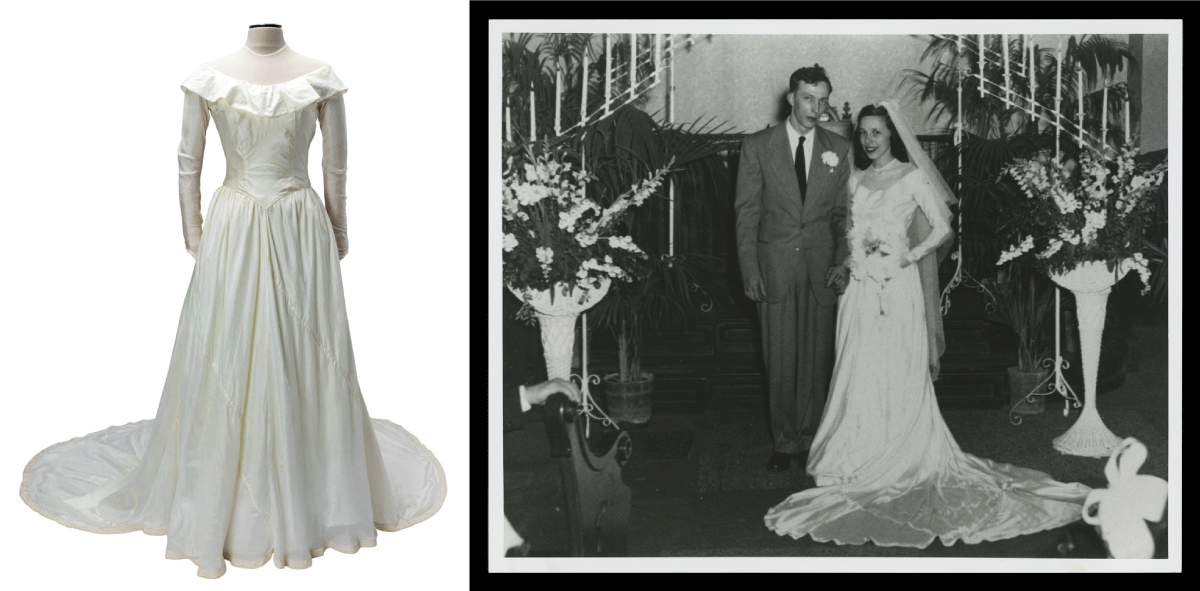
(left) Wedding dress worn by Nancy Wauchek Gillard, 1947. / THF810416. Gift of Gretchen Rudy; (right) Ernest and Nancy Wauchek Gillard on their wedding day, April 19, 1947. / THF734292. Gift of Dana Rudy.
During and just after World War II, resourceful American brides transformed military parachutes into wedding gowns. Many textiles were rationed during the war — prioritized for military production rather than consumer use — so bridal fabric was in short supply. Using parachutes offered an ingenious and practical solution.
Where did these parachutes come from? Some were surplus — defective parachutes that failed to pass the strict standards manufacturers were held to. Others were brought back by servicemen as souvenirs of wartime service. Still others had been deployed, saving the lives of the soldiers who jumped from planes wearing them.
At the beginning of World War II, most parachutes were made of silk, largely sourced from Japan. When the war cut off the supply, producers had to find an alternative. Fortunately, the DuPont chemical company had introduced a synthetic fabric shortly before the war — strong, lightweight nylon. DuPont, together with the Pioneer Parachute Company and silk maker Cheney Brothers Company, devised a parachute made of nylon. The final silk parachutes were procured by the military in spring of 1943; troops were provided nylon parachutes thereafter.
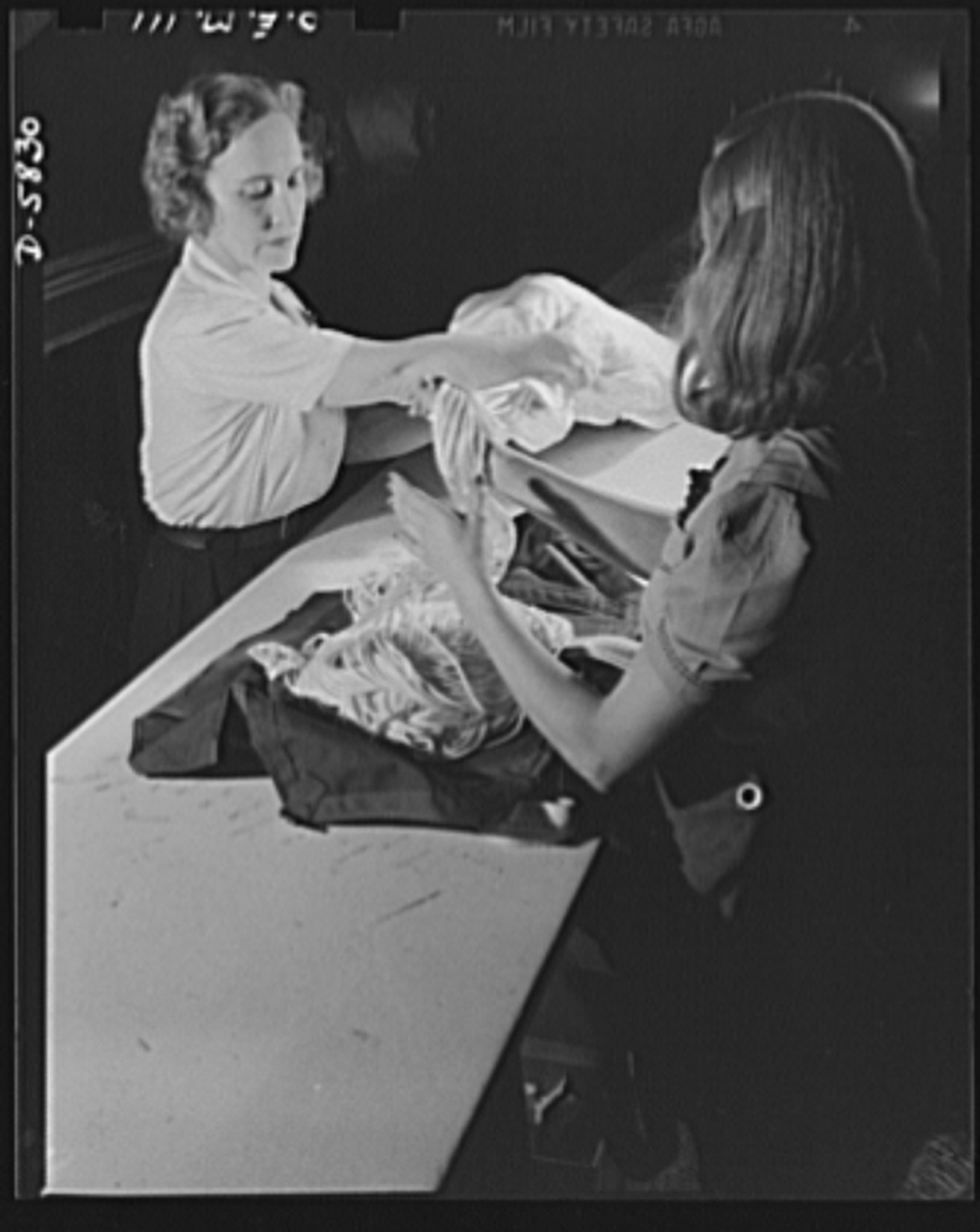
Adeline Gray — experienced parachutist, trained pilot, and parachute rigger and tester at the Pioneer Parachute Company — volunteered to make the first jump in the newly developed nylon parachute in June 1942. Courtesy of the Library of Congress.

Parachutes were made of some 20 yards of silk or nylon — ample fabric for fashioning a bridal gown. For many brides, these parachute gowns reflected practicality, patriotism, and hope. Crafted from textiles that were a substitute for bridal satin, the wedding dresses embodied the meaning of their special day — perhaps especially so for those brides whose parachutes had saved their husband's life.
Nancy Wauchek Gillard was one of the resourceful brides who walked down the aisle in a parachute wedding dress when she married Ernest Gillard in her hometown of Gobles, Michigan, in April 1947. Nancy and Ernest were both employed as chemists at Dow Chemical in Midland. Nancy's future brother-in-law Donald Gillard had offered Nancy his never-deployed nylon parachute as fabric for her wedding dress. Don had served as a Navy pilot and had been discharged from service the previous May. (Groom Ernest Gillard, Don's older brother, had served in the Army in England and France, including participation in D-Day.)
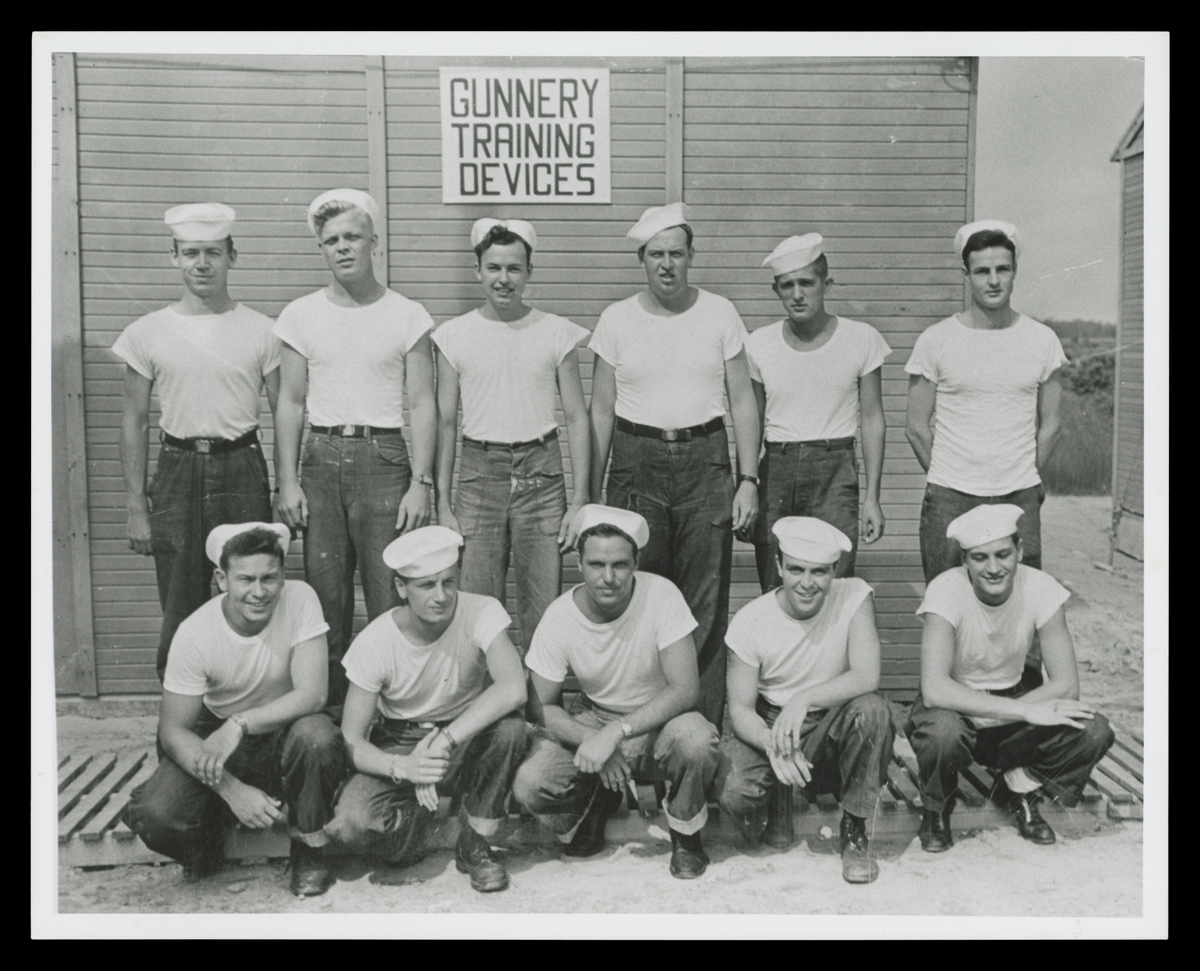
Donald Gillard (front row, middle) with fellow Navy servicemen during World War II. / THF734300. Gift of Dana Rudy.
Once intended for war, Don’s parachute became a symbol of new beginnings for Ernest and Nancy.
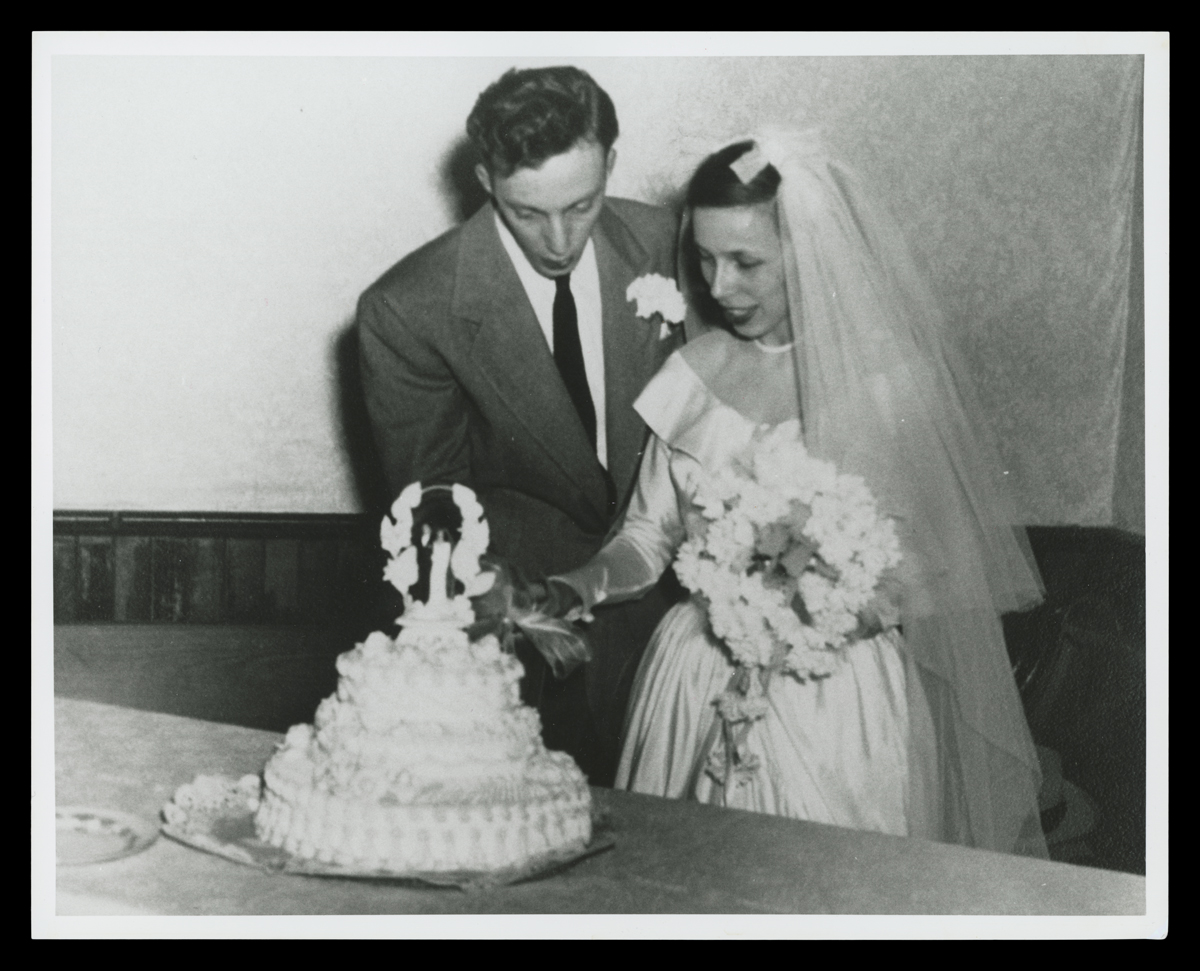
Ernest and Nancy Gillard cutting their wedding cake. / THF734294. Gift of Dana Rudy.
Nancy Wauchek Gillard's wedding dress is only one of the intriguing objects included in Henry Ford Museum of American Innovation's exhibit, Fabric of America: Our Fashions, Textiles, and Technologies (June 7-September 13, 2026).
There are many more stories to be explored.
Jeanine Head Miller is Curator of Domestic Life at The Henry Ford.
Keywords | |
|---|---|
Themes |