
The Midnight Ride of Paul Revere: The Battle of Lexington and Concord
| Written by | |
|---|---|
| Published | 4/14/2026 |
The Midnight Ride of Paul Revere: The Battle of Lexington and Concord
| Written by | |
|---|---|
| Published | 4/14/2026 |
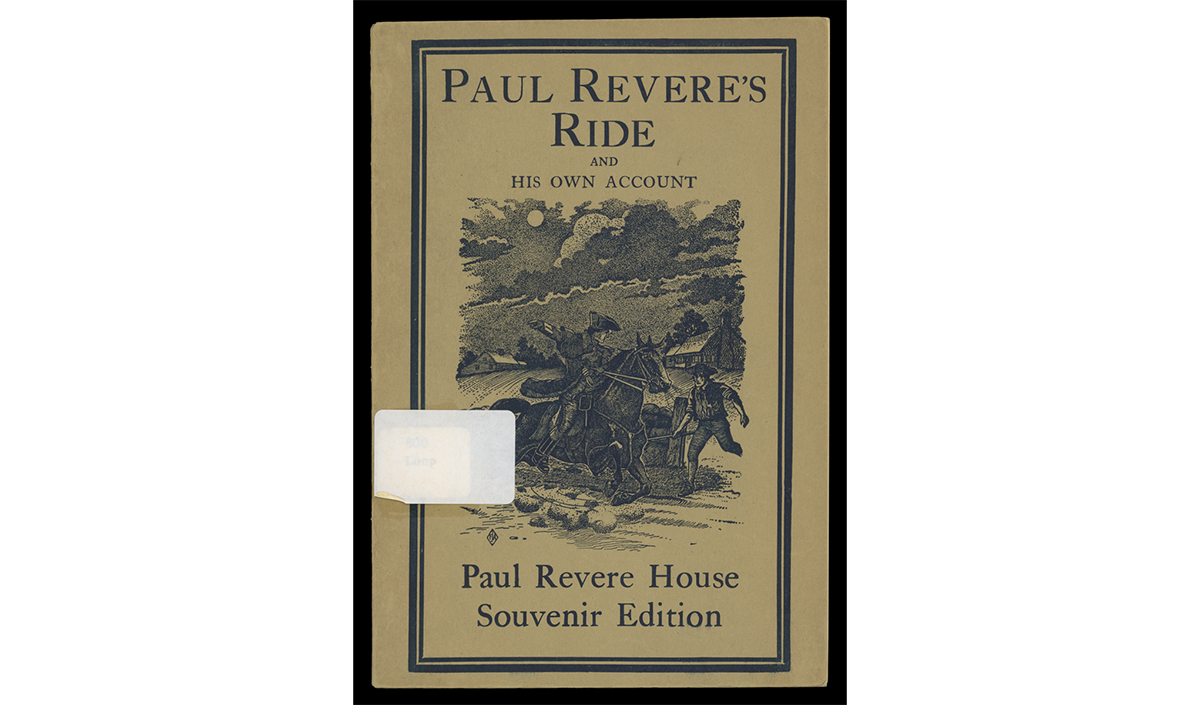 Paul Revere's Ride, 1907 Longfellow, Henry Wadsworth, 1807-1882, Riverside Press (Cambridge, Mass.). / THF149911
These now-famous words, written by Henry Wadsworth Longfellow, captured a moment in history when the world changed. Written in 1860, Paul Revere's Ride provided a romanticized version of what would lead to the first shots of the American Revolution, the Battle of Lexington and Concord. Otherwise known as the "shot heard ‘round the world," this event sparked the beginning of the American Revolution.
Tensions were rising in the lead-up to the American Revolution, but until April of 1775 there was no battle. There were other events, including the Boston Massacre and the Boston Tea Party, and in the aftermath, Boston Harbor was shut down until the colonists paid for the tea spilled into the waters.
 Paul Revere's Ride, 1907 Longfellow, Henry Wadsworth, 1807-1882, Riverside Press (Cambridge, Mass.). / THF149915
The Sons of Liberty, a group of colonists founded in 1765 to oppose taxation without representation and overall colonial oppression, included leaders such as Samuel Adams, John Hancock, Paul Revere, and physician Joseph Warren. Dr. Warren learned of a plot by British General Thomas Gage to stop any rebellion before it started, and he made a plan to march his British troops to Concord, seize any supplies the Patriots had gathered, and arrest Samuel Adams and John Hancock.
A plan had been put in place for just such an occasion. Once the Patriots learned of this plan by Gage and the British, Paul Revere devised a system of lantern signals to let the Patriots know how the British would approach. Using lanterns in the belfry of Boston's Old North Church (also known as Christ Church), one lit lantern meant land travel, and two meant travel by sea. On the evening of April 18, 1775, two lanterns were lit, signaling that the British were using the Charles River to make their way to Concord.
Revere and Billy Dawes saddled up their horses and made their way to Lexington to gather the Minutemen and warn Adams and Hancock that the British were coming. They then made their way to Concord to continue the warning.
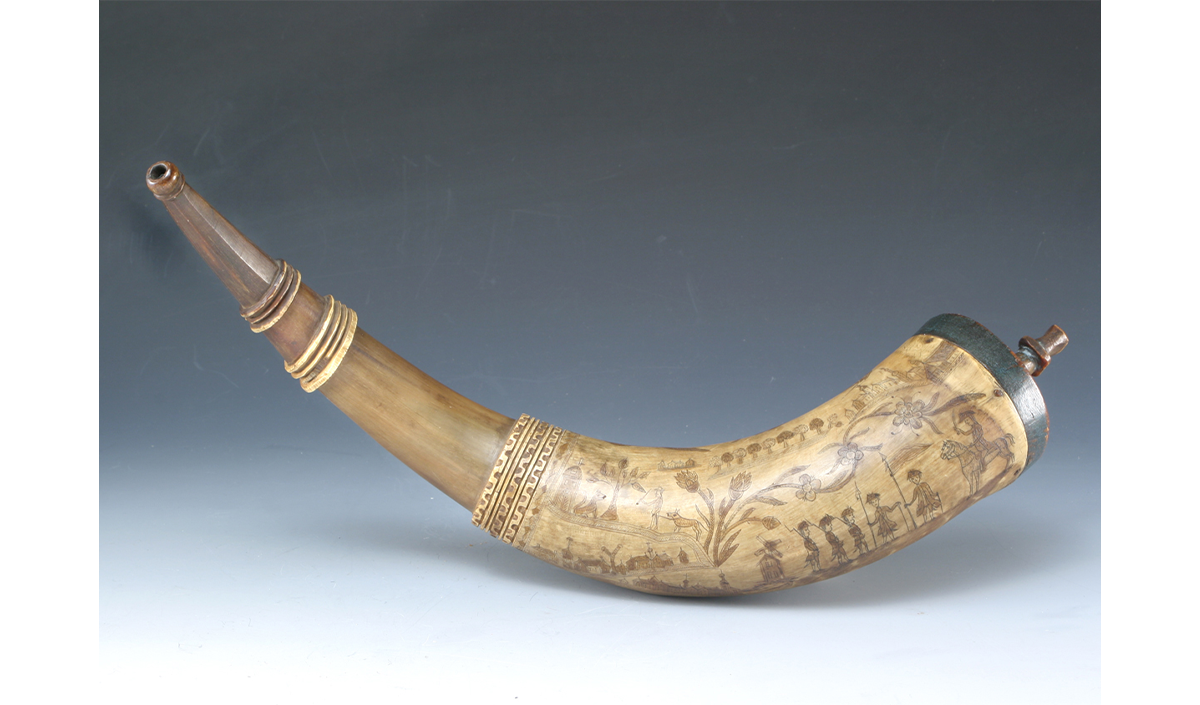 Powder Horn, 1775-1783, engraved with scenes from the Battle of Lexington and Concord. / THF8118
In Lexington, a group of around seventy-seven Minutemen was gathered on the green, ready to confront the British. The British tried to simply march past them and were denied. In the scuffle, a shot rang out, and chaos broke out. Breaking ranks, the British soldiers began to fire back; eight Minutemen were killed. Having already been warned, the Patriot militia was ready and waiting in Concord. Church bells rang, and more joined.
The resistance in Concord was more organized, and the militia attacked a troop of British soldiers guarding the bridge into town, afterwards taking positions behind barns, houses, and other buildings and firing upon unsuspecting Redcoats. The battle left seventy-three British soldiers dead and 174 wounded. They retreated back to Boston.
The first battle of the American Revolution secured a Patriot victory. It also paved the way for the Continental Army to name George Washington as commander. The victory at Lexington and Concord would be the spark that ignited the rest of the revolution.
Heather Bruegl (Oneida/Stockbridge-Munsee), Curator of Political and Civic Engagement at The Henry Ford.
Keywords | |
|---|---|
Themes |