
The Race to Find the Indy 500 Queen Crown
| Written by | |
|---|---|
| Published | 5/22/2026 |
The Race to Find the Indy 500 Queen Crown
| Written by | |
|---|---|
| Published | 5/22/2026 |
Have you ever wondered what happens when an archivist has a research question? Typically, archivists are the ones with the answers as it is our job to make research materials discoverable and accessible to the public. But more often than not, we develop our own questions that need a certain amount of research to find the answer. Most of the questions we have are more routine, like who filed the initial seed patent for a musk melon in 1924. Some of these questions involve a level of curiosity and collaboration that reminds us that it’s important to have fun while learning.
In the Archives & Library at The Henry Ford, we have a printed version of a porch goose (you know, one of those concrete geese that adorns porches across the Midwest, and that gets dressed up for holidays or special occasions) that research staff decorate each month. Last May my supervisor put in a request that we decorate the goose (lovingly named Henry) for the Indy 500 race. My supervisor seldom gets involved in our workplace shenanigans, so I felt it was important to indulge him, and this led me down an interesting rabbit hole about the Indy 500.
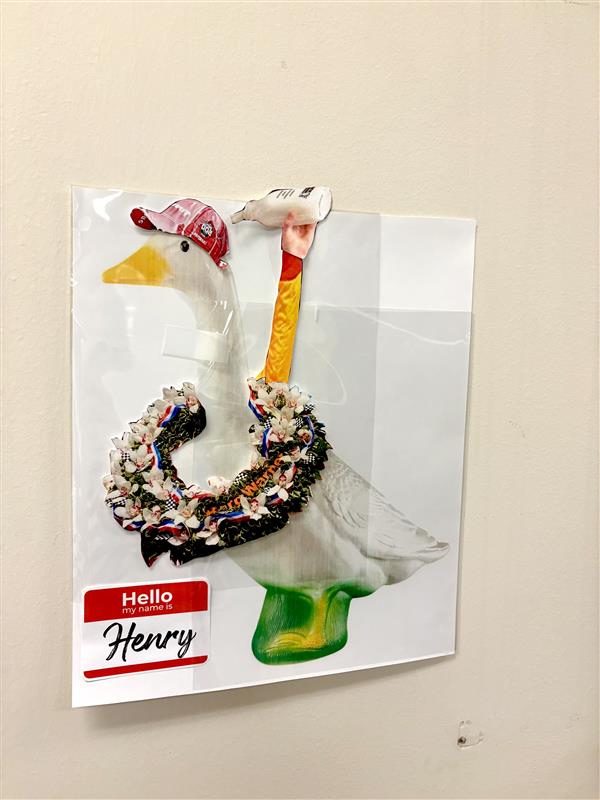 "Henry G. Oose" dressed up for winning the Indy 500. / Photograph by Staff of The Henry Ford
As I was learning more about the race itself, I also learned about the things the community does to support the race. This is how I was introduced to the “Indy 500 Queens,” which sent me down an interesting path of discovery. Since 1959, a queen has been selected through the Indy 500 Princess Program (a program hosted by the community, not the Speedway) which provides scholarships for Indiana students, aged 18-22. Browsing their website, I was surprised to learn that the honorary crown awarded to the queens changed in 1999. I thought, “Why did the crown change? And what happened to the original crown from 1959?” Thankfully, we found an email address, and my wonderful coworker Kathy Makas, reference archivist, reached out to find out more.
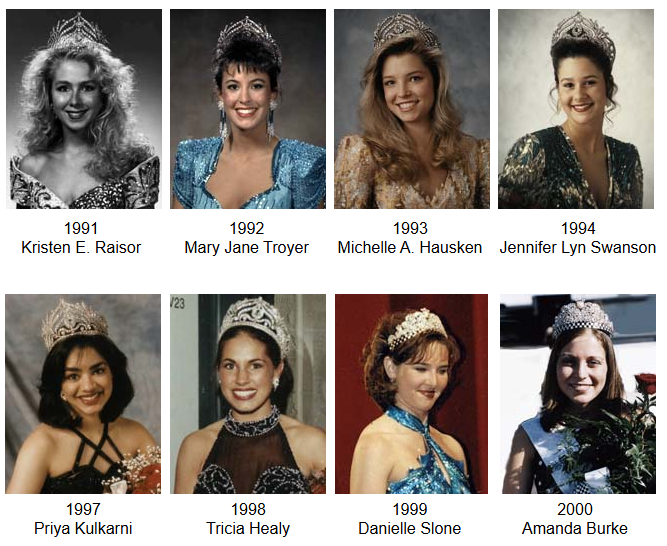 Indy 500 Festival Queens showing the crown change in 1999. / Image Courtesy of Indy Motor Speedway
A few days later we were told “we don’t know.” That is a fair answer, as this is a community organization run entirely by volunteers, and it's likely that nobody who volunteered in 1998 is still around to answer the questions. But as an archivist, I couldn’t accept that that was the only answer. Someone knew what happened to that crown, and I was going to find them! “The game is afoot,” to quote Sherlock Holmes.
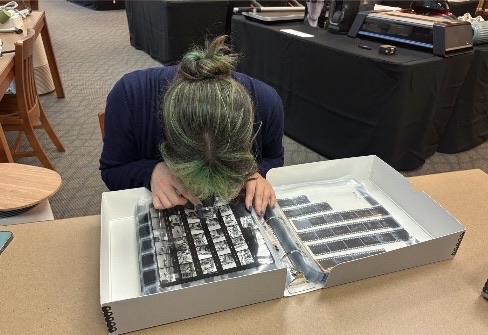 Regina Parsell using a loupe to review film negatives from the Dave Friedman Collection. / Photograph by Staff of The Henry Ford
After some research that involved reaching out to The Henry Ford's Curator of Transportation, Matt Anderson, and The Indianapolis Motor Speedway Museum, and reading books about the event, Kathy struck pay dirt. She discovered that from approximately 1990 until 2016, G. Thrapp Jewelers in Indianapolis (5609 N. Illinois St.) was the official jeweler of the Indy 500 Festival Princess Program. While Mr. Thrapp has since retired, his website is still active and we promptly got in touch with him. After responding to our initial inquiry, Mr. Thrapp agreed to speak with us on the phone to tell us the story of why the crown changed in 1999. Around 1990, G. Thrapp Jewelers offered to become the jeweler for the program, at their own cost, with no charge to the Princess Program. Previously, all the jewelry provided to the princesses was paid for by the Princess Program and given only to the top-tier winners. While Thrapp was providing the jewelry for the program, his business designed custom pendants for each princess and would replace these free of charge if lost or stolen. It was around this time that the festival, and especially the Princess Program, became more community-led rather than committee-led, which was Mr. Thrapp’s intention in getting involved.
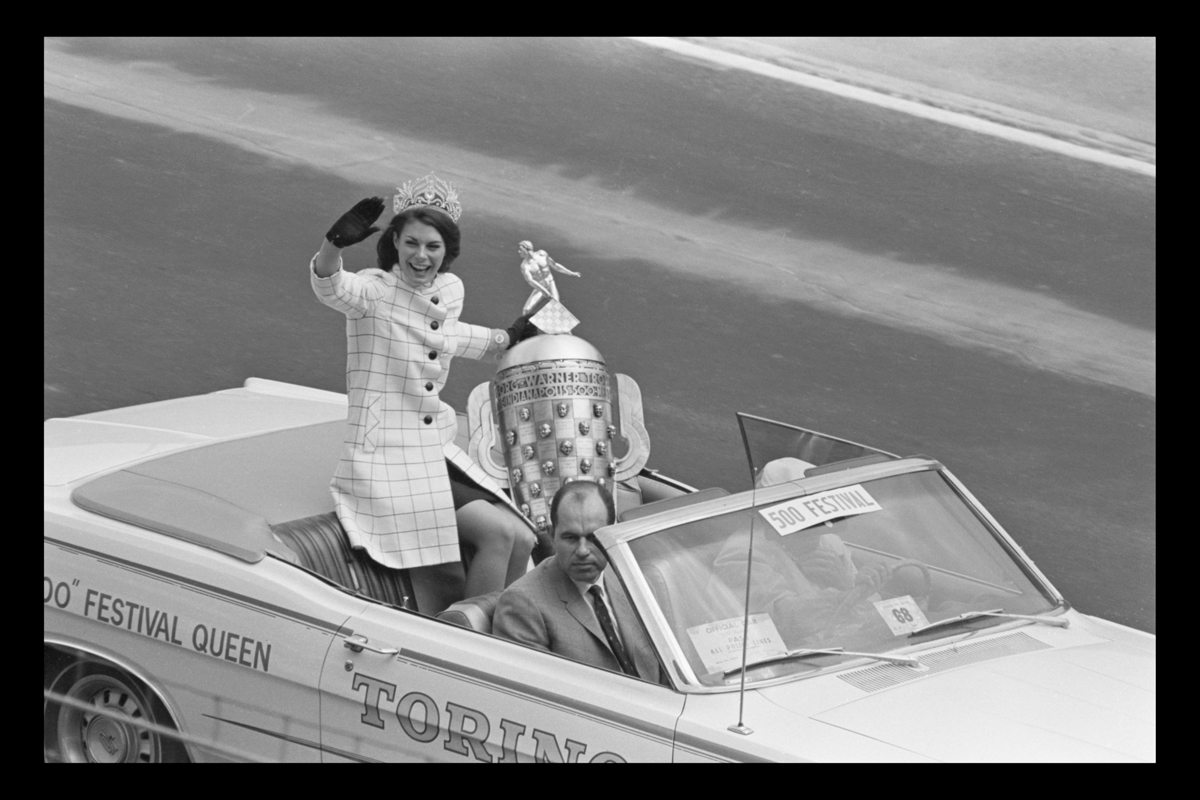 Mimi Littlejohn, the 1968 Indy 500 Queen, waves to onlookers during the parade. / THF140422
Now, for the crown: The original 1959 crown was what Mr. Thrapp describes as “paste,” meaning that it was base metal, heavy, with sharp metal edges. He did not know who designed the original crown or what happened to it after it was replaced. But, in 1998, he and the program decided to design and make a new crown for the queen. It was designed and handcrafted in his store in a process that took one year. This crown was handmade by jewelry artisan Ross Arterberry, who used cubic zirconia, real pearls, and sterling silver, adding onyx and pearls to the bottom banding.
I asked what prompted them to make a new crown, as its unveiling in 1999 coincided with the 40th anniversary of the Indy Queen’s inception. But Thrapp said the crown was changed not because of the anniversary but because the original crown was highly uncomfortable.
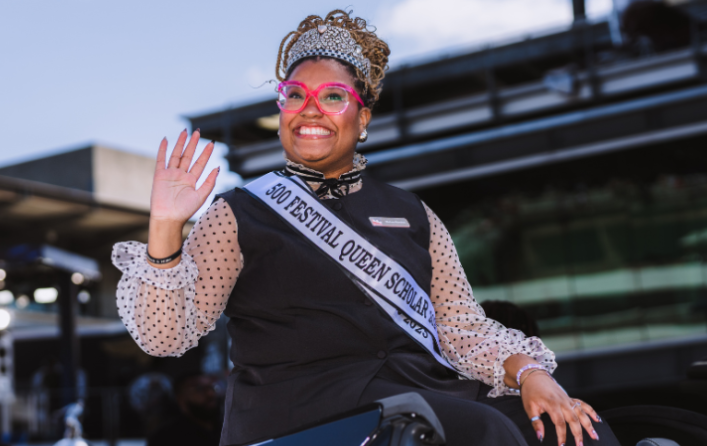 Chelsea Murdock, 500 Festival Queen of 2025, showcasing the current crown in use. / Image courtesy of 500 Festival
Following this delightful phone conversation with Mr. Thrapp, Kathy and I then searched our records to see if we had any pictures of the new crown and discovered that we only have photographs of the old crown. What started out as a fun afternoon of learning about the Indy 500 turned into a monthslong search, and while we still don’t know where the original crown ended up, we do know why it was changed and how that change created a beautiful community event. So, if you have ever wondered what happens when an archivist has a question, you now know that we are just as curious as everyone else, if perhaps a little more ruthless in finding the answer.
Regina Parsell is a Processing Archivist at The Henry Ford, and would like to acknowledge the assistance of Kathy Makas, Reference Archivist, with this research.
Themes |
|---|