
BPP at 60: The Alabama Origins of the Black Panther Party
| Written by | |
|---|---|
| Published | 10/7/2026 |
BPP at 60: The Alabama Origins of the Black Panther Party
| Written by | |
|---|---|
| Published | 10/7/2026 |
While the fight for voting rights across the United States came to one of many peaks in Selma, Alabama, in 1965, culminating in the Voting Rights Act of 1965, the work of Black organizing in Alabama’s Black Belt counties, especially Lowndes County, would lead to the development of one of the most iconic revolutionary movements in the world: the Black Panther Party.
Voting registration efforts would continue to grow in places where the vote was directly oppressed. The Student Nonviolent Coordinating Committee (SNCC), which had been working in Alabama for years toward voting rights for Black residents, would push their efforts into Lowndes County, a rural county between Selma and Montgomery known for its particular kind of violence toward civil rights organizing. Its nickname: Bloody Lowndes. According to author Peniel Joseph in Waiting ‘Til the Midnight Hour: A Narrative History of Black Power in America, “Blacks in the county outnumbered whites four to one; yet as late as 1965, it had registered only two courageous voters.”
-600x600/thf731340.jpg?sfvrsn=153e2806_1 "THF731340")
Poster featuring painting entitled “Free Huey” by Emory Douglas, 1969. Douglas joined the Black Panther Party in 1967 and served as the official “Revolutionary Artist” and “Minister of Culture” for the party. His artwork appeared on posters, newspapers, pamphlets, and material the Panthers distributed. / THF731340
Under the leadership of a twenty-three-year-old Stokely Carmichael (later Kwame Ture), SNCC organizers worked with local Black activists to create the Lowndes County Freedom Organization (LCFO), which ran Black candidates on local issues. Carmichael pushed against the traditional organizing models that had worked for SNCC and other groups, focusing on both Black voter registration and political participation. He was particularly influenced by the efforts of the Mississippi Freedom Democratic Party’s efforts to be recognized two years earlier, but underscored Black nationalist ideals. Unlike complete and total nonviolent direct action that had been the standard for civil rights organizing in most places, voter intimidation and racial violence in “Bloody Lowndes” would be answered with armed protection from Black radicals like the Deacons of Defense and Justice and everyday people in the community tired of being intimidated. By 1970, the organization merged with the Alabama Democratic Party, getting several of its candidates elected to local government in the 1970s and onward.
The LCFO adopted a powerful WWII-era emblem as a counter to the white supremacy Alabama Democratic Party’s white rooster: the black panther. The emblem was designed by SNCC field secretary Ruth Howard, and invokes a creature that “moves back until its cornered, then it comes out fighting for life or death,” as described by Hasan Kwame Jeffries in Bloody Lowndes: Civil Rights and Black Power in Alabama’s Black Belt.
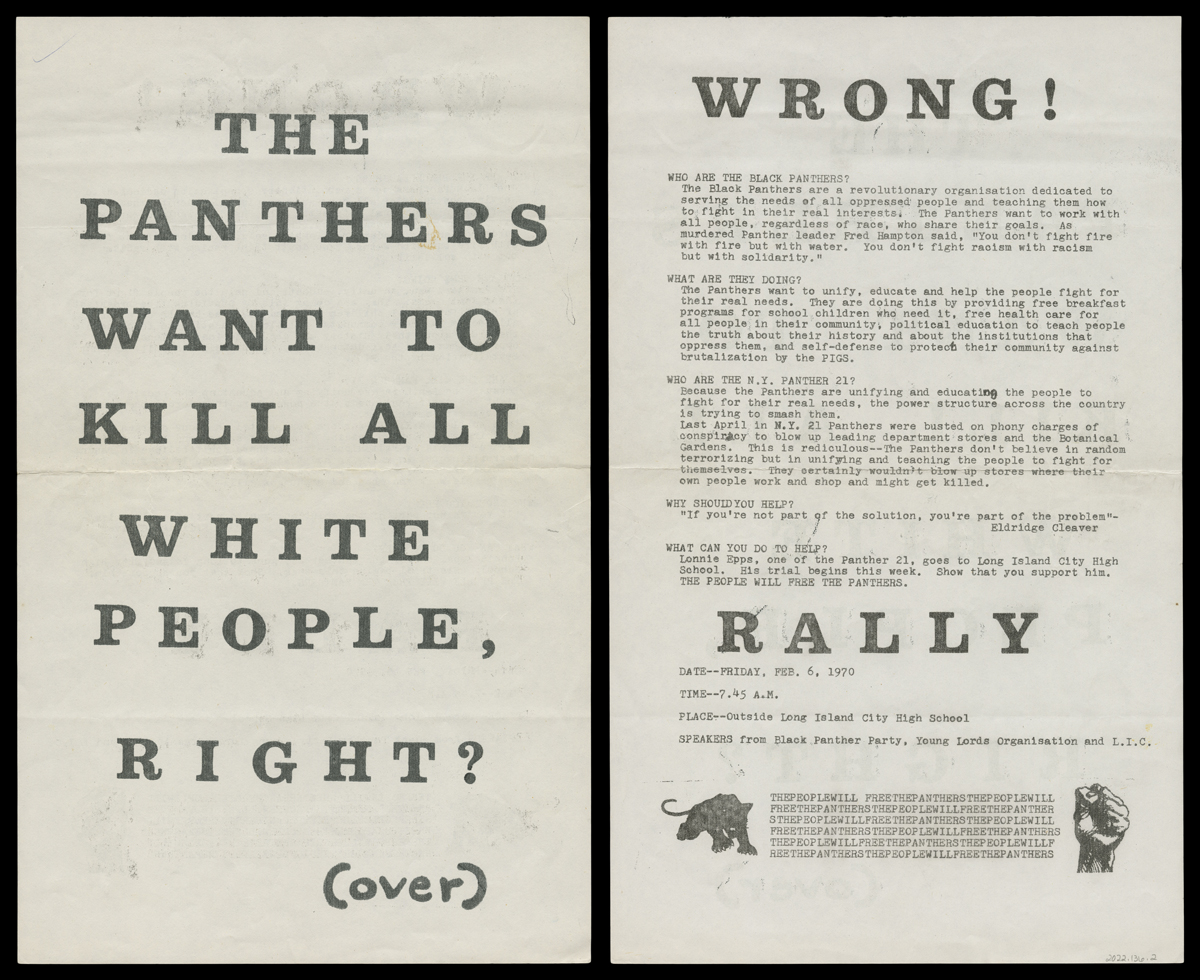
"The Panthers Want to Kill All White People, Right? Wrong!” flier, 1970. Made by the New York-based chapter of the Black Panther Party, the flyer outlines the party's goals. / THF704142
In Joseph’s Waiting ‘Til the Midnight Hour, Carmichael was quoted as saying “Their ballot symbol is the black panther: a bold, beautiful animal, representing the strength and dignity of black demands today. A man needs a black panther on his side when he and his family must endure—as hundreds of Alabamians have endured—loss of job, eviction, starvation, and sometimes death, for political activity. He may also need a gun, and SNCC affirms the right of black men everywhere to defend themselves when threatened or attacked.”
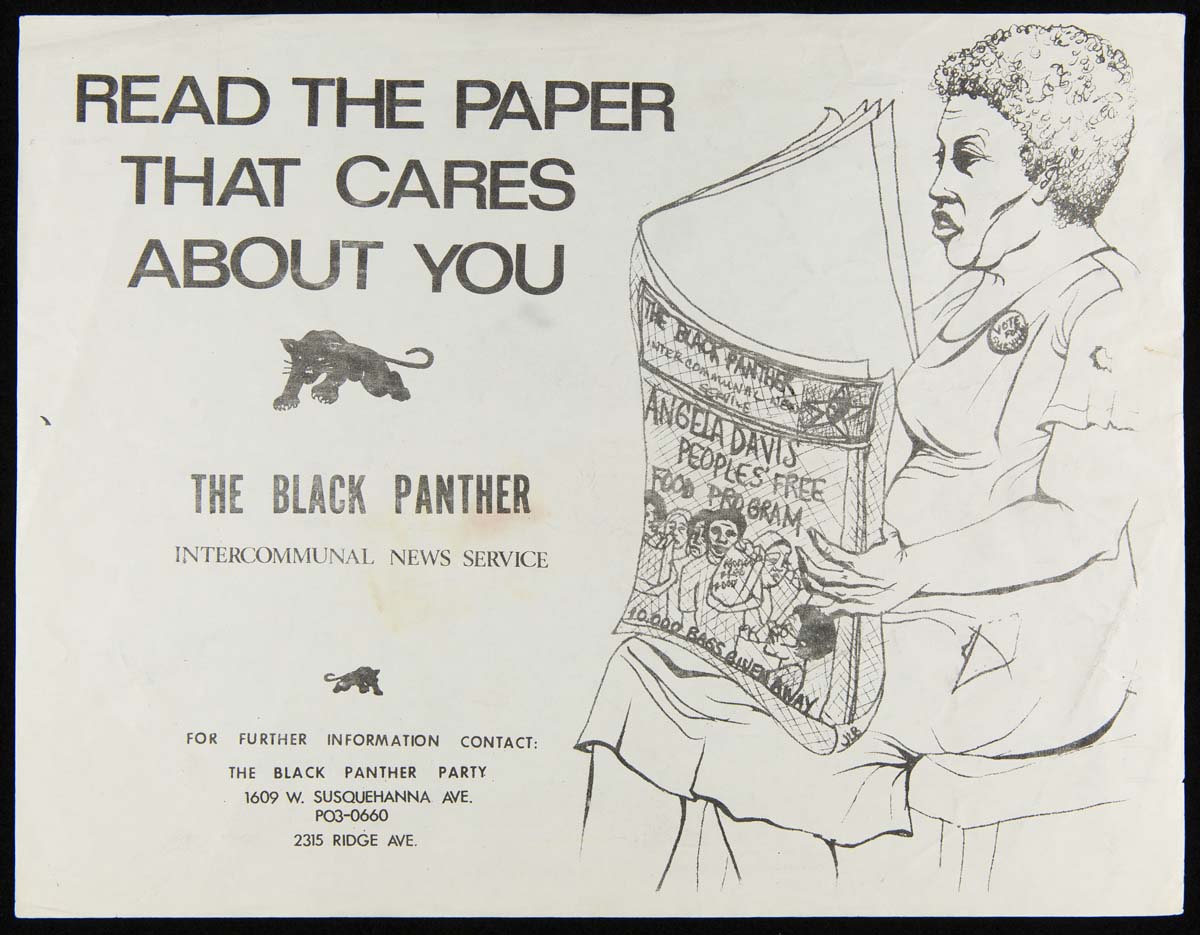
Flyer advertising the Black Panther Intercommunal News Service from 1972. /THF627598
The defiant tenacity of the Lowndes County Freedom Organization and their community would inspire many other Black activist groups across the country. In Oakland, California, a group of young Black radicals would adopt the LCFO’s logo as their own, forming The Black Panther Party for Self-Defense in 1966. Rooted in a revolutionary Marxist–Leninist anti-imperialist lens, cofounders Bobby Seale and Huey P. Newton would work with young people across the country to elevate Black political and community power. Many of their most impactful programs, like the Free Breakfast for School Children Program or the People's Free Food Program, would become standards in community care in the United States. Community work for community people—inspired by Black Alabama’s continued push for full voting rights for all.
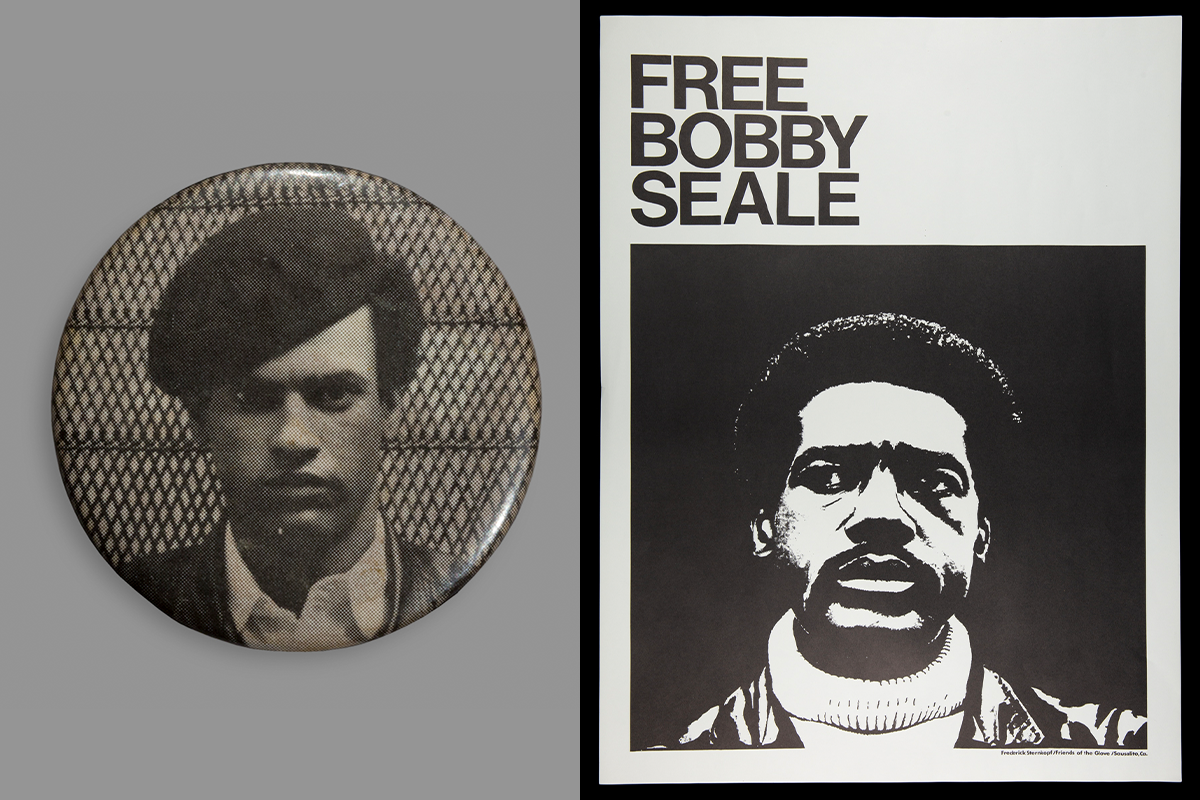
A button featuring Huey P. Newton (1942-1989) (left) and a poster featuring Bobby Seale (b. 1936) (right), who were the cofounders of the Black Panther Party for Self-Defense./ THF166803 and THF722626
Amber N. Mitchell is curator of Black History at The Henry Ford.
Keywords | |
|---|---|
Themes |