
Dyeing With Nature–Earth’s Color Palette
| Written by | |
|---|---|
| Published | 3/18/2026 |
Dyeing With Nature–Earth’s Color Palette
| Written by | |
|---|---|
| Published | 3/18/2026 |
The Living History programs at Greenfield Village give us a step back in time to see how products were made, food was grown, and life was lived before technological production took "making" out of the fabric of everyday life. Today, we can go into any fashion store and buy a piece of clothing—yet, we likely don’t know where it was made, how it was made, or what it is made of. Even more so, most people today couldn’t make a shirt by growing flax or raising a sheep. Connecting to these historical roots of making with nature, we can gain a greater appreciation for the work our ancestors did as well as a better understanding of where our own garments come from.
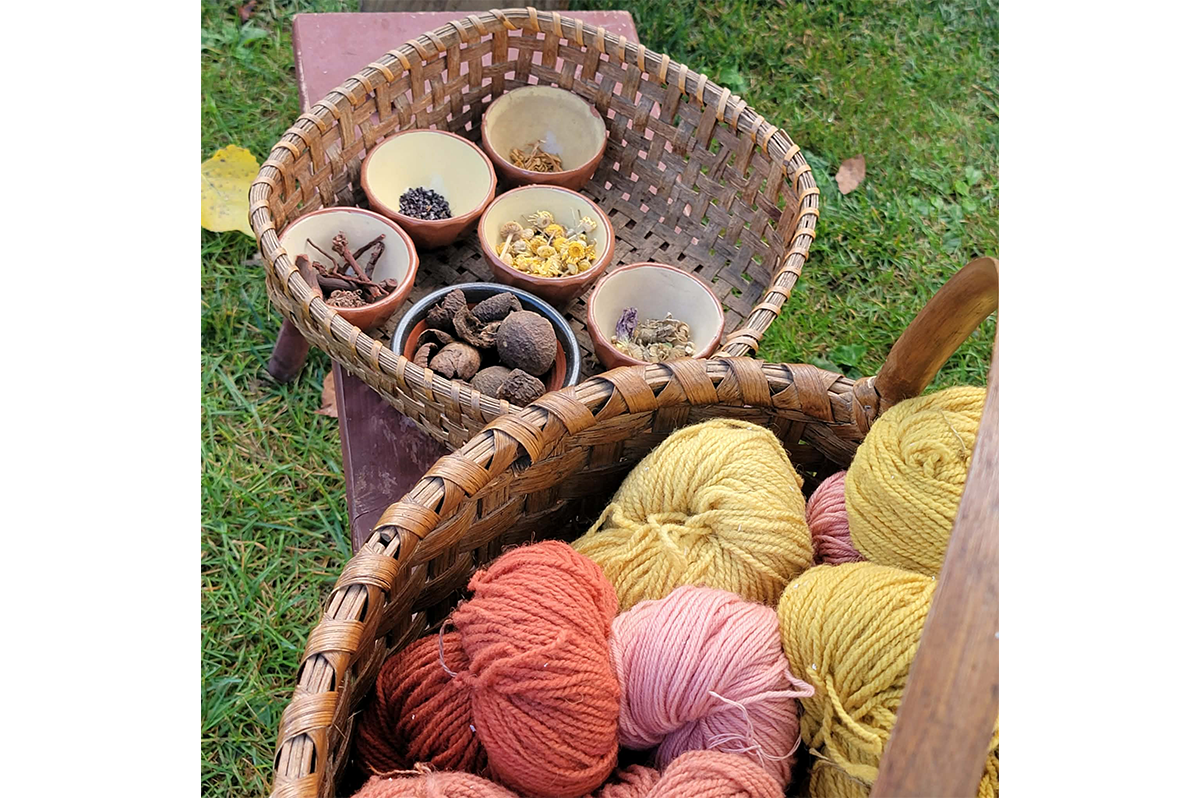 Pictured: Raw material examples of dyes, including Black Walnut, Madder Root, Cochineal, Osage Orange, Golden Marguerite, and Blue Flag Iris. Photo courtesy of the Greenfield Village Living History Team, October 2025
The ancient craft of dyeing fiber was practiced by most early civilizations. People all over the world relied solely on nature to provide them with sources of color—such as leaves, flowers, roots, seeds, even insects, and more. Early civilizations also knew the benefits of using mordants. Mordants were added to the dye process to enhance the quality of color and for colorfastness. Metallic compounds and salts such as iron, chrome, copper, aluminum, and tin were used for this purpose. This reliance on nature to color our world continued through the colonization of North America.
While we don’t know if Greenfield Village resident Anna Daggett dyed wool in the eighteenth century, we do know that women like her would have dyed already spun skeins of yarn made of wool or linen, likely produced on their own farm or that of a local community member. Anna Daggett would have had two sources for dyes—nature (her garden and surrounding forest) and shops in Andover and Hartford, Connecticut. Ancient dyes like madder root (red), woad (blue), and weld (yellow) could grow in the Connecticut climate. Indigenous cultures also illuminated natural dyes new to European colonists like black walnut (brown and black), coreopsis flowers (yellow, orange, red), pokeberry (pink), and Osage orange (yellow, orange). Imported dyes from Asia and South America like cochineal (red—most expensive), indigo (blue), and logwood (purple and black) would have also been available to her.
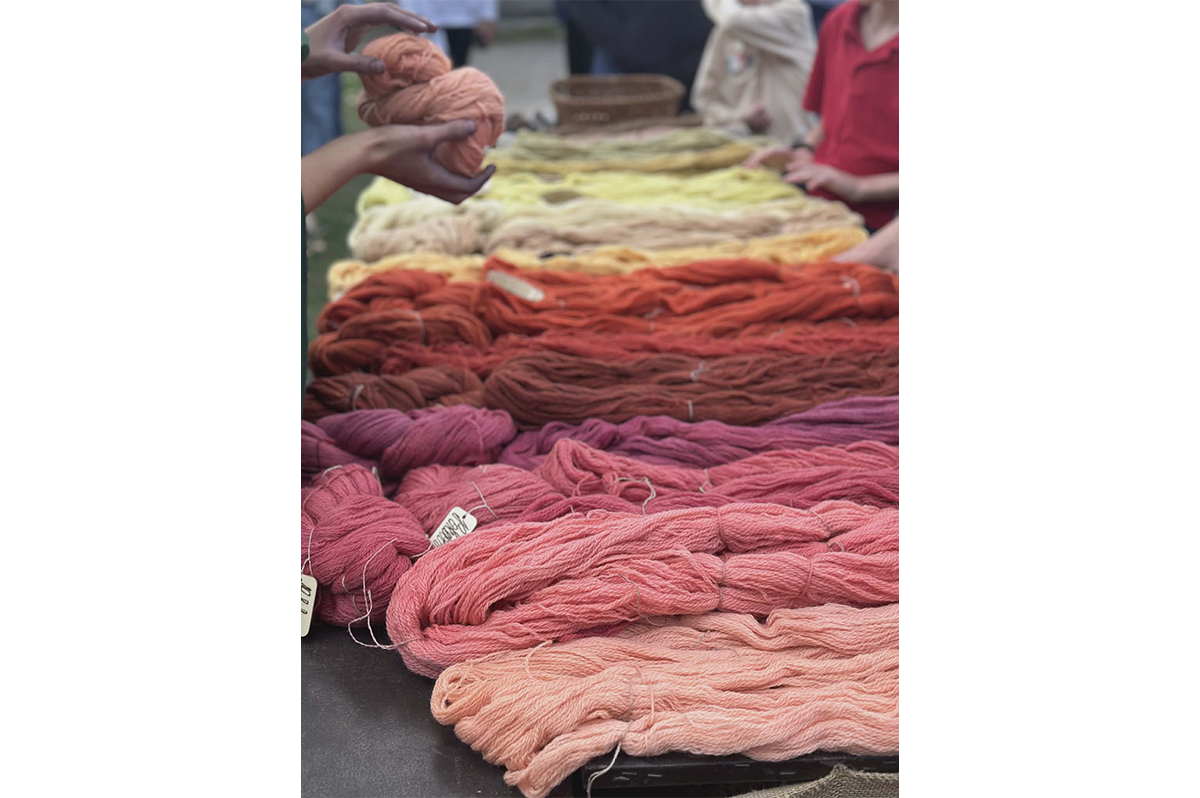 Pictured: Assorted yarn dyed during the Colonial Wool Dyeing Program in 2024 on display in 2025. Photo courtesy of the Greenfield Village Living History Team, October 2025.
Home dyeing in colonial America varied from excellent to poor depending upon the dedication, knowledge, and experience of the dyer. Anna Daggett could have learned any dyeing skills from her mother and other female community members, and any dyeing she might have done would have been fairly basic compared to the professionals. The colonists generally depended on traditional methods and imported dyes whenever they could be obtained. In 1770, seventy tons of dyewoods alone were imported into the colonies. Almost all the professional dyers in colonial America were trained in Europe or employed by men who had such a background—a trend that continued until the mid-nineteenth century with the advent of synthetic dyes.
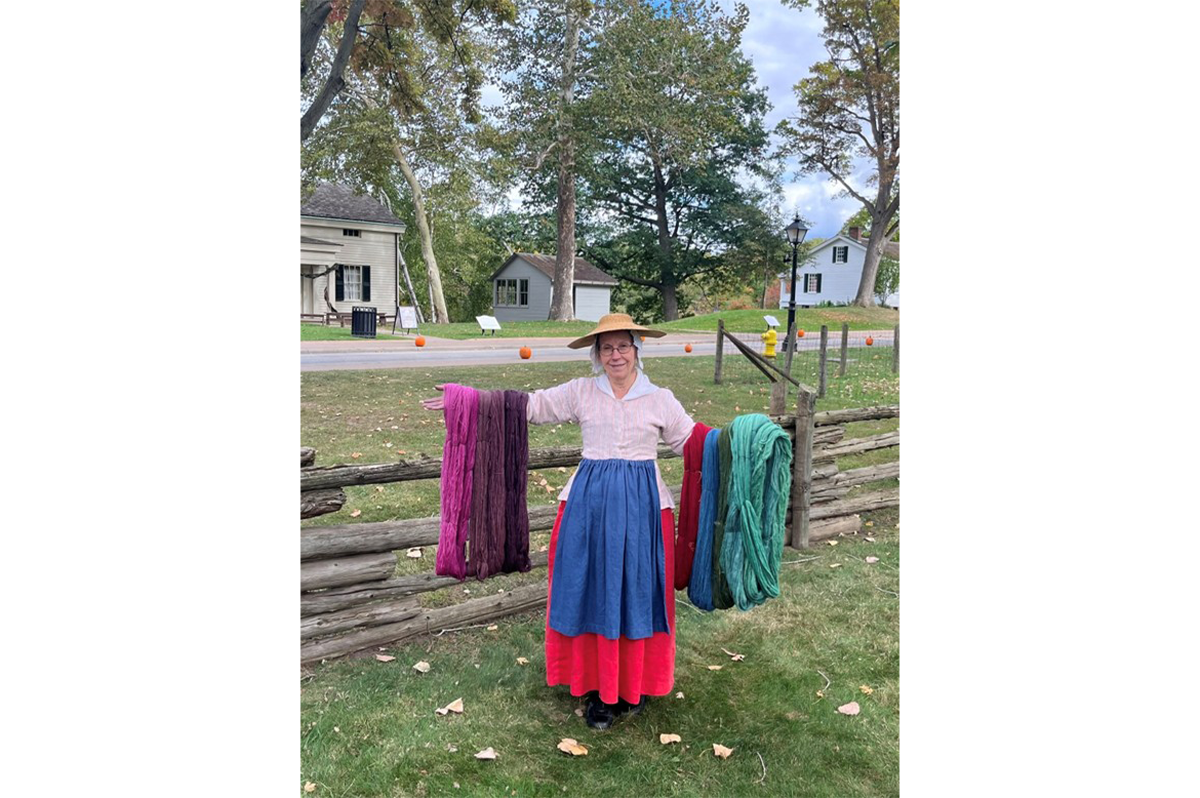 Pictured: Master Presenter Debra Kirby, Dyes from Left to Right: Brazilwood, Logwood, Cochineal, Indigo, Indigo overdye with Osage Orange and Coreopsis. Photo Courtesy of the Greenfield Village Living History Team, October 2025 .
Now, knowing the background of our program here at Greenfield Village, the question is, how difficult is it to dye? The answer to that is, as simple as brewing a cup of tea! While there are many complicated dyes like indigo, there are so many natural dyes that truly are as easy as making tea. While mordanting is not always necessary, we do make a mordant soak using 2 tablespoon of food grade alum powder and 2 teaspoon of cream of tartar for every 200 grams of yarn, mixed with enough warm water to thoroughly cover the yarn (think a warm bath temperature)—this is our first "tea." Preparing our second "tea" or dye bath starts with measuring the dye. This will vary based on the dye, just like different types of tea are brewed with different amounts for flavor. In this example, we’ll use Osage orange, is a tree variety native to North America. Indigenous people use the trunk to make canoes and the shavings from the heartwood or inner tree are used for dye. For this dye, you would need one ounce of shavings loosely tied up in cheesecloth to create the tea bag.
Once we have our heat source going (wood fire), we fill up a pot with water and add our tea bag and let that heat up, slowly. At the same time, we place our mordanted yarn along with additional water and let that heat up at the same rate as the dye pot. The goal is to make sure that the yarn is not shocked by going from cold to hot, with an emphasis on not letting the dye pot boil. When you start seeing steam on your dye pot, you can transfer your yarn over—just lift it out of the mordant pot and into the dye bath, gently. From here, you want to keep your dye pot warm but not boiling and just let your yarn steep until it develops the depth of color you're hoping for. Osage orange generally gives you a nice, bright yellow! Once the color is achieved, pull your pot from the heat and let it cool before taking the yarn out, rinsing it with tap water, and letting it hang dry.
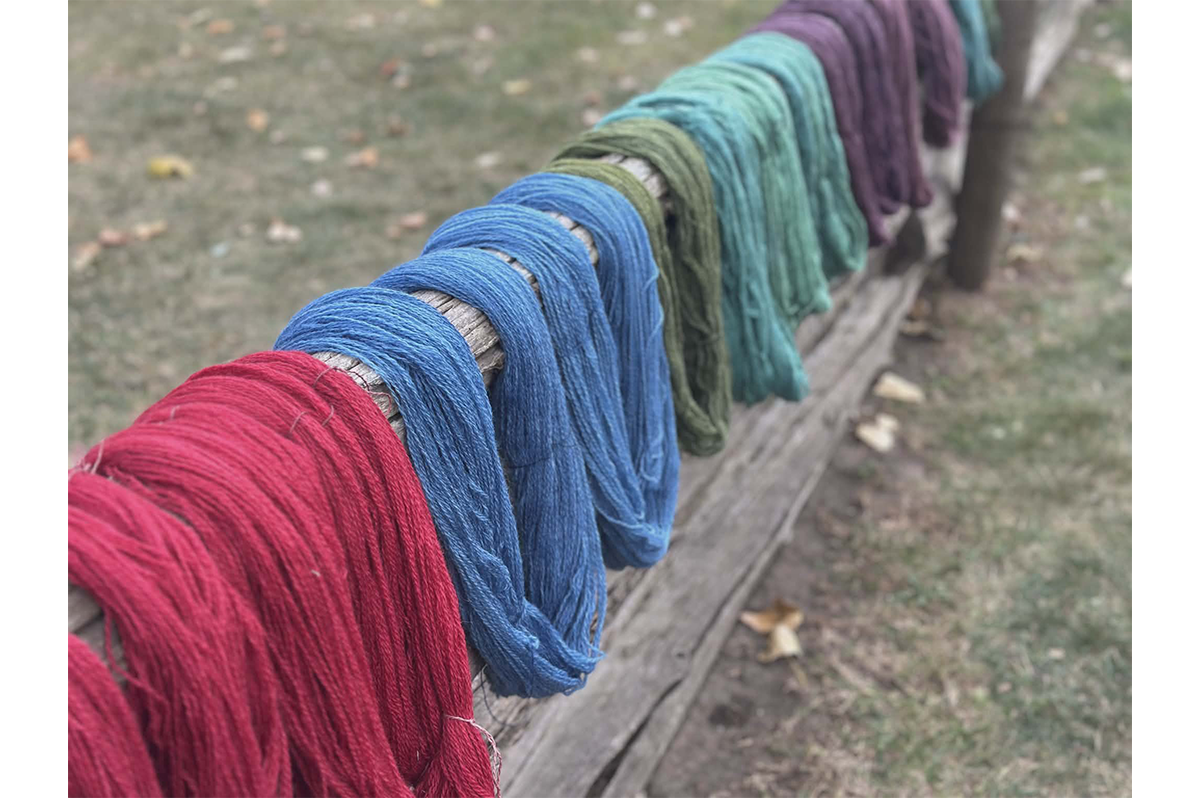 Pictured Dyes from Left to Right: Cochineal, Indigo, Indigo overdye with Osage Orange and Coreopsis, Logwood. Photo Courtesy of the Greenfield Village Living History Team, October 2025
We hope that learning about the history and process of dyeing inspires you to explore color in nature in your own life! There will be two weekends of demonstration for our Colonial Wool Dyeing program in 2026, included with general admission: May 30-31 and October 10-11. Come out to Greenfield Village to see history in action!
Emily Sovey is Manager of Living History at The Henry Ford
Themes |
|---|