
Hosting a Movement: Hospitality in the Jackson Home
| Written by | |
|---|---|
| Published | 4/21/2026 |
Hosting a Movement: Hospitality in the Jackson Home
| Written by | |
|---|---|
| Published | 4/21/2026 |
In 1958, Dr. Sullivan Jackson and his wife Richie Jean Sherrod Jackson moved into 1416 Lapsley Street in Selma, Alabama, to start their married life together. The home would come to be known as “The House by the Side of the Road”—a line taken from Richie Jean’s favorite poem—for the way it welcomed everyone who came by. It was this welcoming spirit that would place the home at the center of history, as the struggle for Civil Rights came to Selma in 1965.
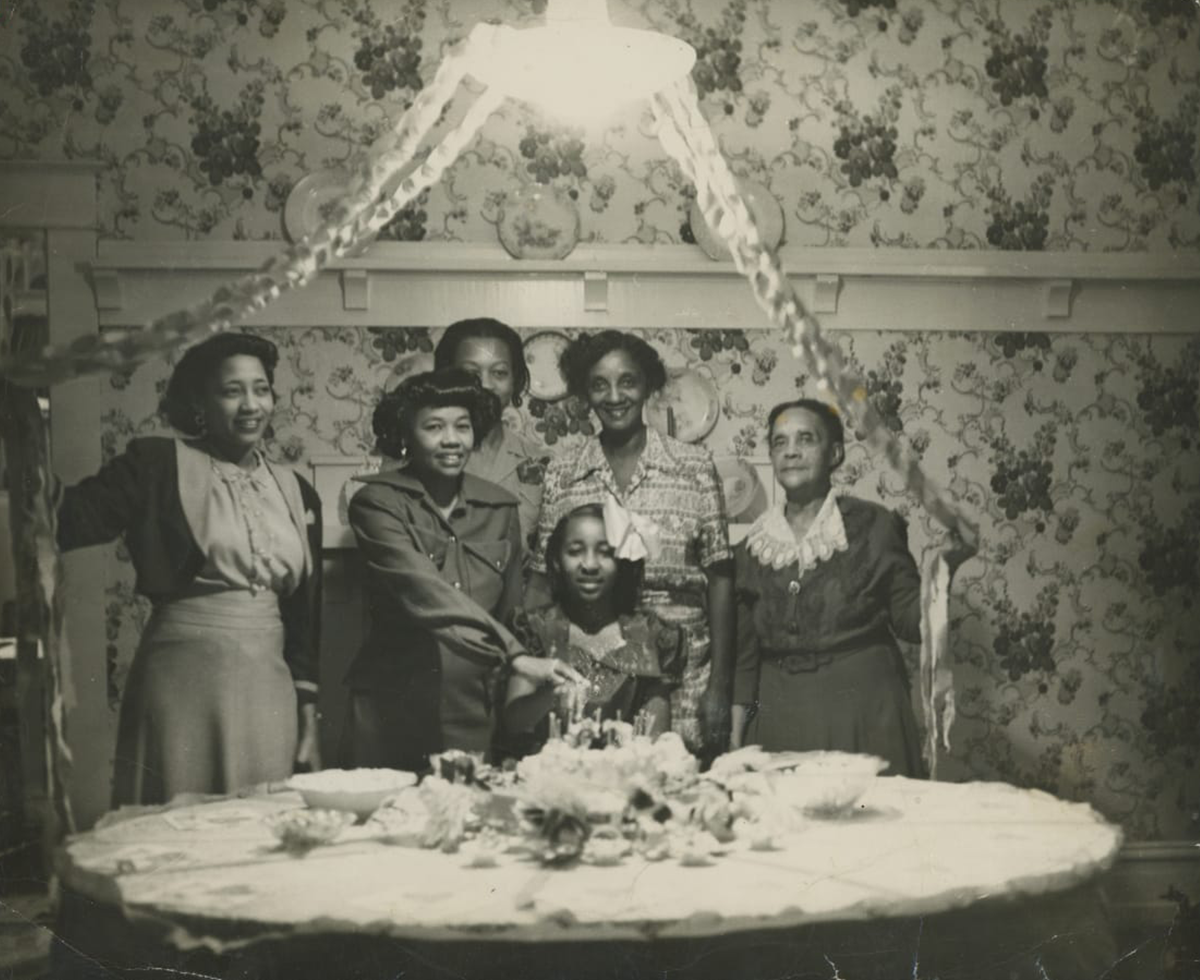
A 16th birthday party for Rose Marie Foster, Sullivan Jackson’s niece, celebrated in the Jackson family home. / THF708432
From the time Sullivan and Richie Jean moved into the house on Lapsley Street, they were hosting. Family, friends, old colleagues from Sullivan’s days in the army or as a travelling musician—whether they were spending the night or simply needed a hot meal while passing through Selma, Richie Jean was always willing to accommodate, even at a moment’s notice. In addition to being an act of hospitality, it was often an act of necessity, as Black Americans often faced discrimination while traveling.

First published in 1936, The Negro Motorist Green Book helped Black travelers determine safe places to stop. Without guides like this, or the help of accommodating families like the Jacksons, Black Americans risked discrimination and danger while on the road. / THF77183
Men who would become icons of the Civil Rights Movement visited the Jacksons long before the Selma movement began, and it was their wives who forged these early connections. Richie Jean had taken music lessons with a young Coretta Scott, who married Rev. Martin Luther King Jr., and had grown up with Juanita Jones, who married Ralph Abernathy, the man who became one of King’s closest friends and mentors in the movement; the couples all married within a few years of each other. The Jacksons, Kings, and Abernathys were tight-knit, and they frequently visited one another, despite the Kings and Abernathys living in Montgomery, and later Atlanta. King was so frequently at the Jacksons’ home that they kept a set of pajamas for him.
 Pajama set worn by Martin Luther King Jr. / THF802666
As the Selma movement grew and King began using the Jackson home as his base of operations, new people began to show up at the house. Richie Jean took great pride in her cooking, and kept everyone who came into the home well fed. Ralph Abernathy and Jimmy Coe loved her smothered cabbage. Breakfast every morning included homemade biscuits—except for one notable time when there were simply too many people, and even Richie Jean was forced to resort to premade rolls. A dinner prepared for forty congressmen consisted of chicken à la king, rice pilaf, and a hot fruit dish. Richie Jean produced it all in a tiny kitchen, with only a standard four-top stove. But like so many other women who have cooked in tiny kitchens, she knew the secret to success: organization.
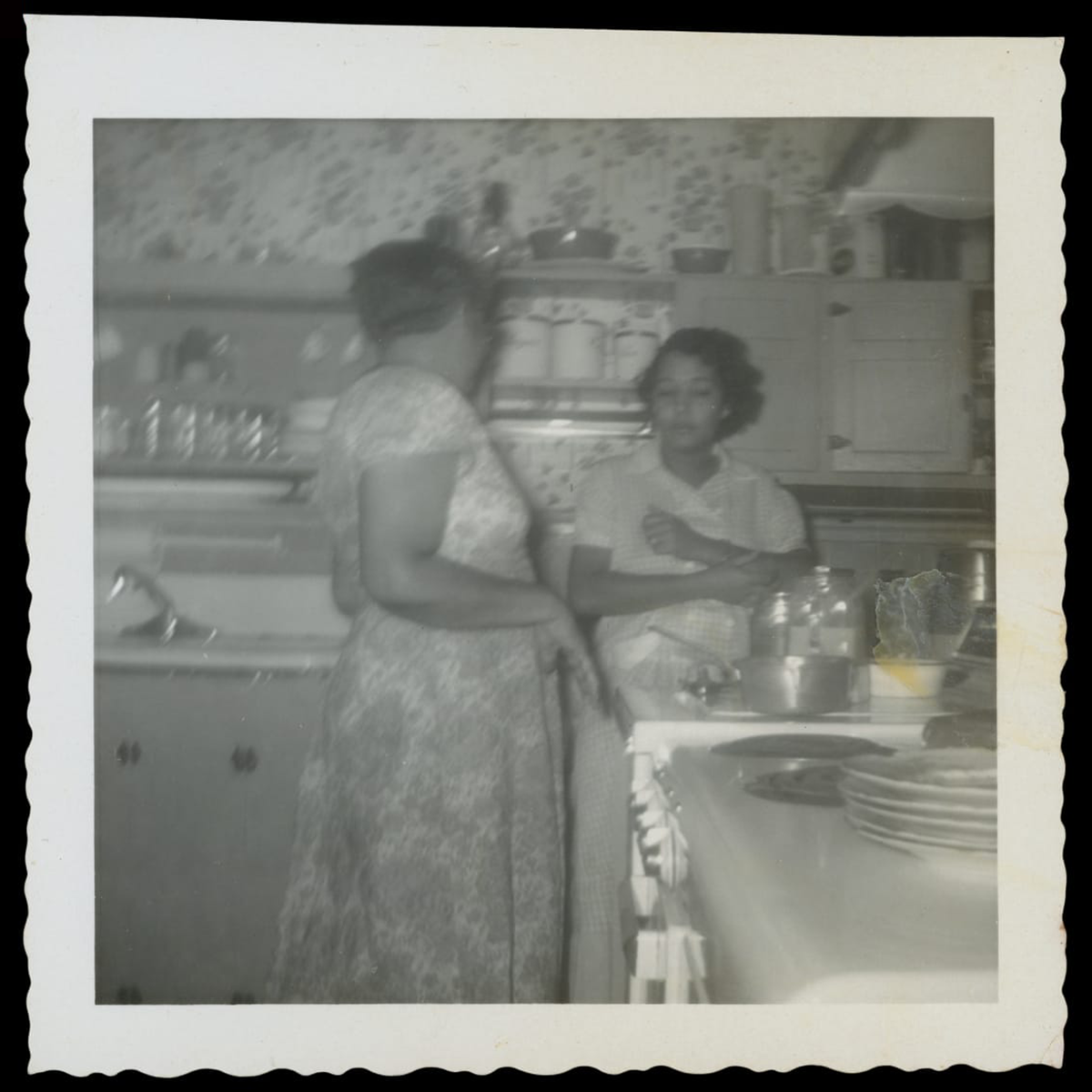
Juanita Sherrod (Richie Jean’s mother) and Richie Jean Jackson in the Jackson Home kitchen, Selma, Alabama, ca. 1959. The layout and features of the kitchen, small though it was, helped facilitate Richie Jean’s work. / THF708492
Organization was key in other ways, too, as a network of support helped Richie Jean and Sullivan with their hosting. Friends and family members loaned blankets, dishes, silverware, and more, while people from around the country responded to King’s call to send canned goods and other supplies to feed the activists in Selma. Supplies flowed to the Jackson Home, sustaining the sustainers who were looking after the activists in their care.
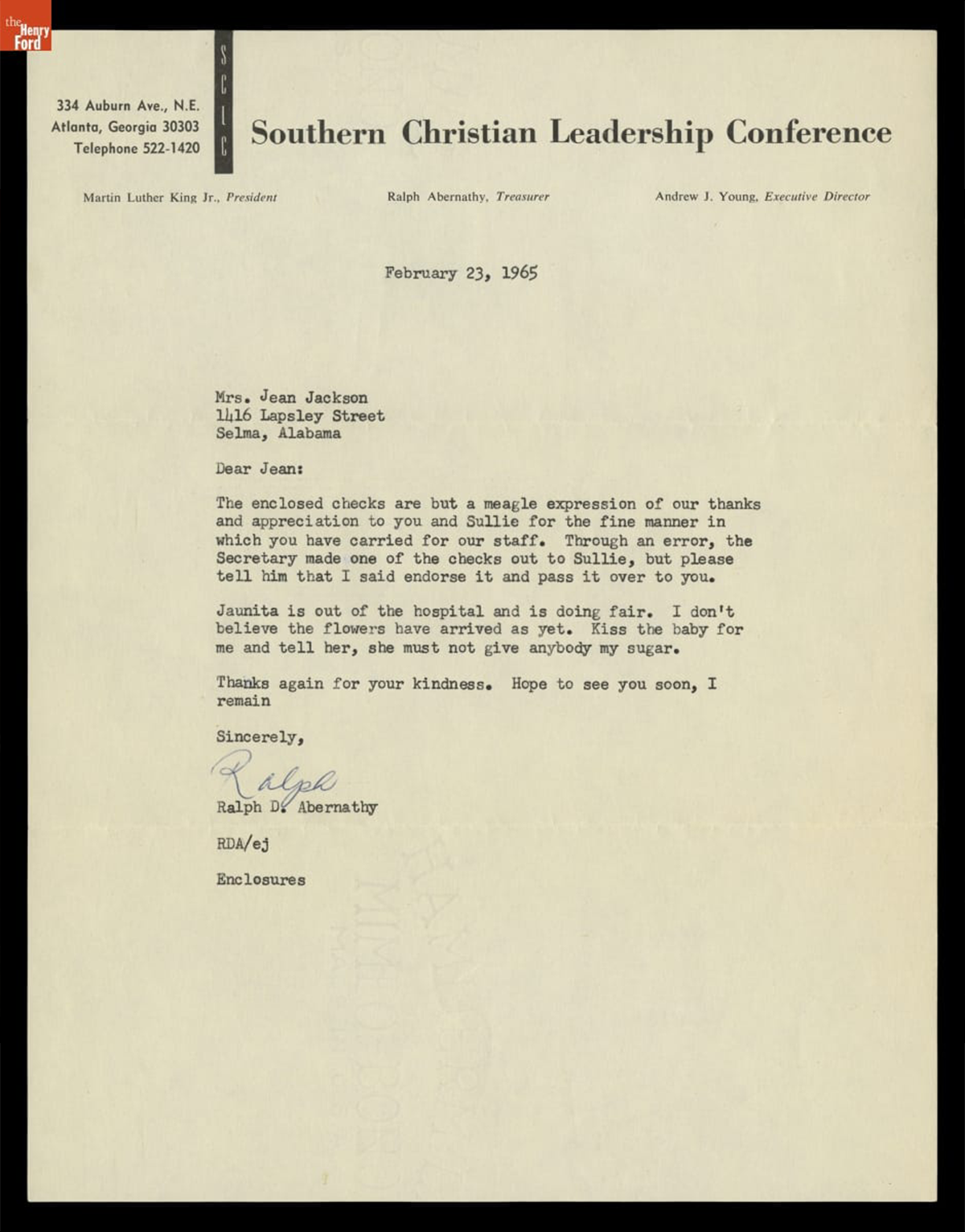 Letter from Ralph Abernathy, Southern Christian Leadership Conference, to Richie Jean Jackson, February 23, 1965. This letter conveys both the depth of gratitude and warmth of feeling that Abernathy—and others—felt for the Jackson family. / THF721760
When the Civil Rights Movement came to Selma, Richie Jean and Sullivan did what they always did: fed, sheltered, and clothed the people who came to their door. There was no time for fear—the work had to be done. Because of the Jacksons, the activists who came to Selma to change the future were cared for and given the respite they so desperately needed.
Today, the Jackson Home welcomes a new set of visitors. Although Richie Jean and Sullivan have gone on, their legacy remains in the home. There is still sustenance, comfort, and strength—albeit in different forms—to be found within the walls of the House by the Side of the Road, for those who seek it.
Rachel Yerke-Osgood is an Associate Curator at The Henry Ford.
With gratitude to Richie Jean Sherrod Jackson, whose memories as preserved in her book The House by the Side of the Road helped inform this article.
Keywords | |
|---|---|
Series | |
Themes |