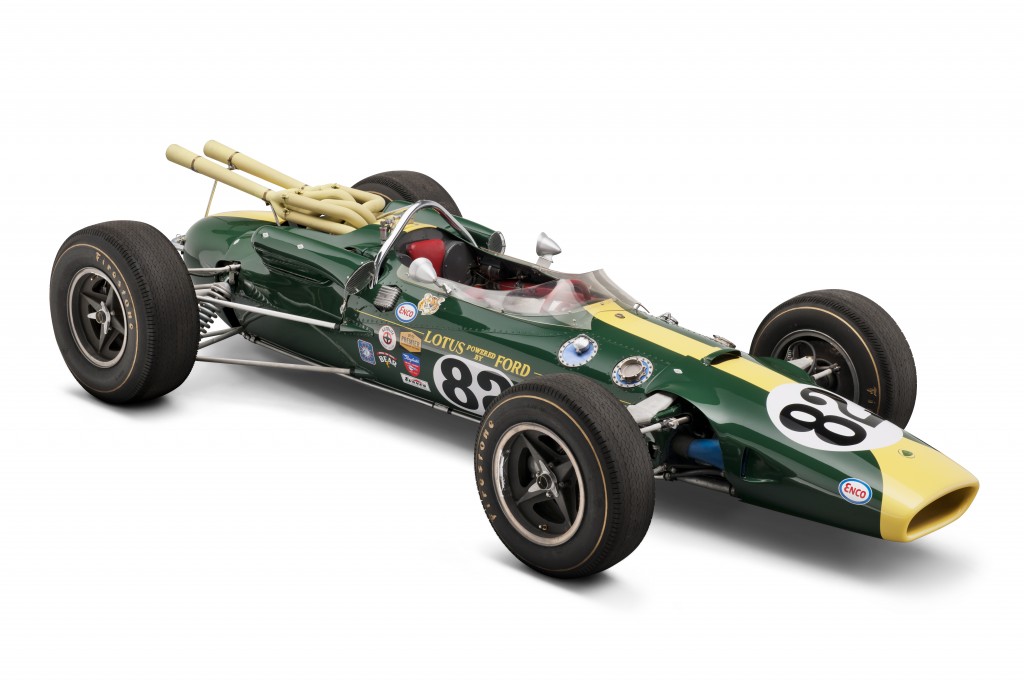
Jim Clark changed the face of the Indianapolis 500 in 1965 when he won with a rear-engine car, the lightweight Lotus-Ford race car. Learn more about the story with resources from our collections.
The 1965 Lotus-Ford Type 38 established Formula One-style design at the Indianapolis 500.
Jim Clark changed the face of the Indianapolis 500 in 1965 when he won with a rear-engine car adapted from Formula One design. His lightweight Lotus-Ford race car broke dramatically from the heavy front-engine roadsters that dominated the race after World War II. Clark's victory capped a three-year effort by some of the biggest names in racing. Driver Dan Gurney realized the potential of F1 technology at Indy and set the project in motion. Designer Colin Chapman put his expertise and reputation behind the chassis. Ford Motor Company provided resources, support, and a superb racing engine. And Jimmy Clark endured two years of disappointment - losing through no fault of his own - before taking the checkered flag in 1965. So complete was their triumph that no front-engine car has won the Indianapolis 500 since.
The Henry Ford's Archive of American Innovation is proud to preserve significant artifacts, images, texts and interviews related to Clark's groundbreaking win. Below are links to key pieces in this collection.
Dave Friedman Collection - more than 4,400 images, by noted racing photographer Dave Friedman, taken at the Indianapolis 500 in 1963, 1964 and 1965
Articles and Books:
Goodwood Revival: On the Track - a blog post with photos and video of the Lotus-Ford at the 2013 Goodwood Revival, where it participated in a tribute to Jim Clark
Wood Brothers Favorite Vehicles - NASCAR team owners Eddie and Len Wood comment on the Lotus-Ford, which the Wood Brothers pit crew serviced at Indy in 1965