
Hunneman Hand-drawn Fire Pumper, 1836
THF188101 / Hunneman Hand-drawn Fire Pumper, 1836
01
Artifact Overview
Hunneman & Company, founded in Boston in 1792, was known for the high quality of its hand-pumped fire equipment, like this example. When in use, the long bars -- called brakes -- were placed on the ends of the pumper. Teams of firefighters pushed them up and down to pump water. This pumper originally served the town of Farmington, Maine.
Artifact Details
Artifact
Hand pumper
Date Made
1836
Creators
Place of Creation
Location
Not on exhibit to the public.
Object ID
26.65.1
Credit
From the Collections of The Henry Ford.
Material
Wood (Plant material)
Copper (Metal)
Metal
Brass (Alloy)
Color
Green
Red
Gold (Color)
Black (Color)
Dark red
Dimensions
Length: 195 in
Width: 51.75 in
Height: 85 in
Wheelbase: 75.625 in
Inscriptions
on sides:
EAGLE
on rear:
FARMINGTON
Keywords |
|---|
02
Related Content
 Set
SetEarly Firefighting
- 32 Artifacts
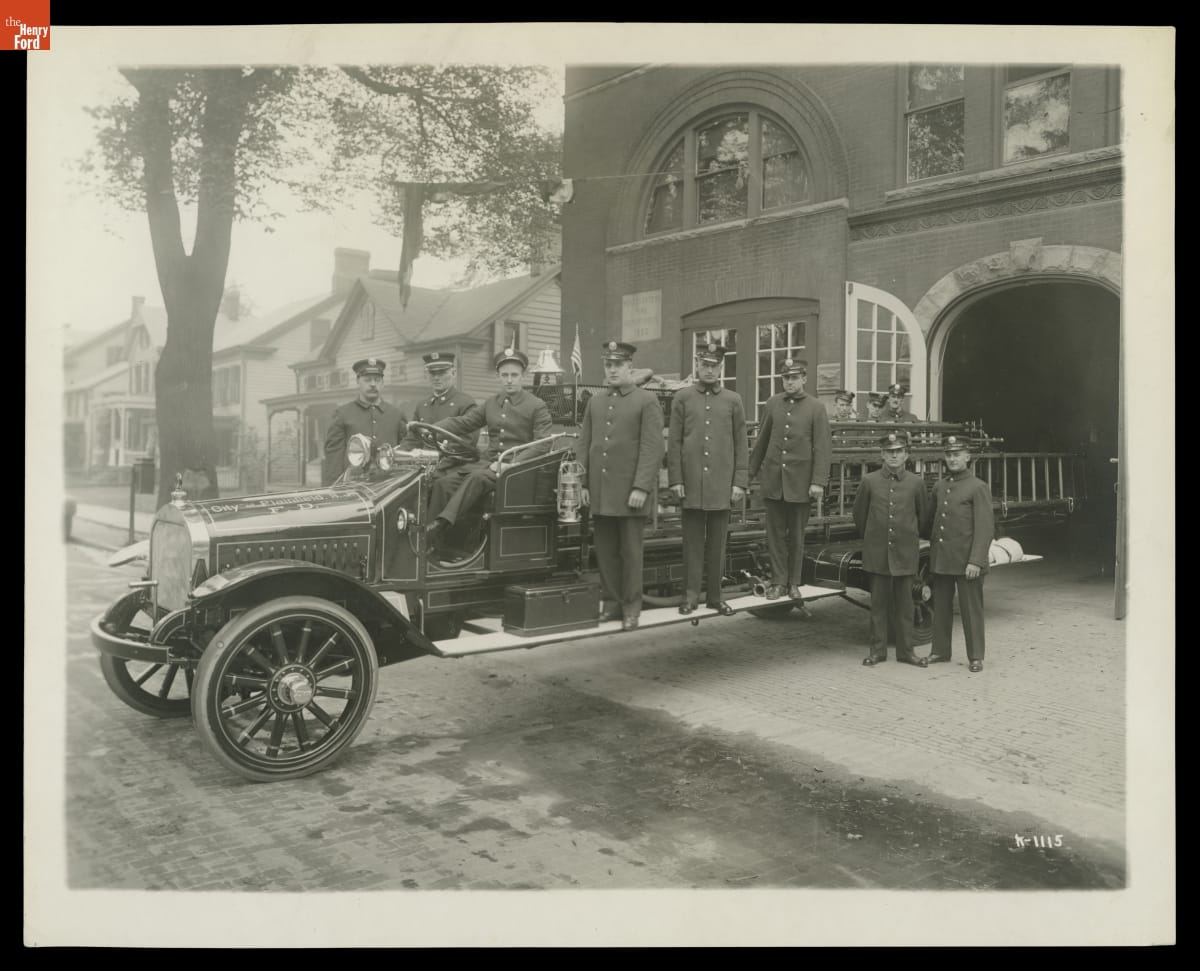
Fire was a constant menace to American cities well into the 20th century, when most buildings were made of wood and firefighting equipment was underpowered and overmatched. Firefighters risked their own lives to save those of others, to protect property, and to constrain and contain blazes before they grew into uncontrollable conflagrations. Early firefighting relied on mettle, muscle, and machinery that improved slowly but steadily over time.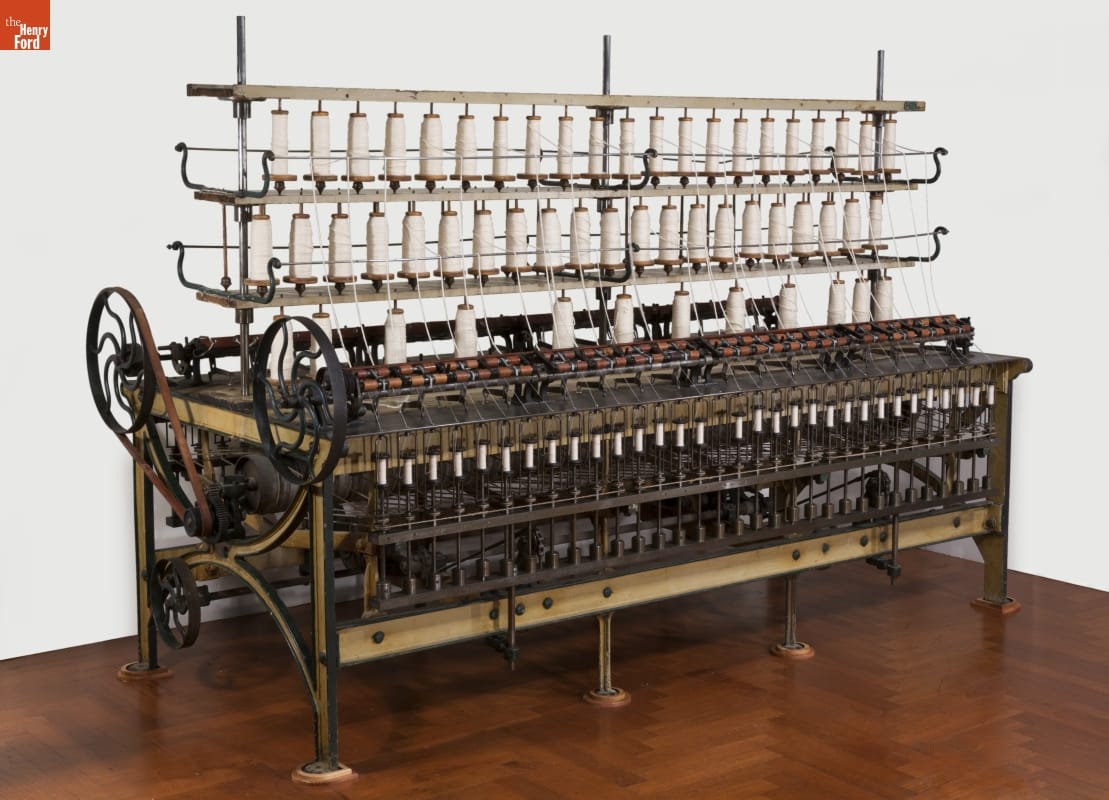 Set
SetFeatured on The Henry Ford's Innovation Nation: Season 8
- 26 Artifacts
Spinning frames spin cotton fiber into yarn and then wind it onto a bobbin. This throstle spinning frame could simultaneously spin 64 strands of yarn. (Throstle -- an old name for a song thrush -- refers to the bird-like sounds the machine made.) Machines like this helped produce the large quantities of yarn that growing industrial weaving operations needed in the early and mid-1800s.