
Lincoln Campaign Flag, 1860-1865
THF154151 / Lincoln Campaign Flag, 1860-1865
01
Artifact Overview
This flag was handmade by Lucinda McGrath of Fayette County, Indiana. Her husband, John, carried it in parades supporting Republican candidates Abraham Lincoln and Hannibal Hamlin in the 1860 presidential election. In 1865, McGrath--carrying this flag--led a group of mourners to meet Lincoln's funeral train as it passed through Indiana en route to its final stop in Springfield, Illinois.
Artifact Details
Artifact
Flag
Date Made
1860
Subject Date
1860-1865
Creators
Place of Creation
Creator Notes
Made by Mrs. John H. (Lucinda) McGrath of Connersville, Fayette County, Indiana
Location
at Henry Ford Museum in The Gallery by GM
Object ID
41.133.1
Credit
From the Collections of The Henry Ford. Gift of Kate McGrath.
Material
Cotton (Textile)
Jute (Fiber)
Technique
Sewing (Needleworking technique)
Color
Blue
Red
White (Color)
Dimensions
Height: 154 in
Width: 65 in
Inscriptions
In blue field, where letters have been removed: LINCOLN AND HAMLIN
Keywords |
|---|
02
Related Artifacts
 Artifact
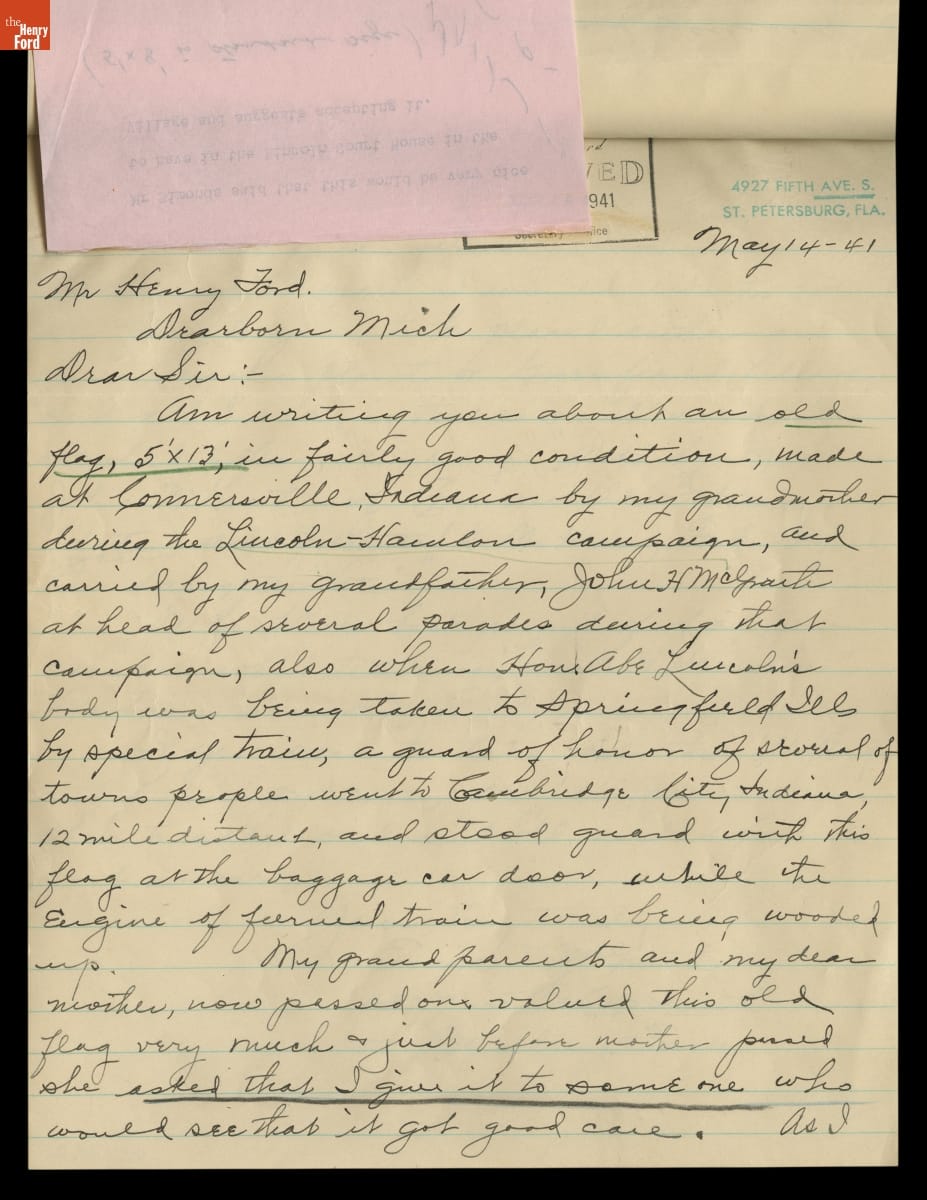
Letter regarding Lincoln Campaign Flag Donation, 1941
In 1941, Earnest McGrath wrote to Henry Ford about donating a flag made by his grandmother, Lucinda McGrath of Connersville, Indiana. Earnest's grandfather John had carried the flag in local 1860 presidential campaign parades supporting Abraham Lincoln. Later, after Lincoln's assassination in 1865, the flag was used as part of an honor guard when Lincoln's body traveled through Indiana. Ford accepted the donation.
03
Related Content
 Set
SetAbe Lincoln, 1860
- 11 Artifacts
Abraham Lincoln and Hannibal Hamlin campaign button for the 1860 presidential election containing tintype portraits of the Republican Party candidates on each side. This use of photography in political campaigns was still unusual at the time--most campaign buttons did not include photographic images of the candidates. article
Mourning Lincoln with the Union League
Guests to Civil War Remembrance at Greenfield Village 2014 may have been surprised to find the Tintype Studio transformed into a period social club called the Loyal Union League.