
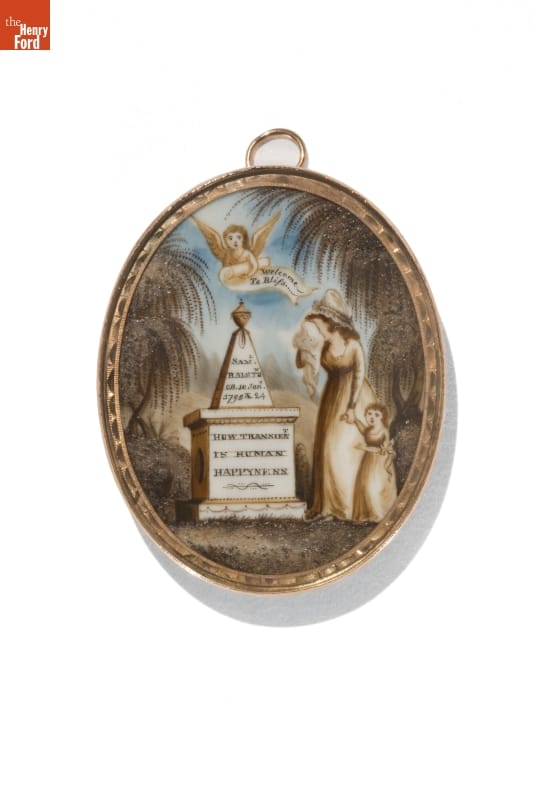
Mourning Pendant for the Potts Family, 1797
THF154734 / Mourning Pendant for the Potts Family, 1797
01
Artifact Overview
Before the 20th century, death came early and often. One way people coped was to wear jewelry as memorials to their loved ones. Over the centuries, mourning jewelry followed the prevailing fashions. Shortly after independence, Americans favored illuminated, miniature brooches and pendants painted on ivory. These featured shapes derived from classical design, symbols such as urns and weeping women dressed as ancient Romans.
Artifact Details
Artifact
Pendant (Jewelry)
Date Made
1797
Subject Date
1779-1797
Location
Not on exhibit to the public.
Object ID
61.151.37
Credit
From the Collections of The Henry Ford.
Material
Gold (Metal)
Glass (Material)
Human hair
Technique
Hairwork
Dimensions
Height: 2.25 in
Width: 1.625 in
Inscriptions
obverse, engraved:
W.R. Potts. Ob. 28. August. 1779. Aged. 19. Months.
Eliza. Potts. Ob. 19 Novr. 1789. Aged 32
verso, engraved:
Benjamin. Potts. Ob. 2. February. 1797. Aged. 3. Years. 11 Months. 18. Days.
Keywords |
|---|
02
Related Content
 Set
SetLove Tokens and Mourning Miniatures
- 30 Artifacts
Before the 20th century, death came early and often. One way people coped was to wear jewelry as memorials to their loved ones. Over the centuries, mourning jewelry followed the prevailing fashions. Shortly after independence, Americans favored illuminated, miniature brooches and pendants painted on ivory. These featured shapes derived from classical design, symbols such as urns and weeping women dressed as ancient Romans.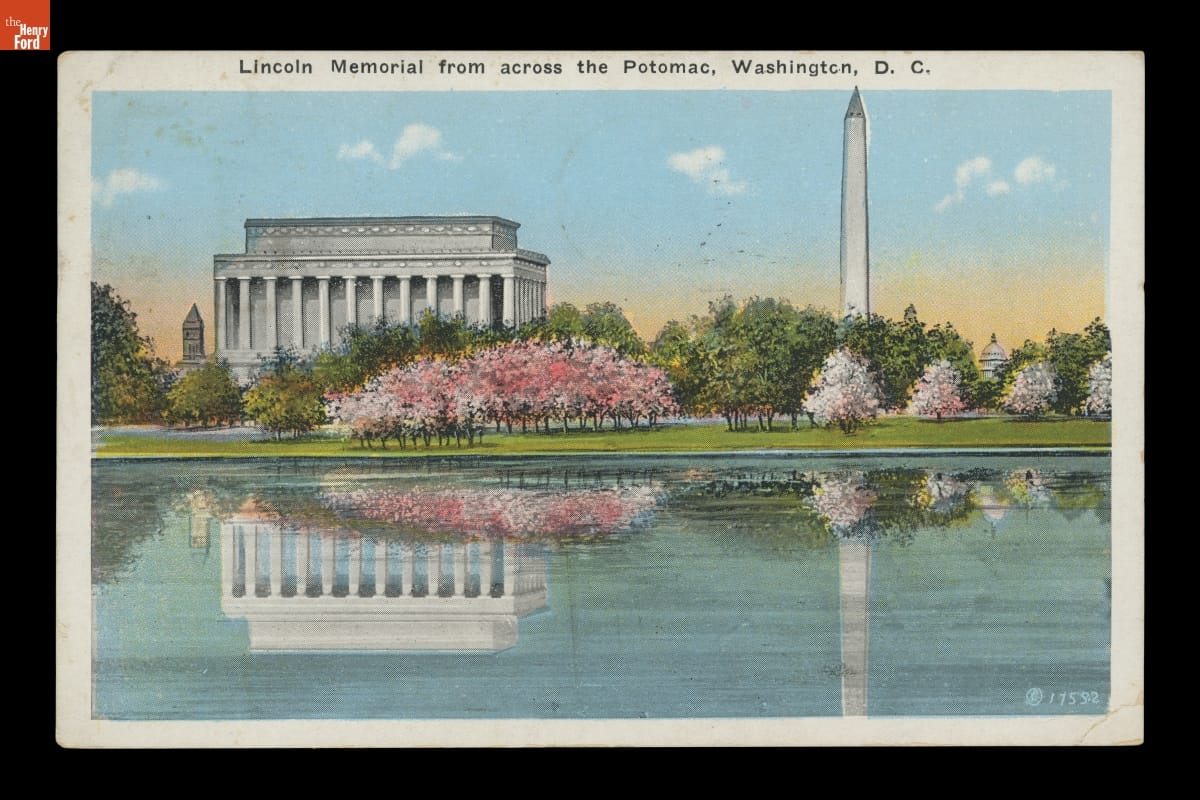 Set
SetMourning and Memorialization
- 9 Artifacts
There are myriad ways that we honor and preserve the memory of those we hold dear. Below is just a small sampling that shows how Americans have mourned and memorialized, from the colonial era until today.