
Runabout, 1876
THF87349 / Runabout, 1876
01
Artifact Overview
Inspired by the lightweight horse-drawn vehicles he saw at the 1876 Centennial Exposition in Philadelphia, Samuel Tooney, a manufacturer of horse-drawn racing vehicles, set to making the lightest carriage possible. The result, weighing in at just 96 pounds, is a design masterpiece: practical minimalism derived from refined engineering and fluency with natural materials.
Artifact Details
Artifact
Runabout (Buggy)
Date Made
1876
Creators
Place of Creation
Creator Notes
Made by Samuel Toomey at S. Toomey & Sons Carriage Manufactory in Dover, Ohio
Location
Not on exhibit to the public.
Object ID
40.216.1
Credit
From the Collections of The Henry Ford. Gift of Ralph Toomey.
Material
Hickory (Wood)
Leather
Metal
Paint (Coating)
Wood (Plant material)
Color
Black (Color)
Brown
Dimensions
Height: 106.375 in
Width: 51 in
Length: 99 in
Wheelbase: 52.5 in
Diameter: 47.5 in (Wheel Diameter)
Diameter: 45.25 in (Wheel Diameter)
Inscriptions
Plate on rear axle: S. TOOMEY & SON / CANAL.DOVER. O.
Keywords |
|---|
02
Related Content
 Set
SetOnline Horse-Drawn Vehicles Collection
- 29 Artifacts
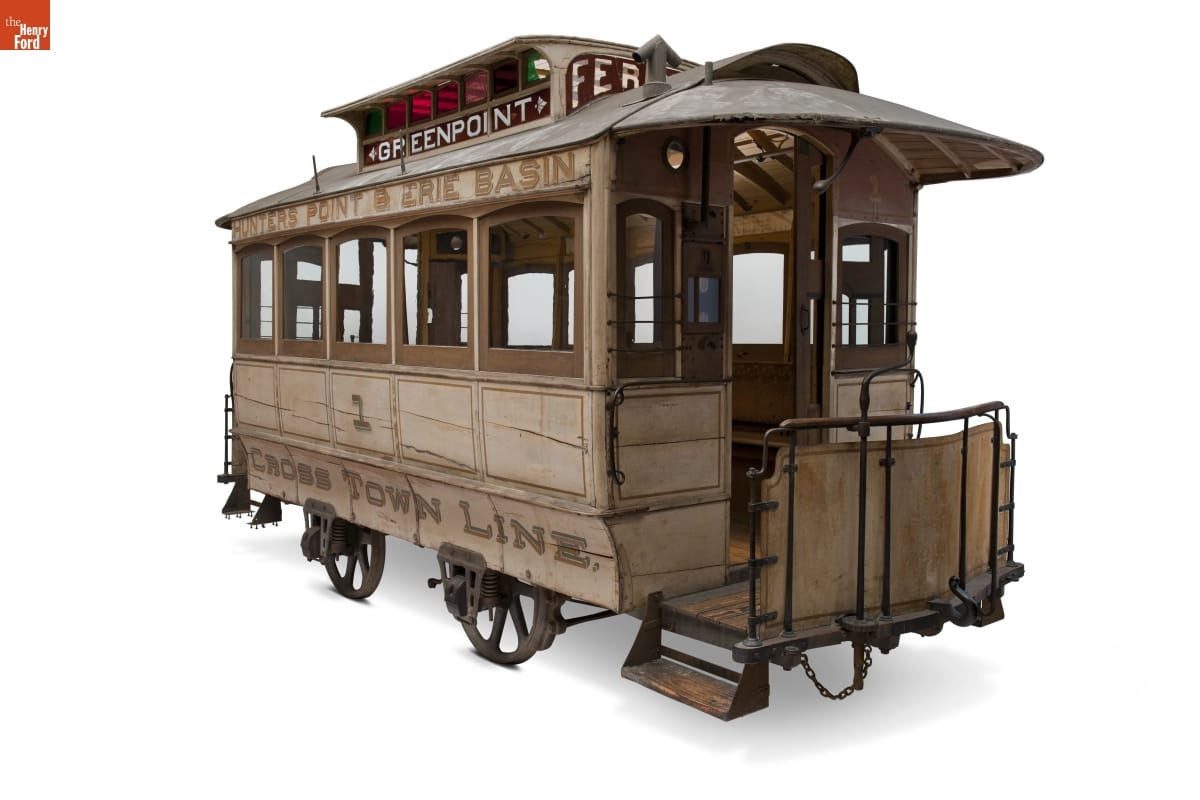
The horse-drawn streetcar was an important means of public transportation in 19th-century American cities. New York's Brooklyn City Railroad ran this car on its line between Hunters Point in Long Island City, and Erie Basin in South Brooklyn. But horses were expensive to stable and feed -- and messy too. Operators embraced electric streetcars starting in the late 1880s. article
The Carriage Era: Horse-Drawn Vehicles
Discover the Carriage Era of horse-drawn vehicles and learn about their unique traits and uses in this insightful blog post from The Henry Ford. Read now!