
Cotton Ginning, Carding, & Spinning Machine, 1835-1840
THF91501 / Cotton Ginning, Carding, & Spinning Machine, 1835-1840 / Photographed by John Sobczak
01
Artifact Overview
Called a "plantation spinner" or "spinster", this small machine combined the three processes required to convert raw cotton to yarn -- ginning, carding and spinning. Its small size and human-powered design was made for enslaved plantation laborers. By the time of the Civil War, there were 3,000 in use across the south. After emancipation they were no longer economically viable.
Artifact Details
Artifact
Cotton gin
Date Made
1835-1840
Creators
Place of Creation
Location
at Henry Ford Museum in Agriculture
Object ID
00.3.8578
Credit
From the Collections of The Henry Ford.
Material
Wood (Plant material)
Tin (Metal)
Dimensions
Height: 47.5 in
Width: 23 in
Length: 39.5 in
Inscriptions
Cast iron maker's plate: J. & T. Pearce Cincinnati
Keywords |
|---|
02
Related Content
 Set
SetAmerica's Industrial Revolution
- 61 Artifacts
The Model T's distinction as a landmark car design can be traced in large part to machines like this -- a high capacity precision machine tool that performed just two production steps on the car engine's cylinder block. The Model T as a design achievement is inseparable from many hundreds of engineering, materials, and production innovations.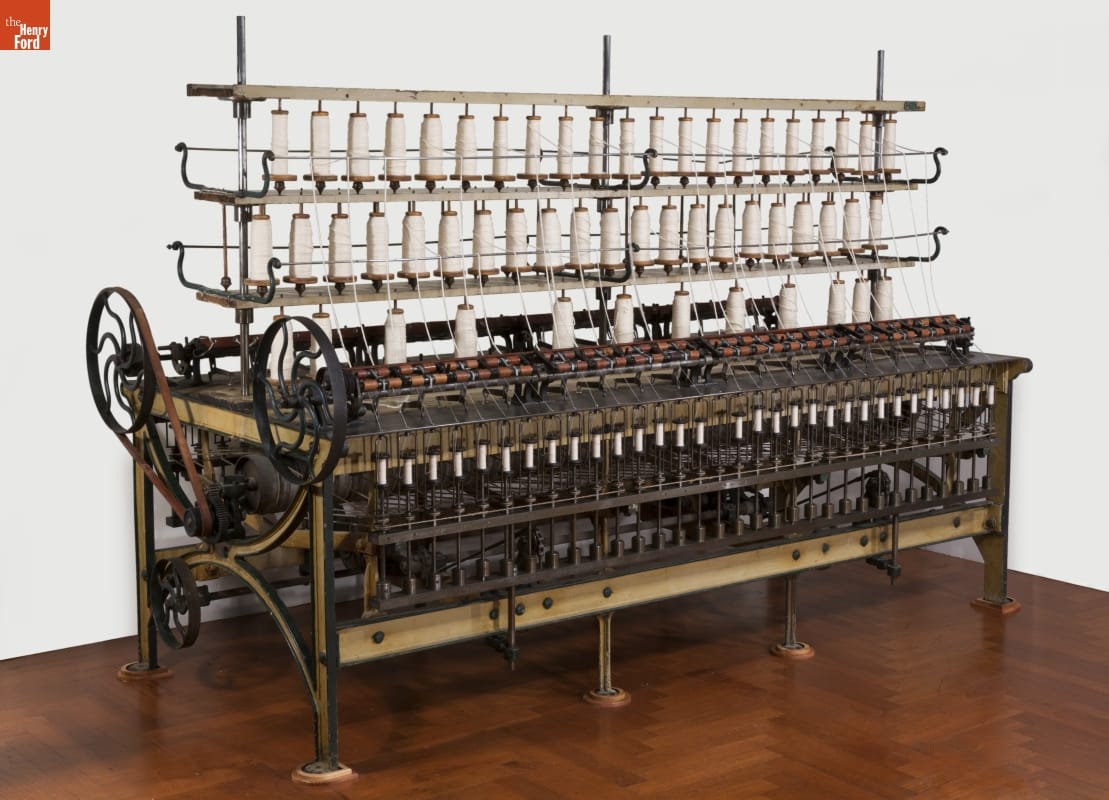 Set
SetSpinning Highlights from the Collections of The Henry Ford
- 16 Artifacts
Spinning frames spin cotton fiber into yarn and then wind it onto a bobbin. This throstle spinning frame could simultaneously spin 64 strands of yarn. (Throstle -- an old name for a song thrush -- refers to the bird-like sounds the machine made.) Machines like this helped produce the large quantities of yarn that growing industrial weaving operations needed in the early and mid-1800s. article
Hidden Histories of the Cotton Gin
Who invented the cotton gin? And what were the unexpected consequences of its invention? Find out the answers to these questions that you did not learn in school.