
Steel Engraving, Portrait of Oliver Evans. The Watt of America, circa 1860
THF203701 / Steel Engraving, Portrait of Oliver Evans. The Watt of America, circa 1860 / detail
01
Artifact Overview
A visionary inventor and engineer, Oliver Evans (1755-1819) helped shape American manufacturing. In the late 1700s, Evans developed a continuous conveyor system for milling flour that revolutionized the industry and influenced the design of future automated factories. In 1804, he patented America's first high-pressure steam engine. Evans' new engine was reliable and versatile -- it was adapted for use in both manufacturing and steamboat propulsion.
Artifact Details
Artifact
Print (Visual work)
Date Made
circa 1860
Place of Creation
Creator Notes
Engraved by Williams G. Jackman and published by John Appleton & Co. in New York City.
Collection Title
Location
Not on exhibit to the public.
Object ID
82.129.720
Credit
From the Collections of The Henry Ford.
Material
Paper (Fiber product)
Cardboard
Technique
Steel engraving (Printing process)
Dimensions
Height: 9.75 in
Width: 6 in
Inscriptions
Typed paper adhered to mat board:
Evans, Oliver. American Inventor. Builder of the steamboat "Eructor Amphibolis"./ at Philadelphia in 1804 (See encyclopedia for life history) / Steel engraving by W.G. Jackman. / Date: about 1860
Keywords |
|---|
02
Related Content
 Set
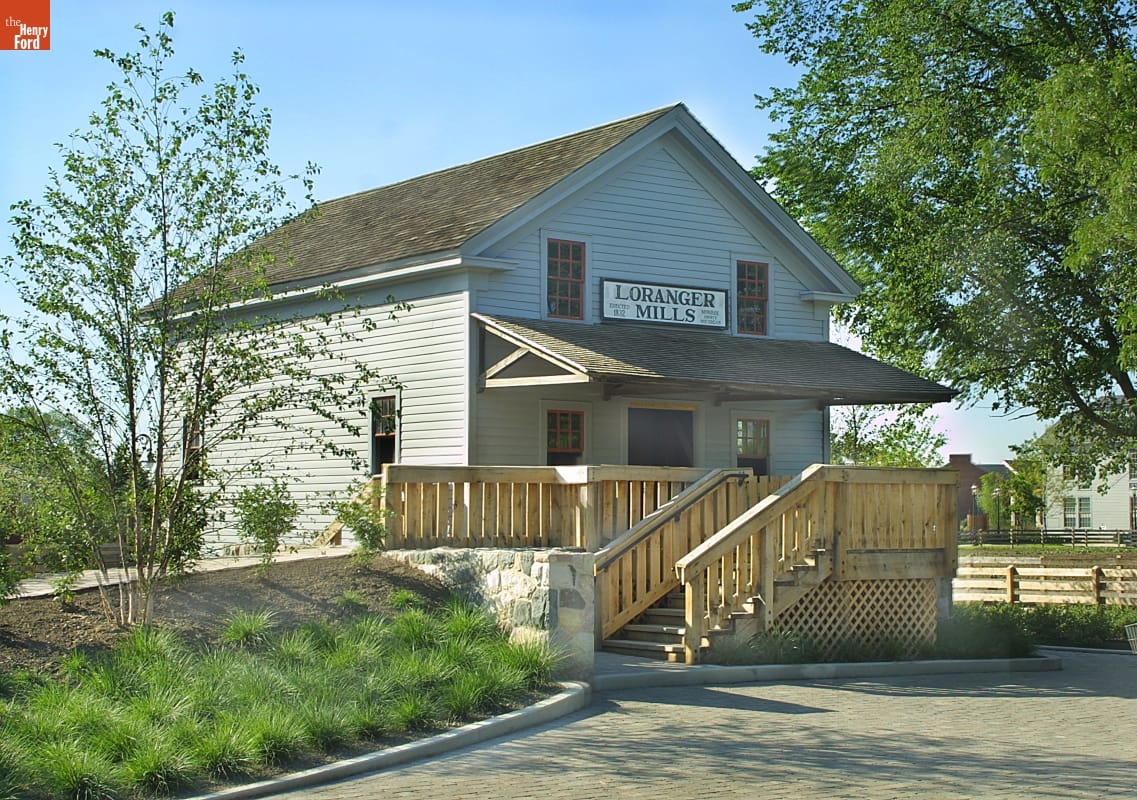
SetLoranger Gristmill
- 9 Artifacts
Gristmills -- usually among the earliest businesses established in a community -- ground grain harvested by local farmers. This mill, originally located in Monroe, Michigan, was set up to grind both corn and wheat. It incorporates a sophisticated conveyor system, developed by Oliver Evans in the late 1700s, that moves grain through the building to undergo a variety of processes.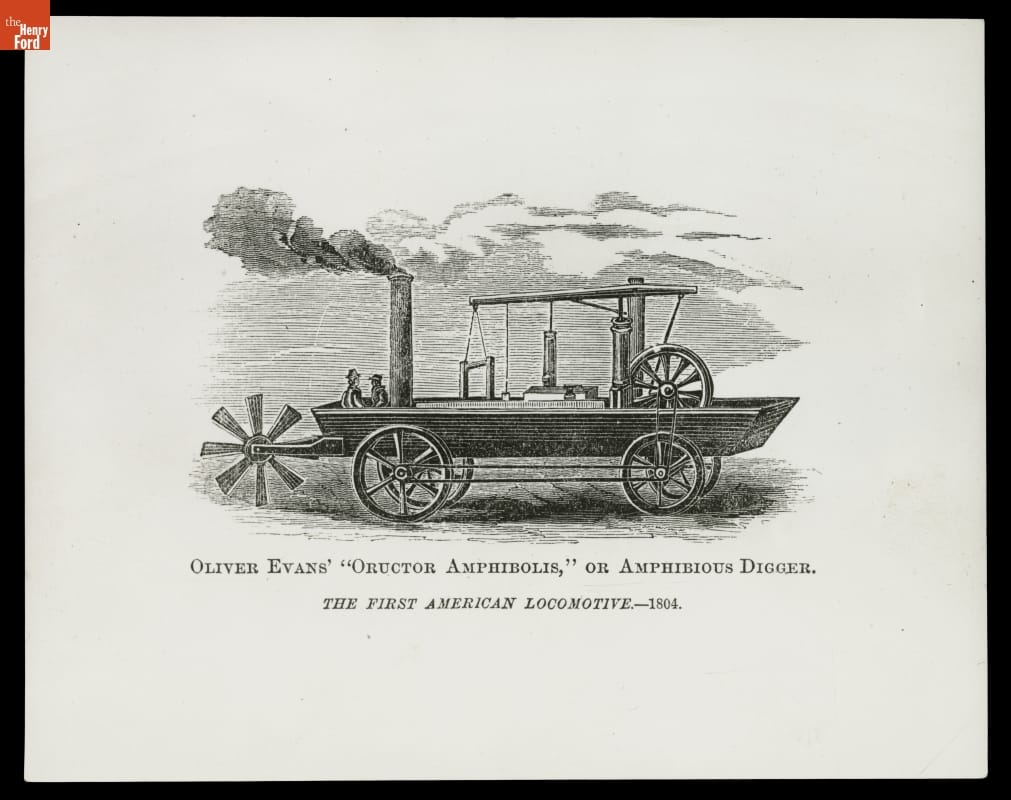 Set
SetOliver Evans (1755-1819)
- 5 Artifacts
Inventor and engineer Oliver Evans believed that steam engines, used to power mills and steamboats, could also propel land vehicles. An opportunity to experiment came with a commission from the Philadelphia Board of Health for a steam dredge. Evans designed a 30-foot-long, 17-ton amphibious digger that moved successfully over land in 1805. This one-time stunt proved the viability of steam-powered carriages.