
Wright Cycle Shop in Dayton, Ohio, circa 1910
THF236856 / Wright Cycle Shop in Dayton, Ohio, circa 1910
01
Artifact Overview
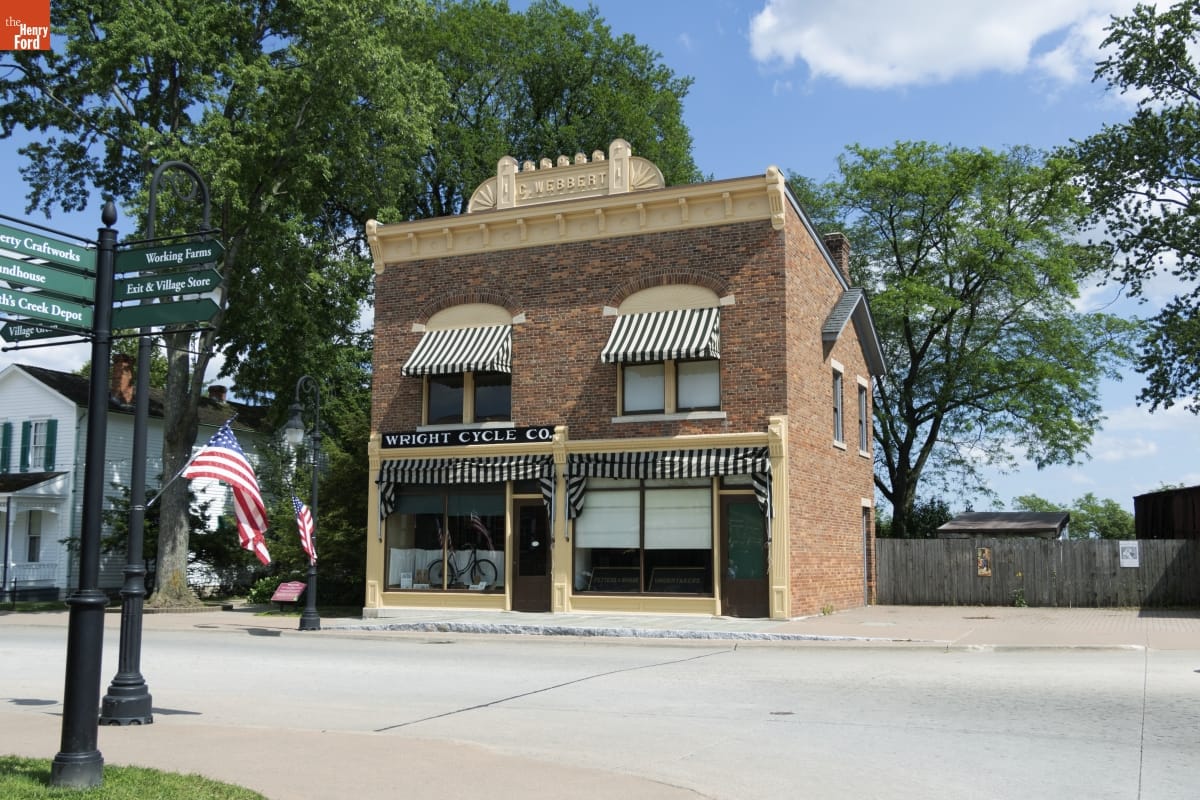
The Wright brothers operated their bicycle business at six different Dayton, Ohio, locations from 1892 to 1908. They occupied this building, at 1127 West Third Street, from 1897 to 1908. It was here that the brothers conducted their first serious aviation experiments and built their gliders and the 1903 Wright Flyer -- the first successful heavier-than-air powered aircraft.
Artifact Details
Artifact
Photographic print
Subject Date
circa 1910
Collection Title
Location
Not on exhibit to the public.
Object ID
EI.1929.P.188.16081
Credit
From the Collections of The Henry Ford.
Material
Paper (Fiber product)
Technique
Gelatin silver process
Color
Black-and-white (Colors)
Inscriptions
Typing on print back reads:
No. 3 -- This is the front of the building in which the Wrights had their original bicycle shop. If you use a magnifying glass you can read the sign 'Wright Cycle Company' over the lower windows at the left. The lower half at the right was occupied by an undertaking parlor. The Wright Brothers occupied the entire upper floor with their drawing boards, wind tunnel and other equipment. This photo shows the building substantially as it would appear in Greenfield Village.
Keywords |
|---|
02
Related Artifacts
 Artifact
Wright Cycle Shop
Wilbur and Orville Wright operated their bicycle business in this building from 1897 to 1908 in Dayton, Ohio. The brothers sold and repaired bikes, and they even produced models under their own brands. It was also in this shop that the Wright brothers built their earliest flying machines, including the 1903 Flyer that became the first successful heavier-than-air, powered, controlled aircraft.
03
Related Content
 Set
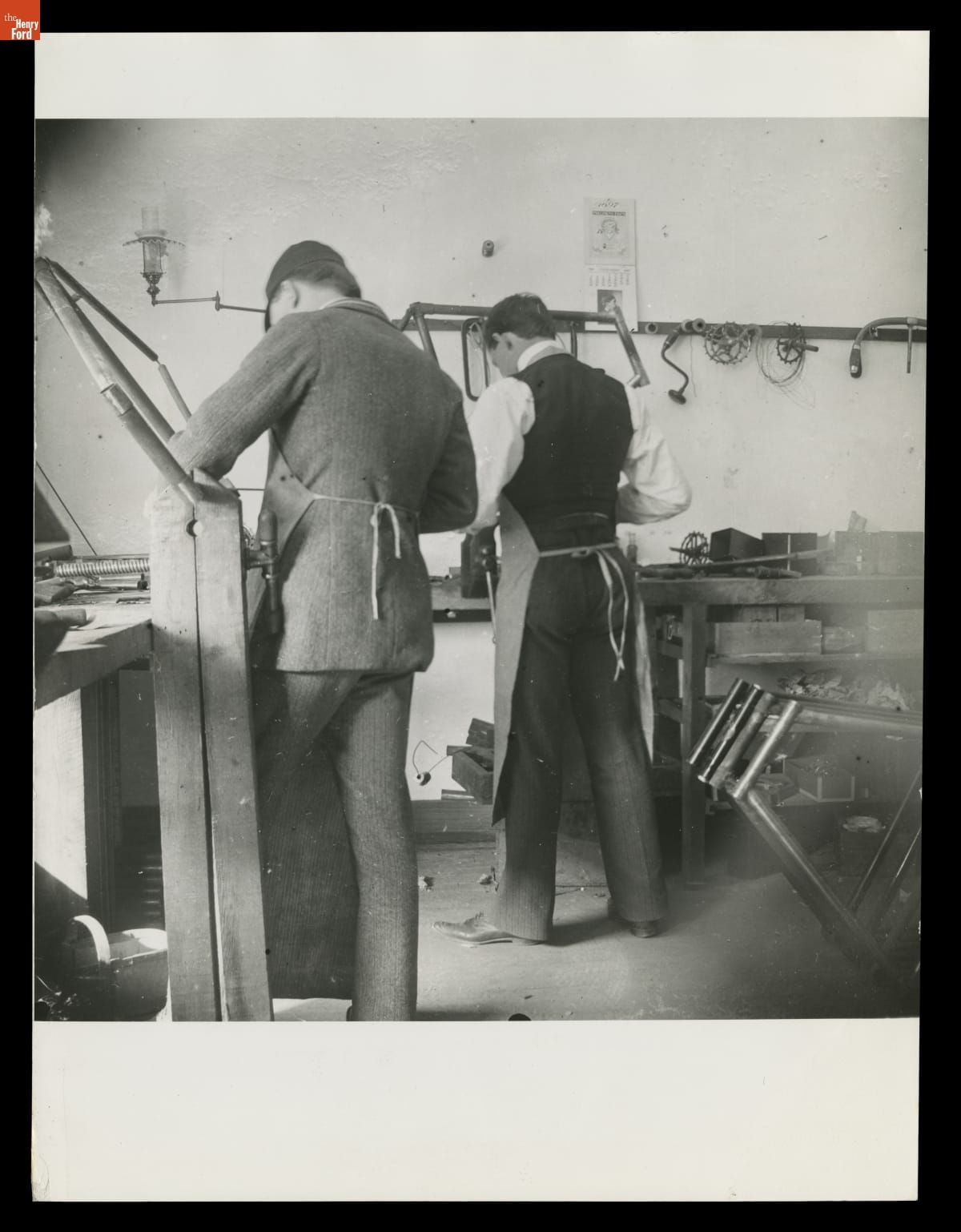
SetThe Wright Brothers and the Bicycle Business
- 10 Artifacts
Orville Wright (right) was photographed alongside friend and former schoolmate Edwin H. Sines in the Wright brothers' Dayton, Ohio, bicycle shop. The Wrights' experiences building printing presses and bicycles sharpened their skills in precision machining. These talents were invaluable in their later efforts to build the first successful heavier-than-air, powered aircraft in 1903.