
De Forest Audion Tube, circa 1908
THF157042 / De Forest Audion Tube, circa 1908
01
Artifact Overview
Dr. Lee De Forest was an inventor, engineer, and the self-styled "Father of Radio." In 1906, De Forest invented the Audion tube, allowing the detection and amplification of weak radio signals. As the first triode vacuum tube, the Audion revolutionized radio broadcasting--and made it more practical. By the late 1920s, vacuum tube radios were the widespread in people's homes.
Artifact Details
Artifact
Vacuum Tube
Date Made
circa 1908
Creators
Place of Creation
Location
Not on exhibit to the public.
Object ID
00.4.2288
Credit
From the Collections of The Henry Ford.
Material
Glass (Material)
Copper (Metal)
Rubber (Material)
Dimensions
Height: 5 in
Diameter: 3 in
Keywords |
|---|
02
Related Content
 Set
SetHeroes of Radio and Television at The Henry Ford
- 12 Artifacts
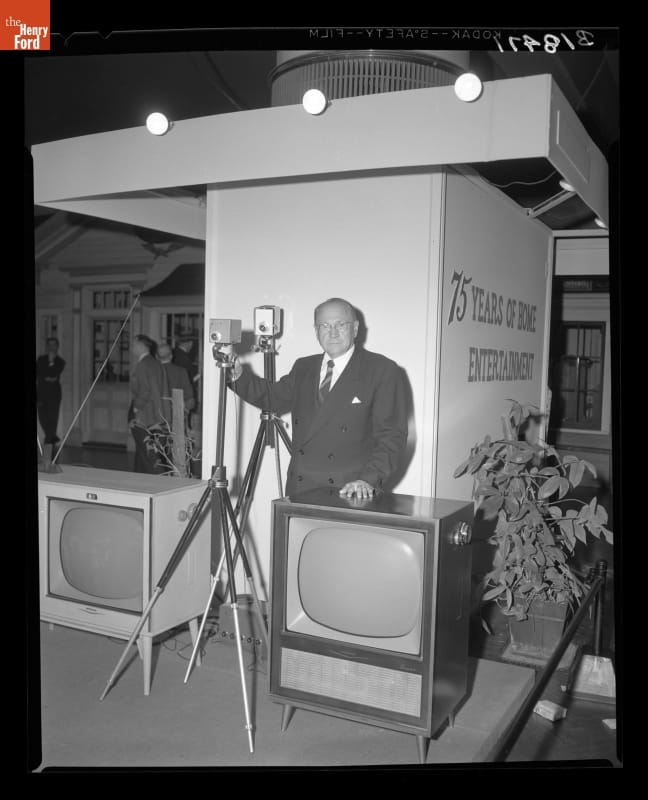
Vladimir Zworykin was an early pioneer of television development, employed by Westinghouse and the Radio Corporation of America. Zworykin's iconoscope and kinescope picture tubes were breakthroughs in television history. Together they allowed electronic television to become a viable technology. Zworykin also headed the creation of the electron microscope and infrared tubes used in night vision "sniperscopes" during WWII.