
Double Harpoon Horse Hay Fork, 1913
THF32438 / Double Harpoon Horse Hay Fork, 1913
01
Artifact Overview
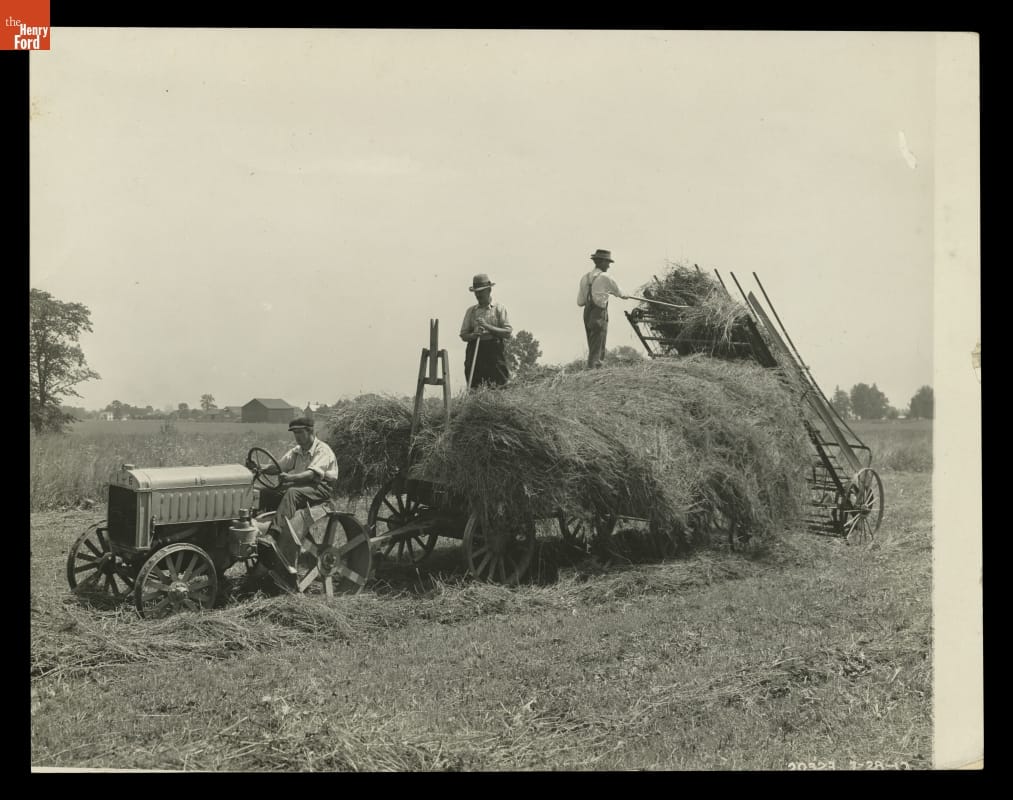
Moving bulky, loose hay in the 19th and early 20th centuries was hard, but necessary, work. Farmers stored some hay in barns after harvesting to continue the drying and curing process. Hay lifting forks -- usually operated with ropes, pulleys and lever releases -- could move large quantities of hay from wagons into haymows or lofts. These devices saved time and energy.
Artifact Details
Artifact
Hay-lifting fork
Date Made
1913
Creators
Place of Creation
Location
at Greenfield Village in Soybean Lab Agricultural Gallery
Object ID
63.165.1
Credit
From the Collections of The Henry Ford.
Material
Steel (Alloy)
Dimensions
Width: 19.5 in
Length: 46 in
Inscriptions
LOUDEN 1913
Keywords |
|---|
02
Related Content
 Set
SetHay
- 14 Artifacts
Hay is a mixture of cut grasses or crops like alfalfa or clover that keeps farm animals well fed during winter months. Making hay is a labor-intensive and time-consuming process--farmers cut, dry, and store hay all summer long. It is also a race against time--rain damages the crop drying in the fields. Mechanical innovations have reduced the time and labor--but not the urgency--required to complete this essential chore.