
Locomobile Old 16 Race Car on Racetrack with Driver and Mechanic, 1906-1908
THF125208 / Locomobile Old 16 Race Car on Racetrack with Driver and Mechanic, 1906-1908
01
Artifact Overview
This racing car set the fastest 1906 Vanderbilt Cup lap, but finished in tenth place. In 1908, shod with improved tires, the Locomobile thundered to victory. "Old 16," as it was known afterward, was the first American car to win a major international road race. In this photograph, the driver and mechanic wear protective cloth face masks, goggles, and leather helmets.
Artifact Details
Artifact
Photographic print
Subject Date
1906-1908
Collection Title
Location
By Request in the Benson Ford Research Center
Object ID
97.28.1
Credit
From the Collections of The Henry Ford.
Material
Cardboard
Paper (Fiber product)
Technique
Gelatin silver process
Mounting
Color
Black-and-white (Colors)
Dimensions
Height: 5.625 in
Width: 8.25 in
Keywords |
|---|
02
Related Artifacts
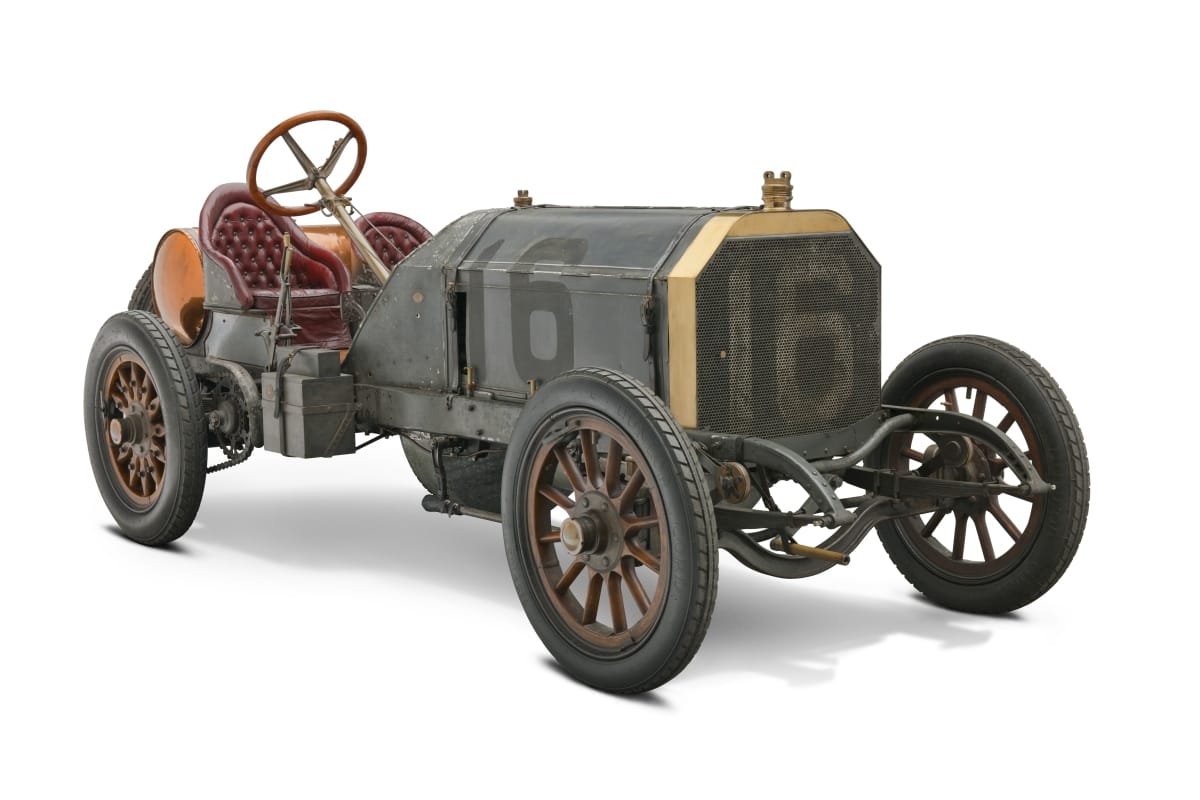 Artifact
1906 Locomobile "Old 16" Race Car
In 1908, driver George Robertson and mechanician Glenn Ethridge took this car to victory in the Vanderbilt Cup, America's first great automobile race. It marked the first time an American-built car won a major international road-circuit race. The Locomobile competed while wearing number 16, and it's been known as "Old 16" ever since.
03
Related Content
 Set
SetAndrew Riker: An Electric Car Pioneer Turns to Gas
- 11 Artifacts
Andrew Riker, an early believer in the electric car, designed this battery-powered racer in 1901. He ran it at Coney Island, New York, that November and, at 57.1 miles per hour, set a world speed record for electric cars. It was a triumph for electricity, but Riker soon lost faith. He joined Locomobile the next year and started designing gasoline-powered automobiles.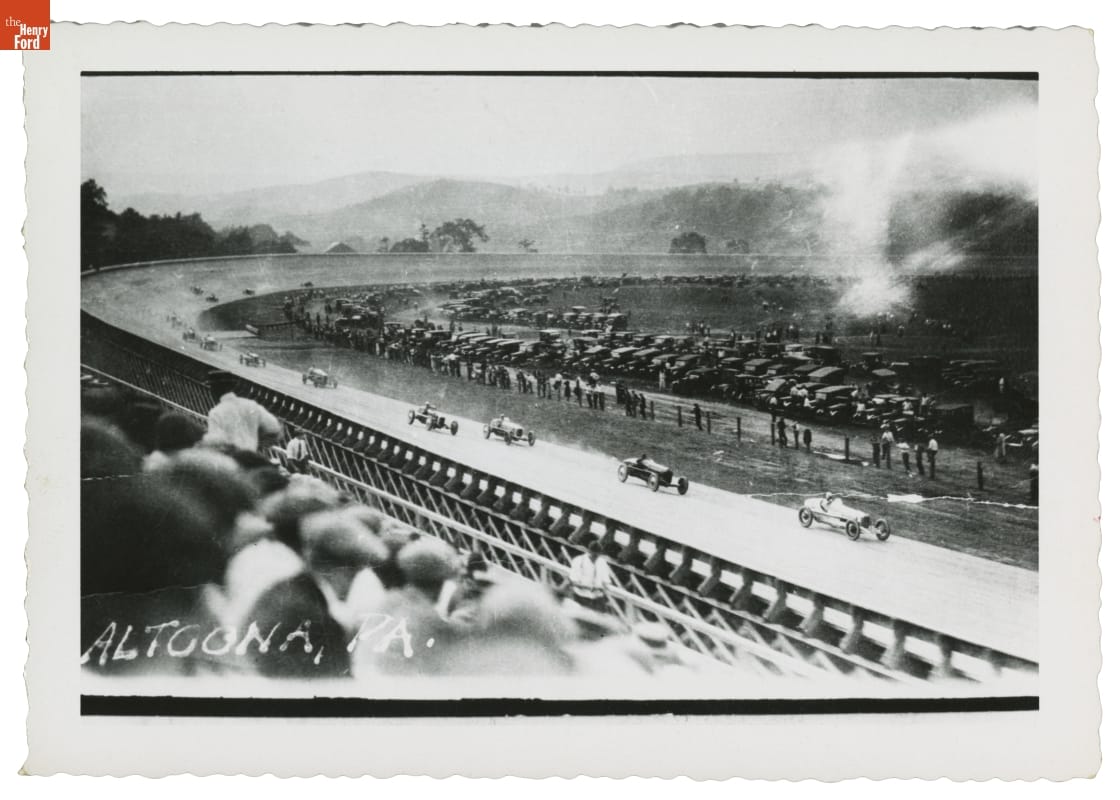 Set
SetRacing
- 50 Artifacts
As automobile racing speeds increased, repurposed dirt horse tracks became inadequate. In the 1910s promoters turned to wooden boards, which provided a smooth road surface and were less expensive than bricks or concrete. But rotting wood required frequent replacement. Improvements in concrete and asphalt made board tracks obsolete in the 1930s. The 1.25-mile board track at Altoona, Pennsylvania, operated from 1923-1931. article
Driven to Win: Dawn of Racing
Learn about early American auto racing, and the significant early race cars and other artifacts you'll see in our new exhibit, Driven to Win: Racing in America. article
1899 Locomobile Runabout: Freedom on Wheels
The 1899 Locomobile combines railroad and bicycle technology—it's powered by a compact version of a steam locomotive engine, and the steel-tube frame, wire wheels, pneumatic tires, and chain drive come from bicycles.