
Cadillac Engine, 1913
THF101052 / Cadillac Engine, 1913
01
Artifact Overview
Cadillac introduced the electric starter in 1912. The device eliminated the difficult and sometimes dangerous work of hand-cranking an engine, and it was quickly adopted by other automakers. Charles Kettering, formerly an engineer with National Cash Register, developed the starter working from electric motors used in cash registers. Cadillac's four-cylinder engine and starter were improved for 1913.
Artifact Details
Artifact
Automobile engine
Date Made
1912-1913
Creators
Place of Creation
Creator Notes
Engine manufactured by Cadillac Motor Car Company in Detroit, Michigan with an electric self-starting ingnition designed by Charles. F. Kettering and produced by Dayton Engineering Laboratories Company in Dayton, Ohio.
Location
Not on exhibit to the public.
Object ID
29.2132.1
Credit
From the Collections of The Henry Ford.
Material
Metal
Brass (Alloy)
Copper alloy
Paint (Coating)
Color
Black (Color)
Copper (Color)
Dimensions
Height: 42 in
Width: 29 in
Depth: 50 in
Inscriptions
Printed on sparkplugs: CHAMPION / REG. U.S. PAT. OFF.
Keywords |
|---|
02
Related Content
 Set
SetEngines Exposed: Power, Performance and Innovation
- 15 Artifacts
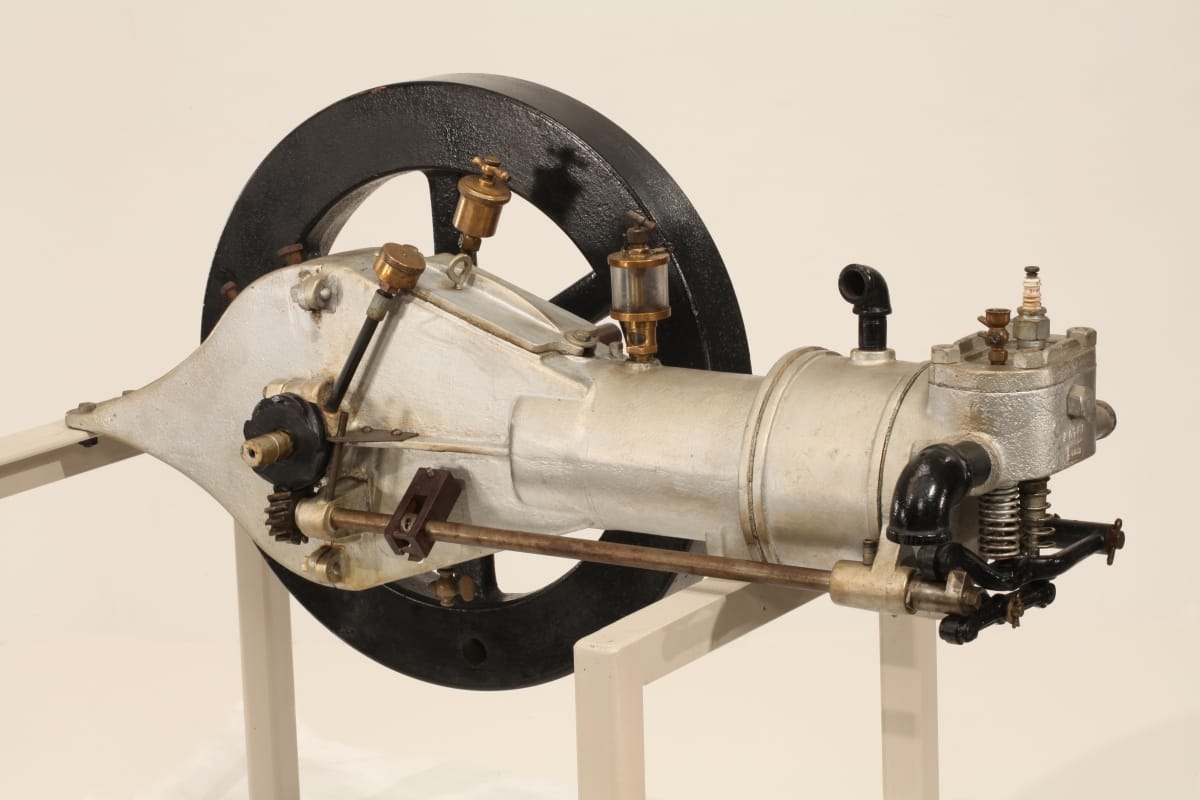
This single-cylinder, four-horsepower engine powered the Oldsmobile Curved Dash runabout. It has one cylinder, one piston, one connecting rod and crank, one balance wheel, and two valves. The complications of larger multi-cylinder engines were eliminated. The engine's simplicity and the vehicle's affordable $650 price made the Curved Dash runabout America's first car produced in large numbers.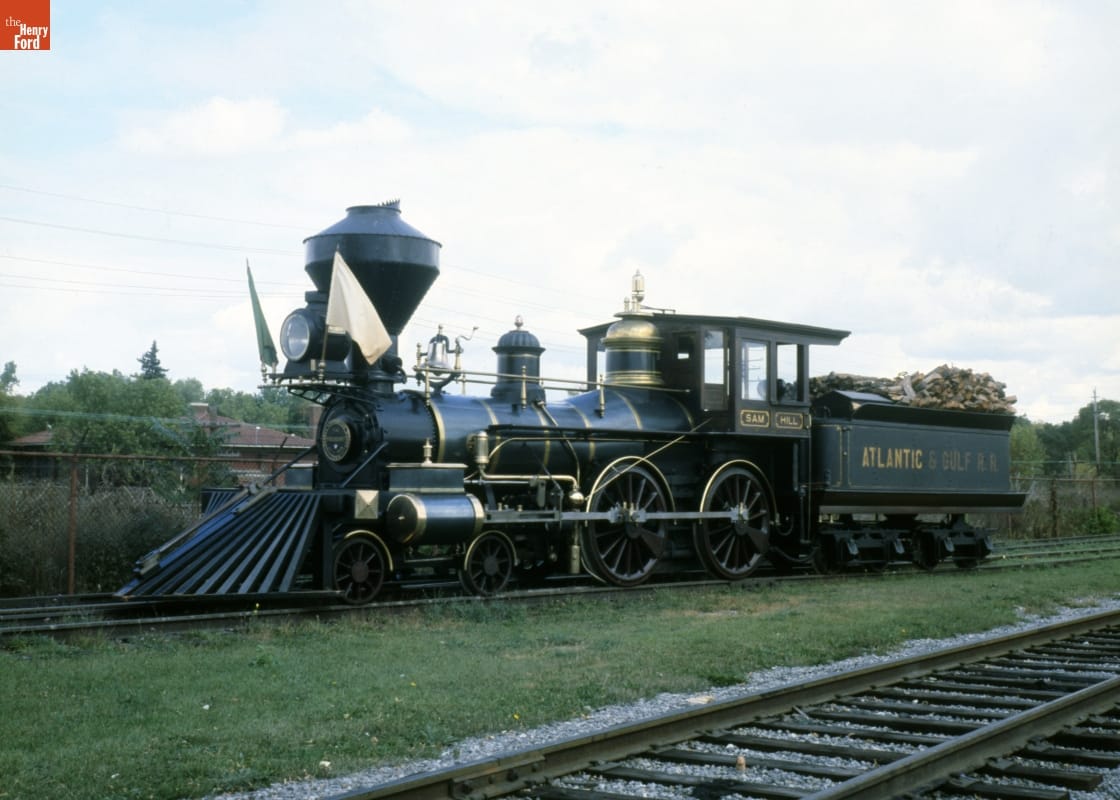 Set
SetMobility
- 49 Artifacts
This 1858 Rogers steam locomotive is typical of those used in the United States in the second half of the 19th century. Its flexible wheel arrangement, high power output, and light weight were well suited to the tight curves, steep grades, and hastily constructed track that characterized American railroads. This locomotive struck an agreeable balance between practicality, safety, and economy.