
Ford Tri-Motor Airplane Advertisement, "First Time Up!," 1928
THF121332 / Ford Tri-Motor Airplane Advertisement, "First Time Up!," 1928
01
Artifact Overview
Air travel was something completely new for most Americans in the 1920s. Ford Motor Company offered an exciting -- and reassuring -- description of the experience in its advertisements for Ford Tri-Motor airplanes. Passengers "move twice as fast as the fastest express trains" secure in the knowledge that "if all three (engines) fail the plane has a gliding range of miles."
Artifact Details
Artifact
Advertisement
Date Made
1928
Subject Date
1928
Creators
Collection Title
Location
By Request in the Benson Ford Research Center
Object ID
64.167.19.245
Credit
From the Collections of The Henry Ford. Gift of Ford Motor Company.
Material
Paper (Fiber product)
Technique
Printing (Process)
Color
Black-and-white (Colors)
Dimensions
Height: 14 in
Width: 11 in
Keywords |
|---|
02
Related Content
 Set
SetFord Tri-Motor
- 14 Artifacts
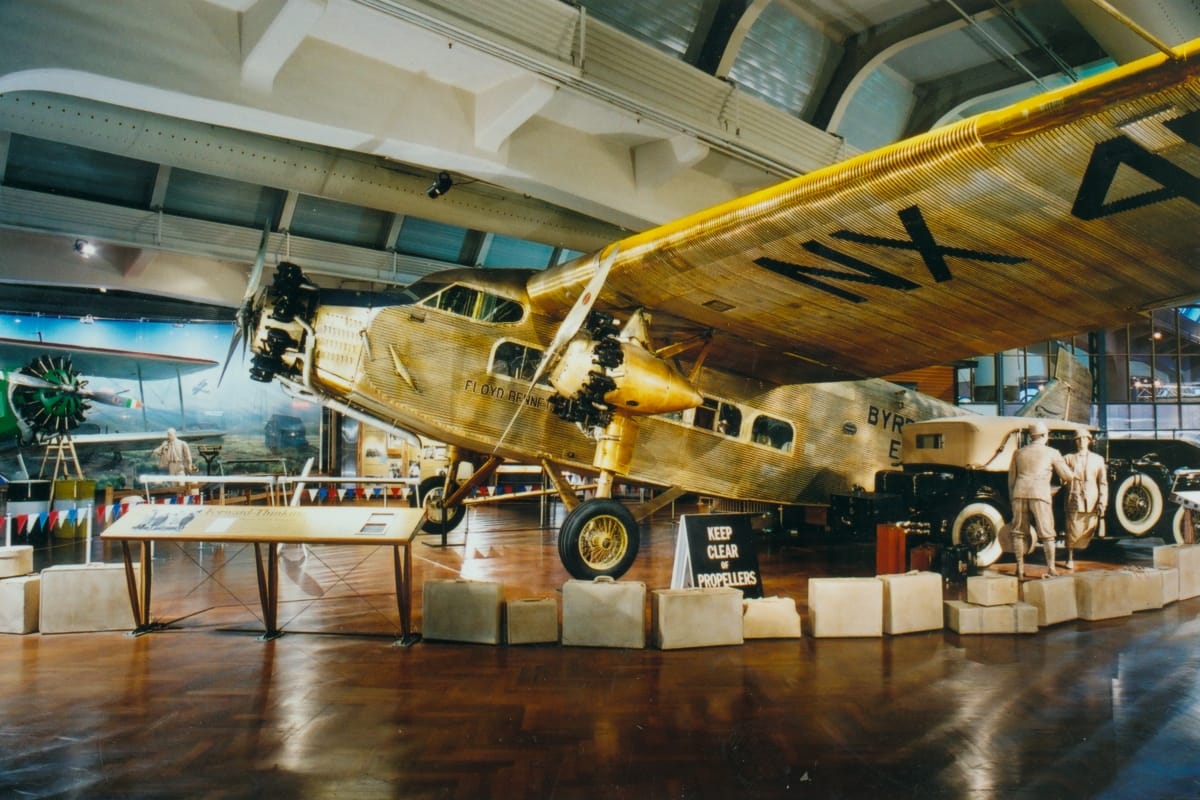
The Ford Tri-Motor was the most popular airliner of the late 1920s and early 1930s. Its rugged dependability led Richard Byrd to choose a Tri-Motor for his attempt to be the first person to fly over the South Pole. On November 28-29, 1929, Byrd and a crew of three achieved that goal in this plane.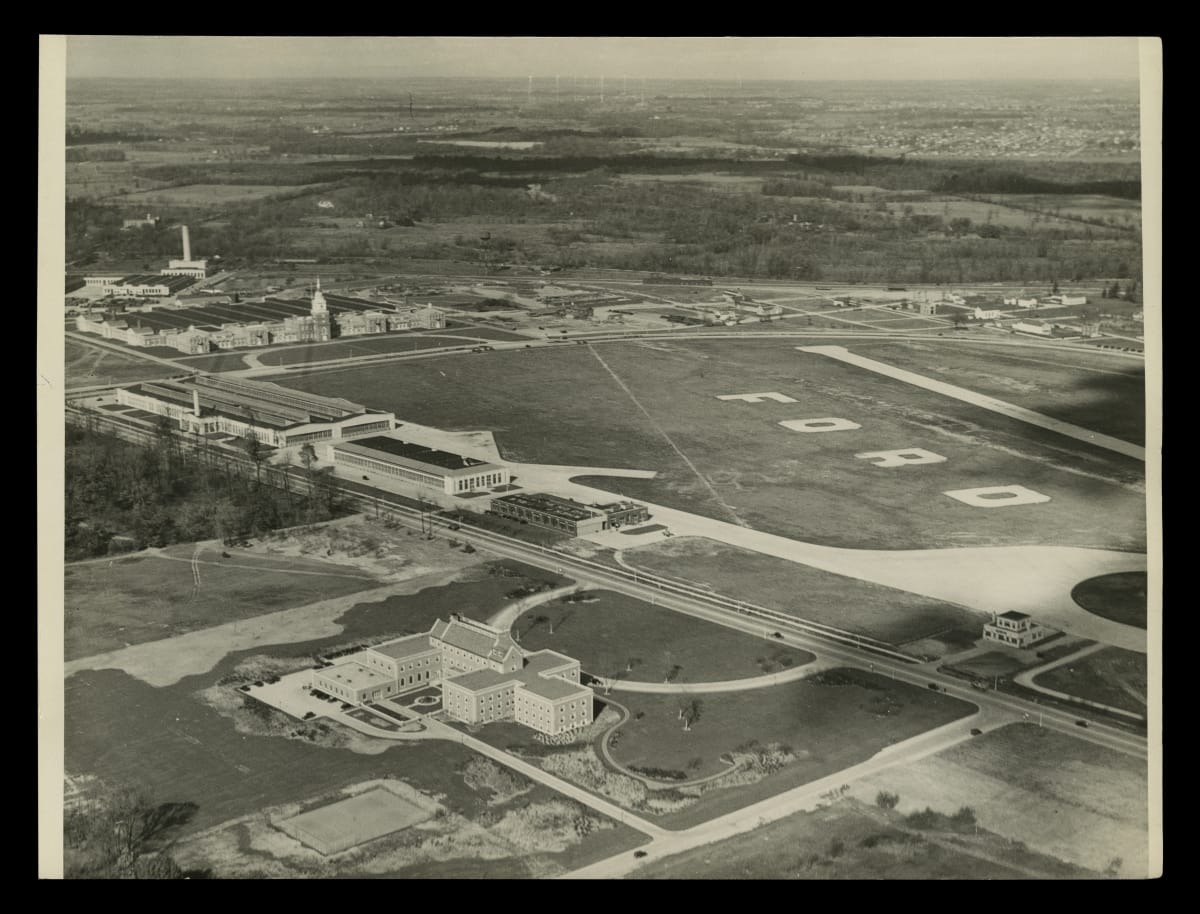 Set
SetHenry Ford: Aviation
- 29 Artifacts
In 1925, an airport opened in Dearborn, Michigan. Edsel and Henry Ford conceived the Dearborn Inn as a business opportunity, a first-class hotel hosting pilots and travelers transiting through the Ford Airport. It is noted as one of the first airport hotels. This aerial photograph shows some of the airfield and the inn (bottom). Also note the Henry Ford Museum's clock tower in the distance.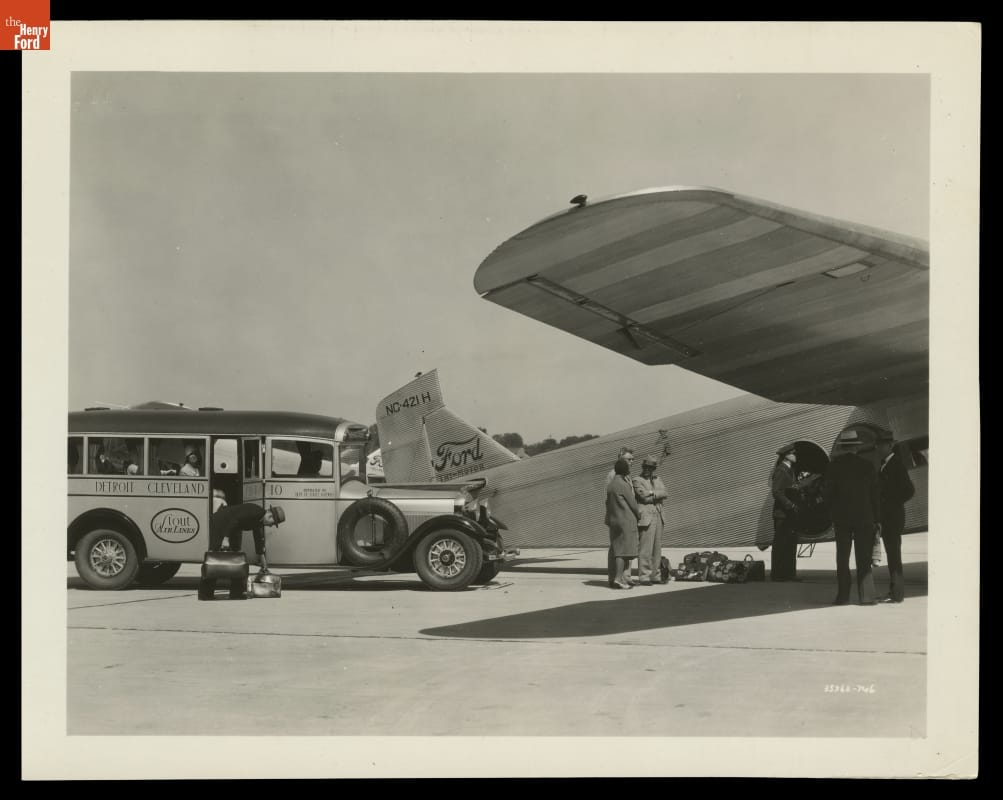 Set
SetFord Tri-Motor: Passenger Travel
- 16 Artifacts
Stout Air Lines advertised direct airplane service between Detroit and Cleveland, but this wasn't strictly true. Stout's "Detroit" terminal was, in fact, Ford Airport in Dearborn, ten miles west of the city. Passengers gathered at a station in Detroit and were shuttled by bus to the Dearborn airport where they boarded the actual plane.