
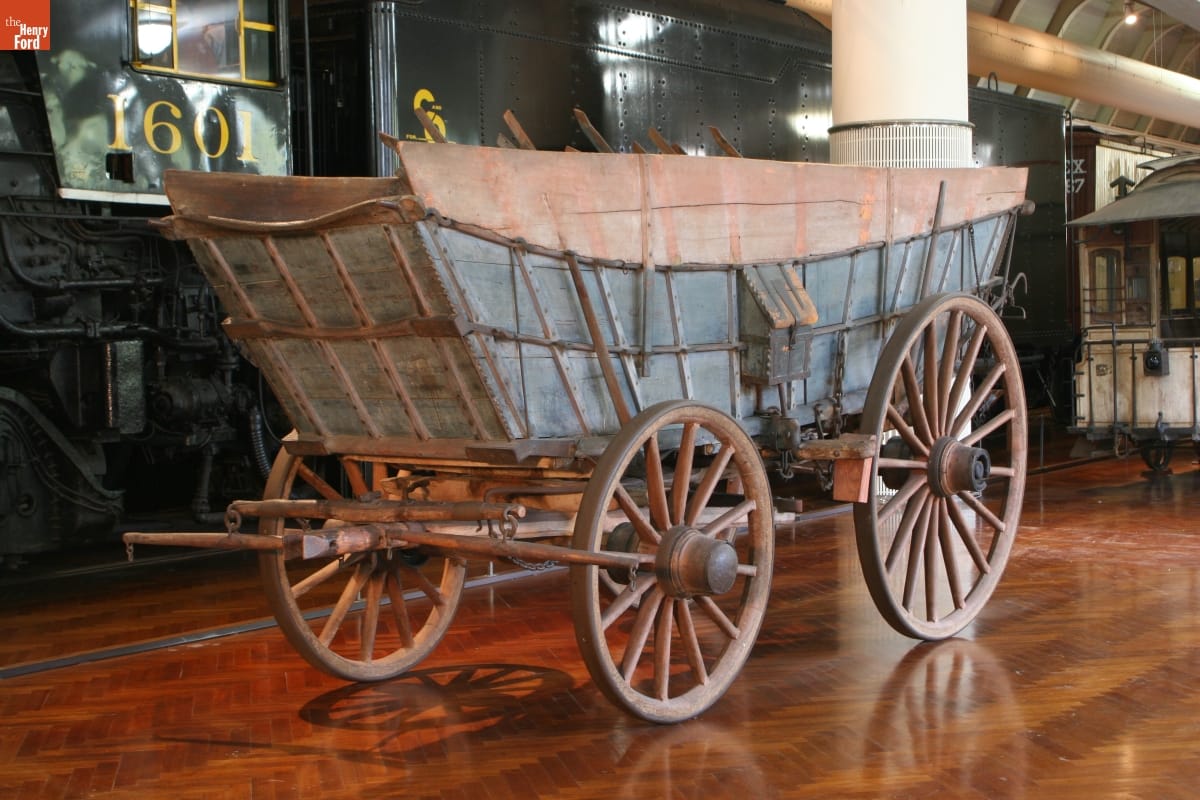
Horse Drawn Dray, circa 1890
THF69339 / Horse Drawn Dray, circa 1890
01
Artifact Overview
Simple two-wheeled drays like this were the most common means of moving goods between docks, railroad stations, and businesses in pre-automotive American cities. This dray was made by Studebaker of South Bend, Indiana, once the nation's largest maker of horse-drawn vehicles. Studebaker entered the automobile business in 1902 and became a major builder before ending motor vehicle production in 1966.
Artifact Details
Artifact
Dray
Date Made
circa 1890
Place of Creation
Location
Not on exhibit to the public.
Object ID
00.136.301
Credit
From the Collections of The Henry Ford. Gift of Ford Motor Company.
Material
Metal
Wood (Plant material)
Color
Black (Color)
Red
Dimensions
Height: 57.5 in
Width: 82 in
Length: 215.5 in
Diameter: 42.25 in (Wheel Diameter)
Inscriptions
Hubs: STUDEBAKER BROS. MFG. CO. SOUTH BEND IND.
License plate marked: MOBILE/112/1-HORSE
Keywords |
|---|
02
Related Content
 Set
SetLesson: Transportation of Goods and Consumption
- 8 Artifacts
Conestoga wagons first appeared in Pennsylvania's Conestoga River valley about 1750. Designed for freight, the Conestoga's curved body tended to keep the load in the center, rather than shifting it toward the rear. The Conestoga's popularity peaked in the first half of the 19th century -- before railroads replaced it for hauling agricultural products and manufactured goods. article
The Carriage Era: Horse-Drawn Vehicles
Discover the Carriage Era of horse-drawn vehicles and learn about their unique traits and uses in this insightful blog post from The Henry Ford. Read now!