
Westinghouse Induction Motor
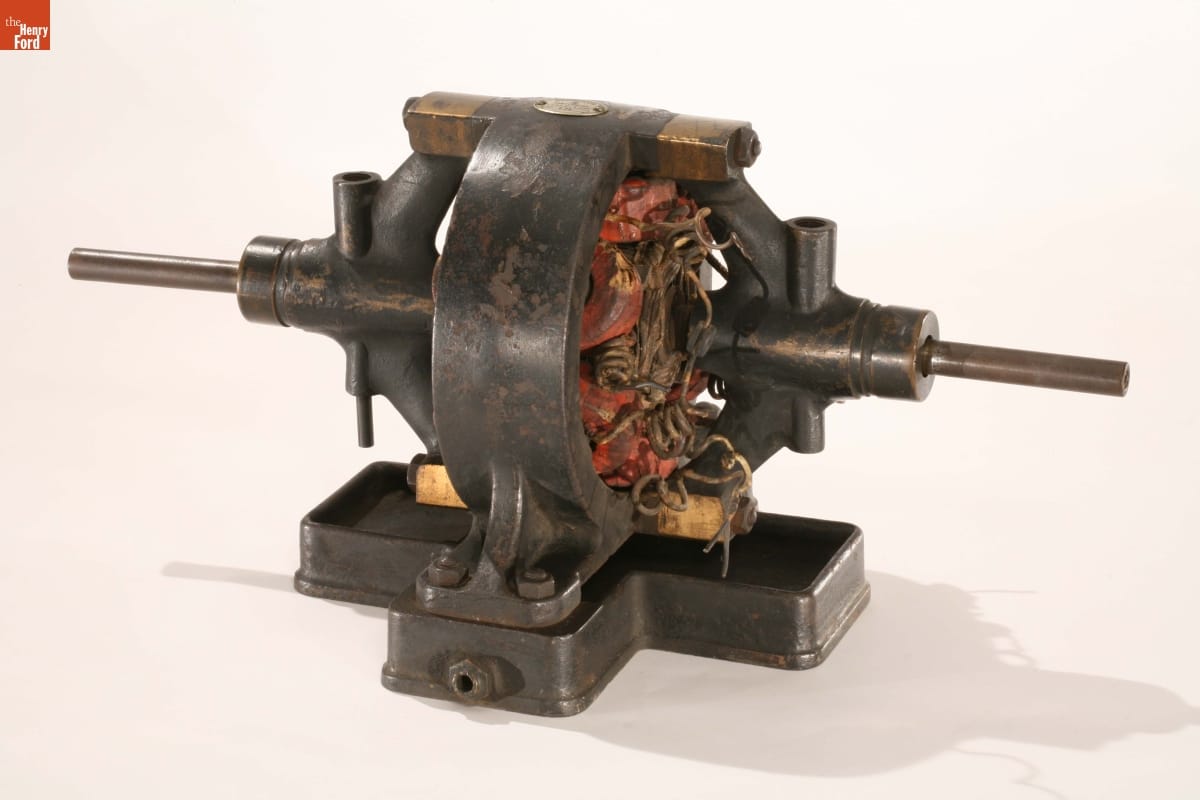
THF95531 / Westinghouse Induction Motor
01
Artifact Overview
Nikola Tesla's name is inseparable from the development of alternating current electricity--particularly with regard to polyphase transmission, but especially with regard to the induction motor. His motor, patented in 1888, was the first practical AC motor. George Westinghouse licensed Tesla's motor patents that same year--enabling the Westinghouse AC lighting system to become a real competitor with direct current systems.
Artifact Details
Artifact
Motor
Place of Creation
Collection Title
Location
at Henry Ford Museum in Made in America
Object ID
29.1333.204
Credit
From the Collections of The Henry Ford. Gift of Westinghouse Electric and Manufacturing Company.
Material
Composite material
Metal
Dimensions
Height: 9 in
Width: 8 in
Length: 16.5 in
Keywords |
|---|
02
Related Content
 Set
SetNikola Tesla
- 12 Artifacts
Nikola Tesla's name is inseparable from the development of alternating current electricity--particularly with regard to polyphase transmission, but especially with regard to the induction motor. His motor, patented in 1888, was the first practical AC motor. George Westinghouse licensed Tesla's motor patents that same year--enabling the Westinghouse AC lighting system to become a real competitor with direct current systems.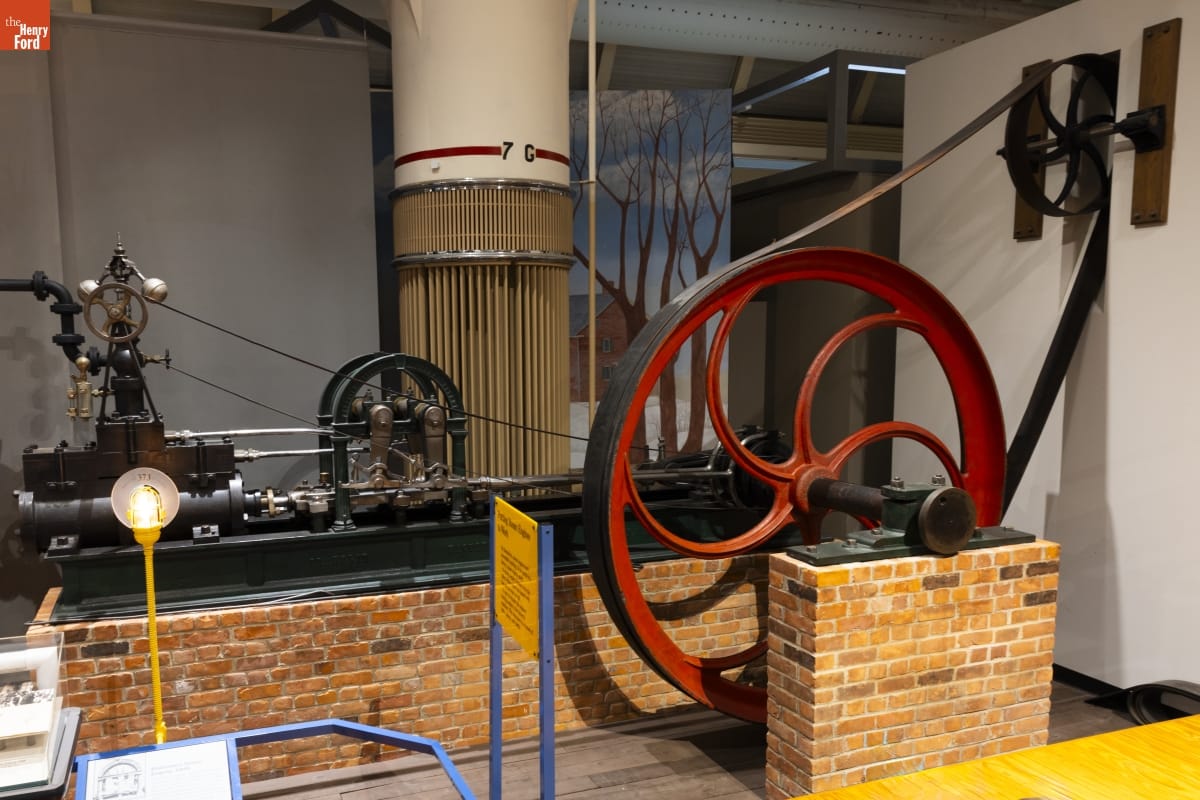 Set
SetAmerica's Industrial Revolution
- 24 Artifacts
Steam power initially spread in the United States via its adoption and adaptation in ships and boats. This early mill engine's layout and dimensions are firmly rooted in Mississippi riverboat practice, while its applied decorative detail and vibrant color scheme speak to the increasingly elevated status of steam technology as it found a firm footing in mills and factories.